South Africa Bags $53.6bn Investment Boost as Ramaphosa Raises Target to $179bn
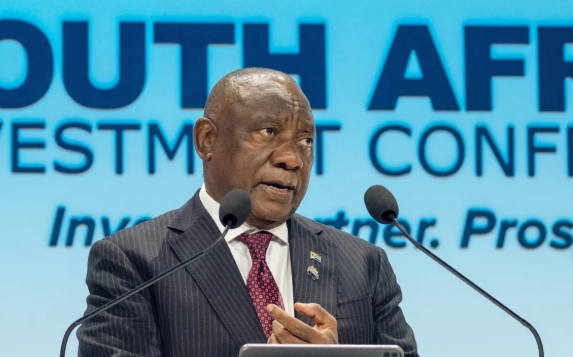
Cyril Ramaphosa speaks at the South Africa Investment Conference in Johannesburg, South Africa, on Tuesday,

South Africa has secured nearly R900 billion (approximately $53.6 billion) in fresh investment commitments at the 6th South Africa Investment Conference, marking a record-setting outcome as the government ramps up efforts to drive economic growth, industrial expansion, and large-scale job creation.

Closing the conference, President Cyril Ramaphosa said the investments—spanning the green economy, energy, tourism, manufacturing, and digital sectors—are expected to generate more than 200,000 jobs, reinforcing the country’s push toward inclusive economic recovery.

Riding on the momentum, Ramaphosa announced a significant escalation of South Africa’s medium-term investment ambition, raising the five-year target from R2 trillion (about $119.2 billion) to R3 trillion (about $178.8 billion). The move signals a more aggressive strategy to attract capital and reposition the economy amid global competition for investment flows.

“We are now at the first year of this long journey that we started at two trillion, but tonight I’m changing the target. As President, I’m changing the target from two trillion to three trillion, that is the new target now,” Ramaphosa said.

He framed the revised benchmark as a renewed mandate for government and private sector stakeholders to intensify efforts toward capital mobilisation and economic reforms. “I’m glad that my ministers are applauding more, it means that they have a new mandate and the new mandate is that we must now go for three trillion and not two trillion anymore, so the target has changed,” he added.

The President also moved to reassure investors on policy certainty, confirming that regulations under the new Public Procurement Act will be finalised by mid-year. The reforms are expected to strengthen transparency, improve efficiency, and enhance accountability in public contracting—critical levers for sustaining investor confidence.
Court Orders Final Forfeiture of ₦3.4bn, Properties Linked to Ex-NNPC Official

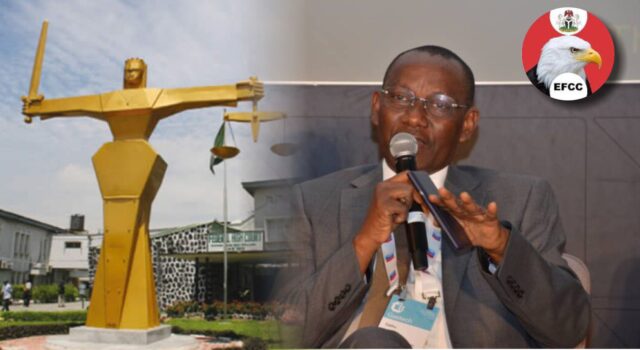
Salihu Nuhu Jamari

A Federal High Court in Abuja has ordered the final forfeiture of ₦3.44 billion and multiple properties linked to a former official of the Nigerian National Petroleum Corporation, following a corruption probe by the nation’s anti-graft agency.

Delivering the ruling on Tuesday, Justice J.O Abdulmalik of the Federal High Court granted the application for final forfeiture filed by the Economic and Financial Crimes Commission against assets traced to Salihu Nuhu Jamari.

The court ordered that the sum of ₦3,444,000,000, alongside three properties located in Abuja and Lagos, be permanently forfeited to the Federal Government. The affected assets include an uncompleted six-bedroom semi-detached duplex with a boys’ quarters in Asokoro District, Abuja; a two-bedroom apartment in Osborne II, Ikoyi, Lagos; and a restaurant property in Lokogoma District, Abuja.

The ruling followed a motion on notice filed by EFCC counsel, Ekele Iheanacho, on March 17, 2026. The court had earlier, on February 25, 2026, granted an interim forfeiture order and directed that the notice be published in a national newspaper, inviting any interested parties to show cause why the assets should not be permanently seized.

No objections were sustained against the application, paving the way for the final order.

According to court filings, the funds and properties are linked to an ongoing investigation into allegations of conspiracy, bribery, kickbacks, and money laundering involving officials and contractors of the Nigerian National Petroleum Corporation. Jamari, who served as Managing Director of the corporation’s Gas and Power Investment Company Limited, was identified as a key figure in the scheme following a petition dated April 28, 2025.

Investigations revealed that he allegedly leveraged his position to channel illicit payments through private firms, including Cumulus Energy Limited and Pius and Phillips Petroleum Limited, where he is listed as a director and signatory. The EFCC maintained that the funds were proceeds of kickbacks from contractors awarded major projects by the national oil company.

In granting the application, Justice Abdulmalik held that the evidence presented by the EFCC was sufficient and that the application had merit, thereby ordering the final forfeiture of the assets to the Federal Government of Nigeria.

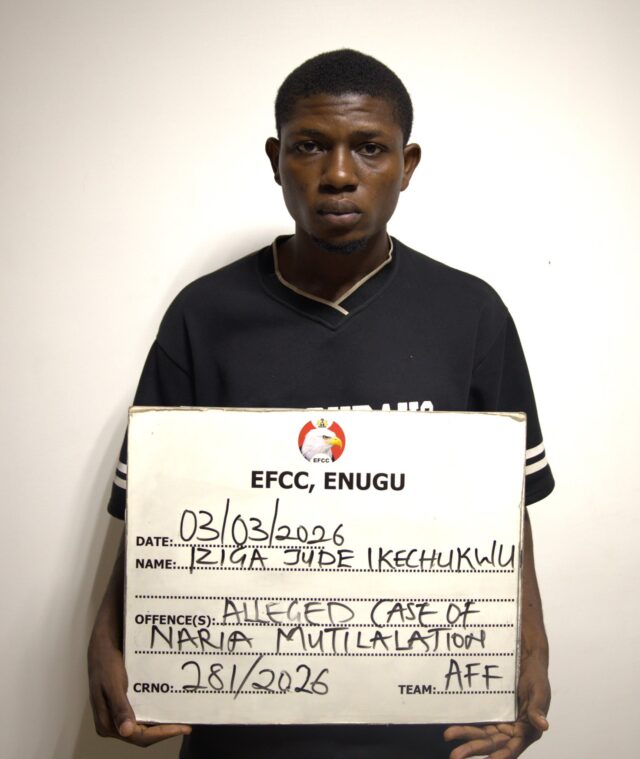
‘Easy-Money’ Jailed One Year for Dancing on Naira Notes

Justice F. O. Giwa-Ogunbanjo of the Federal High Court sitting in Independence Layout, Enugu State, has convicted and sentenced Iziga Jude Ikechukwu, also known as Easy-money, to one year imprisonment for abusing naira notes during his birthday celebration.

The 24-year-old palm kernel dealer was arraigned by the Enugu Zonal Directorate of the Economic and Financial Crimes Commission on March 26, 2026, on a one-count charge bordering on mutilation of Naira notes to the tune of N81,700.

The charge read: “That you, Iziga Jude Ikechukwu on 22nd February 2026, at Embassy Hotel Enugu Ezike, Enugu State, within the jurisdiction of this Honourable Court, while celebrating your birthday, you danced and matched on the sum of Eighty-one thousand, Seven hundred Naira (N81,700) notes issued by the Central Bank of Nigeria. You thereby committed an offence to wit: mutilation, contrary to and punishable under Section 21 (1) of the Central Bank of Nigeria Act, 2007”.

Ikechukwu pleaded guilty to the charge. Justice Giwa-Ogunbanjo convicted him on the spot and sentenced him to one year imprisonment from the date of arraignment, with an option of a N300,000 fine. The court also ordered the forfeiture of the recovered N81,700 to the Federal Government through the EFCC.

The conviction marks the latest development in a case that began when Ikechukwu was arrested on February 28, 2026, at his residence around the Timber Market in Enugu-Ezike. EFCC operatives acted on actionable intelligence from a viral social media video showing him recording himself abusing the Naira notes inside a hotel room during the birthday party.

FG Moves to Cut Out Middlemen in Livestock Market

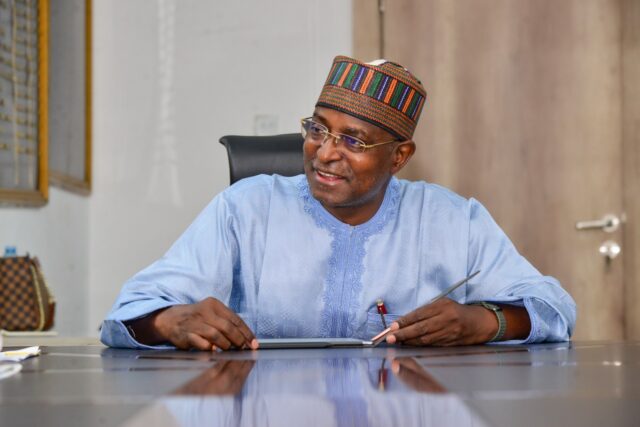
Minister of Livestock Development, Idi Mukhtar Maiha

Nigeria’s Federal Government has announced a sweeping set of reforms aimed at tackling price distortions and inefficiencies in the livestock sector, with a particular focus on reducing the influence of middlemen and improving returns for producers.

Speaking at the maiden edition of the Minister–Livestock Farmers’ Connect held recently, the Minister of Livestock Development, Idi Mukhtar Maiha, identified intermediaries in the value chain as a key driver of rising food prices and artificial scarcity.

“In many cases, the producer does the hard work, but earns the least, while the middleman takes the highest margin. This ultimately drives up prices and creates artificial scarcity in the market,” the minister said.

To address the imbalance, the government is promoting a transition to end-to-end business models that enable livestock producers to establish direct supply relationships with processors, abattoirs, and large-scale buyers. According to Maiha, this approach will improve farmer incomes, enhance transparency, and stabilise market prices.

As part of the reforms, the ministry also announced plans to introduce a live-weight pricing system for livestock, aligning Nigeria with global best practices. The initiative is expected to eliminate arbitrary pricing and reduce exploitation by ensuring animals are sold based on measurable weight.

The minister further highlighted significant investment opportunities across the sector, including pasture seed production, fodder supply, dairy aggregation, leather processing, and livestock by-products. He noted that these segments present viable entry points for entrepreneurs, particularly young Nigerians seeking opportunities in agriculture.

Maiha reiterated the government’s commitment to transitioning from open grazing to more structured livestock production systems, stressing that improved management practices would boost productivity, reduce disease spread, and help mitigate farmer-herder conflicts. “While humans can move, animals perform better when they are properly managed in structured environments. This improves productivity, reduces disease spread, and enhances overall sector efficiency,” he said.

He also revealed that Nigeria’s fodder market is expanding rapidly, with growing domestic demand and export potential to Gulf countries. In addition, he noted that the leather industry alone could generate up to 700,000 jobs, underscoring its importance to economic diversification and industrial growth.

On financing, the minister outlined several funding avenues available to investors, including support from the Bank of Agriculture, the Nigeria Incentive-Based Risk Sharing System for Agricultural Lending, the Development Bank of Nigeria, and intervention programmes backed by the World Bank. He, however, emphasised the need for structured business models and clear off-take arrangements to minimise investment risks.

Addressing security concerns, Maiha acknowledged the persistent threat of cattle rustling and rural insecurity, announcing plans to deploy digital livestock tagging and traceability systems. The initiative will enable real-time tracking, proof of ownership, and recovery of stolen animals, with pilot implementation expected within six months.

In a further push towards modernisation, the minister disclosed that a Livestock Public Digital Infrastructure platform will soon be launched to serve as a central hub for stakeholder engagement, data access, and investment facilitation.

Nigeria Unveils ‘MoorBeta’ Chicken, Targets Poultry Boom, Food Security Gains

Nigeria has approved a new indigenous meat-type chicken breed, MoorBeta, in a move aimed at boosting poultry production, improving farmer incomes, and strengthening national food security.

The approval was granted on March 26, 2026, by the National Crop Varieties and Livestock Breeds Registration and Release Committee during a session held at the National Centre for Genetic Resources and Biotechnology in Ibadan, Oyo State. The Federal Ministry of Livestock Development welcomed the development, describing it as a major milestone in efforts to enhance local livestock productivity.

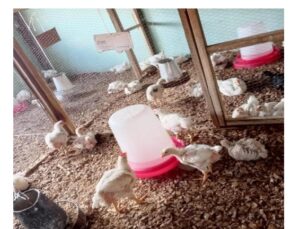
Two-week-old MoorBeta chickens at the Rainforest Agrocology, Owerri, Imo State.

MoorBeta was developed by the Poultry Research Team at the Institute of Agricultural Research and Training, Moor Plantation, Ibadan, following more than a decade of intensive breeding involving both indigenous and exotic meat-type chickens. The Ministry collaborated closely with the institute throughout the process and is represented on the approving committee.

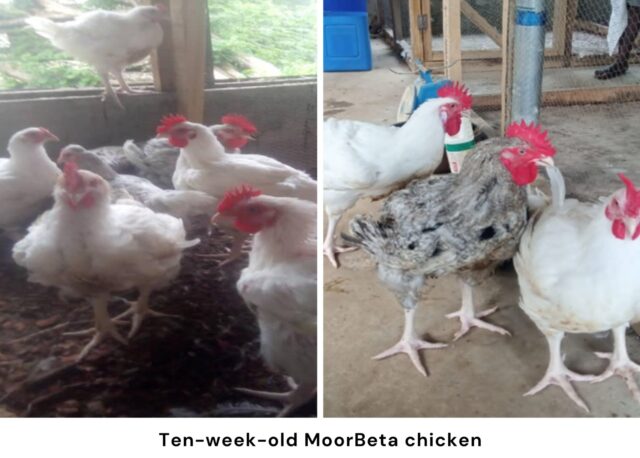
Designed with smallholder farmers in mind, the new breed is adapted to Nigeria’s diverse environmental conditions and demonstrates strong growth performance. At just 10 weeks, MoorBeta attains an average live weight of approximately 2.8 kilograms, while maintaining improved feed efficiency and survival rates exceeding 95 per cent.

Beyond productivity, the breed offers qualities attractive to both producers and consumers. Its meat is described as tender and juicy, with minimal cooking loss, while its physical features include a predominantly white plumage marked with brown, black, or red speckles, a prominent single comb, and a well-developed body structure suited for higher meat yield. Its tolerance to heat stress further enhances its suitability for tropical poultry farming conditions.

Economic projections also highlight its commercial potential. A 2025 cost analysis indicates that raising 100 MoorBeta birds could yield a net profit of over ₦278,000 within a 10-week production cycle, positioning the breed as a viable option for both small-scale and commercial poultry operators.

Tinubu Condemns Plateau, Kaduna Killings, Orders Security Crackdown on Perpetrators

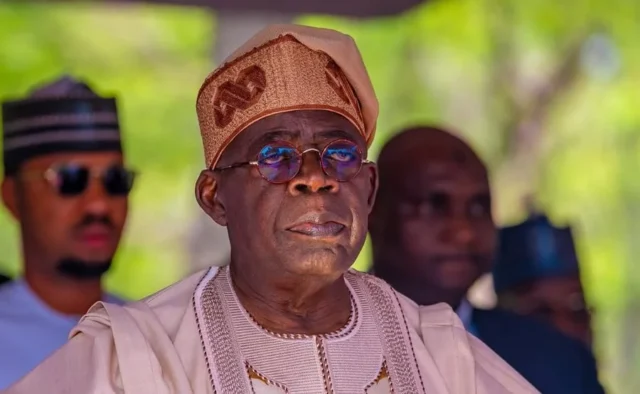
President Bola Tinubu

President Bola Ahmed Tinubu has strongly condemned the recent wave of violent attacks in Plateau and Kaduna states, describing the killings and abductions as “barbaric” and vowing that those responsible will be brought to justice.

The President’s reaction follows deadly assaults by gunmen in Angwan Rukuba district of Jos, Plateau State, and a separate incident in Kahir village in Kagarko Local Government Area of Kaduna State, where wedding guests were reportedly attacked, leading to fatalities and abductions.

In a strongly worded statement, Tinubu described the incidents as an affront to the nation’s values and warned that such acts of violence would not go unpunished. “Anyone who will sneak under the cover of the night and kill defenceless citizens as done in Jos and Kahir village, is a heartless coward,” the President said. He added that attacks on soft targets were aimed not only at causing harm but also at triggering reprisals and escalating violence.

The President directed security agencies to intensify operations to track down those behind the attacks, as well as individuals spreading misinformation capable of inflaming tensions. He also cautioned against narratives suggesting the violence was religiously motivated, urging responsible reporting.

Reaffirming the government’s commitment to restoring order, Tinubu said security agencies were actively addressing the situation and called for public cooperation to maintain peace and safeguard lives and property. He urged affected communities to comply with evacuation and relocation advisories where necessary.

“I urge our security agencies to be more proactive in preventing these attacks by acting on early warning intelligence. All the remaining abductees from Kahir village must be rescued immediately,” he said, while also confirming the safe return of two of the victims abducted in Kaduna.

The President commended Caleb Mutfwang for efforts to contain the situation in Jos, and Uba Sani for supporting rescue and containment operations in Kaduna.

Tinubu also extended his condolences to families of those killed and wished the injured a speedy recovery, assuring that the Federal Government is investing in advanced security equipment to enhance real-time tracking and neutralisation of criminal elements across the country.


EFCC Busts Alleged Job Scam Ring in Ilorin

The Ilorin Zonal Directorate of the Economic and Financial Crimes Commission has uncovered an alleged employment scam syndicate, arresting two suspects accused of defrauding job seekers of nearly ₦3 million under the guise of offering federal recruitment opportunities.

The suspects, identified as Bolaji Kazeem Akinwunmi, popularly known as “Bolaji Original,” and his accomplice, Kemisola Mary Akinbo, were apprehended following investigations into a string of fraudulent activities targeting desperate job seekers.

According to preliminary findings by the anti-graft agency, Akinwunmi allegedly posed as an officer of the Nigeria Customs Service and the Nigeria Immigration Service, claiming he had privileged access to employment slots within the two agencies. Under this false pretense, he reportedly collected a total of ₦2,921,700 from multiple victims seeking job placements.

Investigators revealed that the suspect exploited the high demand for government jobs by presenting himself as an insider capable of securing placements, thereby gaining the trust of unsuspecting applicants. His accomplice is alleged to have played a supporting role in facilitating the scheme.

Yusuf Tuggar Resigns as Foreign Affairs Minister

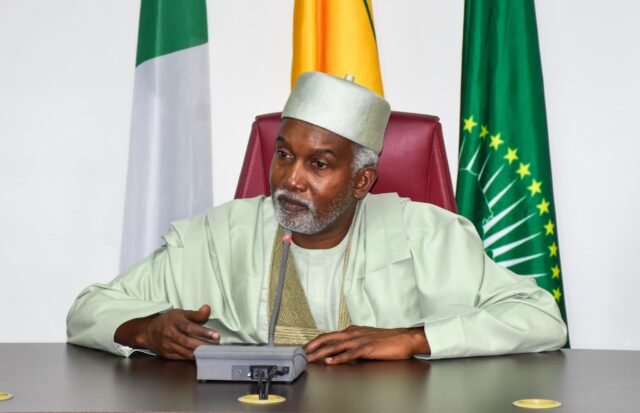
Yusuf Maitama Tuggar

Nigeria’s Minister of Foreign Affairs, Yusuf Maitama Tuggar, has resigned from his position, bringing an end to his tenure marked by efforts to reposition the country’s diplomatic engagements and strengthen international partnerships.

In his resignation letter, Tuggar expressed “profound gratitude” to Bola Ahmed Tinubu for the opportunity to serve and contribute to the administration’s foreign policy direction. He noted that his time in office was guided by the President’s 4D foreign policy strategy, which shaped Nigeria’s diplomatic priorities during his tenure.

The outgoing minister also extended appreciation to the management and staff of the Ministry of Foreign Affairs, as well as members of the diplomatic community, acknowledging their cooperation and support throughout his service.

During his time in office, Tuggar was credited with advancing people-centred diplomacy, particularly through humanitarian evacuations, scholarship facilitation, and sustained support for Nigerians abroad. His tenure also saw increased diaspora engagement, including the development of a structured Nigerians-in-Diaspora database aimed at broadening participation in national development.

He further strengthened Nigeria’s bilateral and multilateral relations through strategic engagements with key partners and alliances, particularly within the Global South. His stewardship also focused on regional security cooperation and the formation of the Regional Partnership for Democracy (RPD), while economic diplomacy initiatives positioned Nigeria as a more attractive destination for foreign investment, especially in the energy sector.

Tuggar’s tenure included efforts to resolve diplomatic disputes, leading to the release of detained Nigerians in foreign countries and the improvement of bilateral ties.

His resignation comes ahead of the March 31 deadline set for political office holders to submit their letters in compliance with provisions of the Electoral Act and directives from the presidency. The letter was submitted to the Office of the Secretary to the Government of the Federation, where it was received by Abubakar Kana, Permanent Secretary, General Services Office, on behalf of the SGF.

‘No To Igbo king’ protests turn violent in South Africa

A scene of violence during the protests.

Protests against the controversial coronation of a Nigerian traditional ruler exploded into violence on Monday, with demonstrators torching vehicles, looting foreign-owned businesses and targeting shops in the KuGompo area of the Eastern Cape.

Properties belonging to foreigners up in flames in East London, South Africa.

The unrest, which began as a march by ActionSA, traditional leaders and local residents, quickly descended into targeted attacks on properties allegedly belonging to foreigners, including Nigerians, Ethiopians and Somalis. Videos circulating on social media showed thick black smoke rising from burning cars and buildings as police scrambled to restore order. Reports from the scene described mobs storming a butchery to steal meat, while at least one stabbing incident involving Ethiopian shop owners left two people hospitalised.

The trigger for the chaos was the recent installation of Chief Solomon Ogbonna Eziko as “Igwe Ndigbo Na East London” – a title given to him by members of the local Igbo community in a ceremony held less than two weeks ago. Traditional authorities and political groups have condemned the event as an unlawful challenge to South Africa’s recognised traditional leadership structures and the authority of the amaRharhabe kingdom under King Sandile.

ActionSA’s Eastern Cape chair, Athol Trollip, told SABC that his party stands firmly with traditional leaders in opposing the installation.

Former radio personality Ngizwe Mchunu said on Newzroom Afrika, “History will judge us wrong if we allow such a mistake to happen on our watch. The political organisation that liberated this country failed.” He went further, demanding that the so-called Nigerian king return home. “The so-called Nigerian king installed in the Eastern Cape must return to his home country,” Mchunu stated.

Solomon Ogbonna Eziko. Credit: Ifeanyi2730 | TikTok

Prince Xhanti Sigcawu of the Amathole House of Traditional Leaders expressed raw anger at the development. “I’m pissed off that Nigerians could come here and claim to have a king here,” he said, adding that the government must deport the people who participated in the coronation for undermining the authority of local kings.

Eastern Cape MEC for Co-operative Governance and Traditional Affairs, Zolile Williams, distanced his department entirely from the event, insisting it had no official involvement. Nkosi Mpumalanga Gwadiso, chairman of the Eastern Cape House of Traditional and Khoisan Leaders, echoed the rejection, stating the coronation violated established customs.

The Nigerian Union in South Africa (NUSA) attempted to calm tensions by describing the title as purely ceremonial. NUSA president Nwobi Smart said the role was created to preserve Igbo culture abroad and serve as a cultural ambassador between the Nigerian community, local authorities and embassies.

“This cultural ambassador will look to be the middle man between local authorities of the Nigerians who stay in this area plus including the middle man for the embassies or consulate in case something happens,” he explained.

As night fell on Monday, police had not confirmed the exact number of arrests or injuries, but eyewitness accounts and live reports indicated widespread destruction of foreign-owned property. The incidents have reignited fears of xenophobic violence in a province already scarred by past attacks on migrants.

Local traditional leaders and ActionSA have vowed to continue pressing authorities for intervention, warning that failure to address the issue could spark even greater unrest. For now, the streets of KuGompo remain tense, with the coronation of one man exposing deep fault lines over culture, sovereignty and immigration in South Africa.

Nigeria Targets 7% GDP Growth, Eyes $14bn Annual Investment — Edun

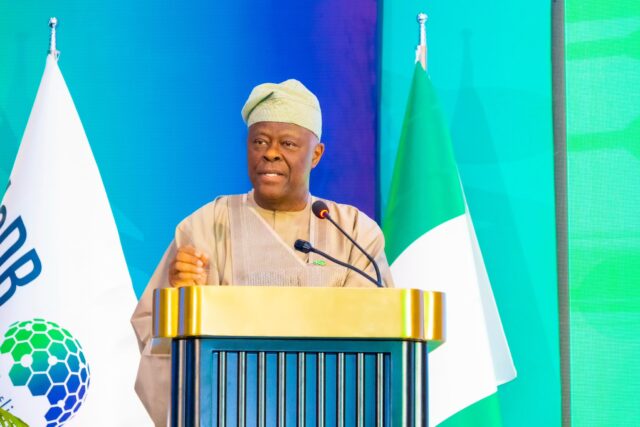
Wale Edun.

Nigeria has set an ambitious economic target of achieving a seven per cent annual Gross Domestic Product (GDP) growth rate, as the Federal Government intensifies efforts to reposition the economy and attract large-scale investment, the Minister of Finance and Coordinating Minister of the Economy, Mr. Wale Edun, has said.

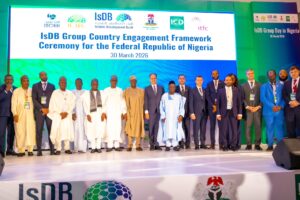
Speaking on Monday in Lagos during the Islamic Development Bank (IsDB) Day, Edun disclosed that the country requires about $14 billion in annual investment to bridge its infrastructure deficit, describing the target as critical to unlocking sustained growth and reducing poverty.

A cross section of dignitaries at the event on Monday.

According to the minister, the growth projection is designed to outpace Nigeria’s population growth rate of about three per cent, thereby improving living standards and economic opportunities. “We are moving from stabilisation to growth, from reliance on public financing to private capital mobilisation, and from traditional borrowing to innovative financing instruments,” Edun said.

He explained that the government is actively repositioning the economy to attract domestic, diaspora, and foreign investments within a stable macroeconomic environment. He added that addressing the infrastructure gap remains central to this strategy, with priority sectors including energy, transportation, agriculture, and digital infrastructure.

Edun further revealed that the Nigeria-IsDB engagement framework for 2026 to 2028 will focus on infrastructure development, social investment, innovative financing, and regional cooperation. He emphasised that digital infrastructure, in particular, is vital in a youthful country like Nigeria, noting that it would empower the population for innovation and global competitiveness.

Highlighting the administration’s broader social agenda, the minister said 2026 has been designated as the year of social development, with plans to integrate up to 10 million Nigerians into productive economic activities through skills development, financing support, and job creation initiatives. He added that the government would continue to empower micro, small, and medium enterprises to boost production and expand market access.

On financing strategies, Edun said Nigeria would deepen the use of Sukuk instruments, expand domestic capital markets, and securitise public assets to attract private investment. He stressed the importance of de-risking investments and strengthening the business environment to drive sustainable growth, while also reiterating the country’s ambition to build a one trillion-dollar economy.

Also speaking at the event, the Director-General of Country Programmes at the IsDB, Mr. Anasse Aissami, reaffirmed the bank’s commitment to Nigeria’s economic transformation. He noted that the institution has expanded its interventions across key sectors such as agriculture, energy, transport, health, and education.

Aissami added that the IsDB plans to scale up its support to Nigeria over the next five years, exceeding its cumulative engagement over the past 25 years, signalling stronger collaboration between both parties.

The IsDB Group Day featured a series of activities including the signing of a Memorandum of Understanding, business partnership presentations, panel discussions, and a news conference. The event brought together senior government officials, private sector leaders, financial institutions, development partners, and other stakeholders, underscoring Nigeria’s push to mobilise capital and accelerate economic transformation.

EDITOR PICKS

Recent Posts