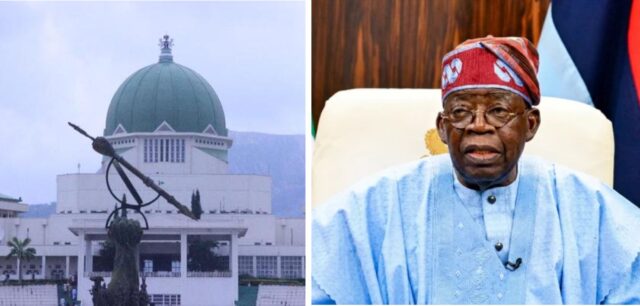
Cybercrime Crackdown: 59 More Foreign Nationals Convicted as Nigeria Steps Up Digital War

Cybercrime suspects paraded by the Nigeria Police

The Nigeria Police Force has secured the conviction of 59 additional foreign nationals linked to a sophisticated international cybercrime syndicate, in what officials are calling one of the country’s largest cybercrime crackdowns to date. The convictions bring the total number of convicted suspects in the high-profile case to 85.

According to a statement issued by Force Public Relations Officer CSP Benjamin Hundeyin, the convictions follow months of forensic investigation by the National Cybercrime Centre (NPF-NCCC). The suspects—mostly of Chinese and Malaysian origin—were part of a syndicate uncovered in Abuja’s Jahi district in November 2024. At the time, police operatives arrested 130 suspects, including 17 Nigerians, for their alleged involvement in large-scale internet fraud, sophisticated hacking operations, and digital identity theft.

Twenty-one of the accused were sentenced in August 2025, while five others were convicted in September. With the most recent 59 convictions, the Inspector-General of Police, Kayode Egbetokun, described the development as a clear signal that Nigeria is “no longer a playground for cybercriminals.” He reaffirmed the Force’s commitment to leveraging cutting-edge digital tools, artificial intelligence, and international partnerships to counter rising cyber threats.

IGP Kayode Egbetokun

This latest success comes amid a broader surge in cybercrime cases across Nigeria. Just last month, the Economic and Financial Crimes Commission (EFCC) arrested 67 suspects in a coordinated operation across Lagos and Ibadan, seizing laptops and cryptocurrency wallets linked to global scam networks. Similarly, in July 2025, the EFCC secured the conviction of two social media influencers in Port Harcourt for running phishing schemes that defrauded victims in Europe and North America of over ₦500 million.

Recent data from the Nigerian Communications Commission (NCC) and Interpol shows that Nigeria ranks among the top 10 countries globally affected by cyber attacks, with financial fraud, ransomware, and identity theft being the most prevalent. Interpol’s 2025 African Cyber Threat Report revealed that cybercrime costs the continent over $4 billion annually, with Nigeria accounting for nearly 30% of reported incidents.

Security analysts have noted that the Nigerian government’s increased investment in cybersecurity infrastructure is beginning to yield tangible results. The establishment of the NPF National Cybercrime Centre, coupled with improved collaboration with agencies such as Interpol, Europol, and the FBI, has significantly strengthened Nigeria’s capacity to trace digital footprints and prosecute offenders.

In his statement, IGP Egbetokun reiterated that the Police Force will not relent in its mission to “safeguard Nigeria’s cyberspace” and urged citizens to remain vigilant online. “These convictions demonstrate our determination to bring both local and foreign actors to justice,” he said. “Cybercrime is a global menace, but Nigeria will continue to be proactive in neutralizing threats through intelligence-driven operations.”

The prosecution of the remaining suspects in the Abuja cybercrime case is still ongoing, with more convictions expected in the coming months as Nigeria consolidates its position as one of Africa’s leading enforcers of digital law.

How India beat Nigeria to the hosting rights for the 2030 Commonwealth Games

Nicholas Lum and Finn Luu of Team Australia compete against Sharath Kamal Achanta and Sathiyan Gnanasekaran of Team India during the Men's Doubles - Semi-Final 2 match at he Birmingham 2022 Commonwealth Games on August 6, 2022. Credit: Birmingham2022.com

On October 15, 2025 the Commonwealth Sport Executive Board moved to recommend Ahmedabad as the proposed host city for the centenary 2030 Commonwealth Games, a development that all but ended Abuja’s bid and put India on course to stage the Games pending formal ratification by the Commonwealth Sport General Assembly on November 26. The recommendation caps a compressed but intense bidding cycle in which two final proposals — India’s Ahmedabad and Nigeria’s Abuja — were assessed against an urgent checklist of infrastructure, finance, delivery risk and legacy.

The pathway to Ahmedabad’s advantage was straightforward: India presented a plan dominated by existing large-scale venues and rapid infrastructure upgrades rather than a wholly new-build vision, giving Commonwealth evaluators confidence that the centenary edition could be delivered on time and with controlled cost. Key to that case is the Sardar Vallabhbhai Patel Sports Enclave project — a cluster of stadia and arenas that surrounds the Narendra Modi Stadium — together with commitments to expand airport capacity, metro/BRT links and hotel rooms in advance of 2030. Indian authorities framed the bid as part of a long-term sporting legacy that also advances Ahmedabad’s push to host the 2036 Olympics. Those practical, legacy-focused arguments featured heavily in the Executive Board’s recommendation.

Financial credibility and government backing also separated the bids. India’s proposal came with high-level political support and public statements tying the Games to national sporting priorities; that level of state assurance reassured a federation that in recent years has been cautious about approving hosts after a wave of expensive withdrawals. Commonwealth Sport has been explicit about favouring bids that reduce the risk of cancellation or last-minute scaling down — a crucial factor after several previous hosts pulled back for budgetary or logistical reasons. India’s package—mixing upgraded existing venues, pledged public investment and private-sector partners—read as lower risk to the Executive Board than a cost-heavy new-build scenario.

Nigeria’s bid was serious and welcomed by many within the Commonwealth and across Africa, but it ultimately struggled to match the immediacy and scale of India’s guarantees. Abuja’s pitch emphasised regional development, continental representation and the transformational potential of hosting for sport in West Africa. Nigerian officials argued the Games would spur infrastructure and tourism growth, and Abuja was touted as a symbolically important African host. However, in the Executive Board’s assessment cycle, Abuja was seen as carrying greater delivery risk — including questions about timelines for venue construction, transport capacity, and the larger financing package — relative to Ahmedabad’s mix of completed venues and near-term projects.

Operational detail mattered. The presence of the Narendra Modi Stadium — one of the world’s largest cricket arenas that has already staged major global events — and proposed competition clusters in Naranpura, Naroda and GIFT City gave India a ready-made footprint for multiple sports, athlete villages and media operations. The Ahmedabad bid emphajsised athlete experience, transport corridors and broadcast logistics, areas where the Executive Board said the proposal had “thorough assessment” scores. By contrast, Abuja would have faced a heavier programme of new construction and upgrades in compressed timelines, factors that historically attract stricter scrutiny from international federations.

Politics and symbolism also played a part. The 2030 Games are the centenary edition of the Commonwealth Games, and Commonwealth Sport appears to have been swayed by a bid that coupled centenary symbolism with an argument that hosting the Games in a major Asian market would re-energise the event’s global profile and commercial prospects. India made an explicit case that a successful 2030 Games in Ahmedabad could stabilise the event’s financial footing and help rebuild momentum after a run of cancellations and scaled-down programmes. That commercial and reputational calculus resonated alongside technical scoring.

A statement by the Commonwealth Sport said it “assessed candidate cities against a wide range of criteria including technical delivery, athlete experience, infrastructure, governance, and alignment with Commonwealth Sport values”.

However, the Executive Board’s recommendation is not the final legal act. The full membership of Commonwealth Sport will vote at the General Assembly in Glasgow next month to ratify the host. If ratified, Ahmedabad will become the second Indian city to host the Commonwealth Games (after Delhi, 2010) and India will begin a multi-year delivery programme to prepare for the centenary celebration. If the Assembly rejects the recommendation — unlikely but possible in rare political circumstances — the Board’s report would provide the route for further deliberation. Until then, India is the favourite to host, and Abuja’s supporters must regroup to press future bids or push for stronger regional hosting opportunities.

Reactions were predictable. Indian political and sporting leaders hailed the recommendation as vindication of a long-term plan to position Ahmedabad as a global sports hub, while Nigerian officials and commentators expressed frustration that Africa missed the centenary platform. Nigerian media stressed the diplomatic and developmental loss of hosting but also highlighted the seriousness of Abuja’s bid and suggested lessons for any future continental bids: clearer financing guarantees, earlier procurement timetables, and more visible existing venue readiness. Analysts say Nigeria’s experience could still be valuable: strong regional hosting proposals remain important to the Commonwealth’s stated goals of sport development across member nations.

This is the second time Abuja has missed out on hosting the Commonwealth Games, having lost to Glasgow for the 2014 edition. But hopes for future edition lingers as the “Commonwealth Sport Executive Board has agreed to develop a strategy for supporting and accelerating Nigeria’s hosting ambitions for future Games, including consideration for 2034.”

In short, India beat Nigeria for the 2030 Commonwealth Games hosting recommendation because Ahmedabad presented a lower-risk, better-guaranteed package built around substantial existing venues, coordinated infrastructure upgrades and clear government backing — factors that fit a cautious federation seeking a reliable centenary host. The final chapter will be written in Glasgow on 26 November 2025, when Commonwealth Sport’s full membership casts its vote and either formally confers the centenary Games on Ahmedabad or opens the door to further debate.

Nepal Asks FIFA to Overturn Malaysia Defeat

FIFA logo, Nepal flag

Nepal has formally appealed to FIFA to overturn their 2–0 loss to Malaysia in the 2027 Asian Cup qualifiers, citing the fielding of an ineligible player by Malaysia and recent disciplinary rulings against the Malaysian Football Association (FAM).

The controversy stems from FIFA’s decision last month to ban seven foreign-born Malaysian players for one year and fine the FAM $440,000, accusing them of submitting forged or doctored ancestry documents in order to qualify those players as Malaysian nationals. Among the banned players is Hector Hevel, who scored Malaysia’s opening goal in the match against Nepal held in Johor in March.

In a statement to AFP, Indra Man Tuladhar, CEO of the All Nepal Football Association (ANFA), said: “We have reached out regarding an ineligible player in the match. Thus the result has to be overturned.” Nepal is requesting that the loss be reversed into a 3–0 win in their favour under competition rules governing matches involving ineligible players.

From Malaysia’s side, the FAM has expressed confidence and is awaiting the outcome of Nepal’s complaint. The New Straits Times reported that Malaysia is undeterred by the appeal and is watching the process closely to see whether their victories—including the one over Nepal—will be upheld or annulled. Meanwhile, FAM has formally filed an appeal against FIFA’s sanctions to the FIFA Appeal Committee (FAC). Acting FAM President Yusoff Mahadi has affirmed that the legal team hired includes international experts and expressed optimism for a favourable outcome.

The stakes are high. Should FIFA or the Asian Football Confederation (AFC) accept Nepal’s request, Malaysia could be adjudged to have forfeited the match, leading to a default 3-0 loss and recalibration of the Group F standings. Under competition rules, Malaysia could similarly be penalized for other matches in which the now-banned players participated.

The timeline, however, is uncertain. The FAC typically takes 30 to 60 days to process appeals, but complex cases involving multiple document verifications and potential hearings may take several months. If FAM’s appeal fails, they would have 10 days to request a full decision report and can then escalate the matter to the Court of Arbitration for Sport (CAS), where arbitrations may take upwards of 5 to 6 months.

Currently, Nepal sits at the bottom of Group F with zero points from four matches, having also lost to Laos and Vietnam. Malaysia, meanwhile, lead the group on 12 points, ahead of Vietnam.

Beyond the administrative dispute, Nepal’s campaign has already been under pressure. Their Australian coach, Matt Ross, has acknowledged that even earning a single point in forthcoming qualifying games would be a minor triumph for a squad often viewed as underdogs. The team is also navigating domestic political unrest in Nepal, which has led to disruptions in planning and forced venue changes for matches.

As both sides await the ruling, the spotlight now turns to FIFA, the AFC, and the FAC. Should the appeal lead to overturning the result, it would set a dramatic precedent in Asian Cup qualification — one that could reshape both sporting and administrative dynamics in regional football.

Senate Confirms Amupitan as INEC Chairman

Prof.-Joash-Amupitan
New INEC Chairman, Prof. Joash Amupitan

In a dramatic conclusion to a day of high political theatre, the Nigerian Senate on Thursday confirmed Professor Joash Ojo Amupitan, SAN, as the new Chairman of the Independent National Electoral Commission (INEC). The approval, by voice vote and without recorded dissent, crowns weeks of speculation and contestation surrounding the leadership of Nigeria’s electoral body.

The confirmation followed a strenuous screening session in the Senate chamber, where Amupitan was grilled by senators for about three hours. Questions ranged from his prior professional roles and claims of non-partisanship to the technology and logistics plans he intends to deploy. At one point, Senate President Godswill Akpabio attempted to limit further questioning on the Biometric Voter Accreditation System (BVAS) and the INEC Result Viewing (IReV) portal, but senators such as Solomon Adeola pushed back, insisting the nominee answer fully.

After the Committee of the Whole, Akpabio asked whether the confirmation was “a true reflection of the House,” and the ayes had it. He declared Amupitan confirmed, noting that security and law enforcement agencies—DSS, the police, and the National Security Adviser’s office—had cleared him, and that he had no criminal record. In his remarks, Akpabio urged Amupitan to fulfil “the expectations of all Nigerians” in ensuring that votes count.

In his address to the Senate, Amupitan pledged an inclusive, transparent, and technologically driven future for Nigeria’s elections. He vowed that “no voter will be disenfranchised” and floated the possibility of deploying drones to deliver sensitive election materials to remote or insecure areas. He also committed to aggressive voter education, the establishment of an Ethics & Compliance Committee within INEC, and collaboration with the National Assembly toward creating an Electoral Offences Commission.

Amupitan, a law professor at the University of Jos and a Senior Advocate of Nigeria (appointed SAN recently), had earlier denied serving as legal counsel for the All Progressives Congress (APC) in the 2023 election petition cases. He urged that court records and law reports be consulted to verify claims. He also told the Senate that he would audit INEC’s logistics and 2023 poll materials and review past practices.

His pathway to confirmation was paved by President Bola Tinubu’s formal nomination earlier this week. In a letter to the Senate, Tinubu cited Section 154(1) of the 1999 Constitution (as amended) as the basis for the appointment and asked for “expeditious consideration.” The nomination had earlier been endorsed by the National Council of State on October 9.

Ahead of the confirmation, opposition parties and civil society groups had flagged concerns that the Senate might shortcut due process. The Human Rights Writers Association of Nigeria (HURIWA), for instance, called the confirmation a “travesty,” accusing the Senate of rubber-stamping a partisan choice and bypassing meaningful oversight. Many pointed to Amupitan’s shared ethnicity with the President as a potential conflict of interest or influence.

But Amupitan also received support from within the Senate. Senator Seriake Dickson (PDP, Bayelsa West) publicly welcomed the nomination, pledging to vote in favor and to push for needed electoral reforms. Some northern youth and civil society groups likewise called for the swift confirmation, arguing that delaying the process could undercut preparation for upcoming elections.

Amupitan becomes the sixth substantive INEC chairman since Nigeria’s return to democracy in 1999. He succeeds Professor Mahmood Yakubu, whose decade-long tenure ended earlier this month, and interim leadership under May Agbamuche-Mbu, who served only briefly.

Observers see the confirmation as both an opportunity and a test. With the 2027 general elections looming, Amupitan’s success will largely depend on whether he can implement reforms that withstand political pressure, deliver free and credible polls, and build renewed confidence in Nigeria’s electoral system.

Nigeria Crush Benin, Miss Automatic World Cup Ticket

Nigeria's Victor Osimhen

It was a day of high drama across Africa as the race for places at the 2026 FIFA World Cup reached a thrilling climax. In Uyo, Nigeria produced a commanding performance to crush Benin Republic 4–0 in their final Group C qualifier, but the result proved insufficient for automatic qualification as South Africa’s emphatic 3–0 win over Rwanda secured top spot and a direct ticket to North America.

The day began with Group C finely poised. South Africa, Nigeria, and Benin were all within touching distance of qualification, but Bafana Bafana entered the final round under extra pressure after being docked three points earlier in the campaign for fielding an ineligible player. That setback appeared destined to derail their dream until a decisive display in Nelspruit turned the tide. Goals in either half gave them a comfortable 3–0 victory over Rwanda, enough to finish on 18 points and edge their rivals on goal difference.

Nigeria, playing simultaneously in Uyo, knew only a convincing win would keep their hopes alive. The Super Eagles rose to the occasion in front of a raucous home crowd. Victor Osimhen led from the front, scoring twice in the first half and completing his hat-trick early in the second. Frank Onyeka added a fourth in stoppage time to round off a dominant performance. The victory lifted Nigeria to 17 points, level with Benin but above them on superior goal difference. Yet despite the margin of triumph, South Africa’s result meant the Super Eagles fell just short of the automatic slot.

It was a bittersweet night for Nigerian supporters. The team finally delivered the kind of ruthless attacking display that had been missing for much of the campaign, but their fate remained out of their own hands. The result in Nelspruit confirmed that South Africa would return to the World Cup for the first time since hosting the tournament in 2010, while Nigeria must now take the longer route through the CAF playoff round next month.

The playoff stage offers a final lifeline — a knockout mini-tournament among the best group runners-up, with the winners advancing to an intercontinental playoff. Nigeria’s 4–0 victory not only salvaged second place but also ensured a healthy goal difference, a crucial factor in determining the top playoff seeds. However, the path ahead will be anything but straightforward. The Super Eagles could face formidable opponents such as Cameroon, Ghana, or Senegal in what promises to be an unforgiving battle for the remaining slots.

Despite the disappointment, Nigeria’s performance against Benin offers reasons for optimism. Osimhen’s return to form after a quiet spell could not have come at a better time, while Onyeka’s commanding midfield presence and the improved defensive coordination underlined a team rediscovering its rhythm.

Indeed, Nigeria’s World Cup journey now hinges on mental strength as much as tactical execution. The margin for error has vanished, and the stakes could not be higher. Yet history has shown that when cornered, the Super Eagles often find a way to soar. Their emphatic victory over Benin may not have delivered automatic qualification, but it could well be the spark that propels them through the playoffs and back onto football’s grandest stage.

For now, South Africa celebrates a triumphant return to the global spotlight, while Nigeria lives to fight another day. The road to 2026 continues — longer, harder, but still alive.

Lagos and Overpopulation: Navigating Africa’s Megacity Challenge

An overpopulation scene in Lagos

Lagos, Nigeria’s economic powerhouse and former capital, stands as one of the world’s fastest-growing megacities and a compelling case study in urban overpopulation. With an estimated population exceeding 15 million people in its metropolitan area, Lagos represents both the promise and peril of rapid urbanization in developing nations. This sprawling metropolis, built on a collection of islands and coastal lowlands, faces unprecedented challenges as it struggles to accommodate millions of residents while maintaining basic infrastructure and services.

The Scale of Growth

The sheer pace of Lagos’s population growth defies conventional urban planning models. From a modest fishing village of approximately 300,000 people in 1950, Lagos has exploded into one of Africa’s largest urban centers. Current projections suggest that by 2050, the city could house over 30 million residents, potentially making it the world’s largest urban agglomeration. This exponential growth stems from multiple factors: high birth rates, internal migration from rural areas seeking economic opportunities, and the city’s role as West Africa’s commercial hub.

The magnetic pull of Lagos is undeniable. As Nigeria’s economic nerve center, the city contributes approximately 30% of the country’s GDP despite occupying less than 0.4% of its land mass. This economic concentration creates a powerful draw for job seekers, entrepreneurs, and families hoping to escape rural poverty. However, the city’s infrastructure was never designed to handle such massive population influxes, creating a perfect storm of urban challenges.

Infrastructure Under Pressure

Lagos’s infrastructure groans under the weight of its swelling population. The transportation system, perhaps the most visible manifestation of overpopulation, showcases the city’s struggles. Traffic congestion in Lagos is legendary, with commuters often spending three to four hours daily traveling relatively short distances. The existing road network, much of it dating back to the colonial era, simply cannot accommodate the estimated 12 million daily trips made across the metropolis.

Public transportation, while extensive, operates at capacity and beyond. The iconic yellow buses (danfo) and motorcycle taxis (okada) form an informal but vital network that moves millions of people daily. However, these systems operate chaotically, contributing to air pollution and safety concerns. Recent efforts to modernize transportation, including the Lagos Bus Rapid Transit (BRT) system and ongoing rail projects, represent steps toward addressing these challenges, but the scale of need far outpaces current solutions.

Water and electricity supply present equally daunting challenges. Despite being surrounded by water, many Lagos residents lack access to clean, reliable water supplies. The state water corporation can only serve a fraction of the population, forcing millions to rely on private boreholes, vendors, or sachet water. Similarly, electricity supply remains erratic, with frequent power outages forcing businesses and residents to depend on expensive diesel generators, contributing to air pollution and economic inefficiency.

Housing Crisis and Informal Settlements

Perhaps nowhere is Lagos’s overpopulation more apparent than in its housing sector. The city faces a housing deficit estimated at over 2 million units, pushing property prices to astronomical levels that price out the majority of residents. This shortage has spawned extensive informal settlements, commonly known as slums, where millions live in substandard conditions.

Makoko, often called the “Venice of Africa,” exemplifies these challenges. Built entirely on stilts over Lagos Lagoon, this floating slum houses an estimated 300,000 people in wooden shacks connected by narrow boardwalks. While Makoko demonstrates remarkable human ingenuity and community resilience, it also highlights the desperate housing situation facing Lagos’s urban poor. Residents lack basic amenities like clean water, proper sanitation, and electricity, while living under constant threat of eviction and flooding.

The government’s response to informal settlements has been mixed, ranging from forced evictions to upgrade programs. However, the scale of the housing crisis far exceeds current intervention capacity, and new informal settlements continue to emerge faster than existing ones can be addressed.

Economic Opportunities and Challenges

Despite its challenges, Lagos’s population density creates unique economic opportunities. The city’s informal economy is remarkably vibrant, employing millions in everything from street trading to artisanal manufacturing. Markets like Alaba International Market and Computer Village have become regional trading hubs, demonstrating how population concentration can drive commercial activity.

The tech sector has also flourished in Lagos, earning the city recognition as a major African tech hub. The concentration of talent, capital, and infrastructure in Lagos has attracted both local startups and international companies, creating a growing knowledge economy. However, these opportunities remain largely concentrated among the educated middle class, while millions of residents struggle in low-productivity informal employment.

Environmental Impact

Overpopulation has severe environmental consequences for Lagos. The city generates thousands of tons of waste daily, much of which ends up in waterways or informal dumps due to inadequate waste management systems. Olusosun Landfill, once one of Africa’s largest dumps, exemplifies the scale of waste challenges facing the city.

Air pollution represents another critical concern. Vehicle emissions, industrial activity, and the widespread use of generators create a toxic atmospheric cocktail that poses serious health risks. Water pollution is equally problematic, with industrial waste, sewage, and solid waste contaminating the lagoons and coastal waters that define Lagos’s geography.

Climate change compounds these environmental challenges. Rising sea levels threaten the low-lying areas of Lagos, while increasingly intense rainfall overwhelms the city’s inadequate drainage systems, leading to regular flooding that displaces thousands and damages property.

Government Response and Urban Planning

The Lagos State Government has implemented various initiatives to address overpopulation challenges. The Lagos State Development Plan outlines ambitious goals for infrastructure development, including new cities like Eko Atlantic and Lekki. These projects aim to create modern, planned urban environments that can accommodate future growth while providing better living standards.

However, critics argue that these developments primarily serve affluent residents while doing little for the urban poor who comprise the majority of Lagos’s population. The challenge lies in creating inclusive development that addresses the needs of all residents, not just those who can afford premium housing and services.

Looking Forward

Lagos’s overpopulation challenge requires comprehensive, multi-faceted solutions. Success will depend on coordinated efforts to improve infrastructure, create affordable housing, strengthen governance, and develop sustainable economic opportunities. Regional planning that distributes development more evenly across Nigeria could help reduce migration pressure on Lagos, while improved urban management could better serve existing residents.

The stakes are enormous. How Lagos navigates its overpopulation challenge will influence the trajectory of urbanization across Africa and provide lessons for other rapidly growing cities worldwide. Success could establish Lagos as a model for sustainable megacity development, while failure could perpetuate cycles of poverty, environmental degradation, and social instability.

As Lagos continues to grow, the city stands at a crossroads. The choices made today regarding urban planning, infrastructure investment, and governance will determine whether this remarkable metropolis can harness the potential of its massive population or remain overwhelmed by the challenges of uncontrolled growth. The world watches as Lagos writes the next chapter in the story of 21st-century urbanization.

AU Unveils Continental Roadmap Against Illicit Synthetic Drug Trade

In a bold and timely move, the African Union has introduced a landmark strategy designed to unite member states in combating the escalating menace of synthetic drug production, trafficking, and associated transnational crime. The framework, known as the Gaborone Strategic Framework for Action, emerged from the Continental Consultation on Synthetic Drug Supply Reduction, held from August 25 to 27, 2025, in Gaborone, Botswana.

The three-day dialogue in Gaborone brought together experts, political leaders, and representatives from AU member states alongside international partners. Their shared goal: to map out a coordinated response to the sophisticated and rapidly evolving threats posed by synthetic drug networks. In his keynote address, President Duma Boko of Botswana offered a stark metaphor, likening the spread of synthetic substances across Africa to a “pandemic.” He warned of how well-resourced cartels undermine public health and national security, urging the urgent deployment of enhanced detection tools, robust intelligence-sharing, and stronger legal apparatuses to dismantle these criminal structures.

Out of these discussions emerged the Gaborone Strategic Framework—both a tangible outcome and a symbol of renewed continental solidarity. This strategic blueprint aligns directly with the AU’s aspirational Agenda 2063, which envisions an Africa that is prosperous, well-governed, and shielded from the vulnerabilities that drug trafficking exploits.

The Framework delineates key pillars for sustained action. It calls for the strengthening of legal systems and enforcement agencies across national borders, enhanced collaboration and intelligence-sharing among member states, bolstered public health programs and preventive campaigns, and inclusion of development-oriented approaches aimed at addressing the underlying causes that fuel illicit drug networks.

Echoing the historic commitment, Ambassador Amma Twum-Amoah, AU Commissioner for Health, Humanitarian Affairs and Social Development, affirmed that the framework represents far more than a policy document. It marks a collective pledge—a shared blueprint to empower member states in dismantling entrenched drug-trafficking networks and building safer communities continent-wide.

Scaling this ambition further, the African Union has pledged to work in close partnership with member states and external collaborators, notably the U.S. Department of State’s Bureau of International Narcotics and Law Enforcement Affairs, to roll out the framework with precision and momentum. This marks a turning point—ushering in a new era of targeted, cooperative engagement in Africa’s fight against synthetic drug-related organized crime.

Nigeria Boosts Deals, Partnerships at IATF 2025

Chairman IATF Advisory Council, former Nigeria President Chief Olusegun Obasanjo (left) and Nigeria Minister of Industry, Trade and Investment, Dr. Jumoke Oduwole, at the IATF 2025 in Algiers, Algeria

The Intra-African Trade Fair (IATF) 2025 in Algeria has reaffirmed its status as Africa’s premier investment gateway, and Nigeria has emerged as one of its top beneficiaries. As business leaders and government representatives from across the continent converged under the fair’s banner of “Gateway to New Opportunities,” Nigerian enterprises secured a strong foothold in forging strategic deals, signing memoranda of understanding, and brokering cross-border partnerships.

At the heart of Nigeria’s presence stood the Dangote Group, which was formally welcomed as an Official Premier Partner of IATF 2025. Dabbling extensively in sectors such as cement, fertilisers, petrochemicals, refined petroleum, sugar, salt, and logistics, Dangote exemplifies Nigeria’s industrial muscle and its capacity to shape continental value chains. Afreximbank, which supported Dangote’s transformative ventures like the Refinery and Fertiliser Complex, hailed the partnership as reinforcing “a self-reliant, prosperous Africa where intra-African trade is the cornerstone of growth.”

On the trade front, Nigerian businesses have an impressive track record. In previous editions of IATF, Nigeria accounted for about $11 billion in signed deals—more than any other participant—and a combined $100 billion in deals has been recorded across three editions of the fair. Across the continent, IATF has generated some $120 billion in trade and investment commitments to date.

IATF 2025’s own forecast remains ambitious: $44 billion in dealflow, drawing over 2,000 exhibitors and 35,000-plus visitors from across 140 countries.

Beyond Dangote, strategic partners such as Arise Integrated Industrial Platforms (Arise IIP)—a joint venture between Africa Finance Corporation, Equitane, and Afreximbank—were also named Premier Partners. Their mission is to build local industrial parks and processing zones to turn raw materials into export-ready products. The move underscores Nigeria’s interest in deepening industrialisation across the continent.

The fair also spotlighted Nigeria’s improving export landscape. The Minister of Industry, Trade, and Investment, Dr. Jumoke Oduwole, revealed that Nigerian exports have surged by over 13 percent year-on-year, thanks to expanding trade corridors and AfCFTA’s implementation. Key exports now reaching across Africa include ceramics, garments, pharmaceuticals, and agro-products.

As for infrastructure, Nigerian delegates left Algiers energized. High-impact projects like the Trans-Saharan Highway, the Nigeria-Algeria gas pipeline, and regional fibre-optic networks were centrepieces of discussion. These corridors promise to slash logistics costs, unlock North African markets, and solidify Nigeria’s position as a hub for continental trade.

In sum, Nigeria’s participation at IATF 2025 illustrates more than presence—it reflects leadership. From securing high-value industrial partnerships with Dangote Group and Arise IIP, to outperforming peers in trade deals, and riding export growth, Nigeria is writing a new chapter in intra-African commerce. The business community would do well to watch these developments—not just as headlines, but as pathways to opportunity.

Jaiz Bank: Leading Nigeria’s non-interest banking revolution

The continued growth and recent strategic developments of Jaiz Bank mark a significant milestone in Nigeria’s financial sector, particularly within the niche of non-interest banking. Established in 2011 as Nigeria’s first non-interest bank, Jaiz Bank has steadily grown to become a dominant player in this space, committed to Islamic banking principles alongside ethical conventional banking products.

The bank’s vision and enduring commitment to its core promise, “Our only interest is you”, embody its customer-centric approach, emphasizing exceptional service, innovation, and trust. These values have underpinned Jaiz Bank’s leadership position in Nigeria’s competitive non-interest banking landscape.

Jaiz Bank strategically positions itself as a market leader in non-interest banking, aiming to deepen its impact on financial inclusion and expand its footprint within Nigeria. The bank has achieved notable business milestones, with a strong financial performance that highlights its growth trajectory. In the first half of 2025, Jaiz Bank reported a profit after tax of ₦14.45 billion, a 90% increase compared to the same period the previous year. Gross income from financing and investments rose by 32% to ₦44.01 billion.

At the end of 2024, the bank’s total assets were approximately ₦1.08 trillion, nearly doubling from ₦580 billion in 2023, supported by a robust shareholders’ equity of ₦71.47 billion. Deposits surged to ₦904.79 billion, almost doubling from ₦466.57 billion in 2023, and gross earnings increased by 75.44% to ₦82.87 billion. Profit before tax rose to ₦24.44 billion, and earnings per share improved to 66.38 kobo, reinforcing Jaiz Bank’s position as a financially sound and rapidly expanding institution.

“Through innovative digital banking, a strong ethical foundation, and a clear customer focus, Jaiz Bank is carving out a sustainable competitive advantage that is poised to capture increasing market share and potentially extend its reach beyond Nigeria in the future.“

A key competitive advantage for Jaiz Bank is its investment in technology and digital innovation. Through platforms like Jaiz Digital and its growing network of agent banking outlets, Jaiz Bank is enhancing accessibility and convenience for a diverse range of customers—including the traditionally underserved—while promoting wider financial inclusion across the country.

Jaiz Bank’s product suite features a range of innovative non-interest financial products such as Murabaha financing, Ijara leasing, and Mudaraba savings accounts, all tailored to meet the evolving needs of retail and corporate customers without compromising Islamic banking principles.

This identity strengthens Jaiz Bank’s position in Nigeria’s crowded banking market, where conventional interest-based banks dominate but demand continues to grow for ethical, Sharia-compliant services. Jaiz Bank’s vision to be Nigeria’s foremost Islamic bank and a leader in ethical finance positions it as a catalyst for financial inclusion and empowerment nationwide.

“Jaiz Bank is carving out a sustainable competitive advantage that is poised to capture increasing market share and potentially extend its reach beyond Nigeria in the future.“

Ultimately, Jaiz Bank’s ongoing efforts are more than operational or branding initiatives—they represent a bold affirmation of its pioneering role in Nigeria’s non-interest banking sector. Through innovative digital banking, a strong ethical foundation, and a clear customer focus, Jaiz Bank is carving out a sustainable competitive advantage that is poised to capture increasing market share and potentially extend its reach beyond Nigeria in the future.

This combination of strong financials, innovative products, and a clear mission underpins Jaiz Bank’s leadership in the evolving Nigerian non-interest banking landscape, making it a model institution within the broader African Islamic finance sector.

Dilapidated schools in Oyo State: A call for urgent government intervention

Education is the bedrock of every society, and the condition of our schools is a reflection of the value we place on the future of our children. It is with deep concern that I draw the attention of the Oyo State Government, stakeholders in the education sector, and the general public to the alarming state of public primary and secondary schools across the state.

A striking example is Ratibi Muslim Primary and Secondary School, located in Oluyoro Oke-Ofa Ibadan. Once a center of learning and community pride, the school faces severe infrastructural decay. The classrooms are dilapidated, roofs are leaking, windows and doors are broken, while students sit in overcrowded, poorly ventilated spaces that are unsafe and inconducive for learning.


Teachers, despite their dedication, are handicapped by the lack of basic teaching materials and a safe learning environment. Pupils and students are forced to endure conditions that not only hinder academic excellence but also expose them to health and safety risks.

This situation is not peculiar to Ratibi Muslim Schools alone but is a widespread challenge across public schools in Oyo State. If urgent steps are not taken, the state risks jeopardizing the future of thousands of children, thereby undermining the human capital development of the state.


I therefore call on His Excellency, Governor Seyi Makinde, and the Oyo State Ministry of Education to:

1. Embark on urgent renovation and rehabilitation of Ratibi Muslim Primary and Secondary School and other public schools in similar condition.

2. Provide modern learning facilities such as furniture, libraries, laboratories, and ICT resources.

3. Strengthen monitoring and maintenance structures to ensure schools remain in good condition.

4. Prioritize the welfare of teachers and students, ensuring they are adequately equipped to fulfill their roles.

Education is a right, not a privilege. Every child in Oyo State deserves access to quality education in a safe, conducive environment. The time to act is now.

Amb. Mallam Ibrahim Agunbiade

Taalib Jami’ei, Islamic Propagation Rabwa Saudi Arabia

agunbiadeib@gmail.com

EDITOR PICKS

Recent Posts