2027 Elections: INEC Fixes Jan 16 for Presidential Polls, Feb 6 for Governorship Races
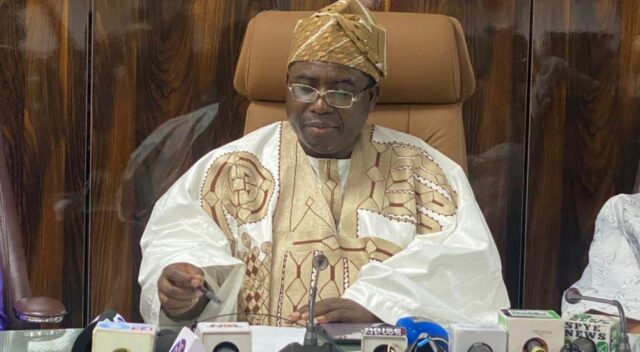
INEC Chairman Prof. Joash Amupitan

The Independent National Electoral Commission (INEC) has unveiled the timetable for Nigeria’s 2027 general elections while announcing sweeping procurement reforms aimed at strengthening transparency, efficiency, and public trust in the electoral process.

The Commission fixed Saturday, January 16, 2027, for the Presidential and National Assembly elections, while Governorship and State Assembly polls will hold on Saturday, February 6, 2027. The announcement was made during a high-level capacity building workshop for National Electoral Commissioners and senior management staff held in Lagos in partnership with the Konrad-Adenauer-Stiftung (KAS).

Declaring the workshop open on behalf of the Chairman, Prof. Joash O. Amupitan, SAN, National Commissioner Mrs. May Agbamuche-Mbu described the engagement as a critical milestone in INEC’s ongoing reform agenda. She said the Commission is focused not only on conducting elections but also on “safeguarding the entire democratic ecosystem through systems that are transparent, accountable, and resilient.”

In his address, Prof. Amupitan underscored the urgency of institutional reforms, noting that the Commission is “159 days into” his tenure at a time he described as pivotal in Nigeria’s democratic evolution. He emphasized that electoral credibility must be anchored on practical systems rather than theoretical commitments.

“My primary mandate, and indeed our collective burden, is to ensure that the electoral architecture of Nigeria is not just robust in theory but strong in practice,” he said. “We must move beyond the rhetoric of reform to the reality of implementation.”
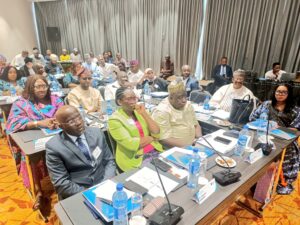
Participants at the event.

The INEC Chairman identified procurement as a central but often overlooked pillar of credible elections, describing it as the “invisible architecture” that underpins successful electoral outcomes. According to him, failures in procurement can erode public trust even before voting begins.

“When procurement is handled with integrity, it becomes the bedrock of public confidence. When it is compromised, it becomes the fault line through which trust collapses,” Amupitan stated. “Our responsibility is not limited to election day activities. It encompasses the entire electoral value chain—from planning and logistics to procurement and deployment.”

He also highlighted the implications of the Electoral Act 2026, particularly the amendment reducing the statutory notice period for elections from 360 to 300 days. The compressed timeline, he said, demands greater efficiency and precision from the Commission.

“This compressed timeline is not a challenge to be lamented but a reality to be mastered,” he said. “It requires us to work with the efficiency of a well-calibrated machine… There is no room for delay, no margin for error, and no excuse for complacency.”

Amupitan explained that the early release of the election timetable was designed to provide certainty for stakeholders, including political parties, candidates, and security agencies, while allowing sufficient time for procurement, logistics, and training.

“Transparency begins with certainty,” he noted. “By releasing this timetable well in advance, we are sending a clear signal that INEC is prepared… and that we intend to conduct an election that meets the highest standards of credibility and professionalism.”

The workshop also featured contributions from development partners and key government agencies. The Resident Representative of KAS in Nigeria, Mr. Tobias Ruettershoff, emphasized that procurement plays a decisive role in electoral integrity, warning that weak systems can undermine even well-conducted elections.

“The credibility of elections does not begin on election day,” he said. “It begins long before with planning, logistics and administration… If procurement is transparent and efficient, it strengthens the integrity of the entire electoral process.”

In a keynote address, the Director-General of the Bureau of Public Procurement, Dr. Adebowale Adekunle, described procurement as the “hidden engine of electoral integrity,” outlining reforms aimed at boosting transparency, competition, and digital transformation. He disclosed that ongoing reforms have already delivered savings exceeding ₦1.1 trillion and led to the certification of more than 2,700 procurement professionals.

Adekunle warned of critical risks in electoral procurement, including overreliance on single vendors and global supply chain disruptions, stressing that such vulnerabilities could undermine democratic processes.

“A resilient democracy must never outsource its sovereignty,” he said, cautioning against excessive dependence on individual suppliers.

He further noted that disruptions in global supply chains—from geopolitical tensions to technological shortages—could delay the delivery of critical election materials. To mitigate these risks, he advocated early procurement planning, supplier diversification, and the adoption of end-to-end electronic procurement systems.

“Every election is a test not only of the electoral body but of the systems that support it,” Adekunle added. “When procurement is done right, it strengthens trust in democracy. When it fails, the consequences can be profound.”
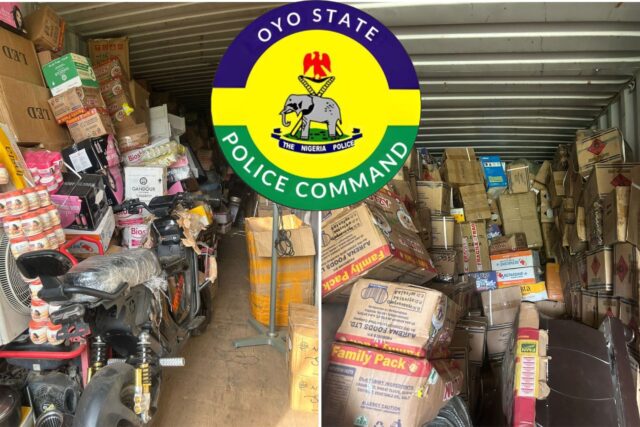

₦100m Robbery Syndicate Crushed, 10 Nabbed in Ibadan Hotel Raid

Loots recovered by the Oyo State Police Command.

Operatives of the Oyo State Police Command have dismantled a notorious armed robbery syndicate operating across multiple states, arresting 10 suspects and recovering stolen items valued at approximately ₦100 million in Ibadan.

The breakthrough followed weeks of intelligence-led surveillance by police operatives, who tracked the criminal network to a hideout within the Genesis Hotel area in the Challenge axis of the Oyo State capital. According to the Command, the gang was known for hijacking cargo containers at gunpoint and diverting high-value goods.

Police authorities disclosed that the suspects were apprehended at the scene without incident. Those arrested include Mukaila Omorayo, Adekanbi Adesola, Ahmed Oderinlo, Samuel Omoseyin, Ramon Saheed, Monilola Ajayi, Akanbi Bisi, Wasilat Abdullahi, Bolaji Tanimola, and Adeola Oyesina.

A significant cache of stolen goods was recovered during the operation, underscoring the scale of the syndicate’s activities. The items include 40 air conditioners, 10 washing machines, an electric motorcycle, trailer spare parts, LED lights, cutting machines, furniture materials, hair products, and assorted consumer goods. Police estimate the total value of the recovered exhibits at ₦100 million.

Investigators revealed that the suspects have made confessional statements detailing their roles within the syndicate, with their testimonies now aiding efforts to track down other accomplices still at large. Authorities say the operation highlights the growing sophistication of organized criminal groups and the importance of sustained intelligence gathering.

The Commissioner of Police in Oyo State, CP Abimbola Ayodeji Olugbenga, commended the operatives for what he described as professionalism, diligence, and resilience in executing the operation successfully. He also acknowledged the role of public cooperation, noting that credible intelligence from residents continues to play a critical role in crime detection and prevention.

The Command further confirmed that the management of the hotel where the suspects were arrested has been invited for questioning as part of ongoing investigations. Police say preliminary findings indicate that criminal elements often use hotels as temporary bases to plan and execute operations.

Reaffirming the Command’s commitment to public safety, the Commissioner urged residents to remain vigilant and continue supporting law enforcement agencies with timely information. He added that the suspects will be formally charged to court upon the conclusion of investigations.

Ondo Police Arrest Three in ₦632,000 POS Fraud, Hunt Accomplice

The Ondo State Police Command has dismantled a suspected Point-of-Sale fraud syndicate in Akure, arresting three suspects linked to the theft of over ₦600,000 from a local trader through a deceptive device-swapping scheme.

Police authorities said the case began on March 19, 2026, when a trader, Mrs. Obadaye Omotola, reported that a group of individuals visited her shop in Ire-Akari under the pretext of purchasing goods. According to the Command, the suspects executed a carefully coordinated distraction, during which they allegedly swapped her MoniePoint POS machine with another device without her knowledge.

Investigations revealed that the suspects had also observed and memorised the victim’s Personal Identification Number during the transaction. Using the stolen device, they reportedly gained unauthorized access to her account and transferred a total of ₦632,000 into accounts under their control shortly after leaving the premises.

Acting swiftly on the complaint, detectives deployed intelligence-led operations that led to the arrest of three suspects identified as Adeyemo Joshua, Opemiposi Olawale, and Oluwashola Blessing. Police confirmed that one additional accomplice remains at large, with efforts ongoing to track and apprehend the individual.

The Command disclosed that the suspects have made confessional statements during interrogation, providing useful leads to investigators. Authorities added that steps are being taken to recover the stolen funds and determine whether the suspects are part of a wider fraud network operating within or beyond the state.

The suspects have since been arraigned in court and remanded in a correctional facility pending further proceedings.

Reacting to the development, the Commissioner of Police, Adebowale Lawal, reaffirmed the Command’s commitment to tackling financial crimes and protecting residents from emerging fraud tactics. He also commended the leadership of the Inspector-General of Police, Olatunji Rilwan Disu, noting that his strategic focus on financial crime policing has strengthened operational outcomes across commands.

Police authorities urged traders and POS operators to exercise heightened vigilance during transactions, warning that fraudsters are increasingly adopting sophisticated distraction techniques to gain access to sensitive financial information.

The Command assured residents that it remains resolute in its mandate to safeguard lives and property, adding that all individuals involved in criminal activities will be identified and brought to justice. Members of the public were also encouraged to support law enforcement efforts by providing timely and credible information to aid crime prevention and detection.

NCC Orders Telcos to Compensate Nigerians for Poor Network

The Nigerian Communications Commission (NCC) has directed mobile network operators to compensate subscribers who suffer poor network services that fall below approved Quality of Service (QoS) standards, in a significant regulatory move aimed at strengthening consumer protection in Nigeria’s telecom sector.

In a statement issued by the Commission’s Head of Public Affairs, Nnena Ukoha, the regulator said affected subscribers will receive compensation primarily in the form of airtime credits. The credits, according to the NCC, will be calculated based on users’ average spending patterns and their presence in specific Local Government Areas where service disruptions are recorded.

The Commission stressed that the directive is rooted in its commitment to safeguarding consumer rights and ensuring accountability among service providers. Ukoha stated that “consumers should not bear the burden of service failures when operators fall short of required performance benchmarks,” reinforcing the regulator’s stance on service delivery obligations.

The NCC noted that telecommunications services have become critical infrastructure underpinning economic activity, social interaction, and access to digital opportunities. It warned that persistent poor network quality not only inconveniences users but also disrupts productivity and commercial operations across the country.

In a further push to address systemic challenges, the Commission extended its directive to infrastructure providers, mandating tower companies to reinvest fines imposed on them into critical upgrades. These include the expansion and reinforcement of network infrastructure such as telecom masts, with clear expectations of measurable improvements in service delivery.

The regulator also underscored the need for sustained investment across the telecom ecosystem, highlighting network resilience, capacity expansion, and infrastructure development as key pillars for delivering reliable services. It maintained that strengthening these areas is essential to supporting Nigeria’s fast-growing digital economy.

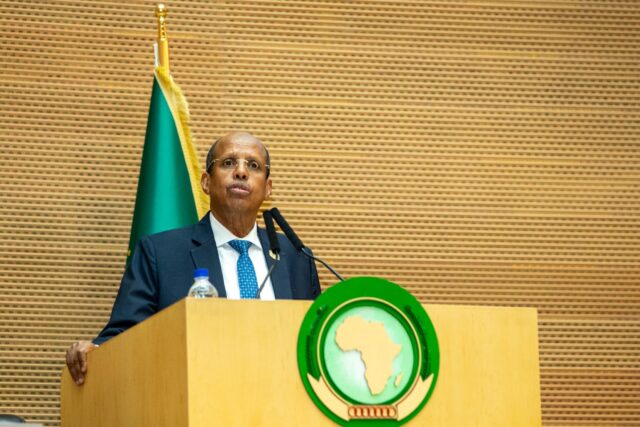
AU Chief Raises Alarm Over Somalia Tensions, Urges Dialogue to Avert Escalation

The Chairperson of the African Union Commission, Mahmoud Ali Youssouf, has called for urgent dialogue and restraint among political stakeholders in Somalia amid rising tensions in the country’s South West State.

In a statement issued as the situation continues to evolve, the AU chief said he is “closely following developments in South West State of the Federal Republic of Somalia,” warning that the growing friction could undermine national stability and security if not carefully managed.

Youssouf emphasized the importance of existing political mechanisms, particularly the National Consultative Council, describing it as a critical platform for inclusive engagement and consensus-building. He urged all parties to “make constructive use of this platform to resolve differences peacefully,” stressing that dialogue remains the most viable pathway to de-escalation.

Highlighting the delicate balance between Somalia’s federal government and its constituent states, the AU Chairperson underscored that disagreements must be handled through cooperation rather than confrontation. He noted that “differences between the Federal Government and Federal Member States should be addressed through dialogue,” pointing to the broader need for unity in safeguarding the country’s fragile progress.

The statement also expressed concern over the potential humanitarian and security implications of the tensions, cautioning that any escalation could further strain an already complex environment. Youssouf therefore called on all actors to “exercise maximum restraint and avoid actions that could lead to escalation.”

Reaffirming the continental body’s commitment, the African Union reiterated its full support for Somalia’s peace, stability, and ongoing state-building efforts. The Commission also pledged its readiness to facilitate dialogue and reconciliation initiatives aimed at preserving national cohesion.

Plateau Govt Imposes 48-Hour Curfew in Jos After Deadly Attack

The Plateau State Government has imposed a 48-hour curfew in Jos North Local Government Area following a deadly security incident in Gari Ya Waye community, Angwan Rukuba, that left several people dead and others injured.

The curfew, which takes immediate effect from midnight of March 29 and will run until April 1, 2026, was announced as part of emergency measures to restore order and prevent further escalation of violence in the area.

In a statement issued on Sunday, the government said the decision was taken in collaboration with security agencies after the “tragic security incident” that resulted in loss of lives and multiple injuries. Authorities have not yet released an official casualty figure, but confirmed that several victims are currently receiving treatment for varying degrees of injuries.

Governor Caleb Manasseh Mutfwang strongly condemned the attack, describing it as “barbaric and unprovoked,” and assured residents that security forces have been mobilised to track down those responsible. The government reiterated its commitment to ensuring that perpetrators are apprehended and brought to justice.

Announcing the directive, the Commissioner for Information and Communication, Joyce Lohya Ramnap, said the curfew was necessary to stabilise the situation and enable security agencies to conduct thorough operations in the affected communities.

Residents of Jos North have been urged to remain calm and law-abiding, while cooperating fully with security personnel. The government also called on members of the public to provide any useful information that could assist ongoing investigations.

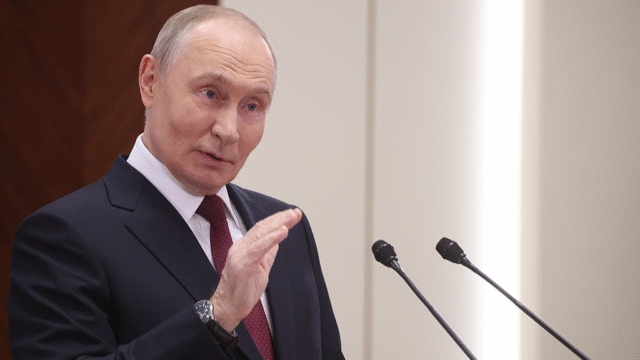
Russia Summons UK Envoy as Spy Row Deepens After British Diplomat Expulsion

Russia Presiden Vladimir Putin

Tensions between Russia and the United Kingdom have escalated further after Moscow summoned Britain’s Chargé d’Affaires, Danae Dholakia, in the latest diplomatic fallout linked to the expulsion of a British embassy official accused of espionage.

The Russian Foreign Ministry confirmed that the British envoy was called in for consultations, a move widely seen as part of a broader pattern of retaliatory diplomacy between the two countries. While officials did not immediately disclose detailed reasons for the latest summons, it follows closely on the heels of Moscow’s decision to expel British diplomat Albertus Gerhardus Janse van Rensburg over alleged intelligence activities.

According to Russian authorities, the expelled diplomat, who served as a second secretary at the British Embassy in Moscow, was accused of engaging in “intelligence and subversive activities that threaten the security” of the Russian Federation. The Federal Security Service (FSB) further claimed that the diplomat attempted to obtain sensitive economic information through informal contacts, allegations that have intensified the already strained relations between the two nations.

In response to such actions, Moscow has maintained a hardline stance. The Russian Foreign Ministry previously stressed that it would not “tolerate the activities of undeclared British intelligence officers” on its territory and warned of reciprocal measures should the situation escalate further.

The summoning of Dholakia reflects a familiar diplomatic script that has played out repeatedly since the onset of the Ukraine conflict, with both countries engaging in tit-for-tat expulsions of embassy staff. In earlier incidents, British officials dismissed similar accusations as unfounded, describing them as “malicious and baseless” claims that undermine normal diplomatic engagement.

NRC Arrests Suspected Track Vandal in Lagos, Court Remands Him in Custody

The Nigerian Railway Corporation (NRC) has announced a fresh breakthrough in its ongoing clampdown on railway vandalism, following the arrest and prosecution of a suspected track vandal in Lagos.

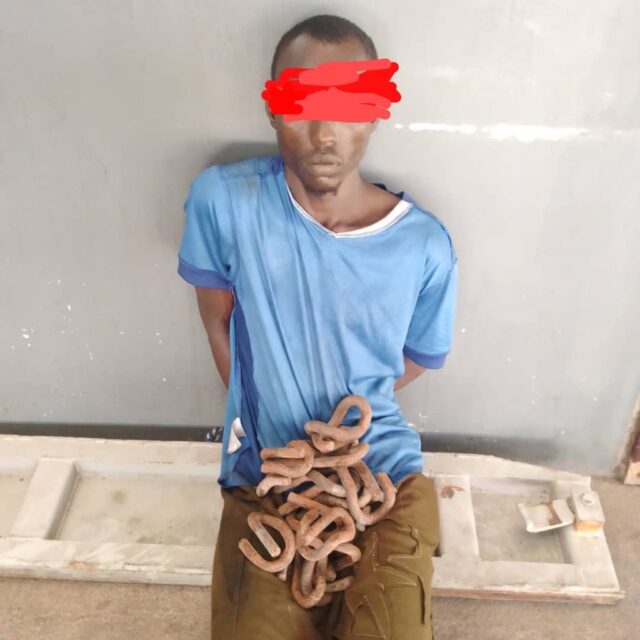
In a statement issued on Sunday, the corporation disclosed that the suspect, Bashiru Hafeez, 32, was apprehended on Thursday, March 26, 2026, by security personnel attached to the Mobolaji Johnson Train Station in Ebute-Metta during a routine patrol. According to the NRC, the arrest was carried out by operatives of Multi Eye Security Services, who are responsible for safeguarding critical rail infrastructure within the corridor.

The suspect was reportedly found in possession of fifteen pandrol clips—iron rail fasteners essential for maintaining track stability—believed to have been illegally removed from the narrow-gauge rail line at Alagomeji. Authorities warned that the removal of such components poses significant safety risks, including the possibility of train derailments.

Following his arrest, Hafeez was handed over to the Nigerian Railway Police Command for further investigation and prosecution. He was subsequently arraigned before a competent court in Lagos, where he was remanded at the Ikoyi Correctional Centre pending further hearing. The case has been adjourned to April 24, 2026.

Reacting to the development, the Managing Director and Chief Executive Officer of the NRC, Kayode Opeifa, reiterated the corporation’s zero-tolerance stance on railway vandalism. He described such acts as economic sabotage capable of endangering lives and undermining national infrastructure.

Opeifa commended the vigilance and swift response of the security personnel involved in the arrest and assured the public that the NRC would continue to intensify efforts to identify, apprehend, and prosecute individuals and syndicates responsible for the destruction and theft of railway assets.

He further warned that anyone found culpable of vandalising railway infrastructure or dealing in stolen rail materials would face the full weight of the law.

The corporation also called on members of the public to remain vigilant and report suspicious activities around railway corridors, stressing that the rail system remains a critical national asset that must be protected collectively.

The ‘Italian Job’ Goes Sweet: 12 Tonnes of KitKat Vanish in Daring Italy–Poland Heist

A major cargo theft dubbed Europe’s “Italian Job” has stunned the confectionery industry after more than 12 tonnes of KitKat chocolate bars were stolen while being transported from Italy to Poland, in what authorities describe as one of the most audacious food heists in recent years.

The shipment, belonging to Swiss food giant Nestlé, disappeared en route after leaving a production facility in central Italy, with both the truck and its cargo still unaccounted for days after the incident. The stolen consignment reportedly contained approximately 413,000 bars, many of them part of a new limited-edition range intended for distribution across European markets.

In a statement, the company confirmed the scale of the loss, noting that “the vehicle and its load are still nowhere to be found,” highlighting the precision and planning behind what analysts are calling a textbook logistics heist reminiscent of a modern “Italian Job.”

Nestlé attempted to strike a measured tone despite the scale of the theft, even injecting humour into the situation. “We’ve always encouraged people to have a break with KitKat, but it seems thieves have taken the message too literally and made a break with more than 12 tons of our chocolate,” a company spokesperson said.

Beyond the light-hearted remark, the company underscored a more serious concern: the growing sophistication of cargo theft across global supply chains. “Whilst we appreciate the criminals’ exceptional taste, the fact remains that cargo theft is an escalating issue for businesses of all sizes,” the statement added, warning that increasingly advanced criminal methods are targeting high-value goods in transit.

Investigations are currently underway in collaboration with law enforcement agencies and logistics partners across Europe, though officials have yet to determine exactly where the truck was intercepted or how the operation was executed. Industry observers suggest the scale and coordination involved point to an organised network with detailed knowledge of transport routes and shipment schedules.

Nestlé has also warned that the stolen chocolate could surface in unofficial sales channels across Europe, urging retailers and consumers to remain vigilant. Each bar carries a unique batch code, allowing authorities to track and identify products linked to the heist if they reappear on the market.

While the company insists there are no safety concerns and that overall supply remains stable, the timing of the theft—just ahead of peak seasonal demand—has raised fears of localized shortages in some markets.

NDLEA Busts Cocaine Hidden in Dry Fish Shipment

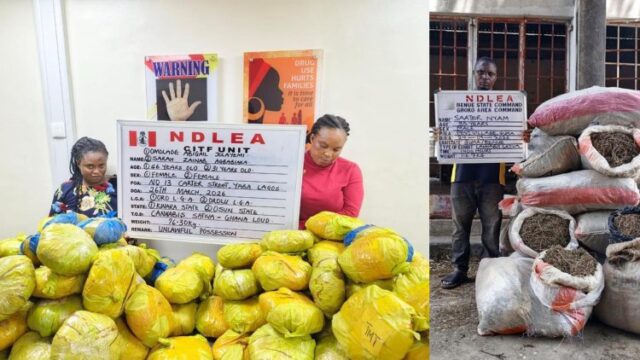
Nigeria’s anti-narcotics agency, the National Drug Law Enforcement Agency (NDLEA), has intercepted a large consignment of cocaine ingeniously concealed inside the heads of dry stock fish, exposing a new layer of sophistication in international drug trafficking operations.

The seizure, disclosed in an official statement by the agency, followed a targeted operation based on intelligence tracking suspicious cargo movements. NDLEA operatives discovered that traffickers had hollowed out the heads of dried fish and stuffed them with cocaine, a method designed to evade conventional detection systems at ports and border points.

According to the agency, the consignment was intercepted during a routine inspection, where officers identified irregularities that prompted a more thorough search. The discovery underscores growing concerns over evolving concealment techniques used by drug cartels seeking to infiltrate Nigeria’s borders.

Chairman of the NDLEA, Buba Marwa, reiterated the agency’s resolve to stay ahead of traffickers through intelligence-led operations and enhanced surveillance. He noted that the agency remains committed to dismantling drug networks and preventing illicit substances from circulating within the country.

The NDLEA emphasized that the operation forms part of a broader crackdown on drug trafficking syndicates exploiting unconventional methods to smuggle narcotics. Investigations are ongoing to identify and apprehend all individuals connected to the shipment, while further forensic analysis is being conducted on the seized substances.

The agency also urged the public to remain vigilant and support ongoing efforts to combat drug trafficking, stressing that such criminal activities pose serious threats to public health, national security, and socio-economic stability.

EDITOR PICKS

Recent Posts