Messi Hat-Trick Powers Argentina Past Algeria as World Cup Legend Equals Klose’s All-Time Scoring Record
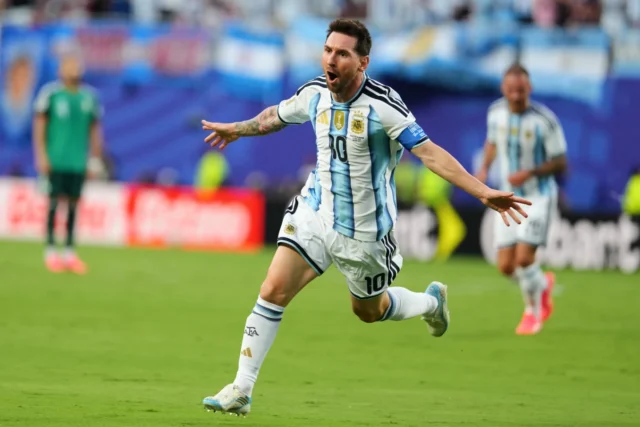
Lionel Messi turned back the clock with a breathtaking hat-trick as defending champions Argentina opened their FIFA World Cup 2026 campaign in emphatic fashion, defeating Algeria 3-0 at a packed Arrowhead Stadium on Tuesday night.
The 38-year-old superstar produced a masterclass in front of thousands of jubilant Argentine supporters, scoring all three goals to match Miroslav Klose’s all-time World Cup scoring record of 16 goals and further cement his status as one of football’s greatest-ever players.
Messi wasted little time making his mark on the tournament, opening the scoring in the early minutes after latching onto a clever pass from Inter Miami teammate Rodrigo De Paul. The Argentine captain doubled the lead shortly after halftime when he reacted quickest to a loose ball in the penalty area before completing his first-ever World Cup hat-trick with a clinical finish moments before being substituted to a standing ovation.
The victory marked a perfect start to Argentina’s title defence and came exactly 20 years after Messi made his World Cup debut against Serbia and Montenegro, a match in which he also found the net.
Argentina manager Lionel Scaloni was left searching for words after another memorable performance from his captain.
“At a loss for words about Leo. What can I say?” Scaloni said. “He’s incredible.”
The three-goal display was the 61st hat-trick of Messi’s remarkable career and his 11th for the Argentine national team. It also extended his scoring streak to five consecutive World Cup matches.
Reflecting on his latest milestone, Messi expressed gratitude for the stage of his career he now finds himself in.
“It makes me very happy to have lived through everything that came my way. What I’m living through now is the cherry on top,” Messi said. “I’m very happy and grateful for this wonderful group. I enjoy it so much.”
The historic night saw Messi become only the second player to score in five different World Cup tournaments, joining long-time rival Cristiano Ronaldo in an exclusive club. His 16th World Cup goal moved him level with German legend Klose at the summit of the tournament’s all-time scoring chart, with the Argentine now strongly favoured to claim the record outright in the coming weeks.
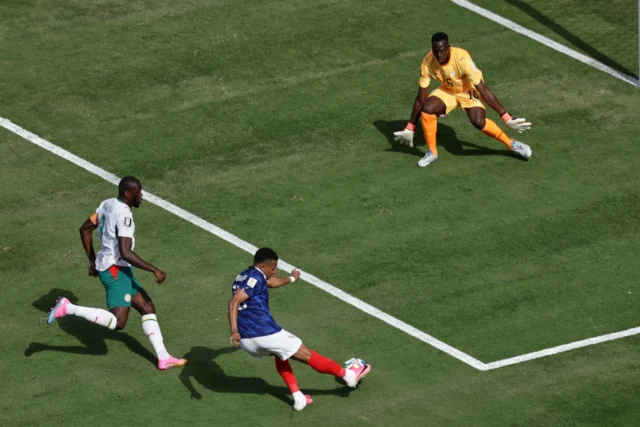
Messi’s achievement overshadowed impressive performances elsewhere in the tournament on Tuesday. France forward Kylian Mbappé scored twice in his country’s 3-1 victory over Senegal to move onto 14 World Cup goals, while Norway striker Erling Haaland also netted twice in a 4-1 win over Iraq.
Haaland could not hide his admiration for the Argentine icon, posting a simple but emphatic reaction after the match.
“Messi is a madman,” the Norwegian striker said.
Despite concerns over a minor hamstring injury sustained during his club campaign with Inter Miami, Messi showed no signs of discomfort and looked sharp throughout the contest.
“When I’m in good shape,” Messi said, “I give it my all.”
Tuesday’s appearance was another landmark moment in the legendary forward’s career, representing his 200th international match for Argentina since making his senior debut in 2005 at the age of 18. Only Portugal’s Cristiano Ronaldo and Kuwait’s Bader Al-Mutawa have made more appearances in men’s international football.
The atmosphere around Kansas City reflected the growing excitement surrounding Argentina’s presence at the tournament. Thousands of supporters wearing Messi’s famous No. 10 jersey filled the stadium hours before kickoff, while fan events across the city celebrated the arrival of the reigning world champions.
Rodrigo De Paul, who provided the assist for Messi’s opening goal, highlighted the influence the captain continues to have on the squad beyond his goals.
“It’s an advantage to have Leo because of how he handles the group and pushes it forward. Because of who he is,” De Paul said. “He doesn’t care about individual records. He prioritizes the group, and for us it’s incredible.”
With Argentina beginning their World Cup title defence in dominant fashion and Messi showing no signs of slowing down, the football world is now watching to see how much further the eight-time Ballon d’Or winner can rewrite the record books before the tournament concludes.