Fuel Price Increases in Canada

Petrol prices across Toronto, ON., Canada are expected to rise again heading into the weekend, continuing a recent upward trend that analysts say is being driven by volatility in global oil markets and growing geopolitical tensions, CP24 reports.

According to fuel price analyst Dan McTeague, the president of Canadians for Affordable Energy, drivers in Toronto could see prices climb by another two cents per litre starting Friday. McTeague said pump prices are forecast to increase to about 148.9 cents per litre, adding to a series of recent price hikes across the Greater Toronto Area.

The increase follows several price adjustments earlier in the week, with petrol already rising in stages in recent days. Data tracking fuel prices shows the average cost reached about 144.9 cents per litre on March 5, after earlier increases pushed prices steadily higher from the low-130-cent range recorded in late February.

Energy analysts say the renewed pressure on fuel prices is tied largely to global oil market instability. Ongoing geopolitical tensions in the Middle East have unsettled energy markets and driven crude prices upward, which typically filters through to higher pump prices for consumers in Canada and elsewhere.

McTeague noted that fluctuations in crude oil prices often translate quickly into higher retail petrol prices, particularly when markets anticipate potential supply disruptions. Even modest increases in global oil benchmarks can ripple through refining and distribution costs, eventually affecting prices at local gas stations.

For motorists in Toronto, the latest increase adds to concerns about rising transportation costs, especially as drivers head into the spring season when fuel demand typically begins to climb. Analysts warn that further increases are possible if crude prices continue to trend upward or if geopolitical tensions persist in key energy-producing regions.

Despite the latest hike, analysts say petrol prices remain below some of the peaks recorded in previous years, when global supply disruptions pushed pump prices significantly higher. Still, the renewed upward movement signals that fuel costs remain vulnerable to external shocks, leaving drivers and policymakers closely watching developments in global energy markets.

Energy Prices Spike as Global Supply Disruptions Reverberate Across Africa, Threatening Higher Fuel Costs

Energy markets around the world surged this week after escalating conflict in the Middle East disrupted tanker traffic and rattled major oil and gas producers, with knock-on effects already being felt in Nigeria and other African economies that rely heavily on crude exports and imported fuels.

On Monday, international benchmark oil prices jumped sharply, with Brent crude briefly rising above $80 per barrel amid concerns that supply routes through the Strait of Hormuz — a chokepoint for around a fifth of global oil flows — are effectively stalled following strikes and retaliatory attacks by the United States, Israel and Iran. The surge in prices followed renewed attacks in the Gulf that have triggered tanker disruptions and facility shutdowns, including temporary halts to liquefied natural gas production by major suppliers.

Market analysts warned that the crisis has added a “war premium” to crude markets as shipping through the strait — long a strategic artery for global energy trade — has slowed considerably in recent days. Prices for U.S. crude also climbed, reflecting heightened risk pricing and fears that extended disruptions could push Brent well above $90 per barrel or even beyond $100 if supply routes remain constrained.

The energy price shock has immediate implications for African producers and consumers alike. Nigeria — Africa’s largest crude exporter — has seen its oil revenue prospects strengthen as Brent benchmarks rise, offering the potential for increased foreign exchange earnings just as global markets tighten. Analysts cited by Bloomberg and local media report that Brent trading close to the $80 mark could yield a short-term fiscal windfall for Nigeria, with analysts forecasting even higher prices if the crisis persists.

However, the rising crude prices also threaten higher fuel costs across Nigeria and other African nations that rely on imported refined products. Downstream operators and energy experts in Nigeria warned that if international crude prices climb above $90 per barrel, local petrol and diesel prices could surge again — potentially undoing recent moderate declines achieved through adjustments by domestic refineries such as Dangote.

Other African oil producing countries, including Angola and Algeria, are also tracking the situation closely, as extended disruptions in the Gulf could shift global trade patterns and redirect demand flows toward Atlantic Basin supplies. With tanker traffic through the Gulf slowed or suspended and shipowners rerouting vessels around Africa’s Cape of Good Hope — adding weeks to transit times — logistics costs are rising sharply.

Beyond crude, natural gas prices have also surged amid reports that QatarEnergy suspended liquefied natural gas output after facilities were affected by regional hostilities. European and Asian gas benchmarks jumped accordingly, raising concerns about energy affordability for consumers and industries across the continent and in gas-importing African economies.

Analysts say the wider effects of the supply disruption could exacerbate inflationary pressures already felt in many parts of Africa, where exchange rates and import costs are closely tied to energy price swings. Central banks and governments may find themselves under renewed pressure to address rising living costs and potential slowdowns in economic growth if energy prices remain elevated.

While some OPEC+ producers agreed recently to modest increases in production in a bid to soothe markets, analysts note that the effectiveness of such moves is limited if tanker routes remain constrained and geopolitical uncertainty persists.

As the Iran-U.S. conflict unfolds, global markets remain on edge, with analysts and investors watching closely for signals on the duration of supply disruptions and the potential for further escalation. For African oil exporters like Nigeria, the current price spike offers both opportunity and risk — stronger revenues on one hand, and the threat of costlier fuels and broader economic pressures on the other.

UAE Intercepts Iranian Missiles, Drones as Three Killed in Escalating Regional Tensions

The United Arab Emirates said its air defence systems successfully intercepted multiple ballistic missiles, cruise missiles and drones launched toward the country, as regional tensions sharply escalated following what officials described as an Iranian attack.

In a statement, the UAE Ministry of Defence confirmed that its air defences “successfully dealt with 9 ballistic missiles, 6 cruise missiles and 148 drones” on Sunday. The ministry added that since the start of the Iranian attack, a total of 174 ballistic missiles had been detected heading toward the country. Of those, 161 were destroyed, while 13 fell into the sea.

The ministry further reported that 689 Iranian drones were tracked, with 645 intercepted. Forty-four drones fell within the country’s territory. It also said eight cruise missiles were detected and destroyed. Despite the large-scale interceptions, officials acknowledged that some projectiles caused collateral damage.

According to the statement, the attacks resulted in three deaths and 68 minor injuries. The ministry said the interceptions and aerial engagements led to “minor to moderate material damage in a number of civilian sites.”

Addressing reports of loud explosions heard across various parts of the country, the ministry clarified that “the sounds heard in different areas of the country are the result of air defence systems intercepting ballistic missiles and fighter jets engaging drones and cruise missiles.” It stressed that these defensive actions were carried out to neutralise incoming threats.

The Ministry of Defence strongly condemned the strikes, describing them as “a blatant aggression and a flagrant violation of national sovereignty and international law.” It stated that the UAE “reserves its full right to respond to this escalation and to take all necessary measures to protect its territory, its people and residents,” adding that such measures would ensure the preservation of the country’s sovereignty, security and stability while safeguarding national interests and capabilities.

Reaffirming its operational readiness, the ministry said it remains fully prepared to confront any threats and is taking “all necessary measures to decisively address anything that aims to destabilise the country’s security and stability.” It emphasised that “the safety of citizens, residents and visitors represents a top priority that cannot be compromised.”

The ministry also urged the public to rely on official sources for updates and to avoid circulating rumours or unverified information as the situation develops.

The developments mark one of the most significant direct military escalations involving the UAE in recent years, heightening concerns over broader instability in the Gulf region. Authorities have not yet provided further details on the origin points of the launches or the timeline for any potential retaliatory measures, but officials indicated that security forces remain on high alert.

Troops Neutralise Two Suspected Terrorists, Recover AK-47 in Benue Operation

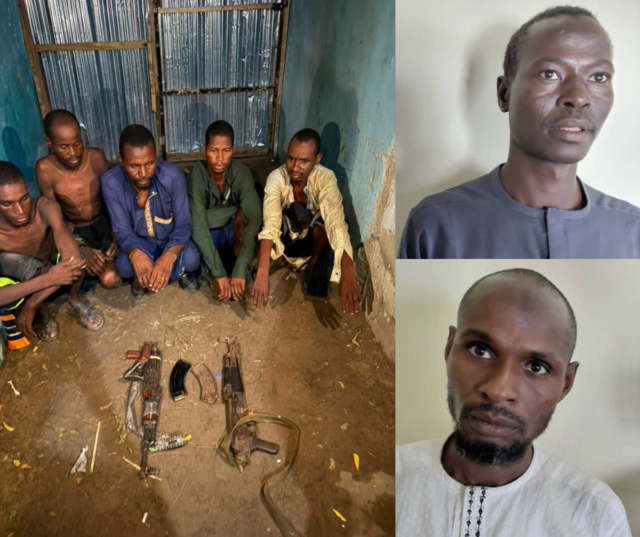
Troops under Operation WHIRL STROKE have neutralised two suspected terrorists and recovered an automatic rifle during a security operation in Amafu Iwer area of Benue State, military authorities have confirmed.

The operation, carried out by Sector 1 troops, took place along the Katsina-Ala–Zaki Biam Road as part of what the military described as a combined confidence-building and fighting patrol aimed at flushing out criminal elements from the state. The action followed what officials said was credible intelligence supplied by local residents regarding the movement of suspected bandits in the area.

According to the Acting Media Information Officer of the operation, Lieutenant Ahmad Zubairu Zubairu, the troops swiftly mobilised to the identified location in collaboration with operatives of the Benue State Civil Protection Guard. On arrival, they made contact with the suspected terrorists, leading to a firefight.

“In the ensuing engagement, two of the terrorists were neutralised, while others fled into the surrounding bush with possible gunshot wounds,” the statement said. Troops subsequently combed the area and recovered one AK-47 rifle, one AK-47 magazine, eight rounds of 7.62mm special ammunition and a pair of green camouflage uniform abandoned by the fleeing suspects.

The Force Commander of Operation WHIRL STROKE, Major General Moses Gara, commended the troops for what he described as their gallantry and professionalism. He said their “proactive posture and commitment to duty continue to yield positive results in the fight against terrorism and banditry.”

Gara also praised members of the local community for providing actionable intelligence that led to the operation’s success, noting that cooperation between civilians and security agencies remains crucial. He encouraged residents to sustain their collaboration with the military and other security outfits, assuring them of the armed forces’ resolve to safeguard lives and property.

The Force Commander further urged troops to maintain strong synergy with other security agencies and relevant stakeholders within the Joint Operations Area, stressing that collective efforts are essential to achieving lasting peace and stability across Benue State and its environs.

Operation WHIRL STROKE, a joint military task force, has intensified operations in recent months amid ongoing security challenges in parts of Benue and neighbouring states, as authorities continue efforts to curb banditry and terrorism in the region.

Michael B. Jordan Triumphs at Actor Awards, Harrison Ford Honoured

Michael B. Jordan accepts the award for outstanding performance by a male actor in a leading role for ‘Sinners’ during the 32nd Annual Actor Awards on Sunday in Los Angeles. Credit: AP Photo/Chris Pizzello

In a night that marked both celebration and surprise at the 32nd Actor Awards, Michael B. Jordan claimed one of the most significant accolades of his career, winning Outstanding Performance by a Male Actor in a Leading Role for his dual portrayal in Sinners, while Hollywood legend Harrison Ford received the prestigious Lifetime Achievement Award during Sunday’s ceremony in Los Angeles.

The Actor Awards, formerly known as the Screen Actors Guild Awards, were presented on March 1 at the Shrine Auditorium and Expo Hall and streamed live on Netflix. The annual event, a key precursor to the Oscars, drew top talent from film and television and was hosted once again by Kristen Bell.

Harrison Ford poses with the lifetime achievement award during the 32nd Annual Actor Awards on Sunday in Los Angeles. (Photo by Jordan Strauss/Invision/AP)

Jordan’s performance in Sinners — in which he plays twin brothers in a genre-blending vampire epic — earned widespread acclaim throughout awards season, but his victory at the Actor Awards stood out as a major moment amid stiff competition. After his name was announced, Jordan was met with a standing ovation from the audience. The win adds to a successful season that has included nominations at the Golden Globes, Critics Choice Awards and NAACP Image Awards, where Sinners also took home the Outstanding Ensemble Cast prize.

Jordan’s victory was also seen as a potential indicator ahead of the Academy Awards, which are scheduled for mid-March. Sinners — buoyed by its Actor Awards success, especially in the lead acting category and ensemble recognition — is now widely viewed as a strong contender in the Oscar race.

While Sinners enjoyed a strong night, the ceremony also honoured acting legends and rising stars across genres. Among the highlights was the attendance of Harrison Ford, who was celebrated with the Lifetime Achievement Award in recognition of his enduring contribution to cinema. Ford’s award was presented by fellow actor Woody Harrelson, who spoke warmly of the 83-year-old icon’s long career. Ford, visibly moved during his acceptance speech, described the recognition as “very encouraging,” acknowledging his fortunate journey in an industry defined by competition and evolution.

The broader slate of winners reflected a mix of dramatic and comedic achievements. Jessie Buckley secured the Outstanding Female Actor in a Leading Role award for Hamnet, and television titles such as The Studio and The Pitt also won ensemble and individual honours.

For Jordan, the Actor Awards mark not only a personal triumph but a defining moment in a career that has steadily built toward leading dramatic roles. For Ford, the evening provided a poignant tribute to decades of iconic performances. As awards season continues toward Hollywood’s biggest night, the outcomes in Los Angeles over the weekend will undoubtedly shape expectations for the Academy Awards and the broader conversation around cinema in 2026.

Iran’s World Cup Slot in Doubt, FIFA Considering Iraq

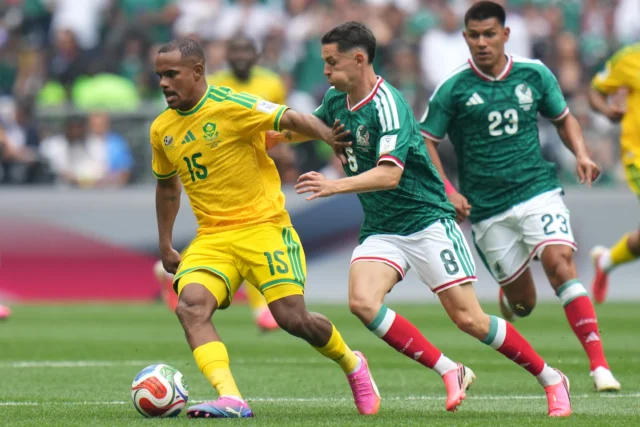
Iran’s place at the 2026 FIFA World Cup — set to be co-hosted by the United States, Canada and Mexico — is under serious threat following a dramatic escalation in Middle East conflict, the president of the Iranian Football Federation has said. The uncertainty comes as political tensions and military action unfold just months before the tournament is scheduled to begin on June 11, raising questions about whether Team Melli will be able to travel to North America and compete.

As reported by AP, remarks carried by Iranian media, Mehdi Taj, head of the Iranian federation, called into question his nation’s ability to participate after recent U.S.- and Israeli-led strikes on Iranian territory that resulted in the deaths of key Iranian officials. The surprise military offensive has ignited fears of broader regional instability and put the future of Iran’s World Cup campaign into limbo. “What is certain is that after this attack, we cannot be expected to look forward to the World Cup with hope,” Taj said, reflecting the grim mood within Iranian football.

Iran qualified for the tournament by topping its Asian qualifying group and is drawn into Group G alongside Belgium, Egypt and New Zealand, with group matches scheduled in Los Angeles and Seattle. However, the geopolitical situation — compounded by longstanding U.S. travel bans on Iranian citizens — casts doubt on whether the squad will be cleared or willing to make the long journey to the host countries.

Taj’s comments come against the backdrop of severe unrest after the attacks, which sparked a series of retaliatory strikes by Iranian forces against U.S. allies in the region. Experts say that even if Iran does not formally withdraw, logistical and security challenges could prove insurmountable, complicating preparations for the prestigious tournament.

FIFA, the world football governing body, has not yet publicly addressed the situation or confirmed whether Iran’s status at the World Cup has changed, but its regulations grant it broad authority to manage unexpected developments, including replacing teams if necessary. Should Iran withdraw or be unable to participate, nations such as Iraq or the United Arab Emirates — next in line from the Asian qualification rankings — have been mentioned as potential replacements.

Beyond the sporting implications, analysts say a withdrawal by Iran could carry significant financial consequences. Under World Cup rules, a team that pulls out after qualifying may be required to return preparation funds and face fines — potentially amounting to millions of dollars — and could even face suspension from future FIFA events.

As the World Cup draw and tournament approach, the situation remains fluid and subject to rapid change. Iran’s football federation has not yet issued a definitive decision on participation, and football authorities globally will be closely watching developments that could reshape one of the sport’s most anticipated events.

Chuqin, Yingsha Crowned Champions In Singapore

China’s table tennis powerhouses Wang Chuqin and Sun Yingsha once again underlined their dominance on the global stage, clinching the men’s and women’s singles titles respectively at the Singapore Smash 2026 Presented by Resorts World Sentosa after 11 days of high-octane action in the Lion City.

Wang Chuqin delivered a commanding performance in the men’s singles final, defeating Chinese Taipei’s Lin Yun-Ju in straight games, 11-3, 11-8, 11-8, 11-9, to claim his second Singapore Smash crown. The victory capped a near-flawless tournament for Wang, who dropped only two games en route to the title.

Roared on by a sell-out crowd, the Chinese star wasted no time asserting control in the final, racing to five consecutive points in the opening game. Lin gradually found his rhythm, but Wang’s relentless pace and precision proved overwhelming as he secured the first game by an eight-point margin. Although Lin showed flashes of brilliance and fought valiantly, especially in the third and fourth games, Wang remained composed under pressure. Even when Lin threatened to extend the contest in the fourth, Wang closed it out with authority, raising his fist in celebration as the arena erupted.

In the women’s singles final, Sun Yingsha triumphed in a gripping all-Chinese showdown against World No.2 Wang Manyu, winning 11-8, 11-9, 7-11, 6-11, 12-10, 11-9 in a contest that lasted one hour and nine minutes. The clash marked the latest chapter in a fierce rivalry that has defined the Women’s Table Tennis (WTT) circuit in recent years.

Sun, the World No.1, entered the match with a commanding head-to-head advantage on the WTT Series, having won 10 of their previous 12 meetings. However, Wang Manyu had claimed victory in their most recent encounter at the China Smash 2025 final, adding extra intrigue to the Singapore decider.

The match began with palpable tension inside The Kallang arena. Despite early aggression from Wang Manyu, it was Sun who edged ahead to take the first two games. Wang responded strongly, leveling the contest at 2-2 and silencing Sun’s supporters, who had begun to raise the noise levels inside the venue.

With momentum swinging, the fifth game proved pivotal. Sun showed resilience and tactical discipline to claw back point by point, eventually edging the crucial set 12-10. In the final game, she surged into a commanding lead before Wang staged a late fightback, narrowing the gap to 9-7 and saving two championship points. But Sun held her nerve to close out the match, sealing her fifth Grand Smash title and her 18th WTT Series crown.

Reflecting on the victory, Sun acknowledged both the quality of the contest and her opponent’s resilience. “We both did our best, as always. Given the close score and the techniques and tactics used, this was a fairly high-level match in women’s table tennis. I led 2-0 at first, but she fought back to level it 2-2. What I did well was that in the fifth set, I came back point by point tenaciously despite being behind, which helped turn the match slightly in my favour,” she said.

The 2026 edition of Singapore Smash once again showcased the depth and intensity of elite table tennis, with Wang Chuqin and Sun Yingsha reaffirming China’s supremacy at the summit of the sport.

Nigeria-Linked Cyber Syndicates Crushed in $4.3m INTERPOL Operation

Nigerian police have emerged as a driving force in one of the continent’s largest crackdowns on online fraud, helping Interpol’s Operation Red Card 2.0 net 651 arrests and recover more than USD 4.3 million from sophisticated cybercrime syndicates.

The eight-week operation, which ran from 8 December 2025 to 30 January 2026, united law enforcement from 16 African nations — Angola, Benin, Cameroon, Côte d’Ivoire, Chad, Gabon, Gambia, Ghana, Kenya, Namibia, Nigeria, Rwanda, Senegal, Uganda, Zambia and Zimbabwe — to dismantle networks behind high-yield investment scams, mobile money fraud and fake loan apps.

Investigators linked the targeted groups to more than USD 45 million in losses suffered by 1,247 victims, most of them across Africa. Alongside the arrests, authorities seized 2,341 devices and took down 1,442 malicious IP addresses, domains and servers.

In Nigeria, the successes were particularly striking. Local police dismantled a high-yield investment fraud ring that preyed on young recruits, using phishing, identity theft, social engineering and fake digital asset schemes to dupe victims. Officers took down more than 1,000 fraudulent social media accounts and seized a luxurious residential property built by the ringleader, which had served as the gang’s operational nerve centre.

In a separate breakthrough, six members of another sophisticated syndicate were arrested for hacking into the internal platform of a major Nigerian telecommunications provider. Using stolen staff credentials, the group siphoned airtime and data bundles before reselling them on the black market, depriving the company and its customers of millions in revenue.

The coordinated effort was supported by INTERPOL’s intelligence-sharing platform and training in digital forensics, under the umbrella of the African Joint Operation against Cybercrime (AFJOC), with funding from the UK’s Foreign, Commonwealth & Development Office and the EU-Council of Europe GLACY-e project. Private-sector partners including the Cybercrime Atlas, Team Cymru, Trend Micro, TRM Labs and Uppsala Security supplied critical threat data.

Neal Jetton, INTERPOL’s Director of the Cybercrime Directorate, praised the cross-border teamwork. “These organized cybercriminal syndicates inflict devastating financial and psychological harm on individuals, businesses and entire communities with their false promises,” he said. “Operation Red Card highlights the importance of collaboration when combatting transnational cybercrime. I encourage all victims of cybercrime to reach out to law enforcement for help.”

With results announced this week, Nigerian authorities say the operation marks a significant escalation in the fight against “Yahoo boys” and their evolving tactics. Officials across the region are already reviewing intelligence gathered during Red Card 2.0, signalling that further arrests and asset recoveries could follow in the coming months.


Atiku Challenges INEC Over 2027 Election Date, Cites Ramadan Clash

Atiku Abubakar

Former Vice President and presidential candidate of the Peoples Democratic Party (PDP), Atiku Abubakar, has called on the Independent National Electoral Commission (INEC) to urgently review the proposed date for the 2027 general elections, warning that the timing could disenfranchise millions of voters.

INEC recently fixed February 20, 2027, for the nationwide polls, but Atiku, in a statement posted on his verified X handle on February 13, raised concerns that the date falls within the Islamic holy month of Ramadan, scheduled to run from February 7 to March 8, 2027.

“The Independent National Electoral Commission (INEC) must urgently reconsider the February 20, 2027 date it has announced for the general elections,” Atiku wrote. “That date falls squarely within the Ramadan period (February 7 – March 8, 2027), a sacred season of fasting, reflection, and spiritual devotion for millions of Nigerian Muslims.”

The former vice president argued that conducting elections during a period of fasting could affect voter turnout and participation, stressing that national elections require both physical stamina and broad civic engagement.

“Elections are not mere administrative rituals; they are national exercises that demand maximum participation, physical endurance, and collective focus,” he said. “Fixing such a critical civic exercise in the middle of a major religious observance reflects poor judgment and a troubling lack of sensitivity to the nation’s socio-religious realities.”

Atiku further emphasized the need for inclusive planning in a country defined by its religious and cultural diversity, warning that the choice of date raises broader concerns about the commission’s preparedness for the 2027 polls.

“In a diverse country like Nigeria, inclusive planning is not optional, it is fundamental,” he stated. “Something as basic as choosing a broadly acceptable date should not be mishandled. It speaks to competence, foresight, and respect for citizens.”

He added that the situation could undermine public confidence in the electoral body if not addressed. “If INEC struggles with getting a simple matter of timing right, Nigerians are justified in asking: what assurance do we have that it will competently deliver free, fair, and credible elections in 2027?”

As of the time of filing this report, INEC has not issued an official response to Atiku’s remarks. The development, however, is likely to intensify political debate as preparations gradually begin for the next general elections, with stakeholders expected to weigh the implications of the proposed date on voter participation and national inclusiveness.

Niger Alleges Foreign Plot, Nigerian-Based Fighters in Niamey Airbase Attack

Niger's General Abdourahamane Tiani

Niger’s military leader, General Abdourahamane Tiani, has alleged that fighters from multiple jihadist groups, including operatives based in northwestern Nigeria, took part in a recent attack on a key military facility in the capital, Niamey, while also accusing foreign governments of sponsoring the assault.

Speaking in a televised interview on Saturday evening, Tiani addressed the attack on the Nigerien Air Force’s Base 101, claiming it was carried out by a joint force drawn from several extremist organisations. According to him, the operation involved “10 motorcycles of JNIM, 10 of IS-Sahel and 20 of ISWAP fighters from Katsina, Sokoto, Zamfara and Kebbi States in Nigeria.”

The Nigerien leader said the attackers represented a coordinated effort between Jama’at Nusrat al-Islam wal-Muslimin (JNIM), Islamic State in the Sahel (IS-Sahel) and Islamic State West Africa Province (ISWAP), underscoring what he described as the growing cross-border nature of insurgent threats in the Sahel and the Lake Chad region.

Tiani also levelled serious accusations against France, Benin and Ivory Coast, alleging external sponsorship of the operation. He claimed the alleged backers paid “about $540,000 to IS-Sahel to carry out and claim the attack,” though he did not present evidence during the interview to support the claim.

Escalating his allegations further, the junta leader said French President Emmanuel Macron had planned a broader campaign of simultaneous strikes against Nigerien military positions across the country. According to Tiani, the proposed targets included Tamou, Say, Torodi, Tera, Bankilare, Ouallam, Bani Bangou and Ayorou.

“Macron had planned seven other simultaneous attacks against positions of the Nigerien military,” he said, adding that Nigerien forces had repelled the attempted assaults.

The claims mark the latest escalation in tensions between Niger’s military government and Western powers, particularly France, following the 2023 coup that brought Tiani to power and led to the withdrawal of French troops from the country.

There has been no immediate official response from France, Benin or Ivory Coast to the allegations. Security analysts caution that the Sahel region has witnessed increasingly complex insurgent operations involving multiple armed groups, but say claims of foreign state sponsorship require independent verification.

The interview comes amid a deteriorating security situation across the central Sahel, where Niger, Mali and Burkina Faso have all faced persistent attacks from jihadist groups despite the formation of a new security alliance among the three military-led governments.

Tiani maintained that Niger’s armed forces had successfully defended key positions and vowed continued resistance against what he described as external interference and coordinated militant threats, as the country grapples with one of the region’s most volatile security environments.

EDITOR PICKS

Recent Posts