Court Orders PDP Factional Chairman Turaki’s Arrest Over Alleged False Information to Police

Kabiru Tanimu Turaki

A High Court of the Federal Capital Territory has issued a bench warrant for the arrest of Kabiru Tanimu Turaki, a factional National Chairman of the Peoples Democratic Party, after he failed to appear in court for arraignment in a criminal case instituted by the police.

The order was handed down on Thursday by Justice Peter Kekemeke, who ruled that the former minister had no justification for his absence despite being duly served with both the charge and hearing notice.

Turaki, who previously served as Minister of Special Duties and Inter-Governmental Affairs, is being prosecuted by the Inspector-General of Police on a one-count charge of allegedly providing false information in a petition dated October 5, 2022.

According to court filings, the alleged offence is punishable under Section 140 of the Penal Code Law. Prosecutors told the court that the defendant had been notified of the proceedings but failed to honour the summons, prompting a request for his arrest.

At the hearing, prosecution counsel Usman Rabiu urged the court to invoke provisions of the Administration of Criminal Justice Act to compel Turaki’s appearance. The judge agreed, holding that where a defendant is aware of a pending charge but refuses to attend court, the appropriate order is a bench warrant to ensure compliance.

Justice Kekemeke stressed that filing petitions or objections does not automatically halt criminal proceedings unless expressly directed by the Chief Judge, rejecting arguments from the defence that Turaki’s absence was tied to a pending petition seeking the transfer of the case.

Earlier proceedings in the matter had been stalled on January 28 after the defendant failed to appear in court, despite an order mandating his presence. The renewed absence at Thursday’s sitting ultimately led to the court’s decision to order his arrest.

The court subsequently directed law enforcement authorities to arrest and produce Turaki before it for arraignment, with the case adjourned to April 22, 2026, for further proceedings.

UN Declares Transatlantic Slave Trade ‘Gravest Crime Against Humanity’, Calls for Reparations

Results of the vote in the General Assembly on the resolution declaring the Trafficking of Enslaved Africans and the Racialised Chattel Enslavement of Africans as the Gravest Crime Against Humanity. Photo: UN

The United Nations General Assembly has adopted a landmark resolution declaring the transatlantic slave trade and the enslavement of Africans as “the gravest crime against humanity,” while urging member states to begin discussions on reparations for historical injustices.

The resolution, spearheaded by Ghana and backed by African and Caribbean nations, was passed with 123 votes in favour, three against, and 52 abstentions, highlighting both strong global support and deep divisions over the issue.

The vote took place during the International Day of Remembrance of the Victims of Slavery and the Transatlantic Slave Trade, underscoring the UN’s renewed focus on addressing the enduring legacy of slavery, which saw millions of Africans forcibly transported and exploited over centuries.

Ghana president John Mahama during his presentation at the UN. Photo: UN

According to the resolution, reparations are considered “a concrete step towards remedying historical wrongs,” with proposed measures including formal apologies, financial compensation, and the return of cultural artefacts taken during the era of slavery.

Speaking during the session, Antonio Guterres called for stronger global commitment to confronting the past, stressing that “far bolder action” is needed to address the lasting consequences of slavery and systemic inequality.

Ghana, which led the initiative, framed the resolution as both a moral and historical necessity. Supporters argue that the measure represents one of the most significant acknowledgments yet by the international community of the scale and enduring impact of the transatlantic slave trade.

“This resolution serves as a safeguard against forgetting,” Ghana’s leadership stated, emphasising the need to honour “the memory of the millions who suffered the indignity of slavery.”

Despite its passage, the resolution exposed clear geopolitical fault lines. The United States, Israel, and Argentina voted against the measure, while several European nations, including the United Kingdom and members of the European Union, abstained. Critics of the resolution raised concerns about the legal implications of reparations and warned against creating what they described as a hierarchy of historical atrocities.

CBN Assures Stability of Union Bank After Court Ruling

he Central Bank of Nigeria has reassured stakeholders of the stability of Union Bank of Nigeria Plc following a recent Federal High Court judgment in Lagos concerning its earlier regulatory intervention in the bank.

In an official press statement on Thursday, the apex bank acknowledged the court’s decision and confirmed that it is in the process of obtaining the Certified True Copy of the judgment for a comprehensive review.

“The Bank is currently obtaining the Certified True Copy of the judgment and will review it carefully,” the CBN stated, reaffirming “its unwavering commitment to the rule of law.”

The development follows a ruling delivered on Wednesday by the Federal High Court in Lagos, which addressed the central bank’s regulatory action on Union Bank dating back to January 2024. While the specifics of the judgment are still under review, the CBN moved swiftly to calm concerns within the financial system.

The apex bank emphasised that, despite the court’s decision, Union Bank remains financially sound and fully operational. It assured customers, depositors, and investors that the bank’s status is unchanged and that it continues to meet all its obligations.

“As the apex regulatory authority, the CBN remains committed to acting in accordance with its mandate and established legal processes,” the statement noted.

The central bank’s intervention appears aimed at preventing potential panic in the banking sector, particularly given Union Bank’s systemic importance within Nigeria’s financial ecosystem. Analysts note that regulatory clarity and swift communication are critical in maintaining confidence, especially in the wake of court rulings that could affect institutional governance.

The reassurance also comes amid a broader push by the CBN to strengthen oversight, enforce compliance, and maintain stability across the banking industry. Recent policy measures—including stricter credit controls and enhanced supervisory frameworks—underscore the regulator’s focus on safeguarding the financial system.

Naira Stabilises as CBN Data Shows ₦1,355–₦1,360/$ Trading Band

Nigeria’s official exchange rate maintained a narrow trading band over the past week, with the naira fluctuating between approximately ₦1,355 and ₦1,360 per dollar in the Nigerian Foreign Exchange Market, according to recent data aligned with figures published by the Central Bank of Nigeria.

Data covering the period from March 22 to March 26, 2026, shows that the naira closed at about ₦1,355/$ on March 22, with marginal movements recorded across subsequent trading days. By midweek, the currency hovered around ₦1,356–₦1,358/$, before settling close to ₦1,357/$ toward the end of the period, reflecting a tightly managed range and limited volatility.

The apex bank’s exchange rate framework, which is based on a volume-weighted average of transactions in the official market, continues to serve as the benchmark for daily pricing. The CBN states that the system provides “empirical data for sound policy formulation,” reinforcing its role in guiding market expectations and investor decisions.

Market indicators suggest that the relative stability recorded during the week follows earlier fluctuations in March, when the naira traded at higher levels above ₦1,370/$ before appreciating toward the ₦1,350 band. Analysts attribute the recent calm to improved liquidity conditions and sustained regulatory interventions aimed at balancing supply and demand in the FX market.

Additional market data shows that the naira’s weekly movement aligns with broader trends observed in recent sessions, where the currency traded within a narrow spread, reflecting cautious equilibrium amid ongoing economic adjustments.

Nigeria Attracts $6.44bn in Q4 2025 as Portfolio Investors Dominate Capital Inflows

President Bola Ahmed Tinubu

Nigeria recorded a significant uptick in foreign capital inflows in the final quarter of 2025, with total importation rising to $6.44 billion, according to the latest report released by the National Bureau of Statistics.

The report shows that capital importation increased by 26.61 percent compared to the $5.09 billion recorded in the corresponding period of 2024, while also posting a 7.13 percent rise from the $6.01 billion recorded in the third quarter of 2025. This sustained growth underscores renewed investor interest in Africa’s largest economy despite ongoing macroeconomic challenges.

A breakdown of the data reveals that portfolio investment remained the dominant driver of inflows, accounting for $5.49 billion, or 85.14 percent of total capital imported during the quarter. Other investments contributed $599.65 million, representing 9.31 percent, while foreign direct investment lagged at $357.80 million, accounting for just 5.55 percent of total inflows.

Sectoral analysis indicates that the banking sector attracted the largest share of capital, drawing in $3.85 billion, which represents 59.75 percent of total inflows. This was followed by the financing sector with $1.94 billion, while the production and manufacturing sector accounted for a modest $308.93 million.

The report also highlights the dominance of the United Kingdom as Nigeria’s top source of foreign capital, contributing $3.73 billion, or 57.94 percent of total inflows. The United States followed with $837.91 million, while South Africa accounted for $516.96 million during the period.

Among financial institutions, Stanbic IBTC Bank Plc emerged as the leading channel for capital importation, receiving $2.23 billion, representing 34.58 percent of total inflows. Standard Chartered Bank Nigeria and Citibank Nigeria also recorded significant volumes, further reflecting the central role of the banking sector in facilitating foreign investments.

The data, compiled by the Central Bank of Nigeria and reported by the NBS, captures fresh capital inflows into the economy through the banking system, excluding reinvested earnings and other components of foreign direct investment.

While the increase in capital inflows signals improved investor sentiment, the heavy reliance on portfolio investments—often considered volatile—continues to raise concerns about the sustainability of Nigeria’s capital inflow structure. Analysts say stronger performance in foreign direct investment will be critical to driving long-term economic stability, job creation, and industrial growth.

AGF Defends OPL 245 Deal, Tackles Atiku Camp Claims

Nigeria’s Attorney-General of the Federation and Minister of Justice, Lateef Fagbemi, has strongly defended the federal government’s resolution of the long-running dispute over the OPL 245 oil block, describing criticism from allies of former Vice-President Atiku Abubakar as “misleading” and driven by “self-serving interests.”

In a detailed statement issued on Wednesday, the Attorney-General said recent comments attributed to the Atiku Abubakar Media Office misrepresented what he described as a major achievement by the administration of Bola Ahmed Tinubu in resolving a dispute that has spanned nearly three decades.

Fagbemi traced the origins of the controversy surrounding the lucrative oil block, noting that OPL 245 was first awarded to Malabu Oil & Gas Ltd in 1998, revoked in 2001, and later reallocated to Shell Nigeria Ultra-Deep Limited in 2002—decisions that triggered prolonged litigation and political scrutiny. He explained that the disputes were eventually addressed through a 2011 Resolution Agreement involving the Federal Government, Malabu, Shell’s successor Shell Nigeria Exploration and Production Company Limited, and Nigerian Agip Exploration.

According to him, under the agreement, Malabu relinquished its claims in exchange for compensation, while the oil block was reallocated to SNEPCo and NAE as joint license holders, with a commitment by the government to convert the asset into an Oil Mining Lease.

The Attorney-General emphasised that the transaction and its aftermath were subjected to extensive judicial scrutiny in multiple jurisdictions, including the United States, the United Kingdom, and Italy, noting that “these proceedings did not establish any wrongdoing against Eni, SNEPCo, or the transaction as a whole.”

He further disclosed that Nigeria faced a potential financial exposure exceeding $2 billion after arbitration proceedings were initiated at the International Centre for Settlement of Investment Disputes (ICSID) by Eni-related entities, which argued that delays in converting the oil block breached Nigeria’s obligations under the Nigeria–Netherlands Bilateral Investment Treaty.

Fagbemi clarified that the arbitration, which began in 2020, focused strictly on treaty obligations and licensing issues, not on ownership disputes involving Malabu or other claimants. He pointed out that individuals now asserting interests in the block neither participated in nor had legal grounds to intervene in the proceedings.

Highlighting the economic importance of the asset, the Attorney-General described OPL 245 as one of Nigeria’s most commercially viable offshore oil blocks, located about 150 kilometres from the coastline, with the potential to significantly boost national production. He noted that the project is projected to add approximately 150,000 barrels per day to Nigeria’s output and is expected to incorporate large-scale offshore production infrastructure alongside gas export components linked to Nigeria LNG.

“The significance of this development cannot be overstated,” Fagbemi said, adding that the resolution “transforms it into a viable and bankable development opportunity capable of delivering substantial economic and social benefits.”

He also referenced a recent ruling by the Court of Appeal in Nigerian Agip Exploration Limited v. Malabu Oil & Gas Ltd (2025), which dismissed Malabu’s challenge to the allocation of the oil block, describing the action as statute-barred and an abuse of court process.

Responding directly to critics, the Attorney-General stated that “the persistence of these criticisms, despite clear legal, commercial, and national interest considerations, strongly suggests that they are driven not by patriotism or objective reasoning, but by undisclosed and self-serving interests.”

He warned that continued opposition risks undermining efforts to unlock the economic potential of the asset, urging Nigerians to reject narratives aimed at derailing progress. “The national interest must not be sacrificed on the altar of a hidden agenda,” he said.


NBA Slams Sowore Over ‘Courtroom Publicity Stunt’

Omoyele Sowore

The Nigerian Bar Association has strongly condemned activist and politician Omoyele Sowore over what it described as a disruption of courtroom proceedings at the Federal High Court in Abuja, warning that judicial spaces must not be turned into platforms for media engagements.

In a statement issued by its President, Afam Osigwe, the association expressed “grave concern” over the incident, which occurred on March 24, 2026, when Sowore reportedly entered the courtroom accompanied by individuals carrying recording devices and appeared to prepare for a press briefing within the court premises.

According to the NBA, Sowore “proceeded to set up what appeared to be preparations for a press conference within the courtroom itself,” with members of his entourage attending to him in a manner resembling a broadcast setting. The statement added that he later moved into the inner bar, sat on a table, and began addressing “a range of national issues,” despite the fact that his case was not scheduled for hearing.

The situation reportedly escalated into a confrontation with Senior Advocate of Nigeria, Musibau Adetunbi, who objected to the conduct and insisted on maintaining courtroom decorum. The NBA noted that the episode created tension within the courtroom environment.

“The courtroom exists solely for adjudication, and its openness cannot be stretched to permit activities unrelated to that purpose,” Osigwe stated, emphasising that while court proceedings are public, access must be exercised within the bounds of discipline and respect for judicial authority.

He further stressed that “any conduct that undermines the dignity of the court, intimidates legal practitioners, or disrupts proceedings constitutes a grave affront to the rule of law,” adding that the use of courtrooms for “publicity, advocacy theatrics, or confrontation is unacceptable.”

The NBA reaffirmed that every Nigerian, including Sowore, has the right to attend court proceedings, but cautioned that such rights do not extend to turning courtrooms into venues for press briefings or activities capable of undermining the authority of the judiciary.

The association also expressed solidarity with Adetunbi and other legal practitioners present during the incident, commending their insistence on preserving the sanctity of the courtroom. It called on court authorities to take necessary steps to ensure that judicial spaces remain protected and free from acts that could intimidate lawyers or disrupt proceedings.

“The courtroom must remain a place of order, respect, disciplined advocacy, and responsible public access, not spectacle, confrontation, or disorder,” Osigwe said.

FG Launches National Single Window to Slash Trade Costs, Boost Economy

Minister of Finance Wale Edun during the press conference.

The Federal Government of Nigeria has launched the long-anticipated National Single Window platform, a major digital reform aimed at streamlining trade processes, reducing costs, and improving efficiency across the country’s import and export ecosystem.

The initiative was formally unveiled in Lagos by the Minister of Finance and Coordinating Minister of the Economy, Wale Edun, who described the platform as a transformative step in Nigeria’s economic modernisation drive. The system integrates multiple government agencies into a unified digital interface, enabling traders to process documentation, approvals, and payments through a single entry point.

“This is a decisive shift from complexity to coordination,” Edun said at the launch. “It will ease trade, improve competitiveness, and support economic growth.”

The National Single Window is designed to eliminate bureaucratic bottlenecks that have historically slowed down cargo clearance and increased the cost of doing business in Nigeria. By harmonising procedures across agencies, authorities say the platform will significantly reduce delays at ports and border points while enhancing transparency and accountability in trade-related transactions.

For businesses, the reform promises faster turnaround times and improved access to both domestic and international markets. For the government, officials say the system will strengthen inter-agency coordination and boost revenue collection through more efficient monitoring and compliance mechanisms.

Edun emphasised that the success of the digital platform will be closely tied to ongoing infrastructure improvements, particularly at Nigeria’s ports. He noted that upgrades to port facilities are critical to ensuring that the efficiency gains from the system translate into tangible economic benefits.

The launch of the National Single Window forms part of a broader reform agenda by the Tinubu administration to reposition Nigeria as a more competitive and investment-ready economy. The initiative aligns with global best practices, as several countries have adopted similar systems to facilitate trade and enhance economic performance.

“This is about creating an economy that works faster, more efficiently, and in the interest of all Nigerians,” the minister added.

EU Commits €290m to Nigeria in Major Digital, Health, Agriculture Push

Nigeria’s Foreign Affairs Minister Yusuf Maitama Tuggar (right) and EU foreign policy chief Kaja Kallas in a meeting in Abuja on Monday.

The European Union has announced a major upgrade in its relationship with Nigeria, unveiling a €290 million Global Gateway investment package aimed at accelerating development across key sectors including digital infrastructure, healthcare, agriculture, and migration management.

The announcement was made on Monday during the eighth EU-Nigeria Ministerial Dialogue held in Abuja, co-chaired by Nigeria’s Foreign Affairs Minister Yusuf Maitama Tuggar and EU foreign policy chief Kaja Kallas. The new funding signals a renewed commitment by both parties to deepen bilateral cooperation amid shifting global economic and geopolitical realities.

Kallas underscored the strategic importance of the partnership, stating, “In the current geopolitical context, the European Union is keen to enhance its partnership with Nigeria,” adding that increasing EU investment in alignment with Nigeria’s development agenda is “a key priority for both sides.”

The €290 million package will fund seven new projects under the EU’s Global Gateway strategy, a flagship initiative designed to boost sustainable infrastructure and economic connectivity worldwide. The investments include €131 million dedicated to digitalisation, with plans to expand broadband access through the rollout of approximately 90,000 kilometres of fibre optic cables, aimed at improving internet access for millions of Nigerians.

Additional funding will support the healthcare sector, with €55 million allocated to enhance local pharmaceutical production and improve access to medical supplies, including vaccines. In agriculture, €86 million will be channelled into strengthening cocoa and dairy value chains, alongside promoting climate-smart farming practices to improve productivity and resilience.

EU Commissioner for International Partnerships Jozef Sikela emphasised the broader economic impact of the initiative, stating, “Together with Nigeria, we are investing in the modernisation of the digital sector, a stronger health system and in the development of agriculture.” He added that the investments “create new quality infrastructures, sustainable jobs and long-term economic opportunities that benefit the Nigerian people.”

The latest development builds on an already robust EU-Nigeria relationship, with the bloc remaining Nigeria’s largest trading and investment partner. Both sides also reaffirmed cooperation in areas such as security, migration, and regional stability, particularly in addressing threats posed by insurgency and economic volatility in West Africa.

White Replaces Eze in England Key Friendlies

Ben White

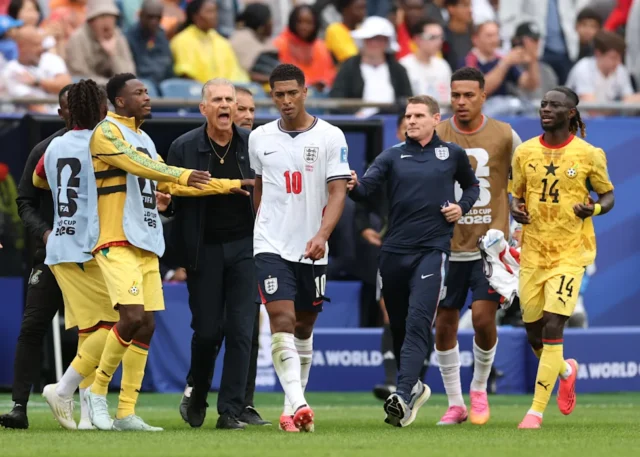
Ben White has been drafted back into the England team squad, while Eberechi Eze has withdrawn due to injury ahead of upcoming international friendlies.

The late changes were confirmed as England manager Thomas Tuchel adjusted his squad for matches against Uruguay and Japan. White returns to the national setup for the first time since 2022, replacing injured defender Jarell Quansah, while Newcastle winger Harvey Barnes comes in for Eze following his withdrawal.

White’s recall marks a significant moment in his international career after a prolonged absence that followed his early departure from England’s 2022 World Cup camp in Qatar. The Arsenal defender had since made himself unavailable for selection under former manager Gareth Southgate but recently indicated his readiness to return.

Eze’s withdrawal is understood to be injury-related, forcing Tuchel into a reshuffle just days before the friendlies. Barnes’ inclusion offers the Newcastle attacker an opportunity to add to his limited international appearances, having impressed at club level this season.

White, who has earned four caps for England, will now look to re-establish himself in the squad as Tuchel continues to assess his options ahead of the 2026 World Cup. His versatility across defensive positions is seen as a valuable asset for the national team setup.

The changes come at a crucial time for England, with Tuchel using the friendlies to evaluate fringe players and build squad depth. With injuries affecting key personnel, the recall of White and the inclusion of Barnes highlight the manager’s willingness to reintegrate players and test new combinations as preparations intensify for upcoming major competitions.

EDITOR PICKS

Recent Posts