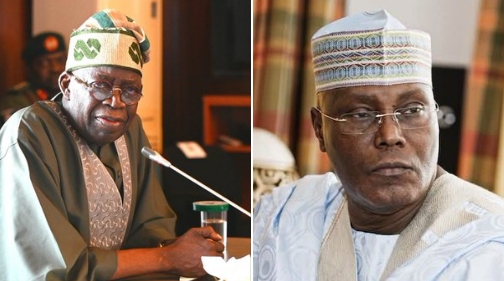
The Presidency has strongly dismissed former Vice President Atiku Abubakar’s criticism of President Bola Ahmed Tinubu’s economic policies, insisting that Nigeria’s reform programme is delivering measurable results and that the country’s economy has recovered significantly from the initial shocks of key policy changes.
In a detailed statement titled “Facts, Not Fear: A Point-by-Point Response to Atiku Abubakar on Nigeria’s Reform Journey,” the Presidency accused Atiku of relying on outdated economic data and presenting what it described as an incomplete picture of the country’s current fiscal and economic realities.
Responding to Atiku’s allegations of fiscal recklessness, excessive borrowing, controversial tax reforms, the removal of fuel subsidies and claims of an alleged ₦7.98 trillion oil windfall, the Presidency argued that the opposition figure’s criticisms failed to reflect developments since the difficult adjustment period of 2024.
According to the statement, “Former Vice President Atiku Abubakar, in his typical pastime, has accused the administration of President Bola Ahmed Tinubu of fiscal recklessness, citing excess borrowing in the 2024 budget, questioning the removal of fuel subsidy, criticising tax reforms, concocting an oil windfall of N7.98 trillion, and suggesting that Nigeria is drifting economically.”
It added: “His concerns, though misplaced, deserve a response—not because criticisms should be silenced—but because Nigerians should have a fuller picture of where the country is today.”
The Presidency maintained that it was misleading to judge reforms introduced in 2024 without considering subsequent improvements in the economy. It said Nigeria’s dollar-denominated Gross Domestic Product (GDP), which fell sharply following the exchange-rate adjustment, had recovered substantially, while the country’s naira-denominated GDP had also expanded considerably.
According to the statement, the economy grew from about $253 billion after the exchange-rate reset to approximately $377 billion, while naira GDP rose from roughly ₦314 trillion in 2024 to about ₦530 trillion. It stressed, however, that these figures should be considered alongside indicators such as inflation, real GDP growth and household welfare.
On public debt, the Presidency rejected claims that Nigeria was over-borrowing, arguing that debt sustainability should be assessed based on economic capacity, revenue generation and how borrowed funds are utilised.
It noted that Nigeria’s debt-to-GDP ratio remained around 40 per cent, significantly below several peer and developed economies, while the debt service-to-revenue ratio had declined from nearly 100 per cent in late 2022 to below 60 per cent under the Tinubu administration.
“What matters are the size of the economy; our revenue-generating capacity; debt servicing costs; the purposes for which funds are borrowed; and whether borrowed resources finance productive investments or recurrent consumption,” the statement said.
Defending the controversial removal of petrol subsidies, the Presidency argued that the policy had strengthened the finances of states and local governments by increasing allocations from the Federation Account.
It said the decision had enabled sub-national governments to spend more on infrastructure, education, healthcare, salaries, pensions and social programmes, describing the reform as a practical demonstration of fiscal decentralisation and “true federalism.”
The statement also rejected allegations that the administration’s tax reforms were designed to increase the burden on ordinary Nigerians, insisting that the changes were intended to protect low-income earners and small businesses while improving compliance among higher-income taxpayers.
According to the Presidency, individuals earning ₦1 million or less annually and businesses with turnovers below ₦100 million stand to benefit under the reforms, while wealthier individuals and profitable enterprises are expected to contribute a fairer share of taxes.
Highlighting achievements in healthcare, the Presidency said more than 3,000 primary healthcare centres had been revitalised nationwide, over 78,000 frontline health workers retrained, and free caesarean section services expanded for indigent mothers in more than 100 health facilities.
It added that three world-class cancer centres are now operational in Kubwa, Enugu and Katsina, while cancer treatment facilities have been expanded in 13 states.
On education, the Presidency said over 11,000 school-related projects had been undertaken through the Universal Basic Education Commission in collaboration with state governments. It also cited the Nigerian Education Loan Fund (NELFUND), which it said had disbursed more than ₦303 billion to over 1.64 million students across about 300 higher institutions.
The statement further claimed that prolonged strikes in public universities had largely become a thing of the past under the current administration.
Addressing infrastructure development, the Presidency said the Federal Government had continued investments in highways, bridges, rail modernisation, airports, power transmission, housing, gas infrastructure and digital connectivity, while state governments had accelerated capital projects due to increased fiscal allocations.
The statement also dismissed Atiku’s claim that Nigeria had realised an unaccounted ₦7.98 trillion oil windfall, arguing that the calculation ignored crude production shortfalls, production costs, contractual obligations and revenue-sharing arrangements with oil companies.
“There is no such windfall of ₦7.98 trillion,” the Presidency said, adding that government revenues from oil were accurately reflected in monthly Federation Account Allocation Committee (FAAC) distributions.
While acknowledging that the reforms had imposed short-term hardship, the Presidency argued that they were necessary to correct longstanding structural distortions inherited from previous administrations.
It maintained that inflation, implementation challenges and social protection measures remained legitimate areas for public debate but insisted that describing the reform agenda as “financial recklessness” ignored broader efforts to stabilise the economy and improve fiscal management.
Concluding its response, the Presidency said Nigeria’s economy had not yet reached its desired destination but insisted that the country was on a stronger path than during what it described as years of fiscal waste and structural imbalances.
“Nigeria’s economy is not yet where it aspires to be. But neither is it where it stood at the height of its structural distortions or in the bygone years of fiscal waste and slackness,” the statement said, adding that the Tinubu administration would continue pursuing reforms aimed at strengthening institutions, expanding opportunities and improving living standards for Nigerians.