Netflix–Warner Bros. $72bn Mega-Deal Set to Reshape Global Streaming Landscape
In one of the most consequential media shake-ups of the decade, Netflix and Warner Bros. Discovery have agreed to a blockbuster merger that values the combined assets at $72 billion, marking a seismic shift in the global entertainment industry. Under the terms of the deal, Warner Bros. Discovery shareholders will receive $23.25 in cash and $4.50 in Netflix stock per share, signalling a powerful vote of confidence in the streaming giant’s long-term dominance.

A major part of the agreement requires Warner Bros. Discovery to spin off its cable networks—including CNN, TNT and others—into a separate company by the third quarter of 2026. The restructuring sets the stage for regulatory scrutiny and is designed to smoothen approval processes in multiple jurisdictions. With the spin-off complete, the full merger is expected to close within 12 to 18 months, pending global regulatory and shareholder approvals.

Netflix, now poised to absorb one of Hollywood’s most storied studios, plans to maintain Warner Bros.’ theatrical release commitments through 2029, easing industry concerns about the future of big-screen blockbusters. The company also expects to integrate HBO Max’s premium library directly into its platform, a move that could redefine content consolidation and intensify competition across the streaming ecosystem.

Leaders from both companies hailed the agreement as a landmark union of storytelling powerhouses. They said the merger would enable the creation of richer, more diverse content for audiences worldwide while combining the technological edge of Netflix with the cinematic legacy of Warner Bros. Despite the enthusiasm, both sides acknowledged the regulatory hurdles ahead, with antitrust bodies in the U.S., Europe and Asia expected to closely examine the deal’s implications for market competition.
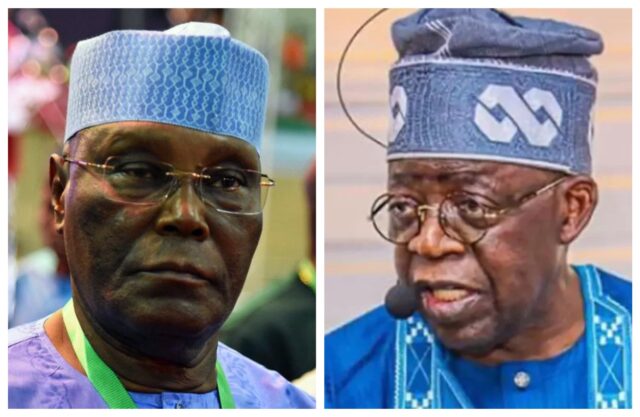
Atiku Blasts Tinubu Over Yakubu’s Nomination, Says Move ‘Morally Indefensible’

Former Vice President Atiku Abubakar has strongly condemned President Bola Ahmed Tinubu’s decision to nominate former INEC Chairman Prof. Mahmood Yakubu as a non-career ambassador, describing the move as dangerous, morally unjustifiable and damaging to Nigeria’s democratic credibility.

In a sharply worded statement, Atiku said no responsible leader should reward the head of an election umpire whose conduct remains at the centre of one of the most controversial polls in the country’s history. He declared that he would never, under any circumstance as president, consider nominating the immediate past INEC boss for such a prestigious diplomatic assignment.

“Let me state without ambiguity: under no circumstance would I, as President of the Federal Republic of Nigeria, nominate the immediate past INEC Chairman for an ambassadorial position,” he said, warning that the decision “raises serious concerns” and risks being interpreted as a political favour rather than a merit-based appointment.

Atiku argued that the nomination presents “terrible optics” for an administration already battling public trust issues. He said rewarding the same electoral chief who presided over the highly disputed 2023 general election sends a dangerous signal to the current INEC leadership—that “partisan, compromised, or poorly executed elections may ultimately be rewarded.”

He added that it would be “morally indefensible for an umpire at the centre of one of the most disputed elections in our history to become a beneficiary of its outcome,” stressing that democracy cannot thrive when electoral misconduct is perceived to be compensated rather than scrutinized.

According to the former vice president, the nomination does not strengthen democracy nor advance efforts to rebuild public confidence in national institutions, particularly the electoral commission. “This is not the path to strengthening our democracy or restoring public trust in our institutions,” he said.

Atiku’s criticism adds to the growing controversy surrounding President Tinubu’s latest ambassadorial lists, which feature 31 non-career nominees, including political allies, former governors, ex-service chiefs and other high-profile figures. The Senate is expected to commence screening of the nominees in the coming days, even as opposition voices intensify scrutiny over the political implications of the appointments.

Samsung’s First ‘Special Edition’ Triple-Fold Phone Hits Market

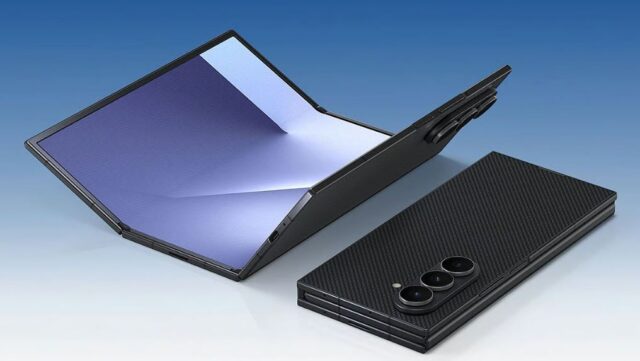
In a bold move signalling its dominance in ultra-premium smartphones, Samsung has unveiled its first triple-folding device, the Galaxy Z TriFold, described by the company as a “special edition” rather than a mass-market release. According to Samsung, the device opens up new possibilities by “increasing … possibilities for creating and working”.

Set to go on sale in South Korea on December 12, the TriFold arrives with an eye-watering price tag of about US$2,443 — more than twice the price of the latest iPhone model.

The phone unfolds into a massive 10-inch display, weighs 309 grams, and at its slimmest point measures less than 0.2 inches thick.

Samsung has emphasised that the TriFold is not aimed at everyday consumers. One executive, Kim Seong-eun, stated the device is “special edition” and “not intended for mass sales”.

The timing of the launch comes as the smartphone market shows signs of maturity, pushing manufacturers to seek novel form-factors and tech differentiation.

While Samsung is not claiming to be the first in the world with a triple-folding phone — indeed, China’s Huawei beat it to the punch — the TriFold underscores Samsung’s ambition to steer the market towards more ambitious, high-end devices.

Dambazau, Fani-Kayode, Jimoh Ibrahim Top Ambassadorial Lists

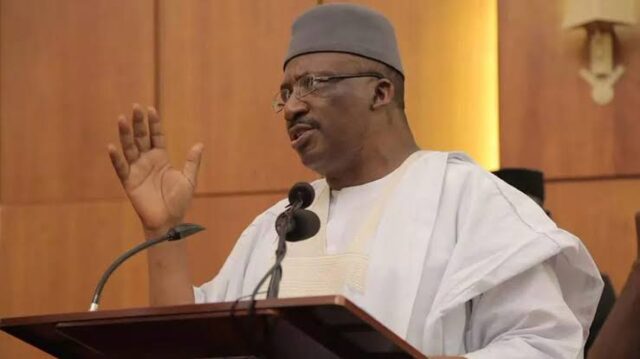
Dambazau

President Bola Ahmed Tinubu has forwarded two separate lists containing a total of 65 ambassadorial nominees to the Senate for screening and confirmation, marking one of the most extensive diplomatic nomination exercises of his administration.

The lists, which include 34 career diplomats and 31 non-career nominees, were officially transmitted to the upper chamber on Thursday.

The non-career list features several prominent political figures and public personalities, signalling a blend of technocratic and political representation in Nigeria’s next diplomatic corps. Among those nominated are former presidential aide Reno Omokri, former Minister of Aviation Femi Fani-Kayode, former Interior Minister General Abdulrahman Dambazau (rtd.), former Abia State governor Okezie Ikpeazu, and former Enugu State governor Ifeanyi Ugwuanyi. The inclusion of these high-profile names has already begun generating nationwide discussion on the strategic direction of Nigeria’s foreign service.

Also on the non-career list are notable figures such as the Chairman of the Independent National Electoral Commission (INEC), Prof. Mahmood Yakubu; former Chief of Naval Staff, Vice Admiral Ibok-Ete Ibas (rtd.); Senator Jimoh Ibrahim; Senator Nora Daduut; Fatima Ajimobi; and former presidential aide and ex-lawmaker Senator Ita Enang, among several others.

With these submissions, a total of 65 ambassadorial nominees are now before the Senate, awaiting screening and confirmation in the coming days. The move underscores President Tinubu’s ongoing efforts to reshape Nigeria’s global engagement and strengthen its diplomatic footprint. As the Senate prepares to scrutinize the nominees, attention is expected to focus not only on their individual credentials but also on the geopolitical vision driving the administration’s nominations.

Tinubu Welcomes 21 New Envoys, Declares Nigeria Ready for Stronger Global Partnerships

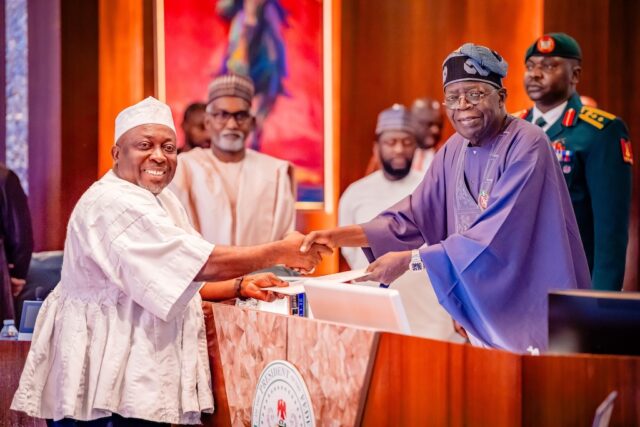
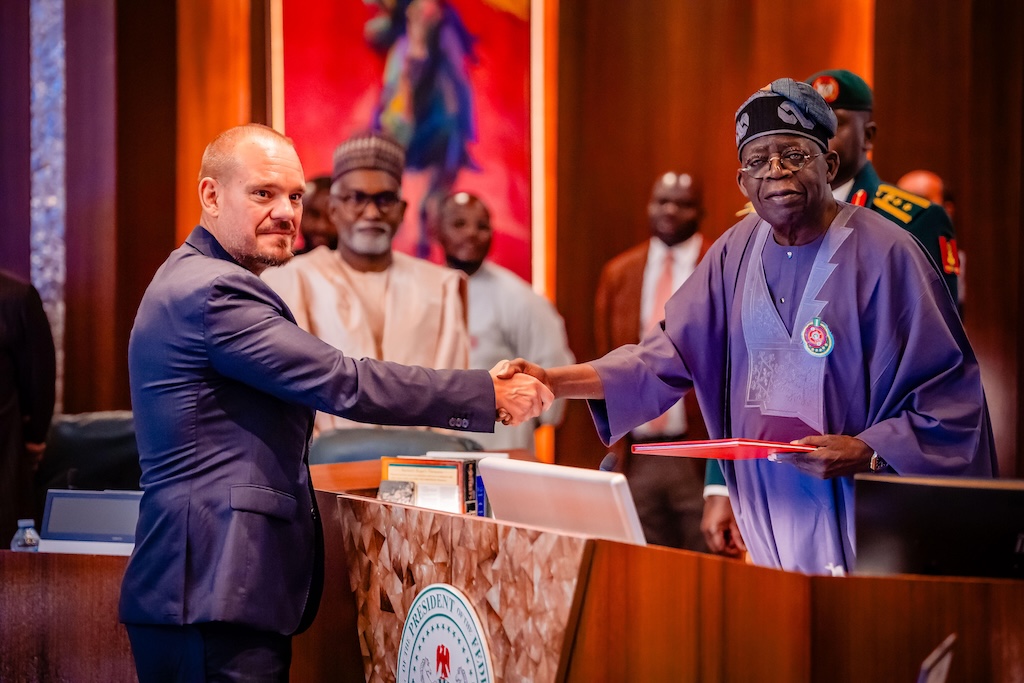
President Bola Ahmed Tinubu on Thursday restated Nigeria’s commitment to global peace, stability and economic cooperation as he received Letters of Credence from 21 newly appointed diplomats at the Presidential Villa in Abuja.

The envoys, comprising 17 ambassadors and four high commissioners, were formally welcomed at the Council Chamber, where the President emphasized his government’s readiness to deepen ties with nations across continents.

Tinubu assured the diplomats that Nigeria remains a reliable partner committed to fostering mutual prosperity. He highlighted his administration’s focus on strengthening democratic institutions, advancing economic reforms and creating an investment-friendly climate driven by innovation and sustainable development.

Reaffirming his open-door policy, the President urged the envoys to engage closely with the Ministry of Foreign Affairs to explore opportunities in areas such as trade, energy, agriculture, education, technology, defence cooperation and cultural exchange.

The President noted that the world faces mounting challenges—from security threats and climate pressures to economic shocks and humanitarian concerns—and stressed the need for collective solutions. He pledged that Nigeria is ready to work with the international community to address these issues, saying his administration remains fully committed to constructive partnerships that promote global peace and shared growth.

Speaking on behalf of the newly accredited diplomats, Japan’s Ambassador Suzuki Hideo described the day as historic and commended President Tinubu for his leadership and reform efforts. He praised Nigeria’s expanding role in ECOWAS and Africa, noting that the country continues to be recognized globally for its resilience and influence. Hideo applauded the President’s bold economic reforms aimed at strengthening the fiscal framework and attracting investment, as well as recent strides in improving national security through intensified counter-terrorism measures.

The ceremony saw the presentation of credentials by envoys from Japan, Chad, Gabon, Türkiye, Palestine, Spain, Indonesia, Mauritania, Austria, Thailand, Bangladesh, Sweden, the Czech Republic, Liberia, Ghana, India, Poland, Italy, Slovakia, Iran and Barbados. Their accreditation marks the beginning of renewed diplomatic engagement and cooperation between Nigeria and their respective nations, with all sides expressing optimism for a productive and mutually beneficial relationship in the years ahead.

Senate Passes Bill to Create Independent Police Pension Board

The Senate has passed a landmark bill establishing an independent Pension Board for the Nigeria Police Force, setting the stage for the police to exit the national Contributory Pension Scheme (CPS).

The bill, which originated from the House of Representatives, was approved on the floor of the Senate after receiving concurrence, marking a major step toward overhauling the welfare structure of police personnel in the country.

Once the bill secures presidential assent, the Nigeria Police Force will operate its own dedicated pension administration system, separate from the broader contributory framework that currently governs the retirement benefits of federal employees. The proposed Police Pension Board is expected to address long-standing concerns raised by serving and retired officers regarding delays, disparities and perceived inadequacies associated with the CPS.

The move is widely regarded as a significant policy shift aimed at improving the morale and post-service welfare of police officers, who have for years advocated for a pension structure tailored to the unique demands of their profession. With Senate approval now secured, attention turns to President Bola Ahmed Tinubu, whose assent will officially bring the Police Pension Board into existence and trigger full administrative transition from the contributory scheme.

If signed into law, the development will mark a new era for police welfare management, potentially offering more streamlined benefits and a pension system designed to better serve Nigeria’s frontline security personnel.

Tinubu Swears In Gen. Musa as Defence Minister

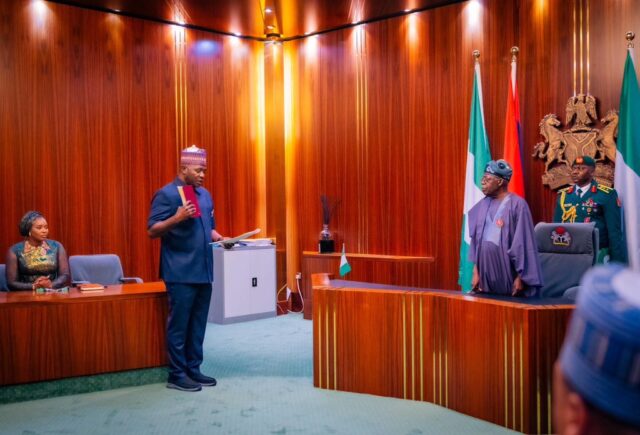
Gen. Christopher Musa (rtd) takes oath of office as Defence Minister in Abuja on Thursday. Credit: State House.

President Bola Ahmed Tinubu on Thursday officially swore in retired General Christopher Musa as Nigeria’s new Minister of Defence, marking a significant reshuffle in the country’s security leadership at a time of escalating threats.

The oath-taking ceremony took place at the Presidential Villa in Abuja, following Musa’s confirmation by the Senate after a rigorous five-hour screening session.

Musa, who served as Chief of Defence Staff from June 2023 until October 2025, takes the helm of one of the nation’s most critical offices as Nigeria grapples with rampant kidnappings, banditry and other forms of armed violence across numerous states.

During his hearing at the Senate, he emphasized the urgent need to integrate modern technology into security operations, asserting that monitoring ransom payments and establishing databases linked to individuals could curb the growth of criminal networks.

President Tinubu expressed confidence in Musa’s ability to steer Nigeria’s defence architecture through the current wave of insecurity and external pressures. The new minister inherits a portfolio at a pivotal moment, underscored by international scrutiny and calls for renewed strategies to protect citizens and vital infrastructure.

As Musa assumes his new role, observers say all eyes will be on how quickly he can translate his vision for technological integration and operational reform into tangible results for Nigeria’s beleaguered security agencies.

Gov. Otti Pleads With Tinubu For Nnamdi Kanu’s Release

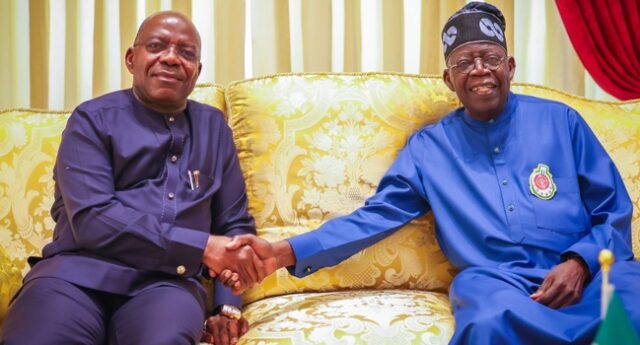
Abia State Governor Alex Otti has intensified efforts to secure the release of detained IPOB leader Mazi Nnamdi Kanu, following a strategic visit to President Bola Ahmed Tinubu after visiting Kanu at the Sokoto Correctional Centre on Sunday, November 30, 2025.

According to the governor’s Special Adviser on Media and Publicity, Ferdinand Ekeoma, the governor’s trip to Aso Rock was solely to discuss Kanu’s continued detention and explore pathways toward resolving the long-running issue.

Ekeoma disclosed that the meeting with President Tinubu was “positive and fruitful,” describing the President as gracious and open during the discussions. He noted that the latest engagement builds on two years of sustained dialogue between Governor Otti and the Federal Government on the matter.

The governor’s persistence, Ekeoma stressed, is not driven by political considerations. He clarified that Otti neither used Kanu’s name during his 2023 campaign nor needs to leverage it for future political advantage ahead of 2027. Instead, he believes that addressing the legal and political concerns surrounding Kanu’s conviction is essential for achieving lasting peace, strengthening security and promoting reconciliation across the South-East.

Governor Otti’s renewed push comes amid growing calls from regional leaders, civil society groups and traditional institutions urging the Federal Government to adopt restorative approaches in handling the IPOB leader’s case. His latest visit to the President signals what observers see as a potentially decisive phase in the long-running attempt to broker a resolution that could ease tensions and foster healing in the region.

NITDA Reaffirms Commitment to Safe, Practical AI Deployment at Lagos 2025 Forum

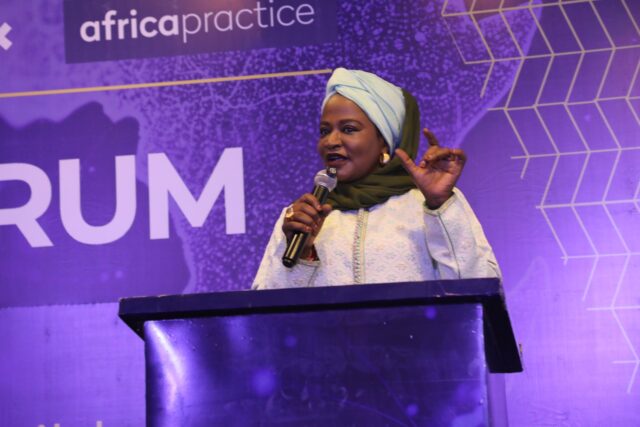
Dr. Amina Sambo Magaji

The National Information Technology Development Agency (NITDA) has reiterated its commitment to advancing safe, practical and scalable Artificial Intelligence (AI) adoption in Nigeria’s education sector as it participated in the AI in Practice Forum Lagos 2025.

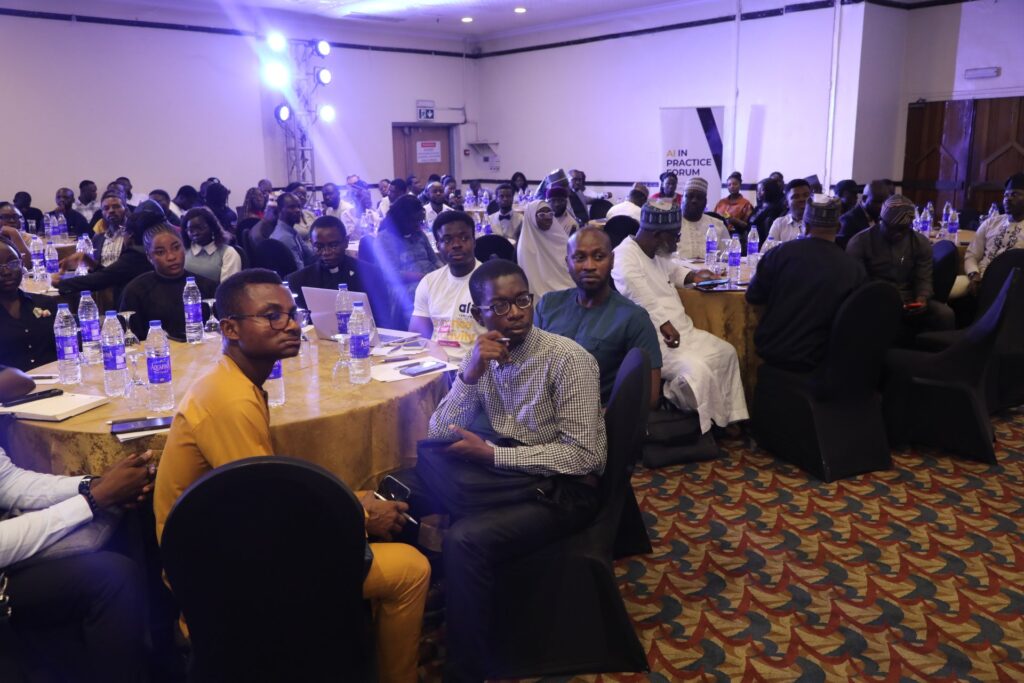
The event, held in Lagos, brought together policymakers, innovators, educators and industry experts to explore real-world applications of AI capable of transforming teaching, learning and school administration nationwide.

Representing NITDA’s Director-General, Kashifu Inuwa Abdullahi, Dr. Amina Sambo Magaji highlighted that the forum fully aligns with the agency’s Strategic Roadmap and Action Plan (SRAP 2.0) and the National AI Strategy approved by the Federal Government in late 2024. She noted that these policy frameworks are designed to build digital literacy, scale innovation, and promote responsible AI deployment across critical sectors — with education ranked among the top national priorities.

Participants at the event in Lagos. Credit: X | NITDA

Dr. Magaji stressed that bridging the gap between policy and implementation is essential for Nigeria’s digital transformation. According to her, NITDA’s interventions are deliberately structured to “connect policy with practice,” ensuring that AI-driven solutions deliver measurable impact, especially in classrooms where challenges such as limited teacher-to-student ratios, administrative bottlenecks, and inconsistent learning outcomes persist.

The forum showcased hands-on sessions, live demonstrations, and case studies illustrating how AI tools are already helping teachers personalise learning, automate assessments, support special-needs students, and improve school management. Participants were exposed to emerging technologies including adaptive learning platforms, AI tutoring systems, intelligent content creation tools and data analytics solutions designed for Nigerian schools.

A key emphasis of the conference was the importance of grounding AI deployment in practicality, inclusiveness, and local relevance. By involving frontline educators, curriculum developers and school administrators, organisers said the forum ensures that AI solutions emerging in Nigeria are not only innovative, but also accessible, culturally appropriate and responsive to real-life challenges.

The Lagos event comes at a time when Nigeria is accelerating its digital-skills pipeline and AI readiness. In November 2025, the Federal Ministry of Communications, Innovation and Digital Economy announced expanded funding for AI research hubs, while global tech companies — including Microsoft and Google — have recently partnered with Nigerian institutions to support AI-focused teacher training and youth development programmes.

With the success of the AI in Practice Forum, NITDA says it will continue strengthening collaborations across academia, industry and government. The agency reaffirmed that its long-term goal is to enable an education ecosystem where AI enhances creativity, expands access, improves learning outcomes and positions Nigeria competitively in the global knowledge economy.

Arsenal Maintain Premier League Lead With 2-0 Win Over Brentford

Arsenal continued their dominance at the top of the Premier League standings on Wednesday after a 2–0 victory over Brentford at the Emirates Stadium. The win re-established a five-point cushion between the Gunners and their nearest challengers.

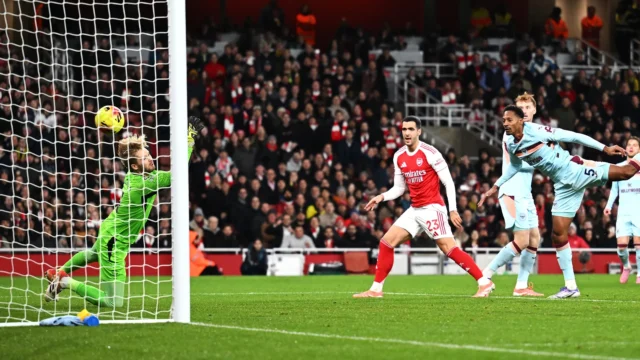
The opener came in the 11th minute when Mikel Merino rose highest to head home a cross from Ben White — a composed finish that capped a fluent Arsenal build-up involving nearly every outfield player.

As the match wore on, Brentford pushed for an equaliser. Their best opportunity came midway through the first half, when Kevin Schade found himself unmarked in the box, only to be thwarted by an excellent reaction save from Brentford’s goalkeeper.

Arsenal held firm defensively despite a swelling injury list, and the second goal — a late strike from Bukayo Saka in stoppage time — sealed the victory as Brentford’s defence tired.

Manager Mikel Arteta hailed his side’s “business-like” performance after the match, pointing to their resilience amid a packed December schedule and a thin defensive roster. “It wasn’t our best performance but in times like this, you take the three points,” he said.

With this win, Arsenal have now extended their unbeaten run in all competitions to 18 games, kept their eighth clean sheet of the Premier League season, and consolidated their position at the summit of the table with 33 points from 14 matches.

EDITOR PICKS

Recent Posts