Leeds Stun Chelsea 3-1 Win at Elland Road

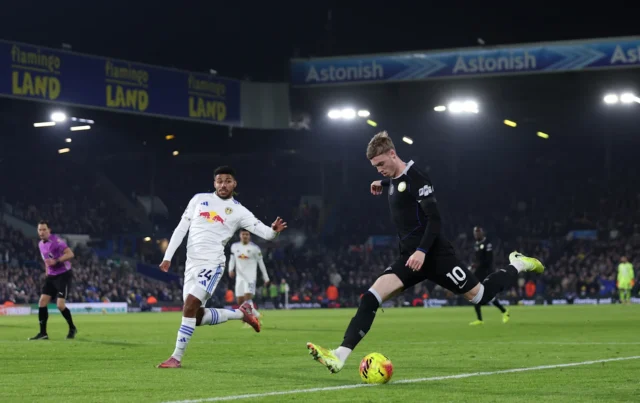
In a dramatic turn in the Premier League title race, Chelsea’s aspirations suffered a serious blow after a 3–1 defeat to Leeds United at Elland Road on Wednesday. The result ended Chelsea’s recent run of form and gifted a vital boost to a beleaguered Leeds side fighting to escape relegation.

Leeds took the lead early when Jaka Bijol powered in a header from a corner in the 6th minute. The hosts doubled their advantage shortly before halftime through a sensational strike from Ao Tanaka, whose low long-range shot left Chelsea’s goalkeeper helpless.

Although Chelsea responded after the break, with Pedro Neto pulling one back early in the second half, their comeback was short-lived. Defensive frailty proved costly — and in the 72nd minute, Dominic Calvert‑Lewin tapped in a third goal after a turned-over pass inside Chelsea’s box, sealing the win for the home side.

For Leeds manager Daniel Farke, the win was a timely revival. He praised his players’ character and performance under pressure: “We showed fight, belief and took our chances — tonight belonged to Leeds.”

Meanwhile, Chelsea boss Enzo Maresca acknowledged the team’s poor showing, lamenting that his side fell short “in all aspects” despite recent positive results. He urged a quick reset as the club’s title challenge suffers a major setback.

The defeat leaves Chelsea trailing the leaders by nine points and slipping to fourth place with 24 points. Leeds, buoyed by the win, climb out of the relegation zone with 14 points.

Liverpool, Sunderland share spoils at Anfield

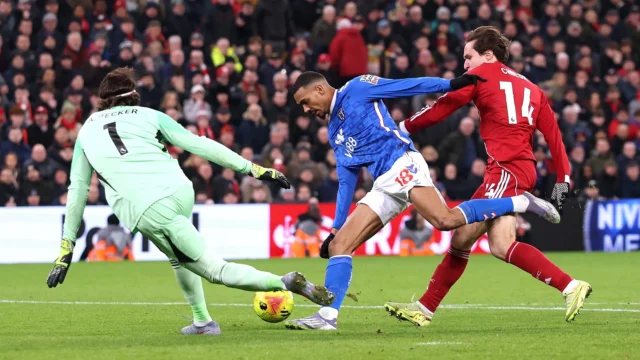
Liverpool were held to a disappointing 1–1 draw at home to Sunderland on Wednesday, extending a troublesome run of form that has left the champions struggling for consistency.

Sunderland stunned the home crowd in the 67th minute when Chemsdine Talbi drilled in a long-range effort that took a deflection off Virgil van Dijk before beating goalkeeper Alisson Becker. The strike marked the first time Sunderland have opened the scoring at Anfield in decades.

Liverpool pressed for an equaliser and finally got it in the 81st minute — though under controversial circumstances. Florian Wirtz weaved through the Sunderland defence and struck on goal; the ball deflected off defender Nordi Mukiele and into the net, with the goal officially awarded as an own goal.

Despite dominating possession and generating several chances — especially after halftime — Liverpool were unable to force a winner, as Sunderland’s defence and last-ditch goal-line clearance by Federico Chiesa denied a dramatic late defeat.

After the draw, manager Arne Slot admitted the performance was far from ideal, acknowledging persistent issues in attack and a troubling inability to capitalise when trailing.

The result leaves Liverpool in eighth place in the Premier League standings with 22 points from 14 games, while Sunderland sit just one place above them, continuing their surprisingly solid start to the season.

Russia Blocks Roblox, Citing Safety and ‘Extremist’ Concerns

Russia has officially blocked access to the popular online gaming platform Roblox, according to announcements made by the country’s media regulator Roskomnadzor and reported by multiple international outlets.

The ban, confirmed on Wednesday, is the culmination of a growing crackdown by Russian authorities on what they describe as “inappropriate content” on the platform. In its statement, Roskomnadzor accused Roblox of allowing the dissemination of “extremist materials” and “LGBT-propaganda,” saying that the platform’s moderation systems failed to ensure the safety and well-being of its users — especially minors.

“Children in the game are exposed to sexual harassment, coerced into sharing intimate photos, and pushed toward lewd acts and violence,” the regulator said in its announcement, adding that Roblox was “popular among pedophiles” who allegedly used the platform to contact minors before initiating real-life contact.

The move is part of a broader pattern of restrictions on Western-based social and gaming platforms inside Russia. This year, Roskomnadzor has repeatedly flagged Roblox for hosting content it deems harmful to “the spiritual and moral development” of children.

For its part, Roblox has not publicly responded to the ban. The California-based company — which in Q3 2025 reported a global average of 151.5 million daily active users — has previously pointed to its robust moderation mechanisms, including AI tools, dedicated moderation teams, and cooperation with law-enforcement and child-safety experts.

In recent months, Roblox instituted new safety measures such as mandatory age checks and plans for facial-verification for access to chat features — yet those changes evidently proved insufficient under Russia’s tightening regulatory landscape.

The Russian ban reflects mounting tensions between global digital platforms and national regulators seeking tighter control over online content. For millions of young gamers and developers in Russia, the move abruptly ends access to a gaming universe that has served as both a playground and a creative outlet.

Senate Confirms Gen. Christopher Musa as Defence Minister

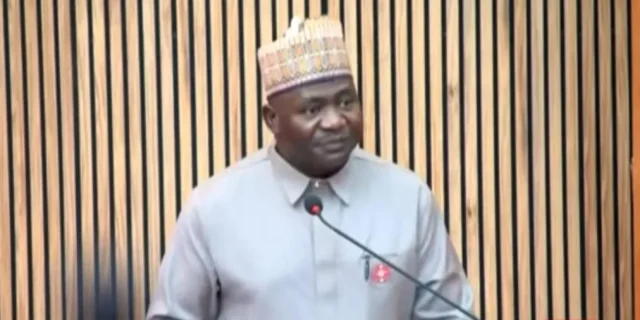
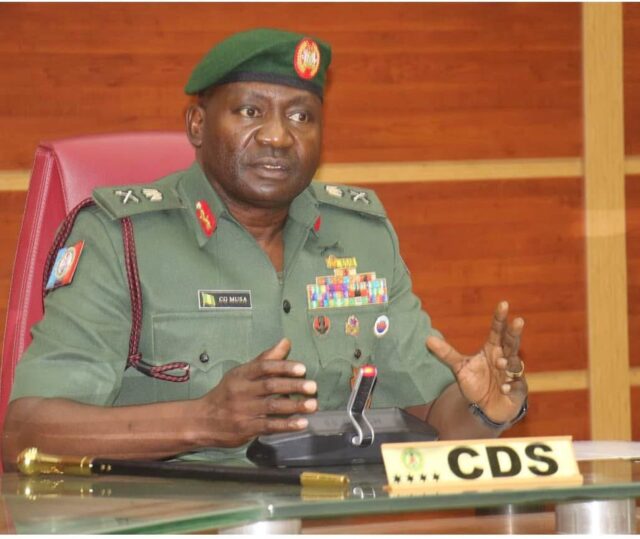
Gen. Christopher Musa

In a decisive move to reinforce Nigeria’s embattled security architecture, the Senate on Wednesday confirmed retired Christopher Gwabin Musa as the country’s new Minister of Defence. The approval came after a rigorous five-hour screening session by lawmakers.

Gen. Musa, who formerly served as Chief of Defence Staff (CDS) — a position he held until his retirement in October 2025 — was nominated by Bola Ahmed Tinubu, President of Nigeria, to succeed Mohammed Badaru Abubakar, who stepped down earlier this week citing health reasons.

During the plenary session, the Senate — meeting as a Committee of the Whole — scrutinised Musa’s past performance, command decisions, and plans for tackling Nigeria’s escalating security crisis including insurgency, banditry, and mass kidnappings.

Addressing senators, Musa pledged renewed vigour and structural reforms to confront insecurity. “The armed forces cannot solve all the problems. Security is localised. Communities must be empowered as first responders,” he said. “From day one, we will review everything. We will not allow terrorists the space to operate.”

He added there would be “no negotiation with criminals,” and called for a coordinated effort among security agencies, sub-national governments, and communities to end ransom payments and bring perpetrators to justice.

His confirmation comes at a precarious time for Nigeria, with recent incidents — such as the abduction of schoolgirls at Government Comprehensive Girls Secondary School, Maga in Kebbi State — sparking national outrage over security lapses.

For his part, Senate President Godswill Akpabio urged the new minister to leverage the “legal environment that serves as a deterrent,” stressing that the confirmation was part of a broader effort to stabilise the nation’s volatile security situation. “We want you to succeed,” he told Musa.

Oil Surges After US-Russia Peace Talks Collapse in Moscow

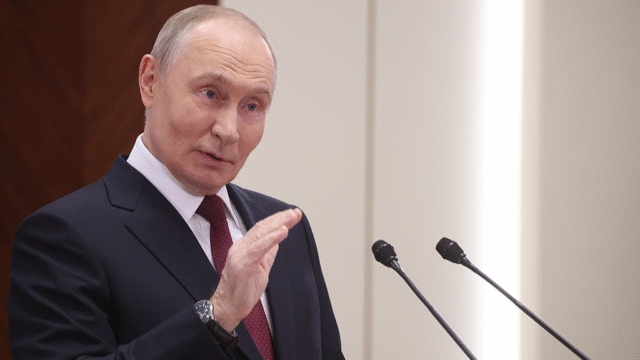
Russia Presiden Vladimir Putin

Oil prices climbed Wednesday after Moscow and US envoys ended their talks in Moscow without reaching agreement on a potential peace deal related to the Ukraine war — a development markets had hoped might ease sanctions on Russian energy.

By 1010 GMT, Brent crude was up 78 cents, or 1.3%, at $63.23 a barrel, while US West Texas Intermediate rose 85 cents, or 1.5%, to $59.49. Both benchmarks had dropped more than 1% in the previous session.

Analysts say the bounce reflects renewed caution as markets confront the prospect that sanctions on Russian oil will remain in place — at least in the near term. “Oil markets and prediction markets do not appear to price a large probability of a near-term peace agreement and removal of the sanctions on Russian oil,” commented analysts at Goldman Sachs in a note cited by market watchers.

The failed negotiations follow a five-hour meeting between Russian President Vladimir Putin and U.S. envoys earlier this week, which Moscow said yielded no compromise.

Still, underlying supply pressures also played a role. Markets remain alert to recent attacks by Ukraine on Russian oil export facilities along the Black Sea coast — which have spotlighted continuing geopolitical risks tied to global energy flows.

That said, rising US inventories have put a cap on prices. Data from oil market sources suggested that, in the week ending November 28, U.S. crude stocks increased by 2.48 million barrels, gasoline inventories by 3.14 million barrels, and distillate inventories by 2.88 million barrels — a build-up that tempered some of the upside in global prices.

Market participants now await official confirmation from the US Energy Information Administration (EIA), expected later today.

150 Nigerian Tech Firms to Benefit as Oduwole Rolls Out Digital Trade Compliance Pilot

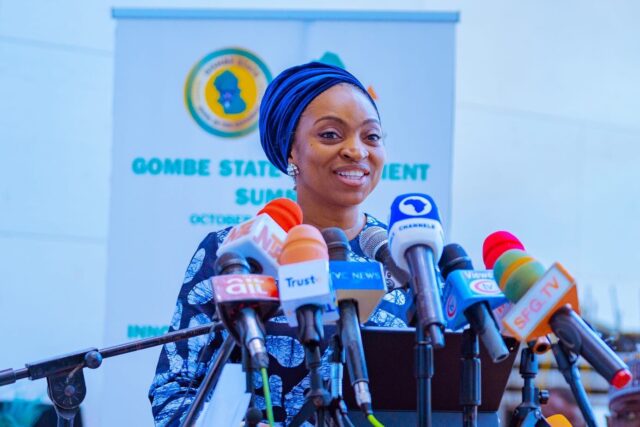
Dr. Jumoke Oduwole

Nigeria’s Minister of Industry, Trade and Investment, Dr. Jumoke Oduwole, has articulated a bold vision for transforming Africa’s digital trade landscape — stressing that regulatory collaboration across the continent, rather than fragmentation, is the key to unlocking Africa’s immense potential. The remarks were shared in a recent feature published by Techpoint Africa.

In the article, Oduwole argues that while digitally delivered services — such as software, online consulting, telemedicine, and digital marketplaces — represented US$114.7 billion in trade in 2024 among African countries, the continent remains a marginal player globally.

She noted that despite this volume, African firms struggle to scale across borders due to disjointed regulatory regimes.

Oduwole recalled the experience of “Hadiza,” a Nigerian tech entrepreneur whose cloud-based service for small and medium-sized enterprises (SMEs) gained hundreds of thousands of users across multiple African countries. However, she told Techpoint, expanding beyond Nigeria proved “a maze of experimentation,” with different countries demanding unique documentation, imposing varying capital requirements, and enforcing divergent rules around taxation, data protection, consumer rights and intellectual property — hurdles which slowed and eventually cooled her expansion ambitions.

“The reality is that regulation designed for traditional businesses does not fit the digital age,” Oduwole said, emphasising the urgent need for harmonised rules across African states. “If we are to reap the full benefit of a unified African digital market, we must move from regulatory fragmentation to regulatory collaboration.”

To that end, Nigeria — which earlier in 2025 was appointed as African Union co-Champion of the AfCFTA Protocol on Digital Trade — has begun efforts to domesticate the Protocol into its national legal framework. Oduwole highlighted that the country’s ministry has already completed “the first comprehensive mapping of digitally delivered services in Africa,” creating a three-tier classification system to clearly define core digital services, digitally deliverable services, and digital marketplaces. This classification aims to ensure African governments properly recognise and regulate digital firms and their services.

In practical terms, between 2025 and 2027, the ministry plans to pilot a scheme to help at least 150 Nigerian digital firms comply with regulatory requirements ahead of cross-continental expansion. The initiative comes alongside plans for new guidance documents to help businesses navigate market entry rules across the bloc, and a broader drive to engage with other AfCFTA member states to align regulations.

At an October 2025 roundtable convened by Nigeria under the AfCFTA framework, regulators and policymakers from Egypt, Ghana, Kenya, Rwanda, South Africa, and Nigeria held working sessions with entrepreneurs to clarify licensing and regulatory requirements — a practical step designed to break down barriers that have historically stunted intra-African digital trade.

For many African innovators and tech companies, the policy shift marks a potentially transformative moment. As Oduwole put it, “We must ensure that our rules do not fence in African innovators — but that our markets and communities benefit from their creativity.”

The article underscores a broader truth: for Africa’s digital economy to flourish, regulatory common ground may be even more critical than broadband infrastructure or startup funding. As the continent moves toward deeper economic integration under AfCFTA, Nigeria’s push — led by Dr. Oduwole — could serve as a blueprint for unlocking the digital trade potential of millions of African entrepreneurs.

CBN Relaxes ATM Limits Amid Pressure on Banking System

The Central Bank of Nigeria (CBN) has announced a sweeping revision of its cash‑handling regulations, scrapping deposit limits and sharply raising weekly cash‑withdrawal ceilings for individuals and corporate customers — in a major policy shift that takes effect from January 1, 2026.

In a circular titled “Revised Cash‑Related Policies,” signed by Dr. Rita I. Sike, Director of the Financial Policy & Regulation Department, the CBN removed the cumulative deposit limit for all customers. The previous fee structure imposed on “excess deposits” will no longer apply.

Under the new framework, individuals may now withdraw up to ₦500,000 weekly across all channels — including ATMs, point‑of‑sale terminals, and over‑the‑counter transactions — a substantial increase from the previous ₦100,000 cap. Corporate entities will enjoy a weekly ceiling of ₦5 million, up from ₦500,000.

ATM withdrawals will also see revised limits: the new policy sets a daily cap of ₦100,000 per customer, with cumulative weekly withdrawals still constrained within the overall ₦500,000 limit.

Where customers withdraw beyond the stipulated limits, the CBN has retained excess‑withdrawal charges — 3 percent for individuals and 5 percent for corporate accounts — to be shared between the CBN (40 percent) and the operating bank (60 percent).

The circular also abolishes the special monthly authorisation scheme that previously allowed individuals and corporates to withdraw larger sums (₦5 million and ₦10 million respectively) once per month. That option will no longer be available under the new rules.

In addition, banks have been directed to load all denominations of naira notes in ATMs — a move intended to improve cash availability across the banking network. The longstanding N100,000 limit on over‑the‑counter cheque encashments for third‑party cheques remains, and any such withdrawals will count toward the weekly cumulative limit.

The CBN says the policy overhaul reflects “present‑day realities,” citing rising costs of cash management, security concerns, and the need to curb money‑laundering risks in Nigeria’s heavily cash‑dependent economy. The previous cash‑limit framework had been introduced in tandem with the earlier naira‑redesign and cash‑limit directives — policies that had, over the years, drawn public criticism for constraining access to physical cash.

Thailand Ends Ban On Afternoon Alcohol Sales

Thailand has officially lifted its ban on afternoon sales of alcoholic beverages, reversing a long-standing public policy that restricted when residents and visitors could legally buy alcohol during daytime hours. The decision, announced by the government on Wednesday, marks a significant change for retailers, consumers, and the hospitality sector across the Southeast Asian nation.

Under the previous regulation, shops and vendors were prohibited from selling alcoholic drinks during certain hours of the day — a curfew meant to curb late-night drinking and related social ills. With the lifting of the ban, convenience stores, supermarkets, bars, and restaurants are once again permitted to sell alcohol throughout the day, a move welcomed by many in Thailand’s vibrant tourism and nightlife industries.

In a statement shared with media outlets, the government said the policy change was part of broader efforts to “modernize regulations, support businesses, and respect adult consumers’ rights,” while continuing to emphasise responsible drinking. A senior official at the Ministry of Commerce, who requested anonymity, said the repeal recognized the changing economic and social dynamics in Thai society, noting that “the ban had outlived its usefulness.”

Local business owners expressed relief at the announcement. One small-shop owner in Bangkok described the ban as “cramping trade” and said that many customers had simply gone elsewhere or delayed purchases until late evening. “Now we can serve customers all day, and that will help our bottom line,” the shopkeeper said. Likewise, representatives of the tourism sector noted the change could boost sales during peak daytime hours, especially among foreign visitors unaccustomed to curfews on alcohol purchases.

However, social critics and public-health advocates urged caution, warning that unrestricted day-time access to alcohol could increase rates of consumption, potentially exacerbating issues like alcohol abuse, traffic accidents, and domestic violence. One community health practitioner remarked that “it’s not just about freedom to buy — we must ensure that with this freedom comes responsibility, education, and stronger enforcement of drinking-age laws.”

The repeal of the ban comes as Thailand recalibrates a range of national policies to adapt to evolving social and economic realities, including recovery in tourism and commerce following the setbacks of the COVID-19 pandemic. For many Thais and expatriates, the move signals a return to greater personal liberty and a nod to modern lifestyles — but for others, it is a cause for renewed vigilance.

Tinubu, National Assembly, Wike Commit N320m to Nigerian Legion

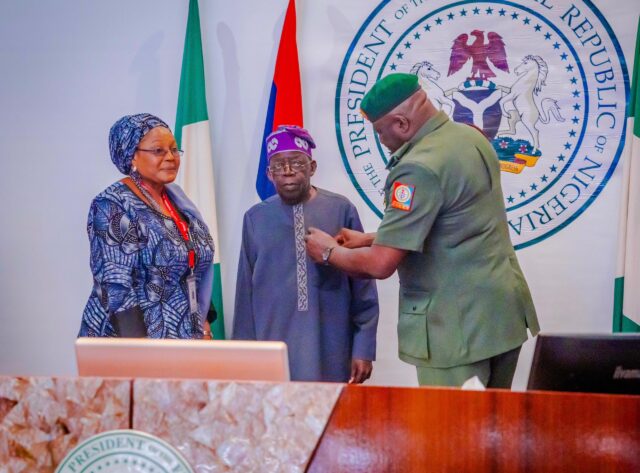
President Bola Tinubu (middle) at the 2026 Armed Forces Remembrance Day Emblem Appeal launch in Abuja

President Bola Ahmed Tinubu on Tuesday pledged N200 million to the Nigerian Legion as the Federal Government reaffirmed its commitment to the welfare of military veterans, injured personnel, and families of fallen heroes. The announcement came during the 2026 Armed Forces Remembrance Day Emblem Appeal launch held at the Presidential Villa, Abuja.

The National Assembly followed with a N100 million donation presented jointly on behalf of the legislature by Senate President Godswill Akpabio and Deputy Speaker of the House of Representatives Benjamin Kalu. The Minister of the Federal Capital Territory, Nyesom Wike, also contributed N20 million on behalf of the FCT Administration.

During the ceremony, President Tinubu, Vice President Kashim Shettima, senior lawmakers, and service chiefs were decorated with the remembrance poppy by Morenike Grace Henry, Chairman of the National Council of the Nigerian Legion. The President used the event to rally public and institutional support for the nation’s veterans, urging Nigerians to give generously to the Legion.

“As a grateful nation, we must honour the fallen, support the wounded, and care for all who answered the call to serve,” President Tinubu said, reflecting on the sacrifices made by service members. “As we honour our heroes, I call on every Nigerian to reject divisive rhetoric and embrace respect, tolerance, and understanding. Our diversity is a national asset that must be projected and cherished.”

The President also praised the military for its successes in counter-insurgency operations, noting substantial progress across different theatres. “Tens and thousands of insurgents have surrendered, key terrorist leaders have been neutralised, and many captives have been freed,” he said, adding that maritime security has likewise improved, with reductions in oil theft, piracy, and illegal fishing.

Tinubu reiterated his administration’s commitment to improving military welfare. “We will continue to improve the welfare of our troops and veterans. My administration has enhanced allowances, upgraded barracks, strengthened healthcare, expanded the Defence Health Maintenance Services Limited, and modernised pensions verifications through BVN and NIN integration.”

Chief of Defence Staff, Lt. Gen. Olufemi Oluyede, appealed to Nigerians to support the emblem initiative, describing it as a symbolic national gesture. “When we wear this emblem, we say to our veterans, Nigeria remembers you. When we support the appeal fund, we affirm that Nigeria cares. When we stand together today, we declare that Nigeria will never abandon those who serve in her name,” he said.

The Permanent Secretary, Ministry of Defence, Richard Pheelangwa, highlighted the significance of Remembrance Day in honouring the courage and sacrifice of soldiers lost in service. He praised the military for securing territories once plagued by conflict. “In many locations once marked by conflict, children have resumed school, markets have been reopened, and families are rebuilding with dignity,” he noted. “Behind every secured territory stand men and women whose courage defines our national character.”

The Armed Forces Remembrance Day, marked annually on January 15, commemorates Nigeria’s fallen soldiers and recognises the service of living veterans.

Tinubu Nominates General Christopher Musa as Defence Minister

Gen. C. Musa

President Bola Ahmed Tinubu has nominated former Chief of Defence Staff, General Christopher Gwabin Musa, as Nigeria’s new Minister of Defence, following the resignation of Alhaji Mohammed Badaru Abubakar on Monday. The nomination was formally transmitted to the Senate in a letter addressed to Senate President Godswill Akpabio.

In the letter, President Tinubu said General Musa is being put forward to strengthen Nigeria’s security leadership and sustain the “ongoing reforms within the nation’s defence architecture.” The President expressed full confidence in the retired four-star general’s capacity to deliver.

“General Musa has served this nation with distinction, courage, and integrity. I am confident he will bring the same commitment to the Ministry of Defence,” Tinubu stated in the correspondence.

General Musa, who turns 58 on December 25, is widely regarded as one of Nigeria’s most experienced military commanders. He previously served as Chief of Defence Staff from 2023 to October 2025, and is a recipient of the 2012 Colin Powell Award for Soldiering — one of the U.S. military’s notable international recognitions for professionalism.

Born in Sokoto in 1967, Musa attended primary and secondary school in the state before enrolling at the College of Advanced Studies, Zaria. He joined the Nigerian Defence Academy in 1986 and graduated in 1991 with a Bachelor of Science degree, after which he was commissioned into the Nigerian Army as a Second Lieutenant.

Over his 34-year military career, General Musa held several key command and staff appointments. These include: General Staff Officer 1, Training and Operations, HQ 81 Division; Commanding Officer, 73 Battalion; Assistant Director, Operational Requirements, Army Policy and Plans; and Infantry Representative, Training Team, Nigerian Army Armour Corps.

He also served as Deputy Chief of Staff (Training/Operations) at the Infantry Centre and Corps; Commander, Sector 3 of Operation Lafiya Dole; and later Commander of Sector 3 Multinational Joint Task Force in the Lake Chad region.

In 2021, Musa was appointed Theatre Commander of Operation Hadin Kai, Nigeria’s largest counter-terrorism and counter-insurgency operation in the North-East. He later became Commander, Nigerian Army Infantry Corps, before his elevation to Chief of Defence Staff by President Tinubu in 2023.

Presidential spokesman Bayo Onanuga, Special Adviser on Information and Strategy, confirmed the nomination in a statement, saying the President believes Musa’s wealth of operational and administrative experience “will further consolidate the progress made in safeguarding Nigeria’s territorial integrity.”

The Senate is expected to screen and confirm the nominee in the coming days. If approved, General Musa will assume leadership of the Defence Ministry at a time when Nigeria continues to confront terrorism, banditry, oil theft, and other complex security challenges.

EDITOR PICKS

Recent Posts