US Clears Nvidia’s H200 AI Chip Exports to China, Adds 25% Fee on Sales
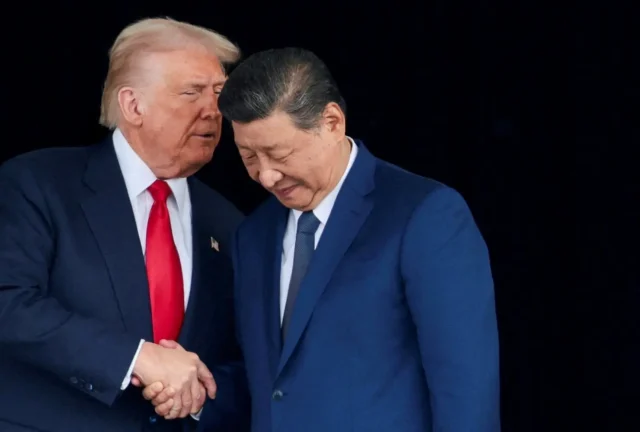
US President Donald Trump and China President Xi Jinping

The United States has approved the export of Nvidia’s powerful H200 artificial-intelligence chips to selected Chinese customers, marking a major shift in Washington’s technology-control policy while imposing a 25 percent levy on all such sales.

President Donald Trump confirmed the move on Monday, announcing that he had already informed Chinese President Xi Jinping of the decision. According to him, Beijing responded “positively” to the arrangement.

“I have informed President Xi… that the United States will allow NVIDIA to ship its H200 products to approved customers in China and other countries, under conditions that allow for continued strong national security,” Trump said on his platform, Truth Social. “President Xi responded positively! 25% will be paid to the United States of America.”

The approval reopens a lucrative market for Nvidia, whose Chinese business was hit hard after previous export restrictions blocked access to advanced AI chips. The Department of Commerce will screen all buyers before any shipment, maintaining what U.S. officials describe as a “controlled opening” designed to protect sensitive technologies.

Nvidia welcomed the decision, saying in a statement that the agreement “strikes a thoughtful balance that is great for America,” noting that it preserves “high-paying jobs and advanced manufacturing” while keeping the U.S. competitive in global AI markets.

The move represents a sharp reversal from earlier bans on AI-chip exports to China, which Washington justified on national-security grounds. Critics warn the renewed access could accelerate China’s military and technological capabilities, while supporters argue the new 25 percent fee ensures the U.S. retains both economic and strategic leverage.

The approval applies only to the H200 line of processors. Washington has kept restrictions in place on Nvidia’s most advanced Blackwell and upcoming Rubin chips, which remain off-limits to Chinese buyers.

Updated: Nigeria To Deploy More Troops To Benin Republic

The Nigerian Senate on Tuesday approved a request by President Bola Ahmed Tinubu to deploy Nigerian troops to the Republic of Benin following last weekend’s attempted military coup in Cotonou.

During plenary, the Senate President, Godswill Akpabio, read the letter from Tinubu and confirmed that lawmakers had unanimously consented to the deployment. “An injury to one is an injury to all,” he declared, stressing that instability in a neighbouring state could pose a threat to the entire sub-region.

The presidential letter explained that the intervention aims to support the Beninese government’s efforts to restore peace and stability after a group of soldiers attempted to overthrow the government. The request is part of a broader regional security mission under the auspices of the Economic Community of West African States (ECOWAS), and cites Section 5, Part II of Nigeria’s Constitution — including prior consultation with the National Defence Council — as the legal basis for deployment.

The coup attempt occurred on Sunday when a faction calling itself the Military Committee for Refoundation (CMR) seized control of state television in Cotonou and announced the removal of President Patrice Talon. In response, Benin’s regular army, according to authorities, regained control of key installations.

As part of the intervention, Nigeria had already provided air support at the request of Benin’s government. The deployment of ground troops now forms part of a coordinated effort by ECOWAS. A regional standby force drawn from Nigeria, Sierra Leone, Côte d’Ivoire and Ghana has been ordered into Benin to help preserve constitutional order and safeguard territorial integrity, the bloc said.

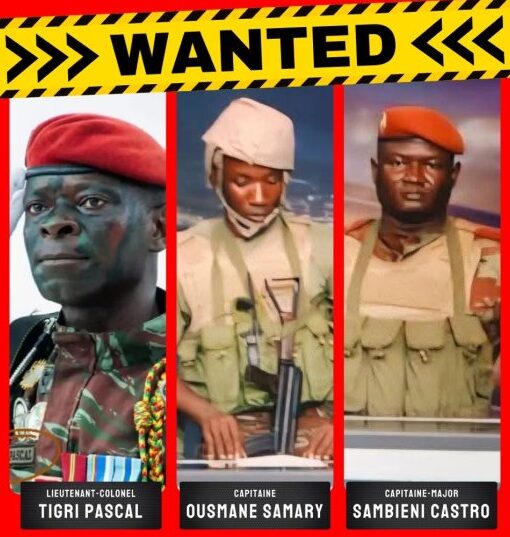
According to the Metro Standard report, constitutional authorities in Benin have declared three soldiers wanted, including Tigri Pascal, a captain named Ousmane Samary, and Major Captain Sambieri Castro.

Sierra Leone’s President, Julius Maada Bio — who currently chairs the ECOWAS Authority of Heads of State — praised Talon and Benin’s security forces for foiling the coup, and thanked member states for their solidarity. “With normalcy now restored … I commend President Patrice Talon’s leadership and the bravery of the Armed Forces for thwarting the attempted military coup,” he said, adding gratitude for “collective efforts … in defence of democracy and constitutional order.”

With Senate approval granted, the consent letter will be forwarded to the president, paving the way for deployment. The move underscores Nigeria’s commitment to regional security and collective defence under ECOWAS.

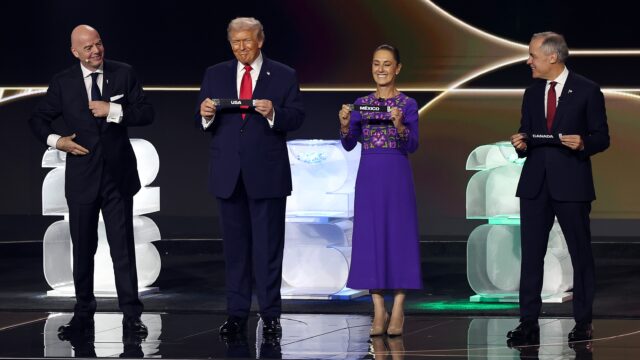
Morocco Draws Defending Champions Brazil in Challenging 2026 World Cup Group

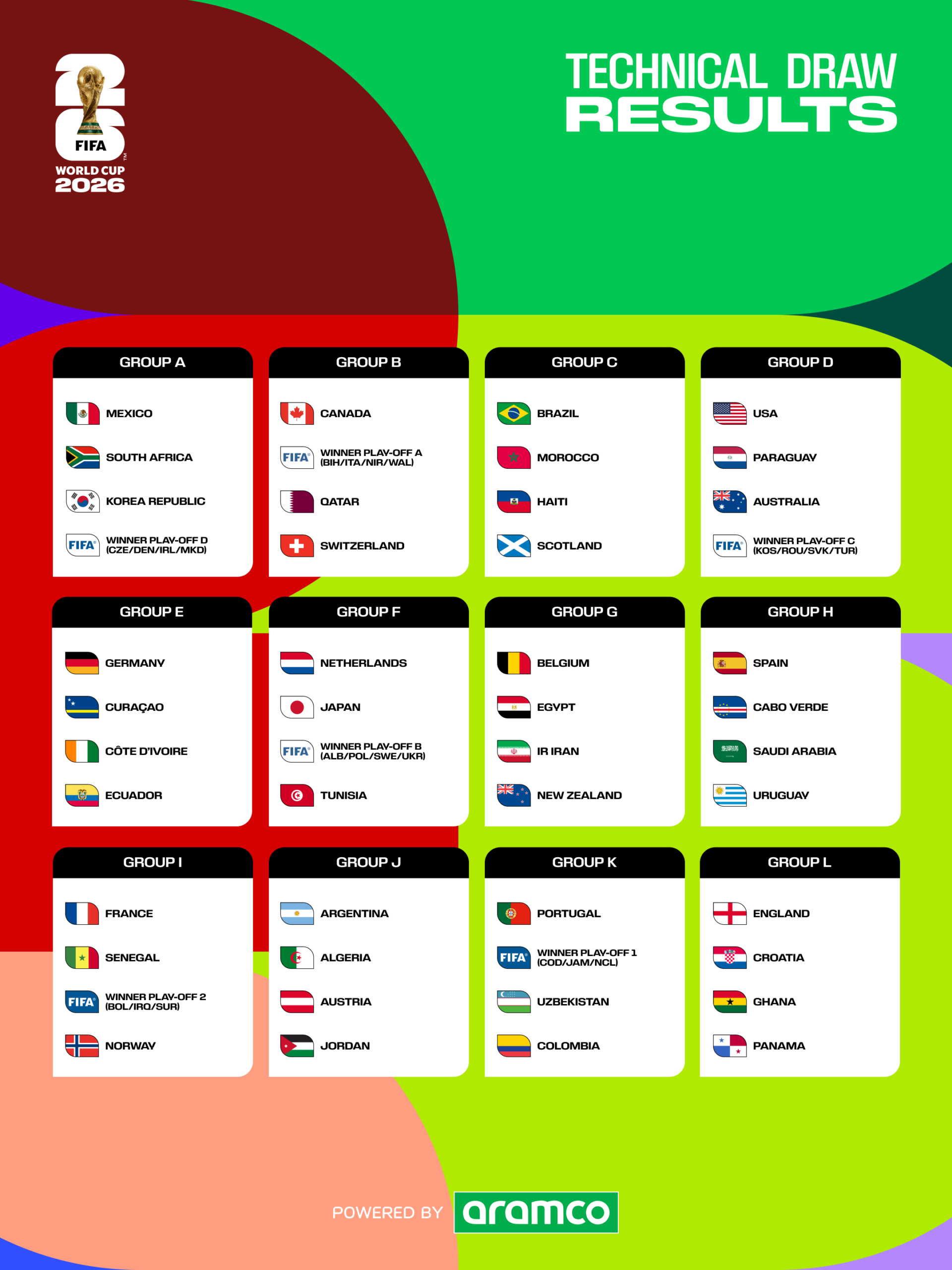
The 2026 FIFA World Cup draw has handed Africa one of its toughest opening-round challenges yet, with Morocco set to face defending champions Brazil in one of the most high-profile group pairings of the expanded 48-team tournament. The Atlas Lions, Africa’s standout performers in recent global competitions, now carry the weight of the continent’s hopes as they prepare for a showdown with the football superpower.

Morocco’s group, which also includes Scotland and Haiti, is widely viewed as one of the most competitive of the draw, posing a significant test for the African side looking to build on its recent history-making performances. While Morocco have earned global respect for their disciplined style, tactical evolution and fearlessness against top teams, Brazil represent a different tier of sustained football dominance. The South Americans enter the tournament with a renewed squad and the expectation of defending their title.

The challenge for African teams extends beyond Morocco. Across the draw, African representatives were matched against some of the strongest teams, raising concerns about early knockouts amid the larger competitive field. Ghana, placed in the same group as England and Croatia, face a daunting set of fixtures that revive old tensions from past World Cup clashes.

The expanded World Cup format, designed to increase global participation, has also intensified match-ups rather than diluting them. Teams were seeded based on rankings and continental distribution rules, but the randomness of the draw has left several African sides with steep mountains to climb.

The tournament kicks off on June 11, 2026, but not before six qualification slots are decided. Six groups are still incomplete as the final playoff fixtures approach. These remaining berths will be filled through intercontinental and regional playoff rounds scheduled for early next year, meaning that some African teams may not know their full group opponents until months before the tournament begins.

FIFA officials have noted that this uncertainty is one of the logistical challenges created by the tournament’s expanded structure, but insist the final qualifiers will “enhance global competitiveness.”

South Africa, returning to the World Cup stage with renewed optimism, also face a demanding group assignment. Drawn alongside two former World Cup quarter-finalists, their group promises a blend of physicality and tactical discipline. They face Mexico, Korea Republic and a yet-to-qualify team in Group A.

Senegal and Egypt, two of Africa’s most prominent football nations, also have difficult paths ahead. Senegal, known for its athleticism and cohesion, must contend with France, Norway, and a play-off winner in Group I.

Egypt are in Group G alongside Belgium, Iran, and New Zealand. While Tunisia will have an uphill task against The Netherlands, Japan, and a play-off winner among Albania, Poland, Sweden and Ukraine.

APC Disqualifies Omisore, Six Others From Osun Governorship Primary

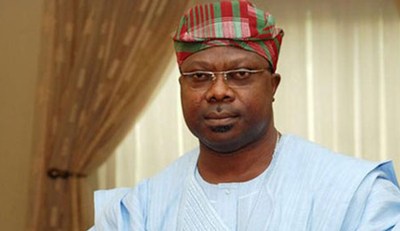
Senator Iyiola Omisore

The race for the Osun State governorship ticket under the All Progressives Congress (APC) has narrowed sharply after the party’s Screening Committee disqualified former National Secretary of the APC, Senator Iyiola Omisore, along with six other aspirants from participating in the December 13 primary election. The development marks a dramatic shift in the internal contest ahead of the 2026 governorship poll scheduled for August 8.

In its report submitted to the APC National Working Committee (NWC) in Abuja, the committee said the disqualified aspirants failed to meet critical nomination criteria, particularly the requirement for sponsorship by at least five fully registered and financially up-to-date party members from each Local Government Area. Only Mulikat Abiola Jimoh and former Finance Commissioner Munirudeen Bola Oyebamiji were cleared to contest the primary.

The committee emphasized that its decision was rooted in strict adherence to procedural fairness and transparency. “Examination of documents and materials: All forms, declarations, supporting materials, and attachments submitted by aspirants were thoroughly reviewed to verify their authenticity and compliance with statutory and party requirements,” the panel stated in its assessment. It added that “each aspirant underwent a structured interview session during which the Committee assessed their knowledge of party rules, personal preparedness, adherence to nomination requirements, and overall suitability.”

Beyond the disqualifications, the committee expressed concern over deepening internal divisions within the Osun APC. It urged the party leadership to initiate an immediate reconciliation process to prevent further factionalisation as preparations intensify for the 2026 election. The panel warned that unresolved conflicts could weaken the party’s chances and stressed the need to present a united front in the coming months.

Supreme Court Strikes Out Osun’s Suit on Withheld LG Funds, Slams FG

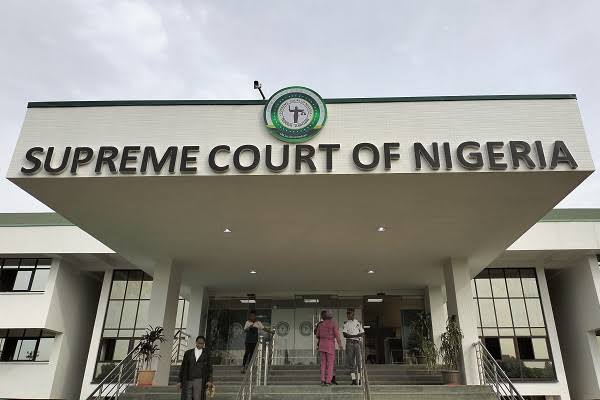
The Supreme Court on Friday dismissed a suit filed by the Attorney General of Osun State seeking to compel the Federal Government to release withheld local government allocations, even as it delivered a stinging rebuke to the Federal Government for violating the constitution.

In a split judgment of six to one, the apex court held that the Osun State Attorney General had no legal capacity to sue on behalf of the 30 local government councils. The court ruled that only democratically elected and properly inaugurated local government officials can institute such an action. The decision effectively struck out the suit marked SC/CV/775/2025, in which Osun had sought ten reliefs, including an order compelling the Attorney General of the Federation to obey earlier court rulings affirming the election of council officials held on February 22, 2025.

Despite striking out the case, the Supreme Court delivered a pointed condemnation of the Federal Government’s actions. In the lead judgment, Justice Mohammed Idris described the withholding of local government funds as a “grave breach” of the 1999 Constitution and its recent landmark decision granting full financial autonomy to local councils. He stated that the Federal Government’s hands were “soiled” by the unlawful seizure of funds and warned that allocations must be paid directly into the accounts of local governments in accordance with constitutional provisions.

Justice Idris also dismissed contempt allegations filed by the Attorney General of the Federation against Osun State, turning the accusation back on the Federal Government. He ruled that the FG itself was in the greater contempt for failing to release the funds as required by law. The justice further held that the Osun Attorney General acted improperly by bringing the suit without proof that he had been formally instructed by the local government councils.

In a dissenting judgment, Justice Emmanuel Agim disagreed with the majority, insisting that the Osun Attorney General did in fact have the authority to file the suit. He strongly criticized the Federal Government’s withholding of funds, warning that the practice was capable of crippling local governance and undermining democracy at the grassroots.

The decision, while procedurally unfavourable to Osun State, reinforces the constitutional principle of local government autonomy and underscores the illegality of federal interference in statutory allocations, setting the stage for further legal and political battles over the country’s troubled federal structure.

Tinubu Appoints New Boards for NADF, Bank of Agriculture, UBEC

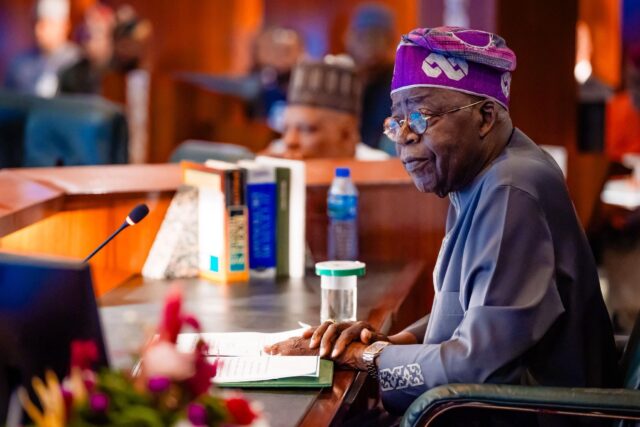
President Bola Tinubu

President Bola Ahmed Tinubu has approved the full constitution of the boards of three key institutions—the National Agricultural Development Fund (NADF), the Bank of Agriculture (BOA) and the Universal Basic Education Commission (UBEC)—as part of ongoing efforts to strengthen agricultural financing and basic education delivery across the country.

According to the statement released by Special Adviser to the President on Information and Strategy, Bayo Onanuga, Tinubu reaffirmed Senator Umaru Tanko Al-Makura as chairman of the UBEC Board, a position he has held since his appointment in July. The President also approved new zonal representatives, including Uchendu Ikechi Mbaegbulem for the South-East and Gift Ngo for the South-South. Other members include Mrs. Ibiwunmi Akinnola representing the South-West, Dr. Meiro Mandara for the North-East, Dr. Abdu Imam Saulawa for the North-West, and Professor Paul Ibukun-Olu Bolorunduro for the North-Central. The chairman and members “shall hold office for a term of four years in the first instance,” the statement noted.

At the Bank of Agriculture, President Tinubu confirmed earlier appointments, naming Muhammad Babangida as chairman and Ayo Sotinrin as managing director. The President also approved the appointment of three executive directors and five non-executive directors drawn from across Nigeria’s six geopolitical zones. Fatima Garba from Sokoto will serve as Executive Director, Corporate Services; Ka’amuna Ibrahim Khadi of Borno State becomes Executive Director, Risk Management and Strategy; while Hakeem Oluwatosin Salami from Kwara takes charge as Executive Director, Operations. The non-executive directors include Aminu Malami Mohammed (North-East), Charles Amuchienwa (South-East), Oladejo Odunuga (South-West), Rabiu Idris Funtua (North-West) and Kochi Donald Iorgyer (North-Central).

In the agricultural sector, the President also inaugurated the board of the National Agricultural Development Fund (NADF), following the earlier appointment of Muhammad Abu Ibrahim as its Executive Secretary and CEO in October 2023. Tinubu emphasized that the board members would be “pivotal to the agency’s work,” especially as the Fund—described as an initiative “conceived by farmers and agripreneurs”—moves toward improving access to affordable agricultural financing nationwide.

The NADF board will be chaired by Mallam Bello Maccido, pioneer chairman of FBNQuest Merchant Bank Limited, who represents the North-West and brings over 30 years of experience in financial services. Other members include Dr. Nelson Henry Essien representing the South-South; Amina Ahmed Habib, a fellow of the Institute of Chartered Accountants, representing the North-West; and engineer-entrepreneur Akinyinka Olufela Akinnola representing the South-West. The North-East is represented by Hassan Tanimu Musa Usman, founder of New Frontier Developments Ltd and former Access Bank non-executive director, while Lufer Samson Orkar represents the North-Central. The South-East slot is filled by Felix Achibiri, Group Director of Genesis Energy Holdings and chairman of DFC Holdings Limited.

Rivers Speaker, 16 Assembly Members Defect to APC

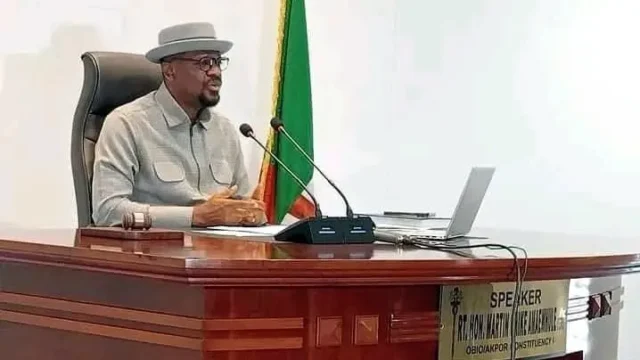
Amaewhule

In a dramatic shift of political allegiance, the Speaker of the Rivers State House of Assembly, Rt Hon. Martin Chike Amaewhule, alongside 16 fellow lawmakers, officially defected from the Peoples Democratic Party (PDP) to the ruling All Progressives Congress (APC) on Friday, citing persistent internal divisions within the PDP as the reason for their move.

Amaewhule, who represents Obio-Akpor I constituency, stood before his colleagues during Friday’s plenary session in Port Harcourt and declared: “The major reason for leaving the PDP is because of the division in the PDP.”

He added that his decision to join the APC was a strategic choice to “join forces with Mr President [Bola Ahmed Tinubu]. He is doing so much for this country.”

During the plenary, Amaewhule formally announced that he had written to his ward chairman signalling his departure from the PDP and declared: “APC is my new party. I will do all that is needed to be done towards ensuring that the party card of the All Progressives Congress is issued to me in no time.”

With their defection, the APC now holds a stronger position within the Rivers State Assembly. The lawmakers listed as joining Amaewhule included key figures such as the Deputy Speaker and other prominent members from constituencies like Akuku-Toru, Okrika, Ogba/Egbema/Ndoni, Port Harcourt, Asari-Toru, and Degema.

This realignment comes amid ongoing political turbulence in Rivers State, where the PDP has governed since 1999 but has recently been riven by factional disputes. The crisis deepened following a conflict between lawmakers and Governor Siminalayi Fubara’s administration, which at one point led to the partial demolition of the Assembly complex and a declaration of state of emergency by President Tinubu.

Nigeria Moves to Boost Local Health Funding as Donor Support Declines

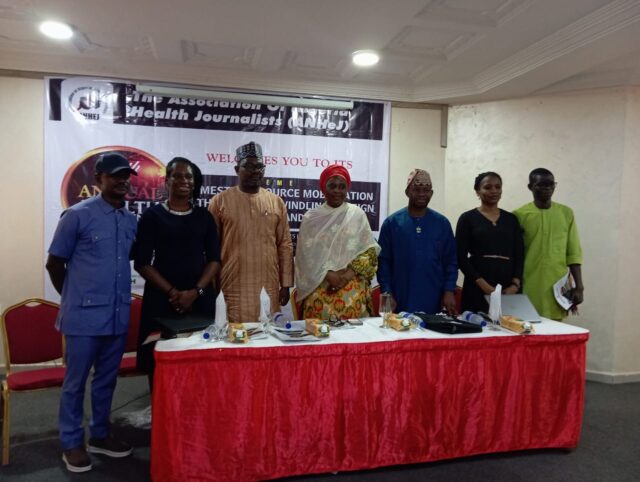
Speakers at the health conference.

The Federal Government has announced a renewed push to strengthen domestic funding for the country’s health sector, warning that Nigeria cannot achieve Universal Health Coverage (UHC) by relying on dwindling international aid.

The declaration was made at the 9th Annual Health Conference of the Association of Nigerian Health Journalists (ANHeJ), where senior health officials and stakeholders emphasized the need for stronger local ownership of health financing.

Speaking at the event, Special Adviser to President Bola Ahmed Tinubu on Health, Dr. Salma Ibrahim Anas, said sustainable progress in the sector depends on Nigeria’s ability to finance its own health priorities. According to her, declining donor grants have made it imperative for the country to develop resilient internal funding structures capable of supporting long-term reforms. She noted that domestically driven financing also fosters accountability and ensures that policies remain aligned with national needs and realities.

Dr. Anas highlighted several ongoing efforts to widen the funding base, including strengthening the Basic Health Care Provision Fund (BHCPF), expanding financial protection mechanisms under the National Health Insurance Authority (NHIA) Act, and exploring new revenue streams such as the Sugar-Sweetened Beverages (SSB) Tax. These strategies, she said, will help Nigeria reduce out-of-pocket spending, expand insurance coverage and improve access to essential services, especially for vulnerable populations.

Participants at the conference stressed that state governments must play a more active role in financing health services. Many speakers renewed calls for states to fulfill the Abuja Declaration commitment of dedicating at least 15 percent of their annual budgets to health. They warned that several states continue to fall short of this target, undermining national efforts to build a stronger and more equitable health system.

Wizkid, Asake Announce Joint EP ‘REAL Vol. 1’ For December

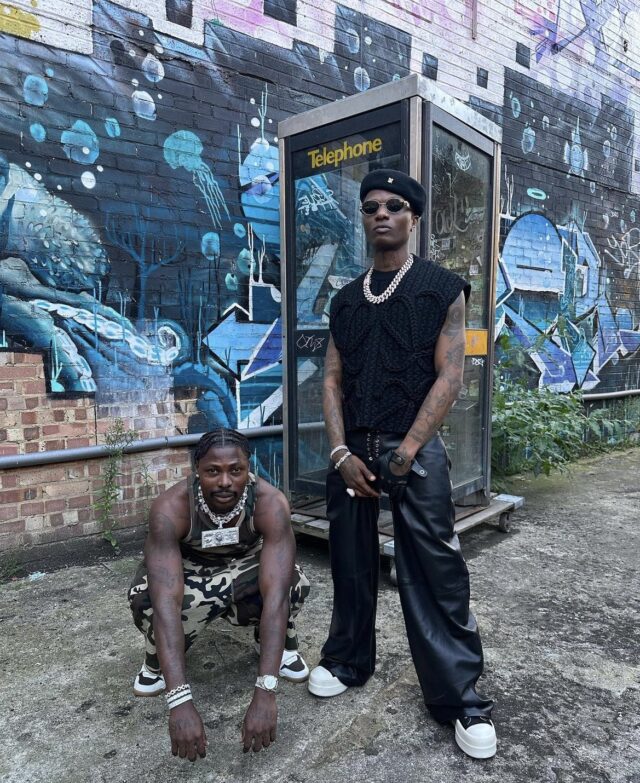
Asake and Wizkid

Afrobeats heavyweights Wizkid, Morayo and Asake have ignited excitement across the music scene with the reveal of their joint EP, REAL Vol. 1, during a high-energy radio takeover hosted by DJ Tunez.

The duo gave fans a taste of what’s coming, teasing the vibrant, street-infused sound of their upcoming single Jogodo while sharing eye-catching promo shots of themselves lounging by a private jet and posing against a graffiti-splashed wall.

The announcement marks a new chapter in a creative relationship that has already delivered fan favourites like MMS. It also arrives at a time when Wizkid continues to dominate Spotify charts and Morayo and Asake maintain strongholds on Apple Music, setting the stage for a collaborative project with significant streaming impact.

While the artists have yet to confirm an exact release date, the EP is expected to drop just in time for the December festivities—traditionally one of Afrobeats’ most vibrant periods. Insiders say REAL Vol. 1 will fuse Wizkid’s signature smooth melodies with Morayo’s soulful depth and Asake’s unmistakable street flair, creating a multi-layered sound tailored for both global playlists and Nigerian party scenes.

Hints from the radio takeover also suggest that this release is just the beginning, with talk of additional volumes already in motion. Fans are now eagerly waiting to see how the trio’s synergy evolves as Afrobeats continues to push its boundaries and expand its global footprint.

Dangote Urges African Entrepreneurs to Invest on Continent

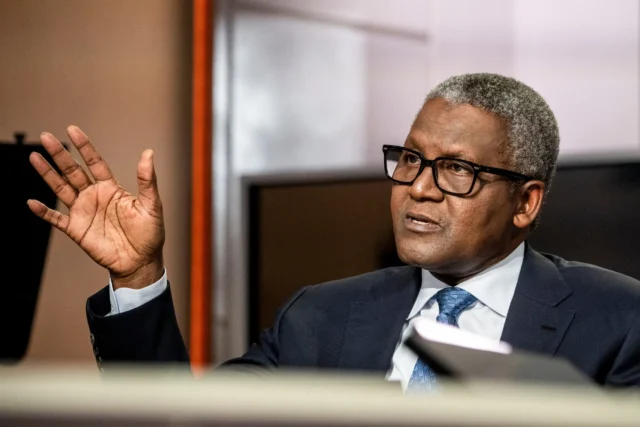
Aliko Dangote

African business magnate Aliko Dangote delivered a provocative message to entrepreneurs across the continent at the Imo State Economic Summit 2025 held in Owerri on Thursday, urging them to invest at home first.

Speaking passionately to a gathering of business leaders and policymakers, Dangote emphasised that local investment is the foundation for attracting international capital. “If we don’t invest at home, there is nobody on earth who will come and invest here,” he said.

Setting the tone, Dangote credited the administration of Bola Ahmed Tinubu for bold economic reforms in Nigeria, asserting that recent policy shifts are already paying dividends. “I want to first of all thank President Bola Tinubu for his bold policies, which are already yielding results. He really took some bold economic steps, one of which was the removal of fuel subsidy,” Dangote remarked.

He went on to urge local entrepreneurs not to wait for foreign players but to lead the way in transforming Africa’s investment landscape.

Dangote pointed out that Africa holds about 30 percent of the world’s mineral resources, yet much of the investment and value-creation opportunities remain unclaimed locally. “When I say at home, I mean in Nigeria and Africa. There are so many potential and mineral resources in Africa,” he noted. “If we don’t lead the way by putting down investment, who do we expect to come and invest in our continent?”

His remarks carried a sense of urgency: local investors must step forward or risk ceding their opportunities to outside interests.

Highlighting his own company’s ambitions, Dangote detailed plans to scale up major projects within Nigeria. He revealed that the Dangote Group intends to become the “number one” fertilizer producer by 2028, increasing urea output from 3 million to 12 million tonnes. “We are investing heavily in fertilizer… we want to become the number one fertilizer plant in Nigeria by 2028,” he declared.

Moreover, he disclosed that the Dangote Refinery is being expanded to process 1.4 million barrels per day, surpassing global competitors: “The refinery will be at 1.4 million barrels per day… this has never been done anywhere in the world.”

In acknowledgement of one of the key enablers of growth, Dangote also praised the power initiative in Imo State, saying “there can never be growth without power,” and lauding Governor Hope Uzodinma for the 375 megawatt electricity project.

EDITOR PICKS

Recent Posts