Tinubu Orders All-Out Manhunt for Kasuwan Daji Attackers, Vows Swift Justice

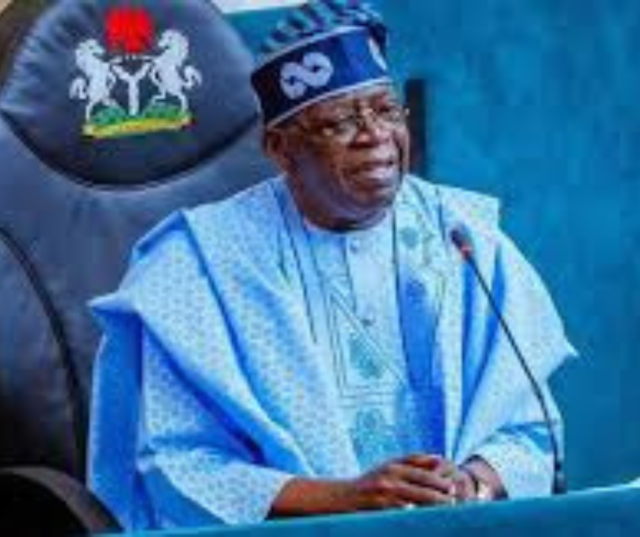
President Bola Ahmed Tinubu

President Bola Ahmed Tinubu has ordered an immediate and coordinated manhunt for the terrorists responsible for the deadly attack on Kasuwan Daji community in Niger State, directing Nigeria’s top security agencies to track down the perpetrators and rescue all abducted victims without delay.

The directive, issued on Sunday, mandates the Minister of Defence, the Chief of Defence Staff, the Service Chiefs, the Inspector-General of Police, and the Director-General of the Department of State Services to intensify operations aimed at apprehending those behind the assault. The attack, which left several villagers dead and women and children abducted, is believed to have been carried out by terrorists fleeing Sokoto and Zamfara states following a United States air strike on Christmas Eve.

The president strongly condemned the killings and abductions, describing the incident as a direct challenge to Nigeria’s security and national resolve. He expressed deep sympathy with the affected families and extended condolences to the government and people of Niger State over the tragic loss of lives.

“These terrorists have tested the resolve of our country and its people. They must, therefore, face the full consequences of their criminal actions,” the President said. “No matter who they are or what their intent is, they must be hunted down. They, and all those who aid, abet, or enable them in any form, will be caught and brought to justice.”

Beyond the immediate pursuit of the attackers, President Tinubu assured residents of Niger State that security agencies have been instructed to scale up patrols and intelligence-led operations around vulnerable communities, particularly areas close to forests that have long served as hideouts for criminal elements. He stressed that the protection of lives and the restoration of peace remain top priorities for his administration.

The President also called on Nigerians to remain calm, united and resolute in the face of the tragedy, warning against divisive rhetoric that could weaken national cohesion at a critical moment. According to him, collective resolve and cooperation with security agencies are essential to defeating terrorism and restoring stability to affected regions.

“These times demand our humanity. We must stand together as one people and confront these monsters in unison,” Tinubu said. “United, we can and must defeat them, deny them any sanctuary. We must reclaim the peace and security of these attacked communities.”


AFCON 2025 Draws Global Attention as FBI Reviews Stadium Security

A high-level delegation from the U.S. Federal Bureau of Investigation (FBI) has arrived in Morocco this week to conduct an in-depth review of the security and public safety protocols implemented for the Africa Cup of Nations 2025, reflecting growing international interest in the robust measures safeguarding one of Africa’s biggest sporting events.

According to Hespress, the delegation, led by Douglas Olson, Director of Operations at the FBI’s Field Intervention Services Division, and Kevin Kowalski, Deputy Director of the Emergency Response Group, is on an official visit from January 4 to January 6, 2026, aimed at studying Morocco’s comprehensive security framework and tactical coordination at football venues across the kingdom.

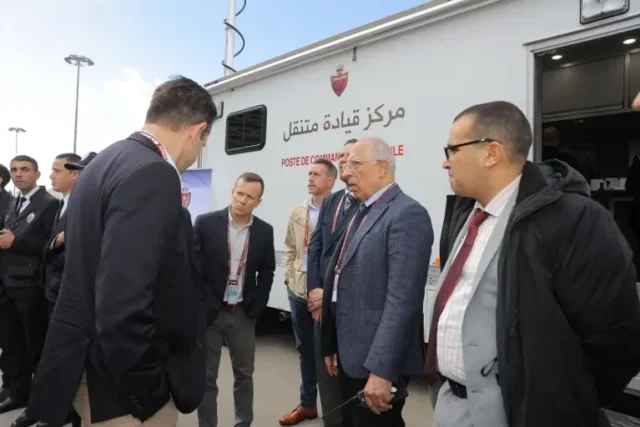
The visit began with a field inspection at Prince Moulay Abdellah Stadium in Rabat on the sidelines of Morocco’s AFCON match against Tanzania, where FBI officials observed first-hand the deployment of security personnel, access control measures, and a layered surveillance system that includes both drones and high-definition cameras. They also assessed the coordination between fixed and mobile command centres that help ensure rapid response capabilities during matches.

In addition to stadium visits, the U.S. delegation toured the African Security Cooperation Center — a purpose-built hub designed to enhance collaboration between Moroccan security agencies and police representatives from participating African nations. The centre, which plays a central role in coordinating operational logistics and real-time information sharing, provided the FBI team with insights into how such joint efforts can be scaled for future international events.

“This engagement allows us to learn from a security model that has been meticulously developed and tested in real-time,” one FBI official said during the visit, speaking on condition of anonymity due to the sensitive nature of the mission. “Understanding these protocols helps inform our own preparation for major global sporting events.”

The delegation’s schedule also includes a visit to Moulay Hassan Stadium, where they will examine security preparations for the match between Algeria and the Democratic Republic of the Congo. That assessment will particularly focus on how Moroccan authorities manage foreign fan entry points, operational coordination with international police officers and the deployment of “spotters” who monitor supporter movements inside and outside the venue.

Morocco’s security setup for AFCON has drawn attention for its integration of advanced technology and human resources, combining aerial surveillance, electronic tracking, and collaborative intelligence mechanisms to cover stadium perimeters, fan zones and transit corridors alike. Experts say these lessons could be valuable for the United States as it prepares to co-host the FIFA World Cup 2026, an event that FIFA requires be supported by an international security cooperation centre.

The visit underscores the increasing bilateral cooperation between Morocco and the United States on security matters beyond AFCON, extending into shared efforts on risk assessment, emergency response coordination and the use of cutting-edge technologies to protect large crowds at international events.

Somaliland Backs U.S. Capture of Maduro, Hails Move as Boost for Democracy

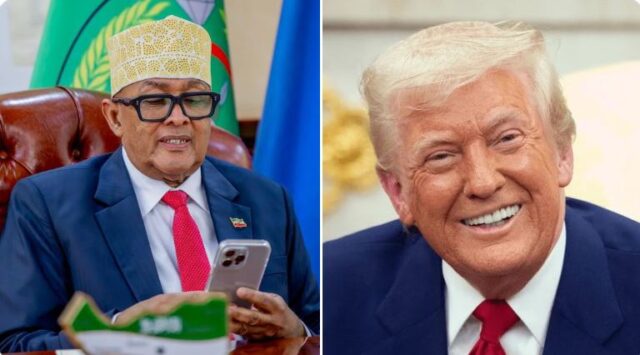
In a striking public declaration, the Government of Somaliland has voiced its support for the recent United States military operation that resulted in the capture of former Venezuelan President Nicolás Maduro, framing the action as a positive step toward restoring constitutional order and democratic governance in Venezuela.

The statement, issued on Monday by the Ministry of Foreign Affairs and International Cooperation, said Somaliland affirms its “principled alignment” with what it called “calibrated international action” by the United States. According to the government in Hargeisa, the operation — which saw Maduro and his wife, Cilia Flores, taken into U.S. custody — has the potential to “help alleviate humanitarian suffering, counter transnational criminal networks, and support a peaceful, Venezuelan-led transition based on sovereignty, accountability, and respect for human rights.”

“In line with international norms and collective security considerations, Somaliland believes that responsible U.S.-led engagement, carried out in coordination with regional and multilateral partners, can help facilitate a constructive political transition,” the statement added.

Somaliland’s public backing of the controversial U.S. operation marks a notable moment in the breakaway republic’s evolving foreign policy. The self-declared state — which declared independence from Somalia in 1991 and is recognised by only a handful of non-UN member states — rarely comments on geopolitical events beyond the Horn of Africa, making this endorsement particularly significant.

The U.S. operation, involving military action and Maduro’s removal from Venezuelan territory, has sparked intense debate internationally. Supporters argue it removes an entrenched authoritarian figure accused of criminal conduct and narcotics trafficking, while critics contend the move undermines sovereignty and international law. Responses have ranged from outright condemnation by countries such as Iran and Russia to more cautious calls for dialogue from international organisations like the African Union.

In Venezuela, reactions have been sharply divided. Officials loyal to Maduro — who remains detained in New York facing narcotics and weapons charges — have decried the U.S. action as an illegal intervention. Meanwhile, some Venezuelan citizens have reportedly celebrated the former leader’s removal, highlighting domestic frustration with years of economic and political turmoil.

Somaliland’s support also comes against the backdrop of its own international recognition efforts. Just days before the U.S. operation, Israel formally recognised Somaliland as a sovereign state — a move that ignited diplomatic controversy, particularly in neighbouring Somalia, which views the territory as part of its sovereign territory. Analysts note that Washington’s military action in Caracas and its growing relationship with Israel may have influenced Hargeisa’s willingness to publicly align with U.S. policy.

While the broader global community continues to weigh in on the legality and implications of Maduro’s capture, Somaliland’s endorsement signals a more assertive and outward-looking foreign policy posture from the Horn of Africa republic. As international reactions unfold and Venezuela’s political future remains uncertain, the Somaliland government said it hopes its position contributes to peaceful and democratic outcomes for the Venezuelan people.

Arsenal Edge Bournemouth in Five-Goal Thriller to Extend Premier League Lead

Arsenal strengthened their grip on the Premier League title race with a dramatic 3-2 comeback victory over AFC Bournemouth at the Vitality Stadium on Saturday, extending their lead at the top of the table to six points. The north Londoners twice came from behind in a pulsating contest that showcased their resilience and depth as the season reaches a critical phase.

Bournemouth stunned the visitors early when Brazilian striker Evanilson capitalised on a misplaced pass from Arsenal defender Gabriel Magalhães to fire the hosts into a 1-0 lead in the 10th minute. The Premier League leaders, however, responded with composure, and Gabriel quickly redeemed himself by powering home a goal six minutes later after a goalmouth scramble that levelled the score.

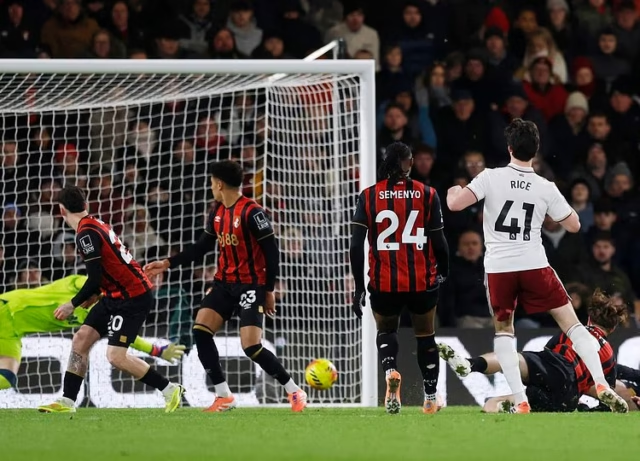
The turning point came in the second half, with Arsenal’s midfield dynamo Declan Rice marking his return from a knee injury in spectacular fashion. Rice struck first in the 54th minute, driving a low finish past Bournemouth goalkeeper Djordje Petrovic after slick build-up play involving Martin Ødegaard and Bukayo Saka. He then doubled his tally in the 71st minute, sweeping in a precise effort following a brilliant attacking move down the right flank.

Despite appearing to have the game under control, Arsenal were made to sweat when Bournemouth substitute Eli Junior Kroupi unleashed a stunning long-range strike in the 76th minute, narrowing the deficit and setting up a nervy finale. Yet, the visitors held firm, managing the closing stages with tactical maturity to secure all three points.

The result extends Arsenal’s unbeaten league run and sees them rise to 48 points from 20 games, six clear of second-placed Aston Villa and seven ahead of Manchester City, who have a game in hand. Villa boosted their own title credentials with a 3-1 win over Nottingham Forest earlier on Saturday, but Arsenal’s response underlines their status as serious title contenders this season.

Following the game, Rice reflected on the importance of the victory, emphasising Arsenal’s relentless approach as the New Year schedule intensifies. “The win against Villa would have meant nothing if we didn’t come here today and didn’t pick up anything,” Rice said. “It’s our first win, but we’re not done yet, we want to get higher and higher.”

Arsenal manager Mikel Arteta also praised Rice’s impact, particularly given the midfielder’s recent injury concerns. The victory represented Arsenal’s fifth straight league win, reinforcing their consistency and resolve at a time when rivals are pushing to close the gap.

For Bournemouth, the defeat extended a 11-game winless run in the Premier League, leaving them 15th in the table and searching for momentum ahead of upcoming fixtures. Despite a spirited performance and an early lead, the Cherries were ultimately unable to contain Arsenal’s attacking threat in the second period.

AFCON 2025 Knockout Night: Mali Stun Tunisia, Senegal March On

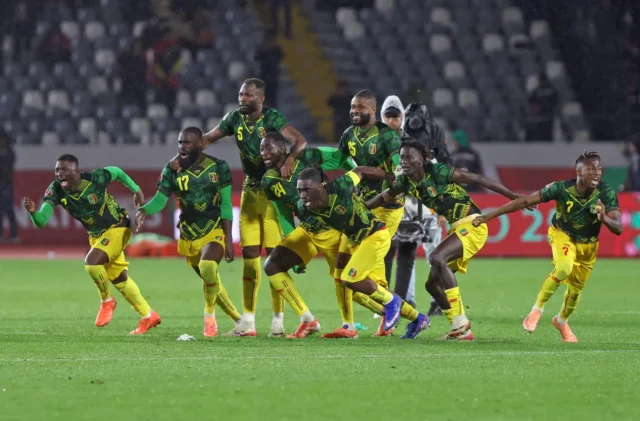
Mali celebrate after beating Tunisia via penalty shootouts. Credit: CAFonline

The Africa Cup of Nations 2025 reached new heights of drama on Saturday, as the Round of 16 produced a thrilling penalty shootout, a commanding Senegal victory and confirmation that the continent’s elite sides are ready to battle for a place in the quarter-finals.

In Casablanca, under the lights at the Stade Mohammed V, Mali delivered one of the standout performances of the knockout phase by eliminating Tunisia in dramatic fashion. The tightly contested encounter ended 1-1 after extra time, with Mali holding their nerve to win 3-2 on penalties and book a quarter-final clash with Senegal.

Although Mali were reduced to 10 men in the first half following a red card, they displayed steely resilience against a Tunisian side that dominated possession for much of the match. Tunisia looked poised for victory when Firas Chaouat headed them into the lead late in regulation time, only for Mali to force extra time thanks to a last-gasp penalty converted by Lassine Sinayoko deep into stoppage time.

The shootout then unfolded as a test of psychological strength, with Mali’s goalkeeper Djigui Diarra emerging as the hero by making key saves that ultimately tipped the balance in the West Africans’ favour. “This night in Casablanca will be remembered as a triumph of courage,” noted spectators and analysts alike, as Mali sealed their place in the last eight.

Meanwhile in Tangier, defending champions Senegal stamped their authority on the competition with a convincing 3-1 victory over Sudan. The Teranga Lions rode the experience and clinical finishing that many expected from a side vying to retain their crown, showcasing a blend of tactical discipline and attacking threat. Senegal’s march into the quarter-finals underscores their status as one of the favourites in this year’s tournament.

Senegal’s match featured moments of tension, including an early shock when Sudan took the lead through Aamir Abdallah, but the West African giants responded with composure and quality to turn the tie around. Midfield maestro Pape Guèye scored and assisted, playing a pivotal role in his side’s progression and reinforcing Senegal’s reputation for knockout fluency.

Across both fixtures, the intensity of knockout football was on full display: strategic substitutions, momentum swings, emotional celebrations and the high stakes that define AFCON’s latter stages. For Tunisia, the elimination will surely be a bitter pill after enjoying long periods of control, while Sudan’s spirited run to the Round of 16 marks a significant achievement for the Nile Crocodiles.

As the tournament heads deeper into the knockout rounds, the remaining teams prepare for even fiercer contests. Mali’s reward for their thrilling shootout victory is a quarter-final showdown with Senegal on January 9, setting up a clash between strategy and star power that could define AFCON’s latter stages.

CAF Clears $150m Debt, Increases Champions League Rewards

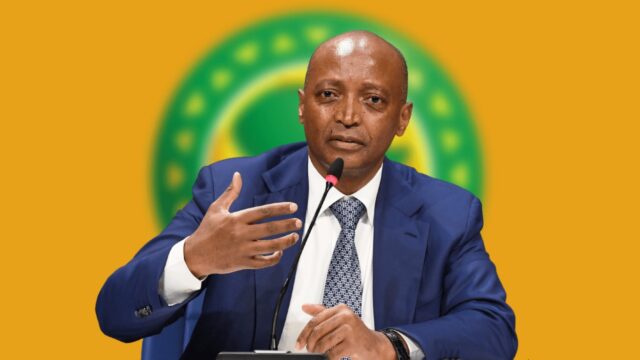
CAF president Patrice Motsepe

Confederation of African Football (CAF) President Patrice Motsepe has underlined the need to properly incentivise players and clubs across the continent, revealing that prize money for the CAF Champions League and the Confederation Cup has been increased as part of broader reforms to strengthen African football.

Motsepe made the remarks while reflecting on CAF’s financial turnaround and its renewed focus on rewarding performance and professionalism in continental competitions. According to him, improved incentives are central to raising standards and ensuring that African clubs can compete more effectively, both locally and globally.

“It is very important that players are properly incentivised,” Motsepe said. “That is why we have increased the money for the Champions League and the Confederation Cup. Players and clubs must feel that their hard work and success are being recognised.”

The CAF president also shed light on the financial challenges he met upon assuming office, describing the scale of the organisation’s debt at the time. Motsepe disclosed that CAF was burdened with liabilities running into hundreds of millions of dollars, a situation he said threatened the credibility and stability of African football’s governing body.

“When I arrived at CAF, the organisation owed more than 150 million dollars,” he said. “I am pleased to say that those debts have since been settled. CAF today is financially stable and better positioned to serve African football.”

Motsepe’s comments come amid ongoing reforms at CAF aimed at improving governance, restoring confidence among stakeholders and attracting greater commercial investment. Since his election, CAF has announced increases in prize money for its flagship club competitions, a move widely welcomed by clubs and players who have long complained about inadequate financial rewards despite the demands of continental football.

By clearing CAF’s inherited debts and boosting competition earnings, Motsepe said the organisation is laying a stronger foundation for sustainable growth. He stressed that financial discipline and fairness would remain central to his administration’s agenda, as CAF seeks to build a more competitive and commercially viable football ecosystem across Africa.

The increased prize money and improved financial health of CAF are expected to have a ripple effect, helping clubs invest more in player welfare, infrastructure and youth development, while also enhancing the overall appeal of African club competitions.

Canada Deports 366 Nigerians, Nearly 1,000 More Await Removal

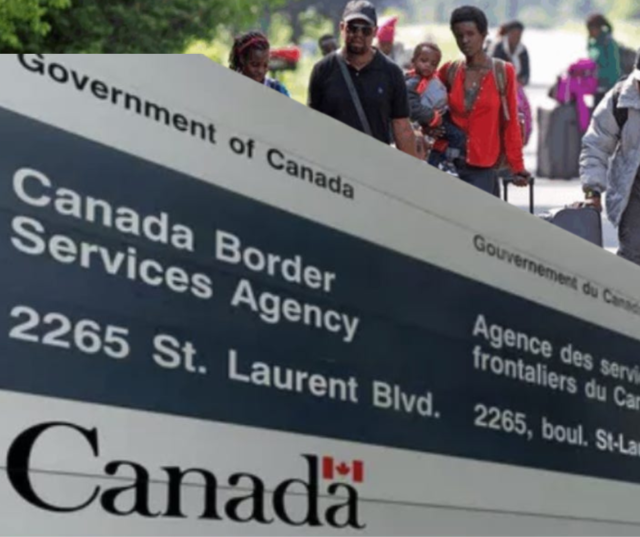
Canada has deported 366 Nigerian nationals as part of a sweeping immigration enforcement effort that marks one of the most intensive removal operations in over a decade, official figures reveal.

Data from the Canada Border Services Agency (CBSA) show that the deportations occurred between January and October 2025, a period during which Nigeria re-entered the list of countries most affected by Canadian removals, ranking ninth among nationalities deported by Canadian authorities. The statistics, updated as of November 25, 2025, also indicate that an additional 974 Nigerians are currently listed in Canada’s “removal in progress” inventory, meaning they have enforceable deportation orders but are yet to be returned.

The recent surge in deportations comes amid a broader crackdown on irregular immigration by Canadian officials, with the CBSA reportedly removing nearly 400 foreign nationals each week, representing the highest weekly deportation rate the country has seen in more than ten years. In the 2024–2025 fiscal year alone, Canada deported 18,048 people at an estimated cost of about $78 million, according to CBSA data.

Under Canada’s Immigration and Refugee Protection Act, the CBSA is legally obliged to remove foreign nationals with enforceable removal orders. Individuals may be deemed inadmissible for a variety of reasons, including failure to comply with immigration regulations, misrepresentation, criminal convictions, security concerns, health issues, or violations of human and international rights. Data from the agency suggest that approximately 83 per cent of those deported were failed refugee claimants whose asylum applications were rejected, while cases involving criminality accounted for a smaller proportion.

Nigeria’s reappearance on the top ten list follows several years of fluctuating deportation numbers. In 2019, Canada deported 339 Nigerians, a figure that later declined before Nigeria dropped off the list entirely in 2023 and 2024. The 366 removals recorded so far for 2025 represent an eight per cent increase compared with the 2019 total, underscoring a notable shift in Canada’s immigration enforcement landscape.

The developments have reverberated across Nigerian diaspora communities and prompted renewed discussion on immigration, asylum policy and Canada’s evolving approach to border security. Many Nigerians migrate to Canada in search of better economic opportunities or to seek asylum on the basis of insecurity and hardship at home, with thousands filing refugee claims each year. According to other sources, Canada has also processed thousands of Nigerian asylum applications, with a significant number of claims being accepted, reflecting the complexity of migration patterns between the two countries.

U.S. Justice Department Charges Venezuela’s Maduro With Narco-Terrorism

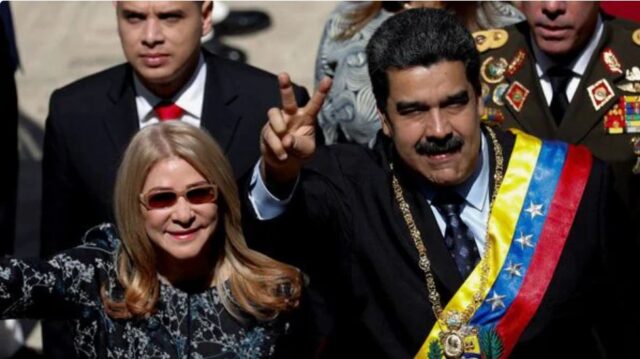
Maduro and wife

The United States Department of Justice has announced the indictment of Venezuelan President Nicolás Maduro and his wife, Cilia Flores, on multiple serious criminal charges, marking a dramatic escalation in Washington’s long-running confrontation with the Caracas leadership.

U.S. Attorney General Pamela Bondi disclosed the development in a statement on Tuesday, confirming that a federal grand jury in the Southern District of New York has returned indictments against the Venezuelan leader and his spouse. According to the Justice Department, Maduro faces charges including narco-terrorism conspiracy, cocaine importation conspiracy, possession of machine guns and destructive devices, as well as conspiracy to possess machine guns and destructive devices against the United States.

“Nicolás Maduro and his wife, Cilia Flores, have been indicted in the Southern District of New York,” Bondi said. “Nicolás Maduro has been charged with narco-terrorism conspiracy, cocaine importation conspiracy, possession of machine guns and destructive devices, and conspiracy to possess machine guns and destructive devices against the United States.”

In a striking claim, the Attorney General added that both defendants are expected to be brought before U.S. courts. “They will soon face the full wrath of American justice on American soil in American courts,” Bondi declared, without providing further operational details on the circumstances surrounding their capture or transfer.

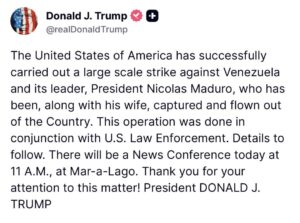
Social media post by U.S. President Donald Trump following the arrest of Maduro and wife on Saturday.

Bondi credited President Donald Trump for pushing what she described as long-overdue accountability, while also praising the role of the U.S. military in the operation. “On behalf of the entire U.S. Department of Justice, I would like to thank President Trump for having the courage to demand accountability on behalf of the American people,” she said. “A huge thank you to our brave military who conducted the incredible and highly successful mission to capture these two alleged international narco traffickers.”

The announcement represents one of the most consequential legal actions ever taken by the United States against a sitting foreign leader, deepening tensions between Washington and Caracas. U.S. authorities have for years accused Maduro and senior figures in his government of turning Venezuela into a hub for transnational drug trafficking and of collaborating with armed criminal and militant groups.

As of the time of this report, there has been no official response from the Venezuelan government or from representatives of Nicolás Maduro and Cilia Flores regarding the indictments or the Justice Department’s claims. The unfolding case is expected to have far-reaching legal, diplomatic and geopolitical implications, as global attention now turns to how and when the proceedings will move forward in U.S. courts.

Lagos Government Vows Tough Action as Fire, Building Collapse Claims More Lives

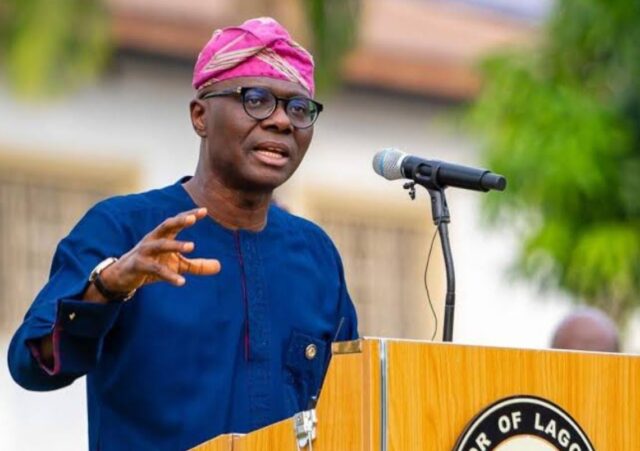
Lagos State Governor Babajide Sanwo-Olu

The Lagos State Government has pledged to enforce tougher regulatory measures to curb the rising incidents of fire outbreaks and building collapses across the state, following the deadly fire and partial collapse of the 22-storey Great Nigeria House in Lagos.

Governor Babajide Olusola Sanwo-Olu made the commitment while inspecting the site of the incident, which occurred about ten days ago and has so far claimed eight lives. The high-rise building was engulfed by fire before parts of it collapsed, triggering an extensive search-and-rescue operation that is still ongoing.

Addressing journalists at the site, Sanwo-Olu said the tragedy underscored the urgent need for stricter enforcement of building standards and safety regulations. He warned that the state government would take “tough but necessary decisions” to prevent avoidable disasters that continue to endanger lives and property.

“We will not shy away from making hard decisions where lives are at stake,” the governor said. “The continuous occurrence of fire incidents and building collapses is unacceptable, and we must confront the root causes decisively.”

Sanwo-Olu explained that excavation and debris-clearing efforts had been delayed because engineers could not guarantee the structural integrity of the remaining portion of the building. According to him, the section still standing poses a serious risk to rescue workers and nearby properties.

“The integrity of the part of the building that is still standing cannot be guaranteed,” he said. “That is why we have had to proceed with extreme caution before commencing full excavation.”

The governor directed the Lagos State Building Control Agency to immediately intensify enforcement actions against developers and property owners who erect substandard structures or flout approved building plans. He said such negligence was largely responsible for recurring collapses and fire disasters in the state.

“I have instructed the Lagos State Building Control Agency to clamp down, without delay, on substandard buildings and sharp practices that put lives in danger,” Sanwo-Olu stated. “We must send a clear message that safety regulations are not optional.”

While commiserating with families of the victims, the governor expressed the state government’s sympathy and assured them that every effort was being made to recover those still trapped and to determine the cause of the incident.

“Our hearts go out to the families who have lost loved ones in this tragic incident,” he said. “The state stands with you at this difficult time.”

Sanwo-Olu also called for the support of federal agencies and multinational companies with specialised technical expertise to safely bring down the damaged structure, allowing excavation to proceed without further risk.

“We are seeking the cooperation of relevant federal agencies and international partners who have the technical capacity to safely dismantle the remaining structure so that excavation can commence immediately,” he added.

Emergency responders confirmed that eight bodies have so far been recovered from the site, while investigations into the cause of the fire and collapse continue.

The incident has once again raised concerns about building safety, regulatory enforcement and emergency preparedness in Nigeria’s commercial capital, with the state government insisting that stricter oversight is now unavoidable to prevent future tragedies.

Somaliland President Warns of Growing Hostility as Mass Protests Sweep Somalia Over Israel Recognition

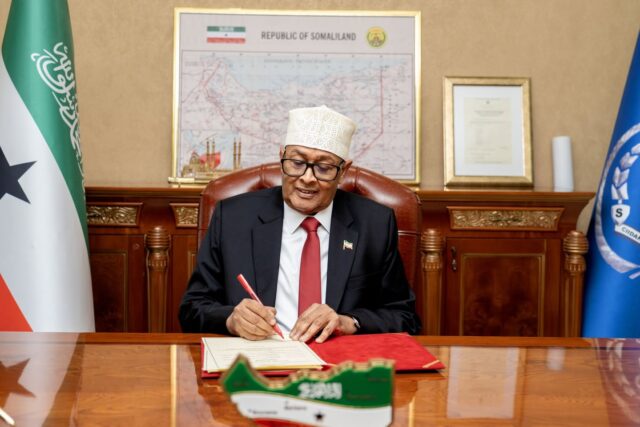
Somaliland president, Abdirahman Abdillahi Irro

Somalia is experiencing a wave of fierce public unrest and deepening political tension after Israel’s historic recognition of Somaliland as an independent state, prompting mass protests, urgent diplomatic activity and a warning from the President of Somaliland about rising hostility in the region.

Tens of thousands of Somalis have taken to the streets in cities across the country, including the capital Mogadishu, Baidoa, Dhusamareb, Las Anod and Buhoodle, in what security analysts are describing as the largest nationwide demonstrations in years. Crowds of men, women and youth flooded main roads, waving Somali flags and chanting for unity and the preservation of Somalia’s territorial integrity, angrily opposing what they view as a violation of their nation’s sovereignty.

The protests erupted shortly after Israel became the first country to formally recognise the self-declared Republic of Somaliland on December 26, 2025, in a move that has upended political calculations in the Horn of Africa and drawn strong regional and international condemnation. Somaliland, which declared independence from Somalia in 1991 following a civil conflict, had long sought diplomatic recognition but had never before secured formal endorsement from a UN member state.

The Somali government, supported by leaders in the protests, has blasted the recognition as an unlawful affront to national unity. In a recent emergency session of the United Nations Security Council, Somalia’s UN ambassador Abu Bakr Dahir Osman told world leaders that Israel’s action threatened both regional stability and the principles of international law. “This utter disdain for law and morality must be stopped now,” he said, warning that the recognition “aims to promote the fragmentation of Somalia.”

Somalia’s National Consultative Council, which brings together the President, Prime Minister and regional leaders, declared the recognition “illegal” and urged the Somali people to stand united in defence of their nation’s unity and peace. A communique released by the council said the decision disregarded Somalia’s sovereignty and imperilled security from the Red Sea to the Gulf of Aden.

Amid the tumult in Somalia, Somaliland’s President Abdirahman Mohamed Abdullahi has warned that the territory’s newfound diplomatic recognition has also generated growing hostility both within and beyond its borders, and called for unity and heightened security as tensions mount.

In comments addressing both supporters and critics, the Somaliland leader emphasised the need for calm and resilience in the face of opposition from Mogadishu and parts of the international community. He said the move towards formal recognition was intended to bolster Somaliland’s diplomatic prospects and foster broader cooperation — not to provoke conflict. However, in a sign of how fraught the situation has become, he acknowledged that critics view the recognition as a threat, and urged his people to remain vigilant. He also highlighted Somaliland’s historical quest for statehood and its efforts to engage with the world on its own terms.

Throughout Somalia, protesters have voiced similar themes of unity and resistance. In the capital’s Mogadishu Stadium, religious leaders and civil society figures urged demonstrators to reject external interference, with many condemning the recognition as part of a broader geopolitical manoeuvre that undermines Somali sovereignty. “We stand for the unity of the Somali people wherever they are,” one rally speaker told the gathering, reflecting the strong nationalist sentiment animating the protests.

Somalia’s Foreign Minister Abdisalam Abdi Ali also weighed in, warning that Israel’s decision could have serious regional consequences, including heightened insecurity in the Horn of Africa and disruption of critical maritime corridors such as the Red Sea and the Gulf of Aden.

The diplomatic backlash has been significant. At the Security Council, several nations condemned Israel’s recognition, arguing it set a dangerous precedent that could embolden separatist movements elsewhere. A senior United Nations official reiterated that existing UN Security Council resolutions affirm Somalia’s sovereignty and territorial integrity, and urged peaceful dialogue rather than actions that might escalate tension.

Turkish President Recep Tayyip Erdogan, hosting Somali President Hassan Sheikh Mohamud in Istanbul this week, described the recognition as “unacceptable” and reiterated Turkey’s backing for a united Somalia. Mohamud decried the move as a violation of international law and said the bilateral talks would focus on rallying diplomatic support against what both leaders view as a destabilising act.

As mass protests continue and diplomatic pressure mounts, the crisis over Israel’s recognition of Somaliland has underscored deep anxieties about state sovereignty, territorial integrity and regional security. For many Somalis, the demonstrations reflect a collective outcry against what they perceive as external interference in their nation’s affairs, even as leaders in both Somalia and Somaliland seek to navigate a rapidly shifting political landscape.

The coming days are likely to see further protests, intensified diplomatic engagement and possible negotiations aimed at de-escalation — but for now, the streets of Somalia echo with calls for unity, defiance and national pride.

EDITOR PICKS

Recent Posts