Troost-Ekong: Super Eagles Ready to Turn AFCON Pain into Glory

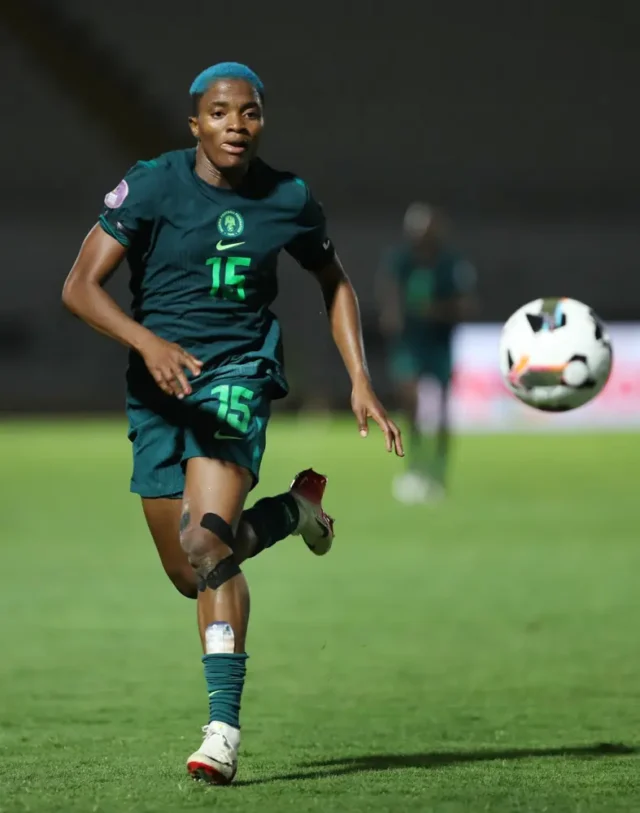
Nigeria captain William Troost-Ekong has said that the Super Eagles are traveling to the upcoming AFCON 2025 with a deeper belief, shaped by the anguish of their defeat in the previous final. In an exclusive interview with CAFOnline, Troost-Ekong remarked: “We learned from pain — now we’re ready” as Nigeria aims to convert heartbreak into triumph.

Troost-Ekong, who plays in Saudi Arabia, described a camp imbued with fresh energy. “The team is excited … the last AFCON left a lasting impression for all of us,” he said, adding that the squad is eager for another chance at the title.

He admitted that in the 2023 final against Côte d’Ivoire, emotions got the better of his side: “We probably should have broken it down more and focused on how we wanted to play instead of playing the occasion.” This time, he stressed, the approach would be more measured.

While acknowledging Nigeria’s strengths, Troost-Ekong cautioned against presumptions. “I think that’s overstated [calling us favourites],” he stated, pointing to the quality of other contenders such as hosts Morocco and defending champions Côte d’Ivoire.

On what it takes to win the continent’s crown, the captain emphasized the blend of intangibles: “Heart, togetherness and consistency.” He noted that momentum must grow gradually through the stages of the tournament, warning against complacency or panic.

Speaking on Nigeria’s group — which includes Tunisia, Uganda, and Tanzania — Troost-Ekong acknowledged no match would be easy. He called Tunisia “high in confidence” and affirmed that matches against Tanzania and Uganda will require focus.

Inside the locker room, the atmosphere is light, he said. Troost-Ekong revealed that Samuel Chukwueze acts as DJ, Victor Boniface contributes comic relief, and Raphael Onyedika is often among the funnier personalities — but all are united in purpose.

Troost-Ekong ended with a plea to fans, thanking those who stayed loyal during Nigeria’s slow start in qualifying: “Please stay behind us … when all of Nigeria — 250 million plus — stands together, that’s our power.”

Nigeria Exits FATF ‘Grey List’ in Major Win for Tinubu Administration

Nigeria President Bola Tinubu

In a significant boost to its international financial standing, Nigeria has been formally delisted from the Financial Action Task Force (FATF) Grey List, a move hailed by President Bola Ahmed Tinubu as a “strategic victory for our economy.”The decision was announced on Thursday at the FATF Plenary in Paris, France, effectively removing Nigeria from the list of jurisdictions under increased monitoring due to deficiencies in combating money laundering and terrorist financing.
President Tinubu, in a statement released by his Special Adviser, Bayo Onanuga, described the delisting as a “major milestone in Nigeria’s journey towards economic reform, institutional integrity and global credibility.”
This achievement culminates over two years of sustained effort after the FATF placed Nigeria on the grey list in February 2023. The listing served as a stark warning from the global community, prompting a comprehensive overhaul of the nation’s Anti-Money Laundering and Counter-Financing of Terrorism (AML/CFT) framework.
“The message from the global community was clear: the nation needed more vigorous enforcement, better coordination, and greater transparency,” the presidential statement read. “Rather than treat this as a setback, Nigeria viewed it as a call to action.”
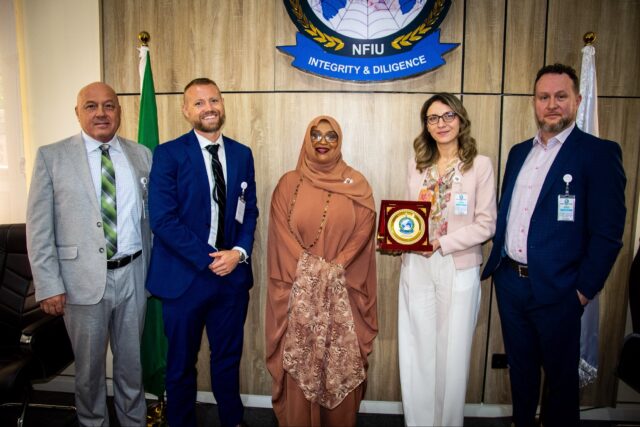
The administration credited the success to “far-reaching legal, institutional and operational reforms” coordinated by the Nigerian Financial Intelligence Unit (NFIU) under the strategic leadership of President Tinubu. The effort involved a multi-agency collaboration across the ministries of Justice, Finance, Interior, and others.
President Tinubu specifically commended the Director/CEO of the NFIU, Ms. Hafsat Abubakar Bakari, and her team for their “dedication and sacrifice” in ensuring the timely completion of the FATF Action Plan.
The delisting is expected to enhance Nigeria’s attractiveness to foreign investors, reduce the cost of international transactions, and improve the country’s overall business climate. It signals to the global financial system that Nigeria has strengthened its measures to tackle serious financial crimes.
According to President Tinubu, this marks the “beginning of a new chapter,” with a pledge to “sustain the already institutionalised reforms” and continue building a financial system that commands global trust.

Tinubu Sacks Defence Chief Musa

Nigeria President Bola Tinubu

Abuja — President Bola Ahmed Tinubu today dismissed several of Nigeria’s top security chiefs in a sweeping shake-up of the military leadership, signalling a new phase in the government’s response to mounting national-security challenges.
In a statement issued from the Presidency, Tinubu confirmed the appointment of General Olufemi Oluyede as the new Chief of Defence Staff, replacing Christopher Musa. He also named Major-General W. Shaibu as Chief of Army Staff, Air Vice Marshall S.K. Aneke as Chief of Air Staff and Rear Admiral I. Abbas as Chief of Naval Staff.
The changes, which took effect immediately, come amid a backdrop of rising violence across multiple regions of Nigeria, including Islamist insurgencies in the northeast, widespread banditry in the northwest and separatist unrest in the southeast.
“The President has approved a re-organisation of the Service Chiefs in furtherance of the Federal Government’s efforts to strengthen the national security architecture,” stated the presidential office. The new leadership is charged with delivering tangible improvements in operational effectiveness and strategic coordination.
Security analysts say the move reflects growing impatience within the government and among the public over persistent failures in combating insurgency, protecting farmland and securing supply-chains. One observer noted: “Replacing senior commanders is a strong signal that record is being taken and accountability is expected.”
However, the changes also raise questions about institutional continuity, morale among troops and the broader challenge of equipping the armed forces with the resources to match their mandate. Some veteran politicians have argued that leadership change alone cannot substitute for better funding, logistics and intelligence.
For President Tinubu, who has made security a headline issue of his tenure, the shake-up offers a moment to reset his strategy and re-assert control. Whether the newly appointed chiefs will succeed where their predecessors struggled remains a key question for the coming months.

Trump Abruptly Halts Trade Talks with Canada over Controversial Advertisement

Canada Prime Minister Mark Carney (left) and US President Donald Trump

President Donald Trump announced on Thursday that he was terminating all trade negotiations with Canada, citing what he described as a misleading television advertisement produced by Ontario that misrepresented Ronald Reagan’s views on tariffs.
In a social media post, Trump accused Canada of using Reagan’s audio out of context in a video “which is FAKE,” asserting that it was intended to influence ongoing U.S. judicial decisions. “Based on their egregious behavior, ALL TRADE NEGOTIATIONS WITH CANADA ARE HEREBY TERMINATED,” he wrote.
The dispute centers on a public service advertisement aired by Ontario’s provincial government that featured clips from Reagan criticizing tariffs. Trump argued the ad “fraudulently” used and edited Reagan’s remarks and said “it was done to interfere with the decision of the U.S. Supreme Court.”
The Ronald Reagan Presidential Foundation responded sharply, stating that the advertisement “misrepresents the Presidential Radio Address … and the Government of Ontario did not seek permission to use and edit the remarks.” The foundation also said it is reviewing legal options.
Canada’s response was more measured. Prime Minister Mark Carney said Canada is ready to resume talks, emphasizing that his government had been engaging in “detailed, constructive negotiations” on sectors like steel, aluminium and autos.
White House economic adviser Kevin Hassett described Trump’s decision as the culmination of mounting frustration with the Canadian negotiating stance. He told reporters: “The Canadians have been very difficult to negotiate with … the fact that we’re now negotiating Mexico separately … reveals that it’s not just about one ad.”
This dramatic reversal threatens to strain a trade relationship that has already been tense. Earlier in 2025, the U.S. imposed sweeping tariffs on many Canadian goods, citing national security, and Canada responded with retaliatory levies. Nevertheless, much of bilateral trade remains under the protection of the USMCA agreement, where exemptions shield certain goods.
Analysts warn that pulling back from negotiations entirely could disrupt supply chains, especially in key sectors like automotive, energy and manufacturing, and could deter further foreign investment in both countries. The move also raises questions about how much commercial diplomacy in the U.S. is influenced by domestic politics, media, and symbolism.
As of now, no new tariffs or trade policy shifts have been enacted in direct response to the announcement, but Trump indicated that Canada would be informed “within the next seven days” of new tariff obligations if trade relations are to remain.

Guillermo del Toro’s ‘Frankenstein’ is a Lifelong Dream, an “Autobiography of the Soul”

Guillermo del Toro. Credit: Photo by John Salangsang

In a new interview, acclaimed filmmaker Guillermo del Toro revealed that his long-awaited film adaptation of “Frankenstein” is more than a passion project—it is the profound culmination of a personal obsession that began in childhood and intertwines with the deepest traumas and themes of his life.

Speaking with Terry Gross on NPR’s “Fresh Air,” del Toro described how seeing the 1931 Boris Karloff film as a seven-year-old was a religious epiphany that reshaped his understanding of faith and humanity.

“I realized I understood my faith or my dogmas better through ‘Frankenstein’ than through Sunday Mass,” del Toro said. “I saw the resurrection of the flesh, the immaculate conception, ecstasy, stigmata. Everything made sense. And I decided at age 7 that the creature of Frankenstein was going to be my personal avatar and my personal messiah.”

His new film, simply titled “Frankenstein,” stars Oscar Isaac as the ambitious Dr. Victor Frankenstein and Jacob Elordi as the Creature. While drawing inspiration from both the classic film and Mary Shelley’s 1818 novel, del Toro’s version is structurally ambitious, dividing the narrative into three distinct chapters. The final section is told from the Creature’s perspective, a choice directly inspired by Shelley’s original text that del Toro felt was crucial for allowing the audience to fully empathize with his misunderstood “messiah.”

The director, whose films like “Pan’s Labyrinth” and the Oscar-winning “The Shape of Water” often center on marginalized beings, explicitly connects the Creature to other foundational figures in his work: Jesus and Pinocchio.

“I triangulate the creature with Jesus and Pinocchio,” he said, noting that his stop-motion “Pinocchio” also featured a crucifix carved by Geppetto to highlight the shared themes of creation and paternal failure.

The interview took a deeply personal turn as del Toro connected the story’s themes of fatherhood and abandonment to his own life. He explained that while he first saw “Frankenstein” through the lens of a son, he now views it as a father, conscious of his own shortcomings.

This reflection is rooted in his complex relationship with his own father, whose kidnapping in Mexico in the 1990s was a defining and traumatic event. Del Toro confirmed he helped secure the million-dollar ransom, an ordeal that forced the family to relocate to the United States under death threats.

“A lot of the moments that happened during that kidnapping are actually obliquely reflected in the film,” del Toro shared. “I tried to make it an autobiography of the soul for me.”

The filmmaker also expressed strong, unequivocal views on modern technology, drawing a parallel between Victor Frankenstein’s hubris and that of today’s “tech bros.” When asked if he used Artificial Intelligence in making the film, his response was stark.

“AI, particularly generative AI, I am not interested, nor will I ever be interested,” he stated. “The other day, somebody wrote me an email, said, ‘What is your stance on AI?’ And my answer was very short. I said, ‘I’d rather die.’”

Instead, del Toro championed the “alchemical pain and experience” of human artistry, a theme that resonates deeply in a film about the terrible responsibility of creation. He sees the Creature’s cursed eternal life not as a gift, but as the ultimate torment.

“I’m a huge fan of death,” del Toro said. “I’m a groupie for death. I think it’s the metronome of our existence. And without rhythm, there is no melody.”

The conversation, rich with insights into art, life, and faith, painted a picture of an artist finally bringing his most personal project to life—a project that seeks to find beauty and meaning in the monstrous, and humanity in the divine.


Source: Interview from NPR’s “Fresh Air” with Terry Gross.

Morocco Makes History as U-20 World Champions

Morocco U-20 celebrate World Cup victory in Chile on Monday

In a landmark moment for African football, Morocco has been crowned FIFA U-20 World Cup champions for the first time after defeating Argentina 2-0 in the final.

The final, held at Estadio Nacional Julio Martínez Prádanos in Santiago, saw Moroccan forward Yassir Zabiri deliver a commanding performance. His first goal came from a free kick in the 12th minute, and he added a second with a close-range finish seventeen minutes later.

Argentina, six-time winners at this level, pressed hard throughout the match but were unable to break through Morocco’s disciplined defense. The defeat marks Argentina’s second ever loss in a U-20 final, their first having come against Brazil in 1983.

Morocco’s triumph makes them the first Arab nation to lift the U-20 World Cup trophy, and only the second African country to do so — Ghana won it back in 2009.

The Confederation of African Football (CAF) quickly lauded the victory, stating that the Atlas Cubs have “written their names in golden letters” and praising the team’s blend of defensive strength and attacking discipline. CAF also highlighted the individual honors: Zabiri picked up the Silver Ball and Golden Boot, while teammate Othman Maamma was awarded the Golden Ball as best player.

This title caps off an impressive run in the tournament. Earlier, Morocco had reached the semi-finals by defeating the United States 3-1 in the quarter-finals, showcasing their resilience and tactical depth.

For Moroccan football, this achievement signals a moment of transformation. The youth development structures have long been praised, but now with a global trophy to their name, Morocco will hope this success catalyzes further growth at senior level.

Manchester United Ends 14-Year Anfield Hoodoo with Dramatic Win Over Liverpool

Liverpool vs Manchester United at Anfield

In a stunning Premier League clash, Manchester United secured a hard-fought 2-1 victory over arch-rivals Liverpool at Anfield this Sunday. The win marks a monumental end to a 14-year drought for the Red Devils, who had not won a league match at Liverpool’s home ground since 2011.

The match began at a breathtaking pace, with United’s Bryan Mbeumo finding the net in just the second minute, silencing the home crowd. Liverpool pressed for an equalizer, which eventually came in the second half through forward Cody Gakpo.

With the match seemingly headed for a draw, United captain Harry Maguire became the unlikely hero. In the 84th minute, he powered a header into the net from a perfectly delivered Bruno Fernandes assist, securing the three points for the visitors.

The result is a significant boost for United under-pressure manager Ruben Amorim, solidifying their position as genuine title contenders. For Liverpool, the defeat represents their fourth consecutive loss under new manager Arne Slot, increasing the pressure and marking a difficult start to his tenure.

Nationwide Protests, Counter-Protests Erupt Over Detained Nnamdi Kanu

Protests in Abuja, Nigeria

Nigeria was gripped by widespread demonstrations on October 20, 2025, as protesters took to the streets in multiple cities to demand the unconditional release of Nnamdi Kanu, the leader of the Indigenous People of Biafra (IPOB). Kanu has been in detention since 2021 without a final conviction.

The protests, occurring in the capital Abuja, as well as Umuahia, Aba, and Lagos, were met with a significant police crackdown. In Abuja, where the demonstration was led by activist Omoyele Sowore, security forces fired tear gas and warning shots to disperse the crowd.

Police confirmed the arrest of at least 13 individuals. Among those detained were Kanu’s brother, Prince Emmanuel Kanu, and his lawyer, Ifeanyi Ejimakor. They were subsequently transferred to a facility described by protesters as “controversial,” raising further concerns from human rights groups who condemned the forceful police response.

The day also saw a separate counter-protest in Abuja, where demonstrators demanded that Kanu’s trial for treason continue. This opposing rally highlights the deep national divisions surrounding the IPOB leader’s case and the ongoing tensions in southeastern Nigeria.

Force Public Relations Officer, Benjamin Hundeyin, said on Channels Television on Monday that the police did not use any live ammunition in dispersing the protesters. “I can state it authoritatively that no live ammunition was fired today; it’s very easy for people who are not familiar with the sounds to mistake the firing of tear gas for live ammunitions,” he said.

Nigeria Police Recover Stolen Vehicles from Netherlands

Nigeria Police Force INTERPOL team handing over the vehicles to representatives of the insurance company

The Nigeria Police Force has recovered two high-end vehicles stolen from the Netherlands in a major operation against transnational organized crime.

The vehicles, a Toyota C-HR (2020) and a Toyota RAV4 (2019), were traced and recovered by INTERPOL units from Abuja and The Hague. They were found in Lagos and Akwa Ibom States.

Investigations showed the cars were stolen from Amsterdam and Midden-Nederland. They were later shipped to Nigeria via the Port of Antwerp in Belgium, arriving in Apapa, Lagos, in late 2023.

Following the recovery, the Nigeria Police initiated civil forfeiture proceedings. A Federal High Court in Abuja granted a final order for the vehicles to be returned to the Dutch government via the insurance company.

On Monday, October 20, the vehicles were formally handed over to representatives of the insurance company and the Embassy of the Netherlands in Nigeria.

The Inspector-General of Police, Kayode Egbetokun, praised the INTERPOL team for their professionalism and effective international cooperation. He stated the operation reflects the Force’s commitment to disrupting cross-border criminal networks.

The Nigeria Police reaffirmed its dedication to intelligence-led policing and strengthening global partnerships to combat transnational crime.

Tinubu Commends EFCC Boss for Record Asset Recovery, Convictions

EFCC boss, Ola Olukoyede (left) and President Bola Ahmed Tinubu

President Bola Ahmed Tinubu has commended the Economic and Financial Crimes Commission (EFCC) under the leadership of Ola Olukoyede for what he described as “notable achievements” in asset recovery and conviction records since the beginning of his administration.

The President, represented by Vice President Kashim Shettima, gave the commendation during the official opening of the 7th EFCC-NJI Capacity Building Workshop for Justices and Judges, held on Monday at the National Judicial Institute (NJI), Abuja. The event had the theme: “Enhancing Justice in the Fight Against Economic and Financial Crimes.”

Tinubu said his administration has made accountability and transparency a top priority by strengthening anti-corruption agencies and granting them the independence needed to perform effectively. “As an administration, we have prioritized public accountability by strengthening the anti-corruption agencies and accorded them the needed independence to execute their statutory mandates,” he stated.

He revealed that the EFCC, under Olukoyede’s leadership, has achieved over 7,000 convictions in the past two years and recovered assets worth more than ₦500 billion. “Recovered proceeds of crime by the agency have been ploughed back into the economy to fund critical social investment programmes, including the Students Loan and Consumer Credit schemes,” the President added.

Tinubu called on members of the judiciary to continue to play their crucial role in ensuring that corruption is decisively tackled. He emphasized that “a robust judicial system is central to the success of anti-corruption efforts,” urging judges and justices to remain impartial and uphold integrity in the discharge of their duties.

“We have allowed both the judiciary and the anti-graft agencies to exercise their constitutional and statutory powers to dispense justice and restore sanity. The evidence is before your eyes,” he said. “Courts and judges are strong pillars of the anti-corruption process. Except the society has full confidence that those who pillage our resources will be subjected to the rule of law, the sneers over our collective commitment to fighting corruption will only get louder.”

The President further noted that corruption undermines every sector of society, warning that no one, including judges, is insulated from its consequences. “There are no special roads, hospitals, or communities for judges. We all shop in the same markets and face the same risks of insecurity, which is a culmination of decades of willful theft and wastage of the nation’s resources,” Tinubu said.

In his remarks, EFCC Chairman Ola Olukoyede expressed gratitude for the government’s support and reaffirmed the Commission’s dedication to enforcing accountability and the rule of law. He emphasized the critical role of the judiciary in ensuring that corruption cases are fairly and swiftly adjudicated.

Olukoyede also lamented the lengthy judicial procedures that often delay justice in high-profile corruption cases, noting that such delays hinder the EFCC’s effectiveness.

EDITOR PICKS

Recent Posts