Reps in Rowdy Session Over Trade Fair Probe

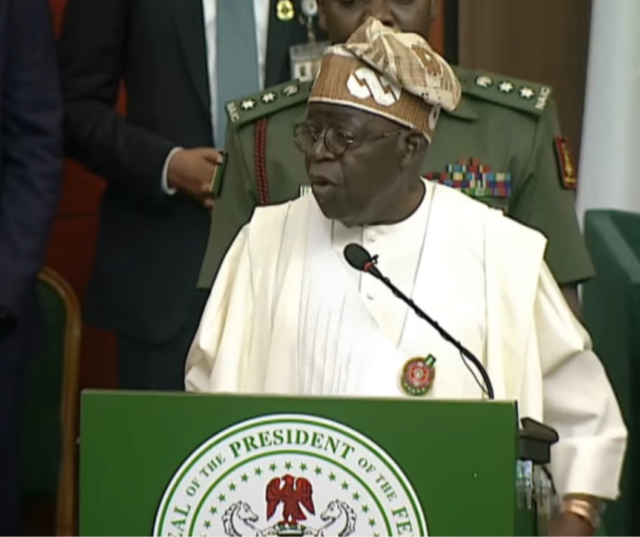
Tensions flared on the floor of the House of Representatives on Tuesday, November 4, 2025, as lawmakers erupted in a heated dispute over which committee should investigate alleged irregularities at the Lagos International Trade Fair Complex. The uproar forced the House into a closed-door executive session.

The controversy began when Ademorin Kuye moved a motion of urgent public importance alleging illegal allocations and the sale of federal assets at the complex, and proposed an ad-hoc committee under the oversight of the House Committee on Public Assets.

Opponents, however, including members aligned with the House Committee on Commerce, argued vehemently that the matter fell within their jurisdiction as it relates to commercial operations of the facility. The dispute unravelled into open conflict when Chairman Francis Waive raised a point of order, insisting that House rules placed the matter under commerce oversight.

As voices grew louder and chambers more chaotic, the Deputy Speaker intervened to call an executive session, citing the breakdown of parliamentary order. Meanwhile, lawmakers refused to entertain any other motions, flooding the debates with shouts of “nay” and heavy opposition, thereby stalling the House’s legislative timetable.

Compounding the disorder, some legislators raised broader concerns, demanding immediate payment of indigenous contractors and refusing to proceed with further business until their demands were addressed. The motion’s rejection underscored deeper frustrations within the House over oversight, committee jurisdictions and the handling of public assets.

The session ended in limbo, with the House adjourning until the following Tuesday and the executive session continuing behind closed doors to craft a resolution path. Observers say the incident highlights ongoing governance challenges and committee rivalries within Nigeria’s legislative arm—at a time when public trust in asset oversight is under scrutiny.

Badenoch Critiques Labour Government as ‘Making Citizens Poorer’

Kemi Badenoch

Conservative Party leader Kemi Badenoch launched a pointed attack on the governing Labour administration in a statement issued on Tuesday, asserting that its economic policies are actively contributing to the erosion of living standards for British households.

Speaking during a media briefing, Badenoch said: “Under the current government our citizens are getting poorer — not because of global events alone, but because this administration has chosen a tax, borrow and spend agenda instead of prioritising growth and opportunity.” While not specifying figures for November, she referenced recent data showing stagnation in real wages and rising inflation as indicators that many Britons are worse off.

In another comment posted on her social-media account, she wrote: “Labour-driven spending without growth will only make you poorer. It’s time for a change of direction.” The post echoed her longer-standing criticism of Labour’s approach to public finances, which she characterised as short-term populism rather than responsible economic stewardship.

Badenoch’s remarks come in the lead-up to a draft Conservative manifesto and reflect her broader strategy of positioning her party as the fiscal alternative to Labour’s administration. She stressed the urgency of reversing what she described as “sustained economic drift” and promised that were the Tories to return to power, they would prioritise policies to boost productivity, reduce taxes and restore household incomes.

Labour officials quickly responded, dismissing Badenoch’s remarks as political rhetoric lacking concrete evidence. A spokesperson for the Labour Party said: “Our government inherited the largest shock to the global economy in a century and is delivering for the British people with rising employment and investment. The Leader of the Opposition is simply trying to manufacture crisis.”

Economists say Badenoch’s critique taps into public anxiety over cost of living, with real wage growth still lagging behind inflation and household budgets under pressure. However, they also caution that attributing these trends solely to current government policy ignores global forces such as energy-price volatility and supply-chain disruptions, which began pre-dating Labour’s 2024 election victory.

With a general election expected within the next 18 months, Badenoch’s statement marks a sharpened tone from her leadership. By articulating a clear contrast with Labour’s economic record — centred around the claim of citizens becoming poorer — she is signalling that one of the key battlegrounds of the upcoming campaign will be the national household balance sheet.

World “On Track to Overshoot” Paris Climate Target, UN Report Warns

The latest annual United Nations Environment Programme (UNEP) Emissions Gap Report delivers a stark verdict: the world has missed the window to guarantee staying within the 1.5 °C global-warming ceiling and is now locked into a path of at least temporary overshoot.

According to the report, even with full implementation of current national climate pledges, global warming is projected to reach between 2.3 °C and 2.5 °C this century. Under existing policy settings the temperature rise could stand at 2.8 °C or higher — a scenario described as “climate breakdown” by analysts.

Lead author Anne Olhoff and her team emphasise that while deeper and faster emissions cuts could delay the overshoot, “we can no longer totally avoid it”.

The report notes that global CO₂-equivalent emissions reached an estimated 57.7 Gt in 2024, reflecting a 2.3 % rise from the previous year and underlining a return to high growth after a brief dip in recent years.

The gap between where global emissions are headed and where they must be to align with the 1.5 °C goal remains vast — roughly 23 billion tonnes of CO₂-equivalent per year by 2035 if the 1.5 °C target is to remain plausible.

In his assessment, António Guterres, United Nations Secretary-General, characterised the situation as “inevitable”— rejecting the notion that the Paris target remains intact, instead saying that every year of delay reduces the chances of staying within a liveable climate.

The report also outlines that while recent national climate plans (NDCs) show incremental improvements, they fail to shift the needle significantly. The authors argue that what is now required is a “quantum leap in ambition” rather than incremental progress.

Urgent Recommendations

UNEP has urged countries around the world to take immediate and decisive action to address the widening emissions gap. The agency stressed that global greenhouse gas emissions must peak and begin a sustained decline as soon as possible, warning that every year of delay further reduces the chances of keeping temperature rise within safe limits.

The agency also called for countries to raise their ambition levels in the next round of national climate commitments, particularly the 2030 and 2035 plans. The report emphasized that these updated pledges must be matched by swift and large-scale deployment of clean energy technologies, investments in nature-based solutions, and a transformation of industrial practices to drastically cut emissions.

Equally critical, the agency highlighted the need to bridge the “implementation gap”—the growing divide between what nations have promised and what they are actually delivering. It urged governments to back up their pledges with credible, time-bound policies, measurable targets, and sufficient financing, ensuring that commitments translate into real-world progress rather than political statements.

Implications for Africa

For Africa, the UN report paints a picture of both urgent risk and potential opportunity. Although the continent contributes the least to global greenhouse gas emissions, it remains one of the most vulnerable regions to the devastating effects of climate change. Rising temperatures, prolonged droughts, erratic rainfall, floods, and the rapid degradation of ecosystems are already taking a heavy toll on communities, agriculture, and infrastructure.

The report warns that continued delays in global climate action will come at a steep cost for African nations. As extreme weather events intensify, governments are likely to face mounting financial pressures from adaptation needs, disaster recovery, and infrastructure repairs. This, UNEP cautions, could lead to higher debt burdens and a growing risk of stranded assets, particularly in economies that depend heavily on fossil fuels and climate-sensitive sectors like agriculture.

At the same time, the report highlights opportunities for Africa to take the lead in building a low-carbon future. Investments in renewable energy, sustainable farming, and green industrial development could not only strengthen resilience but also position the continent as a hub for climate innovation and sustainable growth—if supported by global financing and technology transfer.

A Critical Moment Ahead

With the upcoming COP30 climate summit scheduled in Brazil this November, the timing of this report is strategic. Delegates will enter talks under the shadow of the emissions gap — forced to contend not just with ambition but with urgency and credibility. The question is no longer whether the 1.5 °C threshold will be breached, but how high the overshoot will be and how quickly the world can stabilise from there.

As the report concludes, “We are running out of time.” With the current trajectory, the world is entering a new chapter in climate risk—where the lessons of delay become irreversible.

Sir David Beckham: From East London Boy to Knighthood Honour

David Beckham get knighthood

Former England skipper David Beckham has been officially knighted by King Charles III, receiving one of Britain’s highest honours for his contributions to sport and society.

The 50-year-old football icon, now officially styled Sir David Beckham, described the honour as “a truly humbling” moment. “Growing up in east London with parents and grandparents who were so patriotic and proud to be British, I never could have imagined I would receive such an honour,” he said.

Beckham’s football career is storied. He starred for Manchester United, Real Madrid, LA Galaxy, AC Milan and Paris Saint-Germain, earning 115 caps for England and captaining the national side 59 times.

His glittering playing days included six Premier League titles and the famous 1999 treble with Manchester United.

Off the pitch, Beckham has built a global brand and committed himself to charitable work. He has been a UNICEF ambassador since 2005 and, more recently, served as an ambassador for the King’s Foundation, focusing on education and youth development.

Industry analysts say the knighthood strengthens not just Beckham the icon, but Beckham the brand. “It reinforces his image as a respectable, committed and British figure,” said marketing professor Marie-Agnes Parmentier from the University of Montreal.

His wife Victoria Beckham—already an OBE for her fashion work—expressed her pride, posting on Instagram: “You’ve always been my knight in shining armour, now it’s official. Sir @davidbeckham!!! What an honour, I couldn’t be prouder of you.”

While his knighthood had been anticipated for years, previous obstacles—including a tax-nomination flag from HM Revenue & Customs—had delayed the honour until now.

The investiture ceremony at Windsor Castle took place this week, with Beckham joined by his wife Victoria and their four children. He remarked that the accolade is “an emotional moment for me to share with my family.”

As Sir David, Beckham now stands alongside football legends like Sir Bobby Charlton and Sir Geoff Hurst among knighted athletes. The honour reflects not only a decorated career but also an enduring place in British popular culture and global sport.

His next chapter will likely include expanded philanthropic efforts and his evolving role as co-owner of MLS side Inter Miami CF, as well as continued influence in fashion, media and youth development.

In accepting the accolade, Sir David Beckham has come full circle—from a boy dreaming in East London streets to one of Britain’s most celebrated and honoured sports figures.

China Backs Nigeria Against U.S. Threat of Military Action

Nao Ming

China has expressed its firm support for the government of Nigeria following threats of military intervention by U.S. President Donald Trump, with Chinese Foreign Ministry spokeswoman Mao Ning condemning the use of religious-freedom accusations as a pretext for coercion.

At a press briefing on Tuesday, Mao Ning stated that “as a comprehensive strategic partner, China firmly supports the Nigerian government in leading its people on the development path suited to its national conditions.” She added: “We oppose any country using religion or human rights as an excuse to interfere in other countries’ internal affairs, and reject threats of sanctions or military coercion.”

The remarks follow President Trump’s dramatic announcement that the U.S. would designate Nigeria a “Country of Particular Concern” and prepare for possible military strikes if the Nigerian government failed to curb alleged killings of Christians by Islamist militants.

Nigeria had responded by calling for U.S. assistance only on the condition that its sovereignty and territorial integrity be respected. An adviser to President Bola Ahmed Tinubu said the government “welcomes U.S. assistance as long as it recognises our territorial integrity.”

China’s position aligns with a broader diplomatic stance that emphasises non-interference and respect for national development paths. Literature from Beijing highlights Nigeria as a key partner in the Global South and the Belt and Road Initiative.

Beijing’s intervention could complicate the already tense tri-lateral dynamic between the U.S., Nigeria and China, especially as Nigeria balances its security co-operation with Western allies and its strategic partnership with Beijing. Analysts say China’s vocal support signals both geopolitical alignment and competition in influence across Africa.

For Nigeria, the Chinese backing offers diplomatic cover and underscores its push for autonomy in addressing internal conflicts and foreign relations. Whether this support will translate into concrete security or economic assistance amid the current crisis remains to be seen.

Tinubu Rejects Trump’s Designation of Nigeria as ‘Country of Particular Concern’

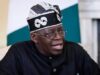
Nigeria President Bola Ahmed Tinubu

President Bola Ahmed Tinubu has firmly rejected the decision of U.S. President Donald Trump to designate Nigeria as a “Country of Particular Concern” (CPC) over alleged violations of religious freedom, insisting that the classification does not reflect the country’s realities.

In a statement issued from the State House on Saturday, President Tinubu reaffirmed Nigeria’s commitment to constitutional democracy, human rights, and freedom of religion, describing the U.S. action as “misguided and inconsistent with the facts on the ground.”

“Nigeria stands firmly as a democracy governed by constitutional guarantees of religious liberty,” Tinubu said. “Since 2023, our administration has maintained open and active engagement with Christian and Muslim leaders alike and continues to address security challenges which affect citizens across faiths and regions.”

The President stressed that the characterisation of Nigeria as religiously intolerant was inaccurate and ignored the government’s sustained efforts to promote peaceful coexistence among all religious and ethnic groups.

“The characterisation of Nigeria as religiously intolerant does not reflect our national reality, nor does it take into consideration the consistent and sincere efforts of the government to safeguard freedom of religion and beliefs for all Nigerians,” Tinubu added.

He emphasised that religious freedom and tolerance have always been core tenets of Nigeria’s identity, declaring that the country “opposes religious persecution and does not encourage it in any form.”

Tinubu further stated that his administration would continue to collaborate with the United States and other international partners to foster mutual understanding and protect the rights of all citizens, regardless of faith.

“Our administration is committed to working with the United States government and the international community to deepen understanding and cooperation on protection of communities of all faiths,” he said.

U.S. President Donald Trump had announced the CPC designation via his social media platform, Truth Social, alleging that “Christianity is facing an existential threat in Nigeria” and that “radical Islamists are responsible for mass slaughter.”

Under the International Religious Freedom Act of 1998, countries listed as CPCs are considered to have engaged in “systematic, ongoing, and egregious violations of religious freedom.” Although the designation does not automatically lead to sanctions, it can affect bilateral relations and foreign aid priorities.

The Nigerian government, however, has argued that the nation’s security challenges — including terrorism, farmer–herder conflicts, and banditry — are complex and not rooted in religion.

Tinubu’s statement signals Nigeria’s diplomatic readiness to challenge the designation and protect its international reputation as a pluralistic, multi-religious democracy.

Laurence Fishburne Open to Returning as Morpheus in Future Matrix Film

Laurence Fishburne CREDIT: Axelle/Bauer-Griffin/FilmMagic

Veteran actor Laurence Fishburne has hinted that he would consider reprising his iconic role as Morpheus should a fifth installment of The Matrix be proposed, saying he “just can’t ignore it” if the offer comes his way.

In a recent interview with Metro UK, Fishburne reflected on the legacy of the 1999 science-fiction classic and the character that helped define his career. “The Matrix [is] for a lot of people… younger than myself… everything that Star Trek or Star Wars was for my generation,” he said. “It was very much the realization of a kind of dream for me — to be in a science-fiction piece that people love, playing a character who is for a lot of people very iconic.

Fishburne, now starring as the vampire Regis in The Witcher Season 4, compared Morpheus to other legendary screen figures such as Darth Vader. “It was like I got to fulfill a certain kind of ambition, portraying a character that meant something — and would mean something for audiences for a very long time,” he said.

When asked about rumors of a possible fifth Matrix film, Fishburne maintained he had heard nothing official. “I have no idea about any of it. I’m just minding my business and going about my life,” he explained, before adding, “Should I be offered anything, I have to consider it. I just can’t ignore it.

The actor’s comments have reignited speculation about whether he could return to the cyber-reality franchise that made him an international star. Fishburne was notably absent from 2021’s The Matrix Resurrections, where a younger version of Morpheus was played by Yahya Abdul-Mateen II.

Speaking separately on The View, Fishburne discussed his recent embrace of fantasy storytelling, particularly his involvement in The Witcher. He praised the series for its inclusivity and strong female characters: “It has people every color of the rainbow … and the women characters are all empowered, in charge, kicking butts and taking names,” he said.

Drawing on his own upbringing, he reflected on how his mother and civil-rights leaders such as Martin Luther King Jr. and Rosa Parks influenced his view of representation. “I basically recognized with acting that I could be anything. And if I could be anything, that meant everybody else could be anything,” he said.

Now, more than 25 years after first stepping into Morpheus’s long black coat, Fishburne remains philosophical about legacy and opportunity — suggesting that while he has moved into new creative worlds, the door to The Matrix remains slightly ajar.

Burna Boy Makes Twitch Debut with PlaqueBoyMax in Late-Night Freestyle Session

Burna Boy
Burna Boy

In a move signaling the evolving landscape of music and digital engagement, Burna Boy made his debut on Twitch last night, joining American streamer PlaqueBoyMax for a late-night “In The Booth” session that fused freestyles, candid conversations, and fan interaction.

The stream drew thousands of viewers, many watching in real time as the Grammy-winning Afrobeats star shared insights into his creative process, projects in development, and personal philosophies. During the session, he confirmed he has three upcoming projects and reaffirmed his commitment to writing all his lyrics—a stance he described as non-negotiable in preserving his artistic integrity.

One highlight of the night was a lighthearted interaction when a username “Davido” gifted multiple subscriptions. Burna Boy’s surprised reaction and laughter sparked memes and chatter across social media, especially in light of the long-running friendly rivalry between the two Nigerian stars.

Throughout the stream, the vibe oscillated between playful banter and deep reflection. At one point, Burna Boy spoke on the importance of creative freedom, addressing his decision to remain in Nigeria rather than relocate abroad. “There’s more freedom at home,” he said, touching on concerns around artistic constraints in foreign environments.

The appearance marks a milestone: it is arguably his first major step into live streaming, blending music, personality and digital culture. It also underscores a wider trend: artists employing streaming platforms like Twitch to connect directly with fans—cutting intermediaries and reshaping the promotional playbook.

For PlaqueBoyMax, whose “In The Booth” series is built around facilitating live musical creation and conversation, Burna Boy’s participation is a major crossover moment—adding an Afrocentric dimension to the platform. According to PlaqueBoyMax’s public profile, he is a streamer, producer and rapper with a growing footprint in both internet culture and music.

Court Rejects Sule Lamido’s Bid to Halt PDP Convention

A Federal High Court in Abuja on Friday dismissed the legal application by former Jigawa State Governor Sule Lamido to stop the Peoples Democratic Party (PDP)’s national convention scheduled for November 15-16 in Ibadan, Oyo State.

Lamido had moved an ex-parte motion (FHC/ABJ/CS/2299/2025) seeking an interim injunction restraining the PDP and Independent National Electoral Commission (INEC) from proceeding with the convention, claiming he was “unlawfully and illegally denied” access to the nomination form for the party’s national chairmanship.

Governor Sule Lamido

In his ruling, Justice Peter Lifu declined to grant the interim relief, instead ordering the PDP and INEC to show cause within 72 hours why Lamido’s application should not be granted. The court adjourned the matter to November 6, 2025.

Lamido’s grievances stem from his inability to purchase the nomination form, alleging manipulation of the process and lack of consultation among the party’s leadership. He accused key structures of marginalising certain stakeholders and short-changing internal democracy.

A leading PDP spokesman dismissed the claim as disruptive, saying, “We are focused on moving forward and will not allow anyone or group to derail our progress.”

The convention, which aims to refresh the party’s leadership and set direction ahead of upcoming elections, remains on track for mid-November. Lamido’s challenge now shifts to a full hearing, but his bid for an injunction has suffered a significant setback.

King Charles Strips Prince Andrew of All Royal Titles

Prince Andrew and King Charles

In a landmark decision issued Thursday, King Charles III has moved to remove his brother Prince Andrew’s royal style, titles and honours, marking one of the most significant disciplinary actions in recent British royal history. The formal process means Andrew will no longer be recognised as “Prince” or “His Royal Highness,” and he will now be referred to as Andrew Mountbatten Windsor.

According to a statement from Buckingham Palace, the king “has today initiated a formal process to remove the Style, Titles and Honours of Prince Andrew, Duke of York.” His lease on the 30-room mansion known as the Royal Lodge has been rescinded and he has been instructed to vacate the residence near Windsor Castle.

The decision comes amid renewed public and parliamentary pressure following revelations of Andrew’s past ties to convicted sex offender Jeffrey Epstein and further civil-law allegations made by survivor Virginia Giuffre. While Andrew continues to deny wrongdoing, the monarchy says the move is necessary “notwithstanding the fact that he continues to deny the accusations against him.”

Royal commentators note the gravity of the step. As one expert said, “We cannot underestimate how powerful this is … this is huge.”

The removal of the title and housing are seen as part of a broader attempt to safeguard the monarchy’s image and stability.

Prince Andrew and late Jefferey Epstein

The history of Andrew’s status underscores how far the royal family has come in its approach. He stepped back from public duties in 2019 and relinquished many of his honorary positions in 2022, but until now he retained his title as “Prince” and the Dukedom of York. This latest action places him into an entirely different constitutional position.

Andrew’s daughters, Princess Beatrice of York and Princess Eugenie of York, retain their titles under royal protocol, but the family’s association with a once-senior working royal has been fundamentally altered.

For the monarchy, the strategic message is clear. Buckingham Palace affirmed: “Their Majesties wish to make clear that their thoughts and utmost sympathies have been, and will remain with, the victims and survivors of any and all forms of abuse.”

The implications extend beyond symbolism. Andrew’s loss of titles raises questions about his finances, security arrangements, and access to royal privileges. It also prompts calls for legislative change to give the crown more power directly to remove titles—something lawmakers have long debated.

This unprecedented demotion of a senior royal underscores how the monarchy is under pressure to modernise accountability and respond more forcefully to scandals. It remains to be seen how Andrew will live and fund his future, and whether this will indeed draw a firm line under one of the most-monitored trajectories in recent royal history.

EDITOR PICKS

Recent Posts