US, Switzerland Reach Tariffs Deal

Credit: SwissInfo

After months of intense negotiations, the United States and Switzerland announced on Friday that they have reached a framework agreement reducing U.S. tariffs on Swiss-exported goods from 39 percent to 15 percent. The deal marks a significant shift in bilateral trade relations.

Under the agreement, Swiss and Liechtenstein companies have committed to invest at least US $200 billion in the United States by 2028, including $67 billion in 2026 alone, according to a fact sheet from the White House. These investments are expected to span sectors such as pharmaceuticals, aerospace, machinery, medical devices and gold manufacturing.

In a statement posted on X (formerly Twitter), the Swiss Federal Council declared: “Switzerland and the U.S. have successfully found a solution: U.S. tariffs will be reduced to 15 %. Thanks to President (Donald) Trump for the constructive engagement.”

U.S. Trade Representative Jamieson Greer described the outcome as a removal of long-standing trade barriers and an opening of new markets for American businesses. He said Swiss companies will “send manufacturing here to the United States” and welcomed the investment commitments as a boost for

Swiss Economy Minister Guy Parmelin said the deal places Switzerland “on an equal footing with the European Union” in terms of U.S. tariff treatment—a considerable relief for Swiss exporters, as the 39 % rate had affected approximately 40 % of their exports to the U.S.

While the 15 % tariff rate is confirmed as a ceiling, the agreement also assures that certain high-value sectors, including pharmaceuticals and semiconductors, will not face higher duties under future U.S. investigations such as Section 232.

The deal further includes Switzerland’s commitment to grant duty-free quota access on selected American agricultural products—such as beef, bison and poultry—marking a gradual opening of Swiss protectionist policies in synergy with the U.S. framework.

Industry reactions have been broadly positive. Swiss manufacturers of precision instruments, watches and machinery welcomed the news, citing the tariff reduction as a crucial step to compensate for lost competitiveness. However, analysts caution that new risks remain, warning that further duties could still be applied if U.S. trade investigations expand.

The agreement concludes a period of heightened tension in 2025, during which the U.S. had raised tariffs on Swiss goods to the highest rate applied to any Western country. The resolution is part of a broader “America First” trade agenda seeking reciprocal and balanced trade relationships.

FG Delays 15% Fuel Import Duty as Market Concerns Mount

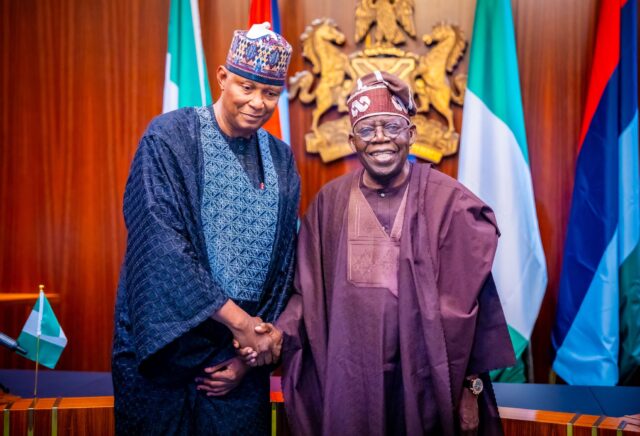
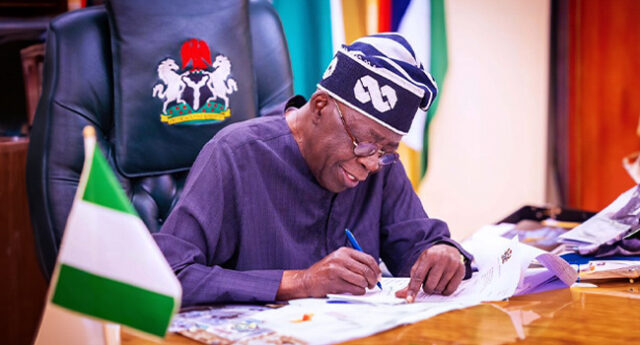
Nigeria President Bola Ahmed Tinubu

The Federal Government has announced a postponement in the implementation of a 15 per cent import duty on petrol and diesel, originally approved by President Bola Ahmed Tinubu in October and scheduled to take effect later this year. The review comes amid fears over market readiness and the potential for further inflationary pressures.

The policy was intended as part of the administration’s broader fiscal strategy to boost non-oil revenues and support domestic refining industries, most notably the Dangote Petroleum Refinery. However, industry groups and fuel importers raised objections to the plan, warning it could raise landing costs, reduce competition, and jeopardise supply—especially with the holiday season approaching.

In a statement, the Nigerian Midstream and Downstream Petroleum Regulatory Authority (NMDPRA) said the duty’s implementation is “no longer in view” and affirmed that there is “adequate supply of petroleum products” in the country. The regulator also urged Nigerians to avoid hoarding or panic buying.

The knocked-back timeline signals an important shift. Initially set to begin from November 21, 2025, the duty would have added roughly ₦100 per litre to petrol prices according to industry estimates—raising fresh cost-of-living concerns amid Nigeria’s already elevated inflation environment.

Explaining the government’s position, a finance ministry memo noted the need for “market readiness,” highlighting that rolling out such a duty without guaranteeing refining capacity and stable supply could undermine the broader energy reform agenda. With local refining capacity still under expansion, authorities preferred to delay rather than risk supply disruption or public backlash.

Trump Calls for Investigation into Epstein’s Ties with Bill Clinton

Trump

Donald Trump announced on Friday that he will ask the Department of Justice (DOJ) and the Federal Bureau of Investigation (FBI) to investigate ties between the late convicted sex offender Jeffrey Epstein and several high-profile Democrats, including former President Bill Clinton, ex-Treasury Secretary Larry Summers, and Silicon Valley figure Reid Hoffman.

Posting on his social-media platform Truth Social, Trump declared: “Epstein was a Democrat, and he is the Democrat’s problem, not the Republican’s problem! Ask Bill Clinton, Reid Hoffman, and Larry Summers about Epstein … Stay tuned!!!”

The announcement follows the recent release of more than 20,000 pages of Epstein-related documents by the House Oversight Committee, which renewed scrutiny over Epstein’s connections with business and political elites.

Trump emphasised that his focus now shifts away from himself, noting in his statement that he has “a country to run” and that investigators should “not waste their time” on him. He asserted that evidence indicates heavy associations between Epstein and the individuals he named.

While the DOJ and FBI have not publicly confirmed whether they will launch the investigation, JPMorgan Chase, one of the financial institutions flagged by Trump, issued a statement expressing regret for its past association with Epstein but said it had no role in facilitating his crimes.

The justice-system leadership, including Attorney General Pam Bondi, has neither endorsed nor rejected the call to investigate. Legal experts are closely watching whether the presidential request marks the start of a formal investigation or a politically driven maneuver. One former prosecutor said directing the DOJ to probe specific individuals can raise separation-of-powers concerns and could be seen as “outrageously inappropriate.”

Trump’s call comes amidst intense congressional scrutiny of the Epstein case. A discharge petition in the House has compelled a vote next week on legislation that would force full release of the government’s files related to Epstein—a move opposed by the White House.

Critics argue that Trump’s renewed focus on Epstein’s ties to Democrats is a diversion tactic aimed at shifting attention away from questions about his own historical association with Epstein. Observers note this raises significant questions about whether the president is seeking accountability or leveraging the scandal for political gain.

Senate Pushes to Empower Civil Courts Over Military Convictions

The Nigerian Senate has taken a landmark step in military justice reform by approving for second reading a bill that would allow civil courts to review convictions issued by military tribunals. The legislation aims to bring Nigeria’s Armed Forces Act in line with democratic standards, judicial fairness, and constitutional accountability.

Sponsored by Senator Abdulaziz Yar’Adua (APC, Katsina), the Armed Forces (Repeal and Re-enactment) Bill, 2025, would repeal Nigeria’s existing military legal framework—originally derived from 1960s decrees and last codified in 2004—and replace it with a modern system more compatible with democratic norms.

A central provision of the bill mandates that convictions handed down by military tribunals be subject to judicial review in civil courts, effectively opening a new avenue for accused military personnel to challenge their sentences.

Supporters argue the reform is long overdue. Senator Tahir Monguno (APC, Borno North) criticised the current system, pointing out that boards of inquiry have functioned both as judge and jury in some cases, a violation of basic legal principles. “You cannot be a judge in your own cause,” Monguno said, welcoming the bill as a way to restore fairness in military proceedings.

The bill also addresses other contentious issues. It proposes replacing outdated fixed fines — some as low as ₦200 or ₦500 — with salary-based sanctions; strengthening protections for lower-ranking soldiers; and criminalising undue interference by commanders in courts-martial.

One of the more socially significant clauses bans the recruitment of persons under 18 into the military, aligning Nigeria’s enlistment age with the Child Rights Act and international humanitarian standards.

If passed, the legislation is expected to deepen civilian oversight over the military. Deputy Senate President Barau Jibrin described the reform as timely, emphasizing that “our laws should evolve with the times” and that the military must operate fully under the rule of law.

The bill has now been referred to the Senate Committees on Defence, Army, Air Force, and Navy, with lawmakers directed to report back within four weeks. The reform, if realised, could become one of the most significant shifts in civil-military relations in Nigeria’s recent history.

Reps Defer WAEC’s CBT Rollout to 2030

In a surprising reversal, Nigeria’s House of Representatives has directed the Federal Ministry of Education and the West African Examinations Council (WAEC) to suspend the planned switch to Computer-Based Testing (CBT) for the 2026 West African Senior School Certificate Examination (WASSCE). The lawmakers have now set a target date of 2030 for full implementation.

The decision follows the adoption of a motion of urgent public importance raised by Rep. Kelechi Wogu (PDP-Rivers), which warned of a “pending massive failure” among students if the transition to digital exams proceeds too quickly.

Wogu expressed concern that many Nigerian schools — especially in rural areas — are not prepared for the shift, citing a lack of computers, trained ICT teachers, reliable internet connectivity, and steady electricity.

In moving the motion, Wogu also referenced the 2025 WAEC result portal outage, describing it as a sign that WAEC might not be ready to scale up CBT.

He argued that unlike JAMB exams, WAEC candidates typically take nine or more subjects, including practical and theoretical papers — a complexity that demands more robust infrastructure and longer preparation time.

The House resolution goes further by instructing the Ministry of Education to ensure that the 2026, 2027, 2028, and 2029 national budgets make provision for: the recruitment of computer teachers, construction of ICT-equipped computer labs, installation of standby generators, and monitoring of school readiness for CBT.

Lawmakers also urged collaboration with state governments and private schools to build the necessary infrastructure before the proposed 2030 rollout.

Some members raised the spectre of severe consequences if CBT is rushed, warning that a mismanaged rollout could lead to high failure rates, heightened student anxiety, and even social problems such as depression and substance abuse.

WAEC and the Ministry of Education have not publicly challenged it yet. Earlier in 2025, both bodies had committed to a full CBT transition by 2026 — an ambition reiterated by Education Minister Tunji Alausa, who said the digital model would help curb widespread examination malpractice.

Over 200 Kenyans Fighting for Russia in Ukraine Conflict, Kenya Cries Out

Photo: Directorate of Criminal Investigations–Kenya via BBC

The Kenyan government has revealed that more than 200 of its citizens are believed to be fighting for Russian forces in the war in Ukraine, amid efforts to curb recruitment networks still operating in the country.

Speaking on Wednesday, Foreign Affairs and Diaspora Cabinet Secretary Musalia Mudavadi stated that many of those involved are former members of Kenya’s security services who were lured abroad under false promises.

The Ministry of Foreign Affairs said the Kenyan embassy in Moscow has recorded cases of injured nationals and others reportedly stranded after being recruited and dispatched to conflict zones without full awareness of the nature of their deployment.

Mudavadi warned that the recruitment networks remain active in both Kenya and Russia, offering attractive payments—reportedly up to US $18,000—to cover supposed visas, travel and accommodation costs. Some recruits believed they were going to work abroad in civilian roles only to end up in military tasks, including drone assembly and frontline assignments without proper training or protection.

The Kenyan government’s disclosure follows a wider Ukrainian claim that over 1,400 citizens from 36 African countries are fighting with Russian forces after being enticed through deceptive means.

In September, authorities in Nairobi rescued 21 Kenyan nationals who were reportedly being prepped for deployment to the conflict. One suspect has been arrested and is facing prosecution in connection with the trafficking network.

President William Ruto has also reportedly appealed to Ukrainian President Volodymyr Zelenskyy for assistance in securing the return of Kenyan citizens believed to be detained in the war zone.

The issue raises broader security concerns for Kenya, including risks related to human trafficking, foreign recruitment, and national security. Mudavadi emphasised the need for vigilance and urged job-seekers to verify overseas employment opportunities through the National Employment Authority and avoid unauthorised intermediaries.

As diplomatic channels remain engaged, the Kenyan government said it is working to enhance cooperation with Russia and Ukraine to track, identify and repatriate citizens caught up in the conflict.

The situation underscores the growing complexity of the Russia-Ukraine war’s reach and the manner in which vulnerable individuals from Africa continue to be drawn into the conflict through mis- information and exploitation.

Osimhen’s Brace Seals Nigeria’s 4-1 Win Over Gabon World Cup Play-off

Nigeria’s Super Eagles moved one step closer to a spot in the 2026 FIFA World Cup following a 4-1 extra-time victory over Gabon National Football Team at the Stade Prince Moulay El Hassan in Morocco. Victor Osimhen was the standout performer, scoring twice in extra time to secure the win.

The match remained goalless for much of regulation time, before Sevilla forward Akor Adams broke the deadlock in the 78th minute thanks to a defensive error from the Gabon side. But as the Super Eagles appeared to be coasting to victory, Gabon’s Mario Lemina struck an equaliser in the 89th minute to force the tie into extra time.

In the extra period, Nigeria turned on the style. Chidera Ejuke restored the lead just two minutes into extra time with a precise finish. Then Osimhen grabbed his first of the night in the 102nd minute and sealed the result in the 110th with a composed strike.

The result places Nigeria in the final round of the CAF World Cup play-offs, where they will face the winner of the semi-final between Cameroon National Football Team and DR Congo National Football Team, with a chance to progress to the inter-confederation playoffs next March.

The victory felt even more significant given recent turbulence within the squad. Just days before the match, the players’ bonus dispute with the Nigeria Football Federation dated from unpaid sums threatened to derail preparations — but captain William Troost‑Ekong confirmed on social media that the squad had resolved the stand-off and were focused on the game.

Osimhen’s extra-time heroics drew praise from fans and pundits alike. With this brace, the forward reinforced his status as one of Africa’s top striking talents and boosted Nigeria’s hopes of returning to the global stage after missing the 2022 World Cup.

Next up, Nigeria will look to carry this momentum into the final play-off while addressing questions about controlling matches before extra time. Gabon, meanwhile, exited disappointed but with a reminder that the Super Eagles are far from invincible in tightly contested knockout fixtures.

Trump Signs Bill to Reopen Government

On Wednesday night, President Donald Trump signed landmark legislation that restores funding to the federal government and brings an end to the longest shutdown in U.S. history.

After 43 days of impasse that disrupted travel, delayed pay for hundreds of thousands of federal employees, and strained food and benefit programmes, Congress approved a funding package and the president swiftly affixed his signature.

The newly-signed bill extends government funding through January 30, 2026, and incorporates three full-year appropriations bills covering key agencies including agriculture and veterans affairs.

It also reverses the mass furloughs and pay freezes that took effect during the shutdown and guarantees back-pay for affected workers.

House members approved the measure by a vote of 222 to 209, with notably only six Democrats joining Republicans to support the legislation. Two Republicans broke rank by opposing it.

Despite the reopening, key provisions remain unresolved. The Democratic push to extend enhanced health-insurance tax credits under the Affordable Care Act was excluded from the bill, with lawmakers agreeing only to hold a Senate vote by mid-December.

In the Oval Office signing event, the President laid blame squarely at the feet of the opposition, warning voters not to forget the economic and service disruptions they say were caused by the legislative deadlock.

With the cornerstone of the shutdown lifted, federal employees were told to return to their workplaces starting Thursday, while agencies begin the process of full operational resumption.

Video: Moment Burna Boy asked a fan to take his girlfriend home because they were sleeping at his show in Denver

Burna Boy
Burna Boy

On Wednesday night at the Red Rocks Amphitheatre near Denver, Grammy-winning Nigerian star Burna Boy paused his performance and publicly called for the removal of a fan and his girlfriend after spotting the woman apparently asleep front-and-centre during his set.

Video footage circulating online shows Burna Boy pointing directly at the couple and declaring, “Wallahi, I’m not doing another song until you go home,” before security escorted them from the venue.

The singer referenced his own condition earlier in the evening, saying he had taken medication yet still showed up, and expressed frustration that a fan was disengaged: “When I see you over there with your girl sleeping in front of me, it pisses me the f*** up.”

Reactions from fans on social media have been mixed. Some defended Burna Boy’s demand for high energy from the audience, stating that those in front-row seats must match the vibe on stage. Others criticised the ejection, noting that ticket-buyers should not be removed simply for appearing uninterested.

Morris Monye Steps Down as Director of Mobilisation for the Obidient Movement

In a surprise announcement that could reverberate through Nigeria’s opposition politics, Morris Monye has resigned as Director of Mobilisation for the Obidient Movement, the grassroots network supporting Peter Obi and the Labour Party (LP).

Monye made the declaration via a public letter, citing frustration with internal dysfunction, self-funding, and the movement’s performance in the recent Independent National Electoral Commission (INEC)-declared Anambra State election outcome.

Monye stated: “Almost a year down the line, most of our short, medium, and long-term plans have not been met. I won’t be part of optics and no work.” He continued: “The poor showing at the Anambra election has also made my position untenable.”

He also made stinging allegations about the movement’s internal posture. Monye claimed he had personally spent approximately ₦40 million on nationwide mobilisation efforts—travel, local support structures, logistics and voter awareness campaigns—without any formal budget or institutional backing. “No money was given to the Directorate of Mobilisation. There’s no bank account even for the directorate. In fact, Mr Peter Obi has never asked what we are doing in mobilisation—no communication, nothing,” he charged.

Monye highlighted additional pressure from outside the movement: he said he and his business interests suffered “constant harassment” from “sympathisers and instruments of this government,” suggesting security and reputational risk had increased for him and his family by continuing.

Among his recorded achievements as head of mobilisation, Monye pointed to the establishment of an online registration system for Obidients, revival of dormant support groups, activation of local and regional structures, and the launch of the “Obidient NextGen” university-campus network. He noted that his resignation does not mean disengagement: he said he will continue to advise but will no longer feature at the movement’s forefront.

In his resignation, he urged the movement to urgently professionalise: engage media and operations consultants, establish polling-unit coordination systems, fund directorates cash-and-carry rather than goodwill, and set measurable outcomes for mobilisation activities ahead of the 2027 election cycle. “You can’t run a campaign simply from general goodwill. This is not 2023. The element of surprise is gone,” he warned.

The Obidient Movement and Peter Obi himself have yet to issue a public response, and it remains unclear how the frontline vacancy will be filled.

EDITOR PICKS

Recent Posts