Gunmen Kidnap Students, Staff from Catholic School in Niger State

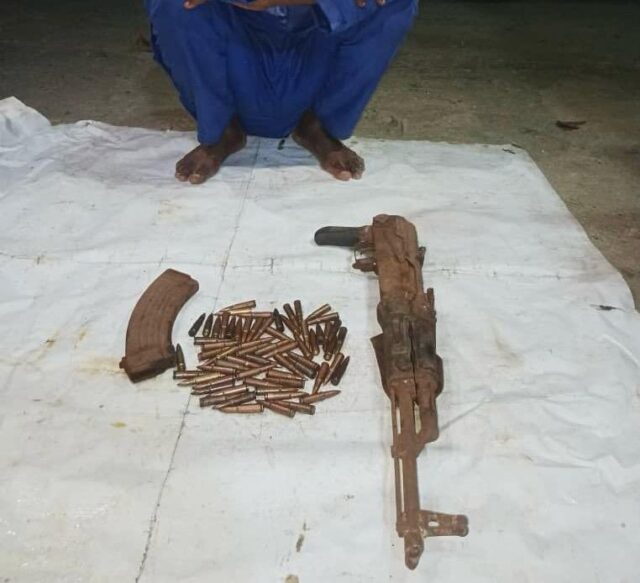
Armed men stormed St. Mary’s Catholic School in Papiri, Agwara LGA of Niger State, during the early hours of Friday, abducting students and staff, amid mounting security concerns in the country.

It is believed that up to 52 schoolchildren were taken in the raid.

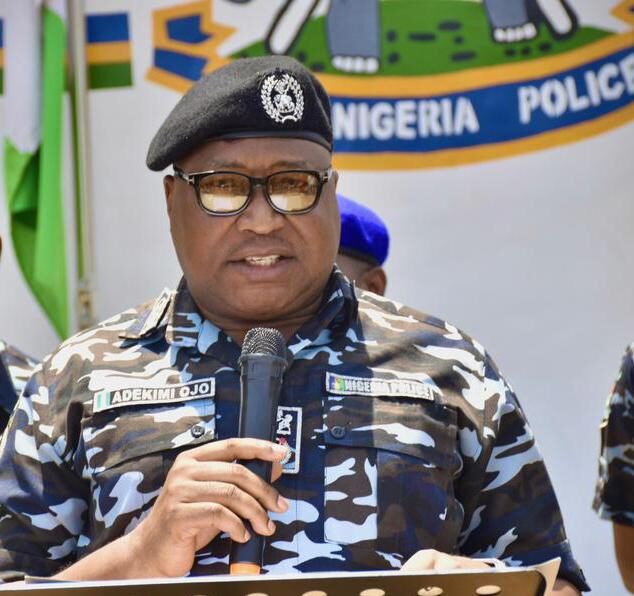
The Niger State Police Command confirmed the attack occurred around 2 a.m., and said tactical units and military forces have been deployed to comb nearby forests in a bid to rescue the victims.

In a statement, the Niger State government expressed its deep concern, noting that the kidnapping took place despite earlier intelligence warnings.

According to the state’s secretary, Abubakar Usman, St. Mary’s School had reopened even though authorities had previously ordered the temporary closure of all boarding schools in parts of the region due to security risks.

The Catholic Diocese of Kontagora, in whose territory the school falls, strongly condemned the abduction. In a public release, the diocese said a security guard was shot during the attack, and called for calm as the church works with government and traditional leaders to facilitate a safe rescue.

The Niger State government has opened an investigation into how the attack occurred, pointing to possible negligence by school management.

According to reports, the Department of State Services (DSS) had already issued warnings about the threat of violence in the area, but the school allegedly resumed operations without clearing its reopening with state authorities.

This abduction comes just days after another mass kidnapping in nearby Kebbi State, where 25 schoolgirls were abducted from a boarding school, and a vice-principal was shot dead.

The wave of attacks has renewed fears about the safety of children in Nigeria’s school system, especially in rural and underserved areas.

Bishop Yohana Dauwa Bulus of the Kontagora Diocese said the violence is a “tragic reminder” that “the country is no longer safe for its children.”

He urged the government to act swiftly to ensure the safe return of those kidnapped and to prevent future attacks.

As of now, no group has claimed responsibility for the assault on St. Mary’s, but security analysts point to armed bandit gangs — many of them former herders — as likely perpetrators.

Authorities have appealed to the public for patience and cooperation, calling on local communities to support ongoing rescue operations while they intensify efforts to bring the students and staff home safely.

EDITORIAL: After the 2026 World Cup Failure, Nigerian Football Must Finally Confront the Truth

Nigeria’s failure to qualify for the 2026 FIFA World Cup is more than a sporting disappointment—it is a national indictment. A country once feared on the continent, once celebrated for producing raw talent that dazzled the world from USA ’94 to Korea/Japan 2002, has now stumbled into a pattern of predictable mediocrity. This latest failure is not an accident. It is the culmination of years of technical confusion, administrative decay, player complacency, and a football philosophy that has refused to evolve with the modern game. If Nigeria is serious about returning to the global stage—and not merely qualifying but competing to win—then the time for polite excuses is over.

The technical failures alone tell a damning story. The Super Eagles entered the qualifiers with a revolving door of coaches, inconsistent line-ups, and tactical plans that shifted wildly from game to game. Whether under local or foreign coaches, the team lacked identity. No pressing system, no transition pattern, no structure in the midfield. Individual brilliance—long the lifeline of Nigerian football—could no longer compensate for the absence of a cohesive plan. In 1994, Nigeria had both talent and tactical clarity. In 2013, when Stephen Keshi led the team to an AFCON triumph, the core philosophy was clear: physical intensity, compact organisation, and a strong spine built around committed players. Today, the Super Eagles have neither clarity nor commitment.

But the deeper crisis lies off the pitch. The Nigeria Football Federation has suffered from decades of administrative dysfunction that would cripple any footballing nation. Inconsistent leadership, allegations of corruption, politicking over coaching appointments, and financial mismanagement have created a toxic environment in which planning is impossible. Coaches are hired late, contracts are disputed, bonuses become national debates, and long-term strategies are sacrificed for last-minute firefighting. Countries like Morocco, Senegal, and Japan have shown that football excellence is not accidental; it is engineered through deliberate investment, continuity, and strong governance. Nigeria, by contrast, continues to run its football like a lottery.

But the deeper crisis lies off the pitch. The Nigeria Football Federation has suffered from decades of administrative dysfunction that would cripple any footballing nation.

The players are not absolved either. Many remain committed, but the culture around the national team has changed. A generation of Europe-based professionals now arrives with the expectation of automatic selection, even when form is poor. Friendly matches are treated as inconveniences. Competitive fixtures often see half-fit stars jogging through games. National pride, once the motivational engine of the Super Eagles, has been diluted by career considerations and a lack of internal competition. In the 1990s, players fought for the jersey. Today, many simply show up.

The crisis is even worse at the grassroots. Nigeria’s golden eras were built on a conveyor belt of talent emerging from schools, local academies, and youth tournaments. The Flying Eagles and Golden Eaglets were global forces, winning multiple World Cups—not because Nigeria had better luck, but because the youth development pipeline was active, credible, and competitive. Today, that pipeline is broken. Age-grade scandals, poorly organised academies, abandoned pitches, and the absence of a coherent youth development policy have left the entire football ecosystem hollow. Without a solid foundation, the senior team will always be unstable.

Yet amidst the frustration, the path forward is not mysterious. The reforms needed are bold, urgent, and unavoidable.

First, the NFF must undergo a complete structural overhaul. Transparency must become non-negotiable. Football administration in Nigeria needs competent professionals, not political appointees. The federation must adopt long-term strategic planning with measurable targets and external oversight.

Second, Nigeria must hire a world-class technical director with full authority over football philosophy, youth development, and coaching standards—someone whose work transcends individual coaches. Successful countries build systems, not personalities.

Third, the country must establish a nationwide youth football framework with licensed academies, certified coaches, school competitions, and modern talent identification. The Golden Eaglets’ success of the past was rooted in structure, not miracles.

Fourth, the Super Eagles need a complete cultural reset. Merit-based selection must return. Fitness, discipline, tactical intelligence, and willingness to fight for the jersey should determine who wears it. Name recognition should not guarantee a starting spot—or even a call-up.

Fifth, preparations for qualifiers and tournaments must begin years, not months, before kickoff. Friendly matches should be purposeful, not ceremonial. Team camps should focus on tactical rehearsals, not negotiations over allowances.

Finally, the federal government—often too involved in football politics—must step back from interference and instead support policy reforms, infrastructure investment, and the creation of a high-performance football centre equipped with sports science, analytics, and modern training tools.

Nigeria is too big, too talented, and too passionate about football to be missing World Cups. But passion cannot replace planning. Emotion cannot replace structure. Nigeria’s football identity is at stake, and unless the country embraces radical reform, the failures of 2022 and 2026 will become recurring chapters in a long decline.

The Super Eagles can rise again. Nigeria can once more dominate African football and challenge the world. The talent is there, the fanbase is loyal, and the history is rich. What has been missing is leadership—the kind that is courageous enough to admit failure and bold enough to build a new beginning.

If Nigeria truly wants to qualify for—and win—future tournaments, then the work must begin now. Not with slogans. Not with blame games. But with the long-overdue reconstruction of the entire football system from the ground up. Only then can the Super Eagles fly again.

EDITORIAL: Nigeria’s Insecurity Crisis and the Missing Link Between Diagnosis and Real Solutions

Nigeria’s insecurity crisis has reached a point where explanations no longer suffice. For years, the federal government has offered familiar narratives: terrorism remnants in the Northeast, banditry in the Northwest, farmer–herder violence in the Middle Belt, separatist tensions in the Southeast, urban crime in major cities, and kidnapping across nearly every state. Yet despite this widely acknowledged landscape of threats, the country continues to drift deeper into instability. What has become increasingly clear is that Nigeria’s challenge is not a lack of awareness but a catastrophic disconnect between what government authorities say they understand and what they are willing—or able—to do to reverse the trend.

This disconnect was once again exposed on the international stage during the recent U.S. congressional hearing on the state of insecurity in Nigeria. American lawmakers—drawing from witness testimonies, international rights organisations, and Nigeria’s own public data—outlined a grim pattern: targeted killings, religiously tinged violence, increasing displacement, and dwindling trust in the country’s security institutions. While the Nigerian side pushed back, insisting that the situation is multifaceted and improving, the deeper problem lingered beneath the diplomatic exchange. Nigeria is stuck in a cycle where the federal government recognises the breadth of the crisis but remains structurally incapable of delivering a solution commensurate with the scale of the problem.

At the heart of Nigeria’s insecurity is a governance architecture that has refused to evolve despite repeated warning signs. The federalised command-and-control structure of policing has left communities under-protected, response time painfully slow, and intelligence operations insufficiently localised. Every state, from Zamfara to Imo, has witnessed instances where security forces arrived only after the violence occurred—and sometimes after perpetrators had retreated into forests or across state borders. Decades of centralisation have created a system where responsibility is national but accountability is thin.

The religious and ethnic dimensions of Nigeria’s insecurity, often treated with caution by government statements, demand frank acknowledgment. In several regions, particularly in the Middle Belt and parts of the Northwest, violence has taken increasingly sectarian patterns. Communities identify their attackers not merely as criminals but as hostile ethnic or religious actors. Conversely, other regions feel unfairly profiled and collectively blamed for crimes committed by fringe elements. The federal government’s reluctance to openly admit the depth of these tensions has prevented the development of conflict-resolution mechanisms tailored to Nigeria’s deeply diverse social fabric. Pretending that identity is irrelevant to the violence has helped no one.

Another critical gap lies in the federal government’s treatment of intelligence. Nigeria’s security agencies are notoriously uncoordinated. Intelligence gathered by one arm is often not shared with others. Local leaders—traditional rulers, community watch networks, grassroots associations—who frequently possess valuable knowledge of attackers’ movements and motives, remain underutilised or mistrusted. The result is a recurring pattern: attacks are carried out with precision, communities send warnings days in advance, and yet security agencies remain slow or absent.

Meanwhile, the economic dimension has only deepened insecurity. Youth unemployment remains high, inflation continues to squeeze vulnerable households, and rural economies have collapsed under the weight of constant attacks. The shrinking of agricultural activity due to fear of bandits and herders has contributed directly to food inflation. Yet federal responses, instead of holistically linking economic deprivation to insecurity, have largely remained rooted in military deployments and episodic crackdowns.

The judiciary and prosecution processes further compound the crisis. Arrested suspects frequently disappear into a system where cases are delayed, mishandled, or abandoned. Communities repeatedly express frustration that detained bandits, kidnappers, or insurgents reappear months later, allegedly freed without explanation. This perception—whether real or exaggerated—has eroded public confidence and fuelled a dangerous appetite for self-help justice.

To move from diagnosis to solution, the federal government must admit that insecurity cannot be resolved through outdated structures. A first step is the long-overdue decentralisation of policing. Nigeria needs multi-layered security arrangements: federal for counterterrorism and border threats, state police for local protection, and community policing for intelligence and rapid response. Without empowering states and communities, the current model will continue to fail.

Secondly, the government must embrace honest dialogue about ethnic and religious grievances. This is not an admission of defeat but a recognition that peace requires addressing perceptions, traumas, and long-standing mistrust. Establishing regional truth, reconciliation, and mediation platforms—staffed by credible, neutral actors—could help reduce retaliatory cycles.

Thirdly, the federal government must overhaul its intelligence-sharing architecture. Technology-driven surveillance, joint command centres, and integrated databases across security agencies would transform the ability to preempt attacks rather than merely react to them.

Fourth, Nigeria must protect its rural economies. Reestablishing farming, reopening rural roads, securing markets, and supporting displaced communities must be treated as national security priorities—not humanitarian gestures.

Finally, transparency is essential. Nigerians deserve clarity about security budgets, progress on arrests, and outcomes of major investigations. Creating a culture of accountability would not only build trust but also pressure institutions to perform.

The missing link in Nigeria’s insecurity crisis has never been a shortage of commissions, reports, or speeches. It is the absence of political courage to implement the structural reforms that Nigeria’s complexity demands. Until the federal government confronts this truth, the country will remain trapped in an endless loop: diagnosing insecurity without curing it, acknowledging threats without neutralising them, and watching communities mourn while waiting for a solution that never arrives.

Court Sentences Nnamdi Kanu to Life in Prison

Nnamdi Kanu

In a landmark ruling on 20 November 2025, a Federal High Court in Abuja sentenced Nnamdi Kanu, leader of the proscribed Indigenous People of Biafra (IPOB), to life imprisonment after convicting him on seven terrorism-related charges. The court’s verdict comes after a protracted trial and follows Kanu’s refusal to mount a formal defence.

Presiding over the case, Justice James Omotosho delivered a scathing judgment against Kanu, describing some of his actions — including sit-at-home orders in parts of southeastern Nigeria — as tantamount to acts of terror. The judge noted that although self-determination may be a political right, “any self-determination not done according to the constitution of Nigeria is illegal.”

Prosecutors had sought the death penalty, but Justice Omotosho opted instead for life imprisonment, citing evolving global norms against capital punishment.

Under the judgment, Kanu was given life terms for counts one, four, five, and six, while on other counts he received 20-year and five-year sentences, all to run concurrently.

The judge also expressed concern over Kanu’s courtroom behaviour. Prior to the ruling, Kanu was removed from the courtroom for “unruly behaviour,” according to media reports.

In his remarks, Omotosho invoked religious reflection, saying the court must “temper justice with mercy,” quoting Matthew 23:23 to underline his decision to spare Kanu from execution.

Kanu, a British-Nigerian dual citizen, was first arrested in Nigeria in 2015 but went into exile before being re-arrested in Kenya in 2021 and extradited back to Nigeria.

He has long challenged the court’s authority, filing motions arguing that the legislation under which he was charged had been repealed and that his prosecution was invalid.

Observers say the verdict could deepen political tensions in Nigeria’s southeast, where Kanu’s IPOB movement has both vocal supporters and fierce critics. The region has a fraught history: IPOB traces its roots to the secessionist ambitions of Biafra in the late 1960s, a conflict that once plunged the country into civil war.

Kanu now has 90 days to appeal the judgment.

Elon Musk Predicts AI, Humanoid Robots Will “Eliminate Poverty”, Make Everyone Wealthy

Elon Musk (middle) at the US-Saudi Elon Musk US-Saudi Investment Forum in Washington on Wednesday.

Tech billionaire Elon Musk has painted an expansive and optimistic vision of the future, suggesting that artificial intelligence and humanoid robots could eradicate poverty and radically reshape the global economy. Speaking at the US–Saudi Investment Forum in Washington on Wednesday, Musk declared that with advanced AI and robots, “work will be optional” and currency may become largely irrelevant.

Musk framed poverty not as an insurmountable social or political issue, but as an engineering challenge that technology can solve. He said that AI systems, combined with his Tesla humanoid robot project Optimus, could drive the cost of goods and services toward zero, making basic needs broadly affordable.

According to Musk, Optimus represents the “infinite money glitch”: if the robots can operate 24/7 and produce many times more than a human worker, they could unlock massive productivity gains.

He argued that this surge in productivity could usher in a world of “sustainable abundance,” where poverty is “statistically irrelevant.”

Musk’s timeline for this transformation is ambitious but relatively near-term: he estimates it could take 10 to 20 years for humanity to reach a point where traditional work becomes more of a choice than a necessity.

In his view, people will still engage in activities like growing vegetables or buying from stores, but labor as we know it will no longer be driven by survival.

Perhaps most provocatively, Musk speculated that money itself could lose its central role in society. In his vision, constraints like electricity and material resources may remain, but “currency becomes irrelevant” as AI-driven productivity makes goods and services abundant.

Musk also extended his vision to health care: he believes Optimus could eventually become a highly capable surgeon, enabling universal access to “the finest medical care.”

He argues that mass deployment of such robots is the only way to provide equitable healthcare and economic opportunity at scale.

However, while Musk’s grand ideas have drawn attention and excitement, they also raise serious questions. Critics note that the technological hurdles remain very large — Optimus is still in development, and scaling humanoid robots to the levels Musk envisions will require massive investment, supply-chain innovation, and safety engineering.

Others argue that the social and ethical implications of a world in which currency is irrelevant and work is optional could be profound, touching on inequality, governance, and the meaning of human purpose.

Still, Musk insists that this robotic future is not just a fantasy, but a necessary path for solving deep-rooted global problems. “There is only one way to make everyone wealthy,” he said — “and that is AI and robotics.”

Nicki Minaj Urges Fans to Support Nigerian Artists

Nicki Minaj

Global rap superstar Nicki Minaj has appealed to her followers to show greater understanding and support for Nigerian artists, saying fans should approach issues involving entertainers with “wisdom and compassion.”

In a post on X.com on Thursday, Minaj encouraged her global fanbase to avoid quick judgment and instead try to understand the circumstances surrounding artists’ decisions. Her message comes at a time when several Nigerian musicians have faced online criticism over industry disputes, delayed releases and controversy-driven debates.

“My darlings, let’s utilize wisdom & compassion as it relates to our Nigerian artists,” she wrote. “There are very logical reasons for most things when we look not to judge, but to comprehend. That goes for every country & their artists. Let’s lift them up & continue to use wisdom.”

Minaj’s comments sparked widespread reactions among Nigerian music fans, many of whom praised her for acknowledging the pressures artists face and for calling for a more supportive global entertainment culture. The rapper has maintained strong ties with the Nigerian music scene over the years, collaborating with Afrobeats acts and frequently engaging with fans across Africa.

Her message adds to ongoing conversations about mental health, pressure and public expectations within the fast-growing Nigerian music industry.

Recent Criticisms of Nigerian Artists

In the context of Nicki Minaj’s call for compassion toward Nigerian artists, the wave of online backlash in November 2025 has largely targeted high-profile figures in the Afrobeats scene. Fans and critics have accused several artists of arrogance, poor fan treatment, and controversial statements, often amplified by social media tribalism and economic pressures on the industry (e.g., high ticket prices and canceled shows). Below are specific examples drawn from recent reports and discussions:

  1. Burna Boy (Damini Ogulu)Accusations of Arrogance and Fan Disrespect

Incident: Burna Boy faced intense backlash after jokingly stating in an interview that he prefers “only rich fans,” which fans interpreted as elitist and ungrateful. This sparked a “bandwagon of criticisms” across X and Nigerian media, with users calling him out for alienating his core audience amid his global success.

Details: The controversy escalated when he opened up about “fighting secret battles,” but fans dismissed it as an excuse, pointing to his history of tardiness at Nigerian shows and ejecting fans from events. Some accused him of hypocrisy, given his songs about Nigerian struggles while charging high concert fees (e.g., struggling to sell tickets for a U.S. tour after five months).

Impact: This ties into broader complaints about Afrobeats stars shifting focus abroad (e.g., “headquarters moving to London”) due to poor local infrastructure, leaving Nigerian fans feeling neglected.

Burna Boy
Burna Boy
  1. Olamide (Olamide Adedeji) – Backlash Over Artist Rankings

Incident: In a 2025 Canadian Culture Tour recap (echoing a 2017 no-show), Olamide was absent from a headlining slot despite hype, arriving late enough for the event to proceed without him. Fans on X called it “disrespectful” to co-headliner Phyno. The artist also drew heavy criticism after declaring Wizkid the “greatest Afrobeats artist after Fela Kuti” in a podcast, which fans of other artists (e.g., Burna Boy and Davido) saw as biased and dismissive of their favorites. This fueled tribalism debates, with some accusing him of favoring “Yoruba-dominated” narratives in the industry.

Details: Olamide responded by saying, “There’s room for everyone,” emphasizing he handles negativity by ignoring it, but the comments went viral, leading to memes and calls for boycotts. Critics highlighted the toxic rivalries in Nigerian music, like Wizkid-Davido beef and Burna Boy-Olamide tensions.

Impact: It reignited discussions on unity in the industry, with fans arguing such statements exacerbate divisions rather than promoting collaboration.


  1. Wizkid (Ayodeji Balogun) – Show Cancellations and Elitism Claims

Incident: At the 2025 Afro Nation Festival in Puerto Rico (March), Wizkid took the stage 5 hours late, prompting an official apology from organizers citing “flight delays.” Fans waited in the heat, leading to memes and complaints about his “star behavior. Wizkid was criticized for canceling a major show (part of his ongoing tour), blamed on low ticket sales amid economic hardships in Nigeria. Fans accused him of prioritising international gigs over local ones, calling it a sign of declining Afrobeats popularity in the U.S. and arrogance toward “average” supporters.

Details: This builds on a history, including a 2022 Ghana cancellation blamed on safety issues (though fans suspected lateness). In 2025 social media threads, he’s grouped with others for “Nigerian time abroad,” contrasting his punctual international tours with African onesSocial media posts mocked him with phrases like “cancel Wizkid,” linking it to his alleged avoidance of Nigerian issues (e.g., silence on Christian persecution despite global fame). Some tied it to tribalism, claiming the industry ignores non-Yoruba artists like Phyno or Flavour.

Impact: Despite this, his album Morayo charted well on Apple Music Nigeria, showing a divide between hardcore fans and casual critics.

Wizkid


  1. TG Omori (ThankGod Omori) – Homophobia and Death Threats

Incident: The music video director sparked outrage by tweeting that “having same gender sex is evil,” leading to accusations of homophobia. A magazine claimed he was using the controversy to promote his glasses line, prompting death threats and safety concerns.

Details: Omori, known for directing hits for artists like Wizkid and Burna Boy, faced calls for industry blacklisting, with fans arguing such views harm Nigeria’s global image. He later clarified it wasn’t promotional but stood by his stance, escalating the debate on artists’ personal beliefs vs. professional roles.

Impact: This highlighted tensions around social issues in the creative space, with some defending free speech while others demanded accountability.


  1. Odumodublvck – Misogyny and Rape Threat Allegations

Incident: The rapper was called out for misogynistic lyrics (e.g., in tracks glorifying violence against women) and alleged rape threats, including past associations with figures facing similar accusations (e.g., Smada). Fans urged boycotts, questioning why “separate art from artist” is invoked selectively.

Details: A viral thread accused him of doubling down on threats, contrasting it with quicker apologies from others (e.g., in unrelated cultural misappropriation cases). Critics linked it to broader industry toxicity, including beefs with MI Abaga.

Impact: It sparked feminist backlash on X, with users like @lafemmefola noting inconsistent outrage compared to male-targeted threats, underscoring gender biases in fan reactions.


  1. Kizz Daniel (Oluwatobiloba Daniel Anidugbe) – Chronic Promoter Conflicts

Incident: In November 2025, Kizz Daniel arrived nearly five hours late to a scheduled performance abroad (showtime 7-11 PM, arrival around midnight), sparking outrage from organisers and fans. Videos circulated showing frustrated attendees leaving, with promoters accusing him of breaching contracts. This echoes a pattern, including a 2022 Tanzania arrest for not showing up after payment.

Details: He’s been labeled a “serial offender” on X, with users noting it “always seems to happen” despite his hits like Buga. Kizz Daniel has denied rumors of intentional delays ahead of his December 2025 Lagos concert, blaming logistics, but fans argue it tarnishes his image and wastes their time and money.

Impact: Multiple “failed concert sagas” in 2025 have led to calls for blacklisting, with one promoter threatening legal action. Despite this, his fanbase remains loyal, but the criticism amplifies broader industry toxicity.


  1. Asake (Ahmed Ololade) – UK Tour Backlash

Incident: During his 2022 UK tour extension into early 2025 promotions, Asake was criticized for a Birmingham show where he arrived over two hours late to a sold-out event, leaving fans “standing for hours.” 2025 recaps highlighted it as part of a “bandwagon” of complaints.

Details: Promoters clashed publicly, with Asake’s team citing travel woes, but attendees shared videos of empty sections by the time he performed. It’s tied to his rapid rise, with fans feeling his global focus neglects punctuality for local and international crowds.

Impact: Despite hits like Lungu Boy, it contributed to 2025 discussions on boycotting “unreliable” stars, especially amid economic strains making tickets unaffordable.


  1. Phyno (Chibuzor Nelson Azubuike)Shared Tour Failures

Recent Incident: Paired with Olamide in the 2025 Canada tour fallout, Phyno faced indirect heat for the event’s disorganization, including his own delayed set (over three hours late). A viral thread accused him of “not caring” about Igbo fans waiting abroad.

Details: He’s been dinged in broader lists of “latecomers,” with 2025 X posts linking it to his rap style clashing with event vibes. Past incidents, like the 2017 tour, show a pattern of logistical excuses.

Impact: As a respected figure, the criticism hurts more, prompting calls for better artist-organizer contracts to avoid “domino effects” on fans.

These examples reflect a pattern of “quick-to-judge” online discourse, as Minaj noted, often rooted in economic frustrations (e.g., unaffordable shows) and internal rivalries. While some criticisms highlight real issues like fan treatment, others stem from tribalism or misinformation, contributing to the “toxic” environment described in posts.


US Congressman Meets Nigerian Security Chiefs in Washington

US Congressman Riley Moore. Credit: rileymoore.house.gov

United States Congressman Riley M. Moore has held a high-level meeting with a delegation of senior Nigerian officials to discuss escalating terrorist threats and the continued persecution of Christian communities across Nigeria. The meeting, which took place in Washington, D.C. on Wednesday, was led by Nigeria’s National Security Adviser, Mallam Nuhu Ribadu, and focused on opportunities to strengthen cooperation between both nations in combating extremist violence.

According to details provided after the closed-door meeting, discussions centered on Nigeria’s ongoing security challenges, including attacks by Boko Haram, Islamic State West Africa Province (ISWAP), and violent militant groups operating across the northeast and Middle Belt regions. The Nigerian delegation also highlighted persistent obstacles involving counterterrorism coordination, security assistance, and the protection of vulnerable populations.

Congressman Moore said the United States remains committed to supporting Nigeria but stressed the need for “tangible steps” to protect Christian communities who continue to suffer displacement, killings, and targeted persecution. He referenced President Donald Trump’s expressed determination to address religious violence worldwide, stating that Washington “will not tolerate continued violence against Christians or other forms of persecution.”

In a statement issued after the meeting, Moore described the conversation as “frank, honest, and productive,” adding that the U.S. is prepared to expand cooperation with Nigeria to address the growing threats posed by extremist groups. He emphasized that the partnership will require concrete action from the Nigerian side, saying the country now has an opportunity to deepen its security relationship with the United States.

“We stand ready to work cooperatively with the Nigerians to help their nation combat the terrorism perpetrated by Boko Haram, ISWAP, and Fulani militants,” he said. “President Trump and Congress are united and serious in our resolve to end the violence against Christians and to disrupt and destroy terrorist groups within Nigeria.”

The Nigerian delegation included top-ranking security and government officials, among them are National Security Adviser and head of delegation, Nuhu Ribadu; Minister of State for Foreign Affairs, Bianca Ojukwu; Inspector General of Police, Kayode Egbetokun; Attorney General of the Federation, Lateef Olasunkanmi Fagbemi, SAN; Chief of Defence Staff General Olufemi Oluyede; Chief of Defence Intelligence, Lt. Gen. E.A.P. Undiendeye. Others are senior advisers and diplomatic envoys attached to Nigeria’s Office of the National Security Adviser and Nigerian Embassy in Washington

The meeting comes at a time of renewed international concern over Nigeria’s worsening security climate. In recent months, several states—including Plateau, Benue, Kaduna, and parts of the North-East—have continued to experience deadly attacks attributed to extremist organizations and armed militias. Human rights groups and international observers have repeatedly called for more decisive action to protect rural communities, especially Christian-majority areas that have seen a rise in targeted killings and mass abductions.

While neither government released new policy commitments following the meeting, both sides signaled willingness to continue engagement. U.S. officials indicated they would closely monitor Nigeria’s next steps, while the Nigerian delegation expressed interest in enhancing intelligence sharing, counterterrorism training, and strategic security partnerships.

The dialogue marks one of the most direct and high-level engagements between U.S. lawmakers and Nigerian security leaders since concerns intensified over religiously motivated violence in the region. Further meetings are expected as both nations work to strengthen cooperation in addressing one of West Africa’s most entrenched security crises.

Microsoft Invests $5 Billion, Integrates Anthropic’s Claude into Copilot

Microsoft has announced a bold new partnership with AI startup Anthropic and chipmaker Nvidia that could reshape its generative AI strategy. As part of the deal, Microsoft will invest up to $5 billion in Anthropic, while Anthropic commits to purchasing $30 billion in compute capacity on Microsoft’s Azure cloud platform. Nvidia, for its part, will contribute up to $10 billion.

A key component of this agreement is the integration of Anthropic’s Claude models into Microsoft’s Copilot ecosystem. Specifically, Microsoft says Claude models—including Claude Sonnet 4.5, Claude Opus 4.1, and Claude Haiku 4.5—will be made available via its Azure AI Foundry service.

The company also confirmed that these models will continue to power its GitHub Copilot, Microsoft 365 Copilot, and Copilot Studio tools.

This integration represents a deliberate diversification of Microsoft’s AI supply chain. Historically, Microsoft has leaned heavily on OpenAI’s models, but the new deal gives enterprise users a choice between OpenAI and Anthropic’s frontier offerings. In Microsoft 365 Copilot’s “Researcher” agent, users can now opt to use Claude Opus 4.1—or stick with OpenAI, depending on their needs.

The technical side of the deal is ambitious. Anthropic will run its Claude models on Azure infrastructure powered by Nvidia chips, particularly Nvidia’s Grace Blackwell and Vera Rubin architectures.

On top of that, Nvidia and Anthropic will deepen their engineering collaboration, optimizing Claude for performance, cost-efficiency, and future hardware — while also tailoring Nvidia’s next-generation chips to better suit Anthropic’s workloads.

Microsoft’s Chief Executive, Satya Nadella, says the partnership is part of a broader strategy to “bring the best infrastructure, model choice and applications to our customers.”

According to analysts, the move reflects Microsoft’s need to reduce reliance on a single AI provider and to future-proof its AI offerings.

For Anthropic, the deal secures a massive long-term commitment to Azure. The startup’s leaders say this allows them to scale Claude rapidly while ensuring that top-tier compute remains available.

Meanwhile, Microsoft’s investment comes at a time when competition in AI is intensifying, and cloud capacity for large language models is increasingly seen as a strategic battleground.

Observers also note the timing of the announcement around Microsoft’s Ignite developer conference, suggesting that the company is signaling to customers and developers that its Copilot and Azure platforms will support multiple frontier AI models—not just OpenAI’s.

The deal could have far-reaching implications for the AI landscape. By making Claude available across its Copilot family and Azure, Microsoft is giving businesses more flexibility in choosing which foundation models to build on. At the same time, Anthropic gains both financial backing and a deeply integrated partner in one of the world’s largest cloud providers.

However, as with any mega-AI deal, there are risks. Some analysts warn of a possible AI investment bubble, given the scale of these capital commitments.

On the other hand, others argue that Microsoft’s model-diversification strategy could insulate it from future shocks—especially as generative AI becomes more central to enterprise workflows.

In short, Microsoft’s $5 billion investment in Anthropic, combined with the Claude integration into Copilot, is more than just a financial bet—it represents a strategic pivot. By deepening ties with Anthropic and Nvidia, Microsoft is laying the foundation for a more model-agnostic, resilient, and enterprise-friendly AI ecosystem.

EU Launches Probe Into Market Power of Amazon, Microsoft

The Amazon Web Services (AWS) office at CityCentre Five, 825 Town and Country Lane, Houston, Texas.

The European Commission has opened sweeping investigations into the dominance of U.S. cloud providers, launching three separate market probes targeting Amazon Web Services (AWS) and Microsoft Azure under the bloc’s Digital Markets Act (DMA). The move represents a significant regulatory push to rein in Big Tech’s influence in Europe’s critical cloud infrastructure.

Two of the investigations will assess whether AWS and Azure should be designated as “gatekeepers”—a classification under the DMA that would subject them to strict rules. The third inquiry is broader, examining whether the current DMA framework is robust enough to address potential cloud-specific competition issues.

According to the Commission, both providers “occupy very strong positions” in Europe’s cloud market, acting as critical gateways between businesses and customers. If formally designated as gatekeepers, the firms would face stringent obligations including limits on self-preferencing and requirements to make their services interoperable with rivals.

Cloud services have become indispensable to modern economies, and the DMA was designed to prevent dominant players from abusing their power. But applying gatekeeper rules to cloud is uncharted territory. The DMA traditionally uses user numbers to trigger regulation — a metric that doesn’t easily map to enterprise-to-cloud relationships.

This initiative is fueled in part by concerns that European cloud providers are struggling to compete with U.S. hyperscalers. Data from market analysts show that American firms now account for roughly 70% of Europe’s cloud market, while European-based providers collectively hold a very small share.

Over the years, smaller European cloud vendors have frequently warned about high switching costs, technical lock-ins, and pricing practices that entrench U.S. giants. An OECD report published earlier this year highlighted how egress fees, data portability challenges, and volume discounts contribute to competitive imbalances.

Not everyone supports the regulation, however. Some cloud operators and industry groups have cautioned that the probe could disproportionately penalize international providers — even as Europe tries to boost its own digital sovereignty.

From the U.S. side, Microsoft has expressed willingness to cooperate, while Amazon warns that gatekeeper designation could undermine innovation and raise costs for European businesses.

The European Commission plans to conclude its investigations within 12 months. If the probe results in the gatekeeper status, it could reshape how cloud computing works in Europe — forcing U.S. firms to open up parts of their infrastructure and business models to rivals and regulators.

TotalEnergies Accused of Complicity in ‘War Crimes’ in Mozambique  

A Berlin-based human rights organisation has filed a criminal complaint in France accusing energy giant TotalEnergies of complicity in war crimes, including torture and enforced disappearances, linked to its liquefied natural gas (LNG) project in Mozambique. The European Center for Constitutional and Human Rights (ECCHR) lodged the complaint on 17 November 2025 with France’s National Anti-Terrorism Prosecutor (PNAT).

The centre’s filing centers on a troubling episode between July and September 2021, when Mozambican soldiers deployed to guard TotalEnergies’ Afungi LNG site allegedly detained, tortured, and executed dozens of civilians. These soldiers, part of a Joint Task Force (JTF) established under an agreement with Total, reportedly held fleeing residents in metal shipping containers near the gas facility. ECCHR claims that only about 26 of the approximately 150 people detained survived.

Internal documents obtained by ECCHR suggest that TotalEnergies was aware of serious abuses by the Mozambican forces long before the “container massacre.” According to the NGO, these include reports of violence, disappearances, and killings dating back to May 2020.

ECCHR argues that despite these warnings, TotalEnergies continued to support the JTF — providing not just financial backing, but also equipment, lodging, food, and bonus payments to the soldiers.

In its statement, ECCHR’s Clara Gonzales said: “TotalEnergies knew that the Mozambican armed forces had been accused of systematic human rights violations, yet continued to support them with the only objective to secure its own facility.”

The NGO emphasised that companies operating in conflict zones “are not neutral actors” and can be held criminally liable if they enable or fuel crimes.

TotalEnergies strongly denies the allegations. Its Mozambican subsidiary, Mozambique LNG, told ECCHR that it had “no knowledge” of the alleged abuses and that it lacked any information indicating such events occurred.

The company has further stated it invited the Mozambican Commission on Human Rights (CNDH) to investigate the claims — a commission that began its own review in March 2025.

The fallout comes as TotalEnergies seeks to resume its $20 billion LNG project in Mozambique. The company recently lifted the force majeure order that halted work after a violent jihadist attack in March 2021.

But ECCHR warns that restarting operations without accountability would amount to “business as usual” in a highly volatile zone.

Meanwhile, investigations are underway on multiple fronts. The Mozambican Attorney General’s Office has opened a criminal probe into the claims.

Export credit agencies from the UK and the Netherlands, which finance the LNG project, are also reportedly reviewing the abuse allegations.

This marks the second major legal challenge TotalEnergies has faced in relation to the Mozambique project. In 2023, families and survivors of a 2021 Islamist-militant attack on Palma filed a separate complaint in France, accusing the company of failing to protect its subcontractors and prevent a large number of deaths.

EDITOR PICKS

Recent Posts