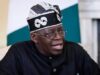
Tinubu Sends Shettima to Kebbi, Condoles Military Over Death of Soldiers

President Bola Ahmed Tinubu

President Bola Ahmed Tinubu has directed Vice President Kashim Shettima to visit Kebbi State on Wednesday in the wake of the abduction of schoolgirls from a boarding school in Maga, Kebbi State. The visit is to convey the federal government’s sympathy to the state government and reassure parents and guardians that every necessary step is being taken to ensure the girls’ safe and speedy return.

The President also extended his condolences to the Nigerian Armed Forces following the death of several soldiers, including Brigadier General Musa Uba, who were killed during an operation against insurgents in Borno State. Tinubu described their deaths as a tragic loss to the nation, expressing deep sadness over the incident.

According to a statement from the Presidency, the military has fully briefed President Tinubu on both the Kebbi abduction and the operation in Borno. He commended Kebbi State Governor Mohammed Nasir Idris for efforts taken to prevent the kidnapping, noting that security agencies had earlier warned of a possible attack by armed bandits.

While condemning the latest security breach, the President urged residents—particularly in communities facing repeated attacks—to strengthen cooperation with security agencies by sharing timely intelligence.

“As Commander-in-Chief of the Armed Forces, I am depressed with the tragic death of our soldiers and officers on active duty. May God comfort the families of Brigadier General Musa Uba and other fallen heroes,” Tinubu said.

He lamented that terrorists had once again targeted innocent students, disrupting their education, and disclosed that he had ordered a rapid response from security agencies to rescue the abducted girls.

“Our security forces cannot succeed in protecting us if the people don’t cooperate and share information that will help them keep our communities safe,” the President added. He called on traditional rulers, community leaders and residents—especially those in high-risk areas—to work closely with the military, police and intelligence services to prevent further attacks.

Vice President Shettima is expected to meet with state officials, families of the kidnapped children and security commanders during his visit.

Video: Defend Nigerian Christians, Nicki Minaj Tells UN

Rapper Nicki Minaj delivered a powerful message at the United Nations on Tuesday, calling global attention to what she described as religious violence and persecution against Christians in Nigeria. The appearance, hosted by the U.S. Mission to the U.N., was coordinated in part by U.S. Ambassador Mike Waltz and former Trump adviser Alex Bruesewitz.

In her remarks, Minaj said, “In Nigeria, Christians are being targeted, driven from their homes and killed. Churches have been burned, families have been torn apart … simply because of how they pray.”

She described the situation as a broader threat to faith, stressing that “faith is under attack in way too many places.”

Minaj thanked U.S. President Donald Trump for pushing the narrative on religious violence in Nigeria, calling his advocacy “urgent action to defend Christians … and to bring a stop to violence.”

She insisted her speech wasn’t partisan, saying: “This isn’t about taking sides … it is about uniting humanity.”

U.S. Ambassador Waltz praised her for leveraging her influence to spotlight suffering communities. He called her “a principled individual who refuses to remain silent in the face of injustice.”

Minaj also addressed her fans, calling them “Barbz,” and spoke of her responsibility as a public figure. “We’ve been given our influence by God. There must be a bigger purpose,” she said.

However, her intervention drew mixed reactions. Former presidential aide Reuben Abati criticized her involvement, suggesting she was pursuing clout rather than substance. He argued she should “stick to Anaconda” instead of speaking on complex geopolitical issues.

Video: Terrorists Attack Kwara Church

A disturbing livestream from the Christ Apostolic Church (CAC) in Eruku, Kwara State, allegedly captured the final moments before gunmen stormed the building during a Tuesday service. According to unverified accounts circulating on social media, several worshippers were reportedly killed, while the pastor and others were said to have been abducted.

As of now, there is no official confirmation of the incident from security agencies or government authorities, and no group has claimed responsibility for the alleged attack. Information remains sketchy, and details circulating online have not been independently verified. Authorities have not yet issued any statements regarding the reports.

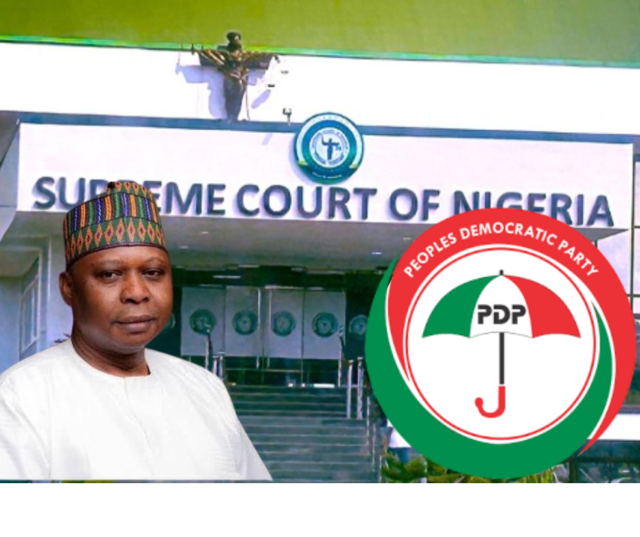
PDP Crisis Deepens as Wike Faction Retaliates with Expulsions, Turaki Vows Fight

The leadership crisis tearing apart Africa’s largest opposition party, the Peoples Democratic Party (PDP), escalated sharply on Tuesday after the faction loyal to FCT Minister Nyesom Wike announced the expulsion of several high-profile members — including Governor Seyi Makinde, Bala Mohammed, Dauda Lawal, and other senior officials — in a counter-move following their own expulsion at the Ibadan convention.

The decision was made during a tense National Executive Committee (NEC) meeting at the PDP national secretariat in Wadata Plaza, Abuja. The Wike-aligned group dissolved six state executive councils — in Oyo, Bauchi, Zamfara, Yobe, Lagos, and Ekiti — citing what they described as violation of the PDP constitution by expelled members.

The NEC, in a communique read by Senator Samuel Anyanwu, accused those it expelled — including former PDP BoT Chairman Adolphus Wabara, ex-Deputy National Chairman Bode George, and Turaki, the newly elected National Chairman — of anti-party activities, contempt for court rulings, and bringing the party into disrepute. Anyanwu said the actions were taken under a report submitted by their acting leadership, which claimed the expelled members had breached the PDP constitution.

In response, Turaki, flanked by Governors Bala Mohammed and Seyi Makinde, held a press briefing outside the secretariat where he asserted that his inaugural National Working Committee (NWC) meeting, scheduled for the day, was legally convened. After police teargas was used to disperse supporters, he announced the gathering would be postponed until November 19.

Earlier, Turaki had visited the FCT Police Command, alerting authorities to what he called “threats” from expelled members trying to gatecrash the secretariat. He declared that anyone occupying Wadata Plaza without approval from the Ibadan convention is an “interloper.”

Speaking to journalists, Turaki stressed that while his administration is ready for reconciliation, it would not tolerate “sabotage” from those he accused of opposing the democratically elected leadership.

Meanwhile, Governor Bala Mohammed, also a part of Turaki’s camp, said he and his colleagues were prepared to “lay down their lives” to defend their mandate and preserve Nigeria’s democratic future.

This bitter power struggle traces its roots to the national convention in Ibadan, where delegates voted to expel Wike, former Ekiti State Governor Ayodele Fayose, Senator Samuel Anyanwu, and others for “anti-party activities.” The resolution was moved by party elder Bode George and seconded by Governor Bala Mohammed.

The actions have sharply divided PDP leadership. Several governors — including Ahmadu Fintiri of Adamawa and Caleb Mutfwang of Plateau — publicly distanced themselves from the expulsions, calling for internal dialogue instead of punitive measures.

UN Greenlights International Force for Gaza

The United Nations Security Council has approved a U.S.-drafted resolution that backs a transitional international force and governing body in Gaza, marking a dramatic new phase in the enclave’s post-conflict reconstruction. Thirteen members voted in favour, while Russia and China abstained.

Under the approved Resolution 2803, a temporary International Stabilization Force (ISF) will be deployed in Gaza to oversee security, support demilitarization and facilitate humanitarian access. The force is expected to operate under unified command and coordinate closely with Egypt, Israel, and a newly trained Palestinian police service.

By IDF Spokesperson’s Unit, CC BY-SA 3.0, https://commons.wikimedia.org/w/index.php?curid=154135090

The resolution also establishes a transitional “Board of Peace,” which will serve as a governing body during the recovery period. Remarkably, the board is to be chaired by Donald Trump, whose 20-point peace plan formed the basis of the resolution. The Board’s mandate runs through December 2027, according to the text.

US Ambassador to the UN, Mike Waltz, described the decision as “historic and constructive,” saying the force will “secure Gaza’s streets, oversee demilitarisation, protect civilians and escort aid through safe corridors.”

He added that the resolution charts a “possible pathway for Palestinian self-determination” — contingent on reforms by the Palestinian Authority.

Hamas denounced the vote, calling it an “imposition of international guardianship.” The group strongly opposes the notion of disarmament, saying that making the ISF responsible for weapons removal “strips it of its neutrality” and risks turning the force into “a party to the conflict, in favour of the occupation.”

Palestinian Foreign Minister Varsen Aghabekian Shahin, speaking from Manila, described the resolution as a “critical first step” toward peace, while urging the process to respect Palestinian self-determination and independence in the long run.

United Nations Secretary-General António Guterres, earlier in November, stressed the importance of a UN-backed stabilization force. He underscored that any transition must be backed by a legal mandate and remain consistent with broader UN goals, including a two-state solution and the reunification of Gaza with the West Bank.

Despite approval, key obstacles remain. No countries have yet committed troops to the force, and the precise command structure and rules of engagement are still being negotiated.

Furthermore, humanitarian needs are immense, and Gaza’s leadership must undergo reforms for the Board of Peace to truly gain legitimacy.

Nigeria’s Inflation Rate Eases to 16.05% in October

Nigeria’s headline inflation rate fell to 16.05 per cent in October 2025, down from 18.02 per cent in September, the National Bureau of Statistics (NBS) reported on Monday.

The data marks the seventh consecutive month of easing inflation and represents a significant reduction compared to the 33.88 per cent recorded in October 2024—some 17.82 percentage points lower year-on-year.

In its breakdown, the NBS said food inflation moderated sharply to 13.12 per cent on an annual basis in October 2025, down from 39.16 per cent a year earlier.

On a month-on-month basis, food inflation recorded a decline of 0.37 per cent, though it noted price increases for items such as fresh onions, pineapple, groundnuts, leafy vegetables and goat meat.

Urban inflation came in at 15.65 per cent, while rural inflation was 15.86 per cent—both reflecting sizeable drops from the same period last year (36.38 per cent and 31.59 per cent respectively).

Despite the encouraging figures, the NBS flagged a monthly headline inflation rate of 0.93 per cent in October—slightly up from 0.72 per cent in September—indicating that price pressures remain present on a shorter-term basis.

Tinubu Charges Judiciary to Restore Public Confidence, Says Integrity Key to Reforms

President Bola Ahmed Tinubu

President Bola Ahmed Tinubu on Monday urged Nigerian judges to uphold the highest standards of integrity, warning that no reform in the justice sector can succeed if public confidence in the judiciary continues to erode.

Speaking at the opening of the 2025 All Nigerian Judges Conference held at the National Judicial Institute (NJI) in Abuja, President Tinubu said the credibility of the judiciary remains central to the survival of Nigeria’s democracy. He stressed that the public perception of the Bench has become a matter of urgent national concern.

“The theme of this year’s conference, ‘Building a Confident Judiciary,’ could not be more fitting,” the President told participants. “Confidence is the lifeblood of justice. A judgment may be grounded in law and delivered with clarity, but unless the public perceives it to be fair, impartial, and untainted, its moral authority is diminished.”

A cross section of the judges

Tinubu acknowledged that many Nigerians have grown frustrated with delays in court cases, concerns about judicial integrity, and obstacles to accessing justice. These perceptions, he said, must not be ignored.

“They call upon us to reflect, to reform, and to restore,” he said. “Justice does not exist for the Bench or the Bar; it exists for the people. Their faith in the judicial process is the foundation of our national stability.”

The President noted that judges remain custodians of the law and urged them to carry out their duties with the spirit rather than the letter of the law always in view. He emphasised that judicial independence, welfare and training are “imperatives” rather than privileges.

“My administration believes that a judiciary strong in capacity, efficient in processes, and uncompromising in integrity is indispensable to the survival of our democracy,” Tinubu declared. “Our courts must no longer be places where cases languish for years. They must become beacons of efficiency.”

The President pledged continued support for the NJI and promised accelerated efforts to modernise court systems across the country. He highlighted digitisation, integrated case management systems and updated infrastructure as priorities for his administration.

“Technology is no longer a luxury; it is a necessity,” he said. “A digital, transparent judiciary will not only improve efficiency but deepen accountability and public trust. We should not leave any of our courts behind in this transformation.”

Tinubu also commended the judiciary for playing a stabilising role during crucial moments in Nigeria’s history. He said its interventions have restrained tyranny, preserved constitutional order, and amplified justice “above the noise of division or despair.”

Chief Justice of Nigeria (CJN), Justice Kudirat Olatokunbo Kekere-Ekun, praised the President’s commitment to judicial reform while calling on judges to embody incorruptibility and resilience in dispensing justice.

“The temple of justice trembles where justice is denied,” the CJN said. “This conference provides an invaluable platform for introspection, collaboration, and strengthening institutional ethics.”

The biennial event was attended by former and serving Chief Justices, Justices of the Supreme Court and Court of Appeal, Heads of Courts, and judges from across the country.

Gunmen Kidnap 25 Schoolgirls From Kebbi Boarding School, Kill Vice-Principal

Armed gunmen abducted 25 girls from a boarding school in northwestern Nigeria early on Monday, November 17, 2025, in a brazen raid that left one staff member dead and another injured, authorities say.

The attack occurred at about 4 a.m. at the Government Girls Comprehensive Secondary School in Maga, located in the Danko-Wasagu Local Government Area of Kebbi State.

According to Police Chief Superintendent Nafiu Abubakar, the assailants carried “sophisticated weapons” and clashed with guards before scaling the school fence and forcing their way into the girls’ dormitories.

Local reports and eyewitnesses say the vice-principal, Hassan Yakubu Makuku, was fatally shot as he attempted to protect the students. A security guard also sustained injuries during the raid.

One resident said attackers arrived on motorcycles and moved quickly to overwhelm the school’s defenses.

In response, security agencies have launched a coordinated search and rescue operation. Police tactical units, military personnel, and local vigilantes are combing nearby forests and suspected escape routes for the kidnapped girls.

Kebbi State officials have confirmed the gravity of the situation; Deputy Governor Umar Tafida has been sent to the scene to assess the unfolding crisis on behalf of Governor Nasir Idris.

The incident underscores the persistent threat posed by armed “bandit” groups in Nigeria’s northwest, which have repeatedly targeted schools for ransom.

Despite the presence of military checkpoints in the region — including one reportedly less than a kilometre from the school — attackers appear to have navigated around security measures with chilling ease.

So far, no group has claimed responsibility for the abduction. But the incident draws parallels with earlier school kidnappings in Nigeria, such as the 2014 Chibok abduction and other mass raids by criminal gangs operating in poorly policed areas.

Court Sentences Prof. Ndifon to 5 Years for Sexual Harassment

A Federal High Court in Abuja has convicted Prof. Cyril Osim Ndifon, the suspended Dean of the Faculty of Law at the University of Calabar (UNICAL), on two counts of sexual harassment and sentenced him to five years in prison. Justice James Omotosho handed down the ruling after the Independent Corrupt Practices and Other Related Offences Commission (ICPC) presented evidence of Ndifon’s misconduct.

The court found Ndifon guilty on two out of the four counts brought against him by the ICPC. He was sentenced to two years on one count and five years on the second count, with both sentences to run concurrently, meaning he will serve a total of five years.

During the trial, the ICPC had accused Ndifon of soliciting explicit images from female students. One key allegation involved a diploma student, identified only by the pseudonym “TJK,” whom the professor reportedly asked to send pornographic photographs via WhatsApp.

In explaining its verdict, the court stated that the evidence presented by the prosecution was sufficient to meet the burden of proof beyond a reasonable doubt. Despite Ndifon’s own testimony denying the allegations, forensic and testimonial evidence weighed heavily.

Meanwhile, Ndifon’s co-defendant, his lawyer Mr. Sunny Anyanwu, was acquitted. The court ruled that the prosecution failed to prove that Anyanwu attempted to pervert the course of justice.

This ruling follows earlier legal developments in the case. In January 2024, Justice Omotosho had remanded Ndifon at Kuje Correctional Centre following his arraignment by the ICPC on four counts related to harassment, cybercrime, and abuse of office.

He was later granted bail in February 2024, with strict conditions including a N250 million bond and two sureties.

The Court of Appeal had earlier upheld the ICPC’s authority to investigate Ndifon, rejecting his argument that the commission lacked power to probe allegations of “demand for sexual gratification” under its mandate.

Mbappé Escalates Legal Battle with PSG, Seeks ~€240 Million

Mbappe

Kylian Mbappé has renewed his legal offensive against his former club Paris Saint-Germain, demanding approximately £230 million (around €240 million) in a labor dispute that has reignited tensions just months after his move to Real Madrid. The claim comes as part of a broader campaign in which Mbappé argues he was unfairly treated — and underpaid — during his final season in Paris.

At the heart of Mbappé’s suit is a demand for €55 million in alleged unpaid wages and bonuses from PSG. His legal team accuses the club of “moral harassment,” saying that after he declined to extend his contract, he was isolated from the first-team environment — a practice known in France as “lofting.”

In April of this year, Mbappé’s representatives took decisive action by freezing €55 million in PSG accounts through a court-ordered seizure.

The move underscored the seriousness of the dispute and cemented a legal stand-off between the two sides.

Beyond the financial claim, Mbappé had filed criminal complaints in May, accusing PSG of harassment, defamation, and attempted extortion.

However, in a somewhat surprising turn, he withdrew the complaint for moral harassment and extortion in July, signaling a partial de-escalation on the criminal front.

Despite that, he is continuing to pursue his case in the French labor courts (the “prud’hommes”), insisting on both the unpaid wages and a reclassification of his PSG contract.

PSG, for its part, strongly disputes Mbappé’s version of events. The club contends that some of the payments he claims as unpaid were subject to a verbal agreement, which they say negates his case for a formal claim.

In internal documents and legal filings, PSG argues that Mbappé’s narrative is “fantasy” and insists that its decision to sideline him was based on standard contractual and sporting considerations, not harassment.

The financial and legal stakes are high. If Mbappé succeeds in having his contract reclassified as a permanent (open-ended) contract, as his team requests, it could dramatically raise the amount he’s owed — and could have major implications for how top-tier players’ contracts are treated under French labor law. His claim also draws on precedents, like that of Adrien Rabiot, who previously won compensation after a similar dispute with PSG.

The case is now being closely watched not just by sports and legal communities, but also by football authorities. Mbappé’s team has appealed to the French Sports Minister and UEFA to highlight PSG’s alleged financial mismanagement, suggesting the dispute could raise broader regulatory and financial fair play questions.

EDITOR PICKS

Recent Posts