Rivers Speaker, 16 Assembly Members Defect to APC

Amaewhule

In a dramatic shift of political allegiance, the Speaker of the Rivers State House of Assembly, Rt Hon. Martin Chike Amaewhule, alongside 16 fellow lawmakers, officially defected from the Peoples Democratic Party (PDP) to the ruling All Progressives Congress (APC) on Friday, citing persistent internal divisions within the PDP as the reason for their move.

Amaewhule, who represents Obio-Akpor I constituency, stood before his colleagues during Friday’s plenary session in Port Harcourt and declared: “The major reason for leaving the PDP is because of the division in the PDP.”

He added that his decision to join the APC was a strategic choice to “join forces with Mr President [Bola Ahmed Tinubu]. He is doing so much for this country.”

During the plenary, Amaewhule formally announced that he had written to his ward chairman signalling his departure from the PDP and declared: “APC is my new party. I will do all that is needed to be done towards ensuring that the party card of the All Progressives Congress is issued to me in no time.”

With their defection, the APC now holds a stronger position within the Rivers State Assembly. The lawmakers listed as joining Amaewhule included key figures such as the Deputy Speaker and other prominent members from constituencies like Akuku-Toru, Okrika, Ogba/Egbema/Ndoni, Port Harcourt, Asari-Toru, and Degema.

This realignment comes amid ongoing political turbulence in Rivers State, where the PDP has governed since 1999 but has recently been riven by factional disputes. The crisis deepened following a conflict between lawmakers and Governor Siminalayi Fubara’s administration, which at one point led to the partial demolition of the Assembly complex and a declaration of state of emergency by President Tinubu.

Nigeria Moves to Boost Local Health Funding as Donor Support Declines

Speakers at the health conference.

The Federal Government has announced a renewed push to strengthen domestic funding for the country’s health sector, warning that Nigeria cannot achieve Universal Health Coverage (UHC) by relying on dwindling international aid.

The declaration was made at the 9th Annual Health Conference of the Association of Nigerian Health Journalists (ANHeJ), where senior health officials and stakeholders emphasized the need for stronger local ownership of health financing.

Speaking at the event, Special Adviser to President Bola Ahmed Tinubu on Health, Dr. Salma Ibrahim Anas, said sustainable progress in the sector depends on Nigeria’s ability to finance its own health priorities. According to her, declining donor grants have made it imperative for the country to develop resilient internal funding structures capable of supporting long-term reforms. She noted that domestically driven financing also fosters accountability and ensures that policies remain aligned with national needs and realities.

Dr. Anas highlighted several ongoing efforts to widen the funding base, including strengthening the Basic Health Care Provision Fund (BHCPF), expanding financial protection mechanisms under the National Health Insurance Authority (NHIA) Act, and exploring new revenue streams such as the Sugar-Sweetened Beverages (SSB) Tax. These strategies, she said, will help Nigeria reduce out-of-pocket spending, expand insurance coverage and improve access to essential services, especially for vulnerable populations.

Participants at the conference stressed that state governments must play a more active role in financing health services. Many speakers renewed calls for states to fulfill the Abuja Declaration commitment of dedicating at least 15 percent of their annual budgets to health. They warned that several states continue to fall short of this target, undermining national efforts to build a stronger and more equitable health system.

Wizkid, Asake Announce Joint EP ‘REAL Vol. 1’ For December

Asake and Wizkid

Afrobeats heavyweights Wizkid, Morayo and Asake have ignited excitement across the music scene with the reveal of their joint EP, REAL Vol. 1, during a high-energy radio takeover hosted by DJ Tunez.

The duo gave fans a taste of what’s coming, teasing the vibrant, street-infused sound of their upcoming single Jogodo while sharing eye-catching promo shots of themselves lounging by a private jet and posing against a graffiti-splashed wall.

The announcement marks a new chapter in a creative relationship that has already delivered fan favourites like MMS. It also arrives at a time when Wizkid continues to dominate Spotify charts and Morayo and Asake maintain strongholds on Apple Music, setting the stage for a collaborative project with significant streaming impact.

While the artists have yet to confirm an exact release date, the EP is expected to drop just in time for the December festivities—traditionally one of Afrobeats’ most vibrant periods. Insiders say REAL Vol. 1 will fuse Wizkid’s signature smooth melodies with Morayo’s soulful depth and Asake’s unmistakable street flair, creating a multi-layered sound tailored for both global playlists and Nigerian party scenes.

Hints from the radio takeover also suggest that this release is just the beginning, with talk of additional volumes already in motion. Fans are now eagerly waiting to see how the trio’s synergy evolves as Afrobeats continues to push its boundaries and expand its global footprint.

Dangote Urges African Entrepreneurs to Invest on Continent

Aliko Dangote

African business magnate Aliko Dangote delivered a provocative message to entrepreneurs across the continent at the Imo State Economic Summit 2025 held in Owerri on Thursday, urging them to invest at home first.

Speaking passionately to a gathering of business leaders and policymakers, Dangote emphasised that local investment is the foundation for attracting international capital. “If we don’t invest at home, there is nobody on earth who will come and invest here,” he said.

Setting the tone, Dangote credited the administration of Bola Ahmed Tinubu for bold economic reforms in Nigeria, asserting that recent policy shifts are already paying dividends. “I want to first of all thank President Bola Tinubu for his bold policies, which are already yielding results. He really took some bold economic steps, one of which was the removal of fuel subsidy,” Dangote remarked.

He went on to urge local entrepreneurs not to wait for foreign players but to lead the way in transforming Africa’s investment landscape.

Dangote pointed out that Africa holds about 30 percent of the world’s mineral resources, yet much of the investment and value-creation opportunities remain unclaimed locally. “When I say at home, I mean in Nigeria and Africa. There are so many potential and mineral resources in Africa,” he noted. “If we don’t lead the way by putting down investment, who do we expect to come and invest in our continent?”

His remarks carried a sense of urgency: local investors must step forward or risk ceding their opportunities to outside interests.

Highlighting his own company’s ambitions, Dangote detailed plans to scale up major projects within Nigeria. He revealed that the Dangote Group intends to become the “number one” fertilizer producer by 2028, increasing urea output from 3 million to 12 million tonnes. “We are investing heavily in fertilizer… we want to become the number one fertilizer plant in Nigeria by 2028,” he declared.

Moreover, he disclosed that the Dangote Refinery is being expanded to process 1.4 million barrels per day, surpassing global competitors: “The refinery will be at 1.4 million barrels per day… this has never been done anywhere in the world.”

In acknowledgement of one of the key enablers of growth, Dangote also praised the power initiative in Imo State, saying “there can never be growth without power,” and lauding Governor Hope Uzodinma for the 375 megawatt electricity project.

Netflix–Warner Bros. $72bn Mega-Deal Set to Reshape Global Streaming Landscape

In one of the most consequential media shake-ups of the decade, Netflix and Warner Bros. Discovery have agreed to a blockbuster merger that values the combined assets at $72 billion, marking a seismic shift in the global entertainment industry. Under the terms of the deal, Warner Bros. Discovery shareholders will receive $23.25 in cash and $4.50 in Netflix stock per share, signalling a powerful vote of confidence in the streaming giant’s long-term dominance.

A major part of the agreement requires Warner Bros. Discovery to spin off its cable networks—including CNN, TNT and others—into a separate company by the third quarter of 2026. The restructuring sets the stage for regulatory scrutiny and is designed to smoothen approval processes in multiple jurisdictions. With the spin-off complete, the full merger is expected to close within 12 to 18 months, pending global regulatory and shareholder approvals.

Netflix, now poised to absorb one of Hollywood’s most storied studios, plans to maintain Warner Bros.’ theatrical release commitments through 2029, easing industry concerns about the future of big-screen blockbusters. The company also expects to integrate HBO Max’s premium library directly into its platform, a move that could redefine content consolidation and intensify competition across the streaming ecosystem.

Leaders from both companies hailed the agreement as a landmark union of storytelling powerhouses. They said the merger would enable the creation of richer, more diverse content for audiences worldwide while combining the technological edge of Netflix with the cinematic legacy of Warner Bros. Despite the enthusiasm, both sides acknowledged the regulatory hurdles ahead, with antitrust bodies in the U.S., Europe and Asia expected to closely examine the deal’s implications for market competition.

Atiku Blasts Tinubu Over Yakubu’s Nomination, Says Move ‘Morally Indefensible’

Former Vice President Atiku Abubakar has strongly condemned President Bola Ahmed Tinubu’s decision to nominate former INEC Chairman Prof. Mahmood Yakubu as a non-career ambassador, describing the move as dangerous, morally unjustifiable and damaging to Nigeria’s democratic credibility.

In a sharply worded statement, Atiku said no responsible leader should reward the head of an election umpire whose conduct remains at the centre of one of the most controversial polls in the country’s history. He declared that he would never, under any circumstance as president, consider nominating the immediate past INEC boss for such a prestigious diplomatic assignment.

“Let me state without ambiguity: under no circumstance would I, as President of the Federal Republic of Nigeria, nominate the immediate past INEC Chairman for an ambassadorial position,” he said, warning that the decision “raises serious concerns” and risks being interpreted as a political favour rather than a merit-based appointment.

Atiku argued that the nomination presents “terrible optics” for an administration already battling public trust issues. He said rewarding the same electoral chief who presided over the highly disputed 2023 general election sends a dangerous signal to the current INEC leadership—that “partisan, compromised, or poorly executed elections may ultimately be rewarded.”

He added that it would be “morally indefensible for an umpire at the centre of one of the most disputed elections in our history to become a beneficiary of its outcome,” stressing that democracy cannot thrive when electoral misconduct is perceived to be compensated rather than scrutinized.

According to the former vice president, the nomination does not strengthen democracy nor advance efforts to rebuild public confidence in national institutions, particularly the electoral commission. “This is not the path to strengthening our democracy or restoring public trust in our institutions,” he said.

Atiku’s criticism adds to the growing controversy surrounding President Tinubu’s latest ambassadorial lists, which feature 31 non-career nominees, including political allies, former governors, ex-service chiefs and other high-profile figures. The Senate is expected to commence screening of the nominees in the coming days, even as opposition voices intensify scrutiny over the political implications of the appointments.

Samsung’s First ‘Special Edition’ Triple-Fold Phone Hits Market

In a bold move signalling its dominance in ultra-premium smartphones, Samsung has unveiled its first triple-folding device, the Galaxy Z TriFold, described by the company as a “special edition” rather than a mass-market release. According to Samsung, the device opens up new possibilities by “increasing … possibilities for creating and working”.

Set to go on sale in South Korea on December 12, the TriFold arrives with an eye-watering price tag of about US$2,443 — more than twice the price of the latest iPhone model.

The phone unfolds into a massive 10-inch display, weighs 309 grams, and at its slimmest point measures less than 0.2 inches thick.

Samsung has emphasised that the TriFold is not aimed at everyday consumers. One executive, Kim Seong-eun, stated the device is “special edition” and “not intended for mass sales”.

The timing of the launch comes as the smartphone market shows signs of maturity, pushing manufacturers to seek novel form-factors and tech differentiation.

While Samsung is not claiming to be the first in the world with a triple-folding phone — indeed, China’s Huawei beat it to the punch — the TriFold underscores Samsung’s ambition to steer the market towards more ambitious, high-end devices.

Dambazau, Fani-Kayode, Jimoh Ibrahim Top Ambassadorial Lists

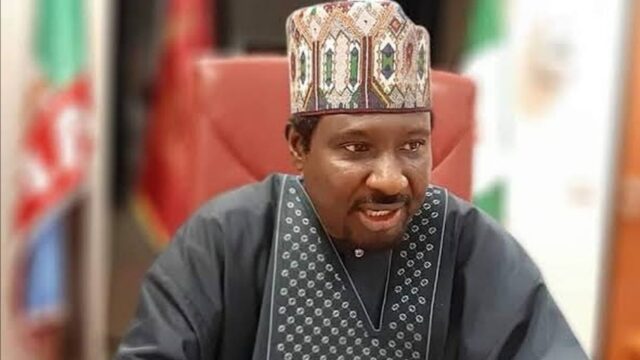
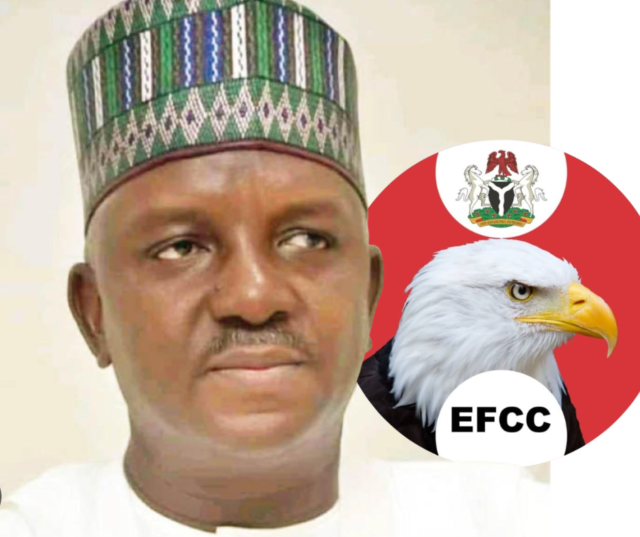
Dambazau

President Bola Ahmed Tinubu has forwarded two separate lists containing a total of 65 ambassadorial nominees to the Senate for screening and confirmation, marking one of the most extensive diplomatic nomination exercises of his administration.

The lists, which include 34 career diplomats and 31 non-career nominees, were officially transmitted to the upper chamber on Thursday.

The non-career list features several prominent political figures and public personalities, signalling a blend of technocratic and political representation in Nigeria’s next diplomatic corps. Among those nominated are former presidential aide Reno Omokri, former Minister of Aviation Femi Fani-Kayode, former Interior Minister General Abdulrahman Dambazau (rtd.), former Abia State governor Okezie Ikpeazu, and former Enugu State governor Ifeanyi Ugwuanyi. The inclusion of these high-profile names has already begun generating nationwide discussion on the strategic direction of Nigeria’s foreign service.

Also on the non-career list are notable figures such as the Chairman of the Independent National Electoral Commission (INEC), Prof. Mahmood Yakubu; former Chief of Naval Staff, Vice Admiral Ibok-Ete Ibas (rtd.); Senator Jimoh Ibrahim; Senator Nora Daduut; Fatima Ajimobi; and former presidential aide and ex-lawmaker Senator Ita Enang, among several others.

With these submissions, a total of 65 ambassadorial nominees are now before the Senate, awaiting screening and confirmation in the coming days. The move underscores President Tinubu’s ongoing efforts to reshape Nigeria’s global engagement and strengthen its diplomatic footprint. As the Senate prepares to scrutinize the nominees, attention is expected to focus not only on their individual credentials but also on the geopolitical vision driving the administration’s nominations.

Tinubu Welcomes 21 New Envoys, Declares Nigeria Ready for Stronger Global Partnerships

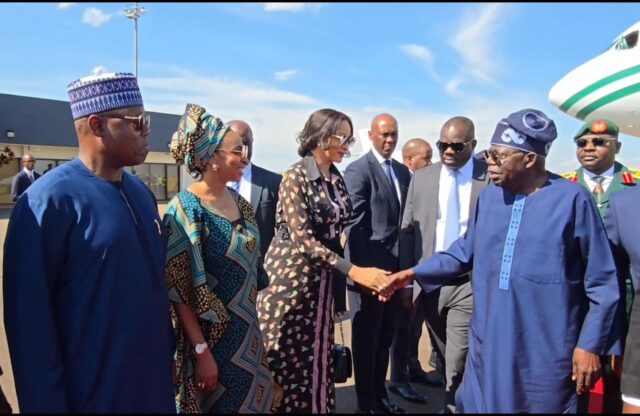
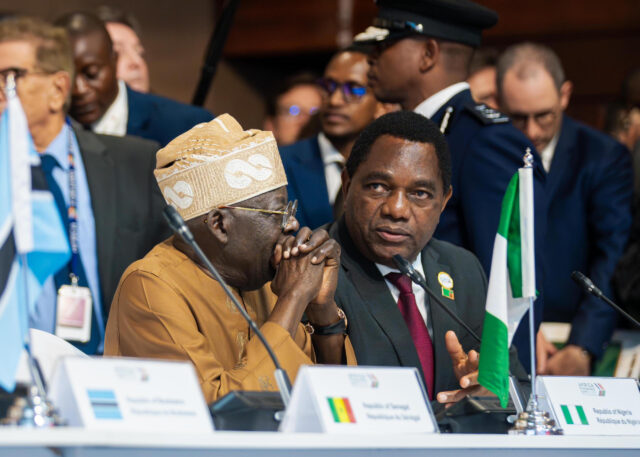
President Bola Ahmed Tinubu on Thursday restated Nigeria’s commitment to global peace, stability and economic cooperation as he received Letters of Credence from 21 newly appointed diplomats at the Presidential Villa in Abuja.

The envoys, comprising 17 ambassadors and four high commissioners, were formally welcomed at the Council Chamber, where the President emphasized his government’s readiness to deepen ties with nations across continents.

Tinubu assured the diplomats that Nigeria remains a reliable partner committed to fostering mutual prosperity. He highlighted his administration’s focus on strengthening democratic institutions, advancing economic reforms and creating an investment-friendly climate driven by innovation and sustainable development.

Reaffirming his open-door policy, the President urged the envoys to engage closely with the Ministry of Foreign Affairs to explore opportunities in areas such as trade, energy, agriculture, education, technology, defence cooperation and cultural exchange.

The President noted that the world faces mounting challenges—from security threats and climate pressures to economic shocks and humanitarian concerns—and stressed the need for collective solutions. He pledged that Nigeria is ready to work with the international community to address these issues, saying his administration remains fully committed to constructive partnerships that promote global peace and shared growth.

Speaking on behalf of the newly accredited diplomats, Japan’s Ambassador Suzuki Hideo described the day as historic and commended President Tinubu for his leadership and reform efforts. He praised Nigeria’s expanding role in ECOWAS and Africa, noting that the country continues to be recognized globally for its resilience and influence. Hideo applauded the President’s bold economic reforms aimed at strengthening the fiscal framework and attracting investment, as well as recent strides in improving national security through intensified counter-terrorism measures.

The ceremony saw the presentation of credentials by envoys from Japan, Chad, Gabon, Türkiye, Palestine, Spain, Indonesia, Mauritania, Austria, Thailand, Bangladesh, Sweden, the Czech Republic, Liberia, Ghana, India, Poland, Italy, Slovakia, Iran and Barbados. Their accreditation marks the beginning of renewed diplomatic engagement and cooperation between Nigeria and their respective nations, with all sides expressing optimism for a productive and mutually beneficial relationship in the years ahead.

Senate Passes Bill to Create Independent Police Pension Board

The Senate has passed a landmark bill establishing an independent Pension Board for the Nigeria Police Force, setting the stage for the police to exit the national Contributory Pension Scheme (CPS).

The bill, which originated from the House of Representatives, was approved on the floor of the Senate after receiving concurrence, marking a major step toward overhauling the welfare structure of police personnel in the country.

Once the bill secures presidential assent, the Nigeria Police Force will operate its own dedicated pension administration system, separate from the broader contributory framework that currently governs the retirement benefits of federal employees. The proposed Police Pension Board is expected to address long-standing concerns raised by serving and retired officers regarding delays, disparities and perceived inadequacies associated with the CPS.

The move is widely regarded as a significant policy shift aimed at improving the morale and post-service welfare of police officers, who have for years advocated for a pension structure tailored to the unique demands of their profession. With Senate approval now secured, attention turns to President Bola Ahmed Tinubu, whose assent will officially bring the Police Pension Board into existence and trigger full administrative transition from the contributory scheme.

If signed into law, the development will mark a new era for police welfare management, potentially offering more streamlined benefits and a pension system designed to better serve Nigeria’s frontline security personnel.

EDITOR PICKS

Recent Posts