The Nigerian Army has recorded fresh gains in its counter-terrorism and anti-crime operations in the North-East, with troops of Operation Hadin Kai arresting five suspected kidnappers and recovering AK-47 rifles in Borno State, while two high-ranking Islamic State West Africa Province (ISWAP) commanders have also surrendered to military authorities.
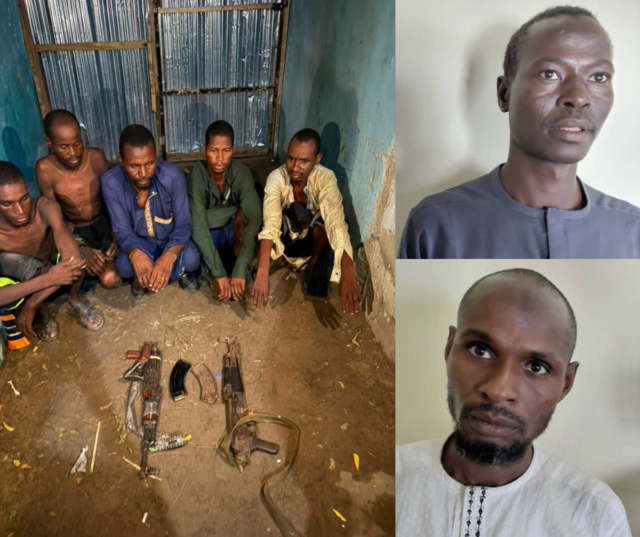
In a statement released on Thursday, the Nigerian Army said troops operating under the Joint Task Force North East, Operation Hadin Kai, carried out a successful intelligence-led operation in Magumeri Local Government Area of Borno State, leading to the arrest of five suspected members of a kidnapping syndicate.
According to the Army, the operation was launched following credible intelligence on the activities of criminal elements operating along a known corridor in Magumeri. During the raid, troops recovered two AK-47 rifles, magazines and ammunition, significantly degrading the operational capability of the suspected kidnappers.
The Army stated that preliminary investigations linked the suspects to kidnapping and other criminal activities across parts of Borno State. The arrested individuals are currently in custody and assisting security agencies with ongoing investigations aimed at tracking down additional members of the syndicate and dismantling their support networks.
The military described the operation as evidence of its continued commitment to protecting lives and property while sustaining offensive operations against terrorists, kidnappers and other criminal groups threatening national security.
The latest arrests come days after Operation Hadin Kai recorded another major breakthrough in its counter-insurgency campaign with the surrender of two senior ISWAP commanders.
The Nigerian Army disclosed that the terrorists, identified as Ismail Mohammed and Abu Umar, surrendered to troops on June 8, 2026, and are currently undergoing profiling and debriefing procedures in military custody.
Military authorities revealed that both men occupied strategic positions within the ISWAP hierarchy and operated within the Mangari axis of the Lake Chad region. Ismail Mohammed was identified as a close associate of senior ISWAP leader Baa Shuwa and was said to possess extensive knowledge of the group’s command structure and operations.
The second surrendered commander, Abu Umar, was described as a key explosives expert within the terrorist network. According to the military, he was responsible for the fabrication and maintenance of vehicle-borne improvised explosive devices (VBIEDs) and other combat-support equipment used by insurgents.
The Army further disclosed that ongoing interrogations revealed that another senior terrorist figure, Mohammed Khalifa, a member of the ISWAP Shurah Council, was neutralised during recent joint military operations conducted by Operation Hadin Kai and allied forces.
Military authorities said the surrender of the two commanders represents a significant blow to the terrorist organisation because of their influence, experience and technical expertise acquired over several years within the insurgent network.
The Army noted that the development underscores the effectiveness of sustained military offensives and precision operations conducted across terrorist enclaves in the North-East. According to the military, the sustained pressure has continued to weaken terrorist capabilities, disrupt their networks and force increasing numbers of insurgents to abandon the fight.
“The surrender of the two commanders represents a major setback to the terrorist organisation, particularly given their experience, influence and technical expertise acquired over several years within the insurgent network,” the Army stated.
The military added that the growing number of surrenders reflects declining morale among insurgents and demonstrates the success of ongoing efforts to dismantle terrorist leadership structures and eliminate safe havens used by extremists.
Reaffirming its resolve, the Nigerian Army said Operation Hadin Kai remains committed to maintaining relentless pressure on all terrorist elements and exploiting every opportunity to dismantle criminal and insurgent networks in order to restore lasting peace and stability across affected communities in the North-East.