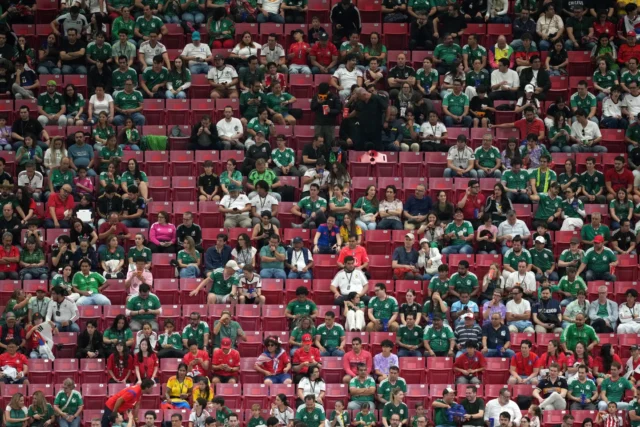
The FIFA World Cup 2026 has been hit by growing criticism over ticket pricing after several early tournament matches were played in front of noticeable sections of empty seats, raising fresh questions about affordability, fan access and the governing body’s commercial strategy.
Concerns intensified following Thursday’s Group Stage match between South Korea and the Czech Republic in Guadalajara, Mexico, where FIFA reported an official attendance of 44,985 at a stadium with a capacity of approximately 46,000. Despite the near-capacity figure, television images showing large patches of empty seats sparked widespread debate among supporters and observers.
The issue resurfaced during Canada’s opening World Cup match against Bosnia and Herzegovina at Toronto’s BMO Field. Although the stadium has a capacity of 44,315, hundreds of seats remained unoccupied, with tickets still available only hours before kick-off at prices many supporters described as excessive.
According to ticket listings, Category 1 and Category 2 seats for Canada’s opening fixture were priced between $1,645 and $2,240, prompting criticism from fans and consumer groups who argue that attending World Cup matches has become financially out of reach for ordinary supporters.
The controversy comes despite FIFA’s insistence that demand for the tournament remains exceptionally strong. FIFA President Gianni Infantino recently defended the governing body’s pricing policy, arguing that ticket costs were comparable to those of other major international sporting events.
FIFA has previously announced that more than six million tickets had been sold for the expanded 48-team tournament and maintained that demand had exceeded expectations by “a factor of 10 or more.”
However, supporters’ organisations have challenged that narrative. Football Supporters Europe (FSE) warned before the tournament that what it described as “extortionate” ticket prices risked excluding traditional football fans from the sport’s biggest event. The group noted that ticket prices for the 2026 tournament had increased significantly compared to the 2022 FIFA World Cup in Qatar.
The issue has also attracted political attention. Former United States President Donald Trump recently criticised the pricing structure, saying he “wouldn’t pay” the four-figure sums being charged for tickets to the United States’ opening match against Paraguay.
FIFA has sought to explain the discrepancy between attendance figures and the visible empty seats seen during broadcasts. Following scrutiny over the Guadalajara match, the organisation stated that some spectators may have been standing in concourse areas rather than occupying their assigned seats during portions of the game.
Nevertheless, the optics have continued to fuel criticism. Television footage from both Guadalajara and Toronto repeatedly showed empty sections of seating, particularly in areas opposite the main broadcast cameras.
The attendance concerns come as FIFA faces increasing scrutiny over its ticketing practices. Reports indicate that only 29 of the tournament’s 104 matches had sold out before the competition began, while tickets remained available for 75 fixtures in the days leading up to the opening game.
Adding to the pressure, ticketing practices surrounding the World Cup are now reportedly being examined by legal authorities in the United States. Attorneys General in New York and New Jersey have demanded answers from FIFA over allegations that ticket prices were being artificially inflated and that some supporters may have been misled during the sales process.
Among the concerns raised are claims that FIFA introduced more expensive premium seating categories after initial ticket sales had begun and utilised dynamic pricing models that allowed prices to rise significantly in response to demand. Reports also suggest that seats may have been withheld from initial sales before being released later at higher prices, a strategy critics argue contributed to scarcity and increased costs for fans.
Despite the controversy, FIFA continues to promote the tournament as a major success, citing record ticket sales and strong global interest in the first World Cup to feature 48 teams and be jointly hosted by Canada, Mexico and the United States.