Goldman Sachs has raised fresh concerns about the resilience of US consumers, warning that surging inflation—driven largely by rising energy costs linked to the ongoing Iran conflict—is beginning to weigh heavily on household spending and could dampen economic growth in the months ahead.
In a research note released Tuesday, Goldman Sachs strategist Ronnie Walker said what had initially appeared to be a strong year for consumer spending is now showing signs of strain. “What originally appeared to be a solid year for consumer spending has quickly become more challenging. … We expect weak real consumption growth over the coming months,” Walker wrote.
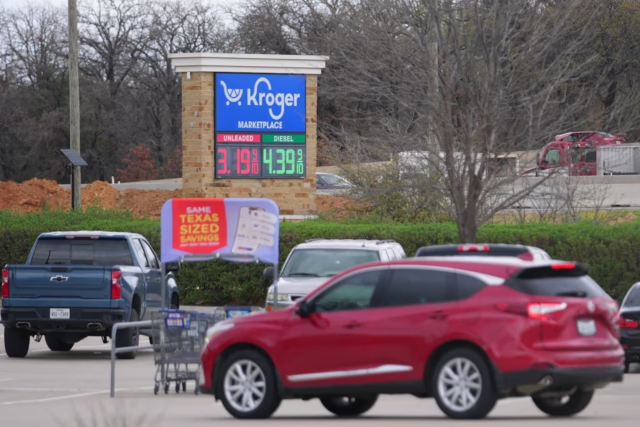
At the centre of the pressure is a sharp increase in fuel costs. According to the bank, gasoline prices have surged by nearly 40 percent since the conflict began, creating a significant drag on household finances. Walker estimated that current fuel price levels represent “a roughly $140 billion annualized headwind to household incomes,” though this could ease if oil prices moderate later in the year. Under Goldman’s baseline scenario, Brent crude is expected to return to around $80 per barrel by year-end, reducing the drag to about $60 billion annually, but still leaving a cumulative impact of roughly $70 billion for 2026.
The burden, analysts say, is not evenly distributed. Lower-income households are particularly vulnerable, as they spend a far greater share of their income on fuel compared to wealthier consumers. The report noted that these households spend roughly four times as much on gasoline as a share of after-tax income as those in the highest income bracket, amplifying the impact on discretionary spending, including dining and retail purchases.
Recent economic data underscores the growing strain. The University of Michigan Consumer Sentiment Index fell sharply to 47.6 this month, marking an 11 percent drop from March and the lowest level recorded in the survey’s 74-year history. The decline cuts across income groups, age brackets and political affiliations, reflecting widespread concern about rising living costs and economic uncertainty. Analysts note that the reading is even lower than levels recorded during the 2008 financial crisis and the inflation shocks of the 1980s.
Inflation expectations are also climbing, with year-ahead projections rising to 4.8 percent, the largest one-month increase in a year. Economists say the spike is closely tied to higher energy prices stemming from geopolitical tensions, reinforcing fears that inflationary pressures may persist longer than anticipated.
Investors are already adjusting to the changing outlook. Consumer-facing stocks, particularly those with heavy exposure to lower-income customers, are showing signs of strain. Shares of McDonald’s have slipped about one percent over the past month, while Dollar General and Dollar Tree have posted only modest gains, underperforming the broader market rally.
Market participants are now closely watching upcoming retail sales data for further insight into how consumers are responding to rising costs. The figures are expected to provide a clearer picture of spending patterns and whether higher fuel prices are beginning to significantly curb demand across key sectors of the US economy.
Yahoo Business