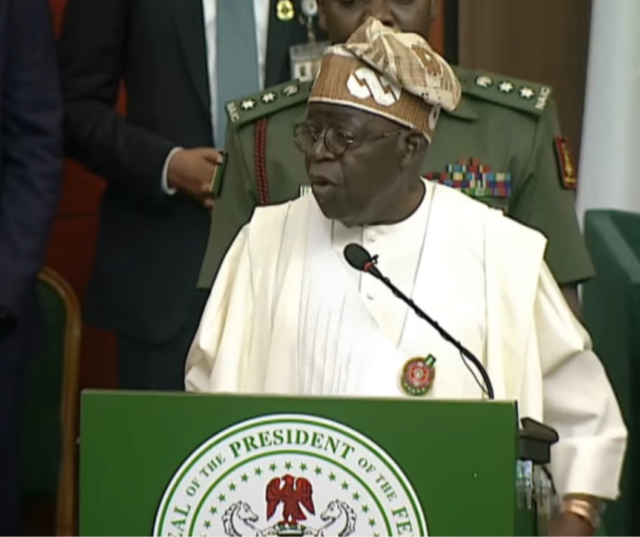
The Federal Government has filed a 13-count charge against six individuals over an alleged plot to overthrow the administration of President Bola Ahmed Tinubu, marking a significant escalation in the prosecution of suspected threats to national security.
The charges, filed before the Federal High Court in Abuja, accuse the defendants of conspiracy to wage war against the Nigerian state and commit acts linked to terrorism.
Among those named in the charge sheet are retired Major General Mohammed Gana, retired Naval Captain Erasmus Victor, serving police inspector Ahmed Ibrahim, and three other suspects identified as Zekeri Umoru, Bukar Goni, and Abdulkadir Sani. The defendants are scheduled to be arraigned before Justice Joyce Abdulmalik on April 22, as the government moves to formally prosecute the case.
Also listed in the charge, but reportedly at large, is former Minister of State for Petroleum Resources, Timipre Sylva, who is alleged to have played a role in concealing aspects of the plot.
According to the charge sheet, the Federal Government alleged that the suspects conspired in 2025 “to levy war against the state to overpower the President of the Federal Republic of Nigeria,” an offence punishable under Nigerian law. The prosecution further claimed that some of the accused had prior knowledge of planned treasonable acts but failed to report them, while one of the defendants was accused of handling funds linked to terrorism financing.
The case is being prosecuted by the Office of the Attorney-General of the Federation, with the Director of Public Prosecutions said to have signed the charge. Legal proceedings are expected to test the government’s resolve to pursue accountability in what authorities describe as a serious attempt to undermine constitutional order.
The development follows months of investigations into an alleged coup plot that first surfaced in 2025, leading to multiple arrests across military and civilian circles. Security agencies had earlier indicated that the conspiracy involved elements within the armed forces, law enforcement, and civilian networks.
Nigeria, which has maintained uninterrupted democratic governance since 1999, has in recent months heightened vigilance amid a wave of coups and attempted takeovers across parts of West and Central Africa.