The United Nations General Assembly has adopted a landmark resolution declaring the transatlantic slave trade and the enslavement of Africans as “the gravest crime against humanity,” while urging member states to begin discussions on reparations for historical injustices.
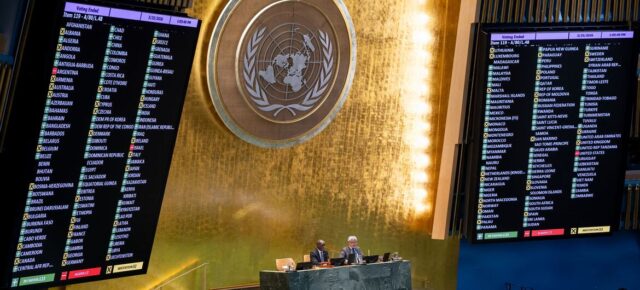
The resolution, spearheaded by Ghana and backed by African and Caribbean nations, was passed with 123 votes in favour, three against, and 52 abstentions, highlighting both strong global support and deep divisions over the issue.
The vote took place during the International Day of Remembrance of the Victims of Slavery and the Transatlantic Slave Trade, underscoring the UN’s renewed focus on addressing the enduring legacy of slavery, which saw millions of Africans forcibly transported and exploited over centuries.
According to the resolution, reparations are considered “a concrete step towards remedying historical wrongs,” with proposed measures including formal apologies, financial compensation, and the return of cultural artefacts taken during the era of slavery.
Speaking during the session, Antonio Guterres called for stronger global commitment to confronting the past, stressing that “far bolder action” is needed to address the lasting consequences of slavery and systemic inequality.
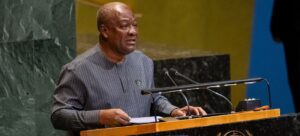
Ghana, which led the initiative, framed the resolution as both a moral and historical necessity. Supporters argue that the measure represents one of the most significant acknowledgments yet by the international community of the scale and enduring impact of the transatlantic slave trade.
“This resolution serves as a safeguard against forgetting,” Ghana’s leadership stated, emphasising the need to honour “the memory of the millions who suffered the indignity of slavery.”
Despite its passage, the resolution exposed clear geopolitical fault lines. The United States, Israel, and Argentina voted against the measure, while several European nations, including the United Kingdom and members of the European Union, abstained. Critics of the resolution raised concerns about the legal implications of reparations and warned against creating what they described as a hierarchy of historical atrocities.