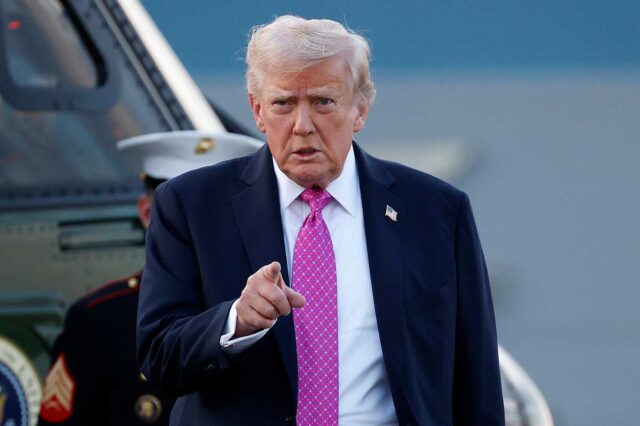
U.S. President Donald Trump has declared an end to the conflict with Iran, announcing that a formal peace agreement is expected to be signed in Europe in the coming days following high-level negotiations involving key Middle Eastern leaders.
In a statement released on Tuesday, Trump said planned U.S. military strikes against Iran had been called off after discussions with Iranian authorities reached what he described as the highest levels of leadership and received approval from all parties involved.
“Based on the fact that discussions with the Islamic Republic of Iran have been brought to the highest level of Iranian leadership and approved, I have, as President of the United States of America, cancelled the scheduled strikes and bombings against Iran this evening,” Trump said.
The U.S. president added that negotiations had produced an agreement in principle, stating that “discussions and final points have been, in both concept and great detail, approved by all parties involved.”
According to Trump, the countries involved in the talks include the United States, Iran, Saudi Arabia, the United Arab Emirates, Qatar, Turkey, Pakistan, Bahrain, Kuwait, Jordan and Egypt. He also indicated that a venue and date for the formal signing ceremony would be announced shortly.
“Time and place of the signing to be announced shortly,” he said.
The announcement marks a dramatic shift from recent tensions that had raised fears of a wider regional conflict. Trump noted that a naval blockade would remain in effect until the agreement is formally finalized, suggesting that some security measures will stay in place during the transition period.
The breakthrough reportedly followed direct diplomatic engagements involving Trump and leaders of Qatar, the UAE and Saudi Arabia, countries that have played increasingly influential roles in regional mediation efforts. The negotiations are being viewed as a significant diplomatic development aimed at preventing further military escalation in the Middle East.
Notably, reports indicate that Israeli Prime Minister Benjamin Netanyahu was not part of the negotiations that led to the agreement, a development that could generate fresh debate about the future direction of regional security arrangements and U.S. diplomacy in the Middle East.