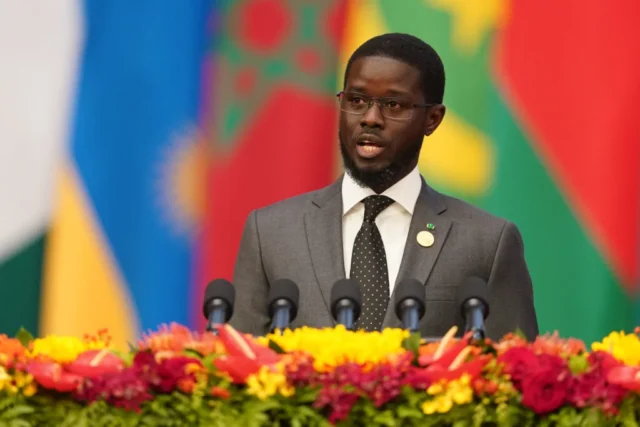
Ousmane Sonko has been elected speaker of Senegal’s parliament just days after being dismissed as prime minister by President Bassirou Diomaye Faye, deepening political tensions at the top of the country’s leadership.
Lawmakers on Tuesday overwhelmingly voted Sonko into the powerful parliamentary position with 132 votes in favour, despite his removal from government on Friday amid mounting speculation over a growing rift between the president and his former political ally.
The dramatic political turnaround came after parliament reinstated Sonko as a lawmaker earlier in the day before proceeding with the vote for speaker.
Sonko, who remains the dominant figure within the ruling Pastef party, received a prolonged standing ovation after the result was announced. According to the session’s presiding member, Ismael Diallo, no legislator voted against Sonko while one abstained.
The former prime minister was the sole candidate for the position.
Sonko replaces El Malick Ndiaye, a close ally who resigned from the role on Sunday, paving the way for Sonko’s return to frontline institutional politics.
The development marks a significant setback for President Faye, who had dissolved the cabinet and removed Sonko from office in what many observers viewed as an attempt to assert control over the government amid disagreements over how to address Senegal’s worsening debt crisis and economic challenges.
Faye had appointed Sonko prime minister in April 2024 shortly after winning the presidency, a victory widely seen as heavily influenced by Sonko’s popularity and political machinery.
Sonko, once regarded as Faye’s mentor, was unable to contest the presidential election himself because of a defamation conviction that barred him from running.
The latest developments have now fuelled concerns about a power struggle at the heart of Senegal’s ruling establishment.
Opposition leader Aissata Tall Sall condemned Sonko’s election as an “institutional coup,” arguing that procedural rules had been manipulated to facilitate his rapid return to parliament and subsequent elevation as speaker.
Sall said the process had been prepared under “pressure that the majority wants to impose.”
She also questioned the legality of Sonko’s reinstatement as a lawmaker, insisting he should first have formally resigned as prime minister before temporarily taking a parliamentary seat.
Despite the controversy, Sonko’s emergence as speaker places him in charge of Senegal’s only legislative chamber, where Pastef controls 130 of the 165 seats, potentially giving him a formidable platform from which to shape national politics and challenge the presidency.
Meanwhile, President Faye has moved quickly to stabilise his administration following the cabinet shake-up by appointing senior economist Ahmadou Al Aminou Mohamed Lo as the country’s new prime minister.
Faye said the new appointee possesses the expertise required to help steer Senegal through mounting economic pressures and a crippling debt burden that has become one of the defining challenges facing the government.