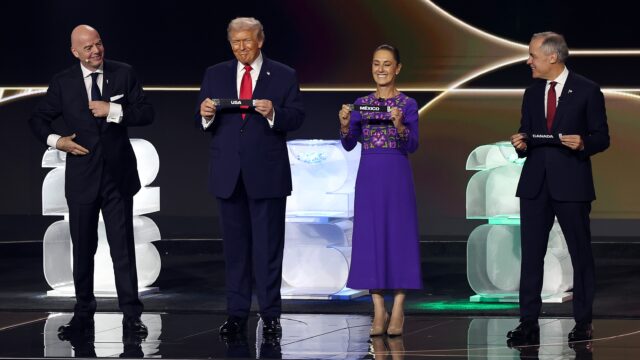
The 2026 FIFA World Cup draw has handed Africa one of its toughest opening-round challenges yet, with Morocco set to face defending champions Brazil in one of the most high-profile group pairings of the expanded 48-team tournament. The Atlas Lions, Africa’s standout performers in recent global competitions, now carry the weight of the continent’s hopes as they prepare for a showdown with the football superpower.
Morocco’s group, which also includes Scotland and Haiti, is widely viewed as one of the most competitive of the draw, posing a significant test for the African side looking to build on its recent history-making performances. While Morocco have earned global respect for their disciplined style, tactical evolution and fearlessness against top teams, Brazil represent a different tier of sustained football dominance. The South Americans enter the tournament with a renewed squad and the expectation of defending their title.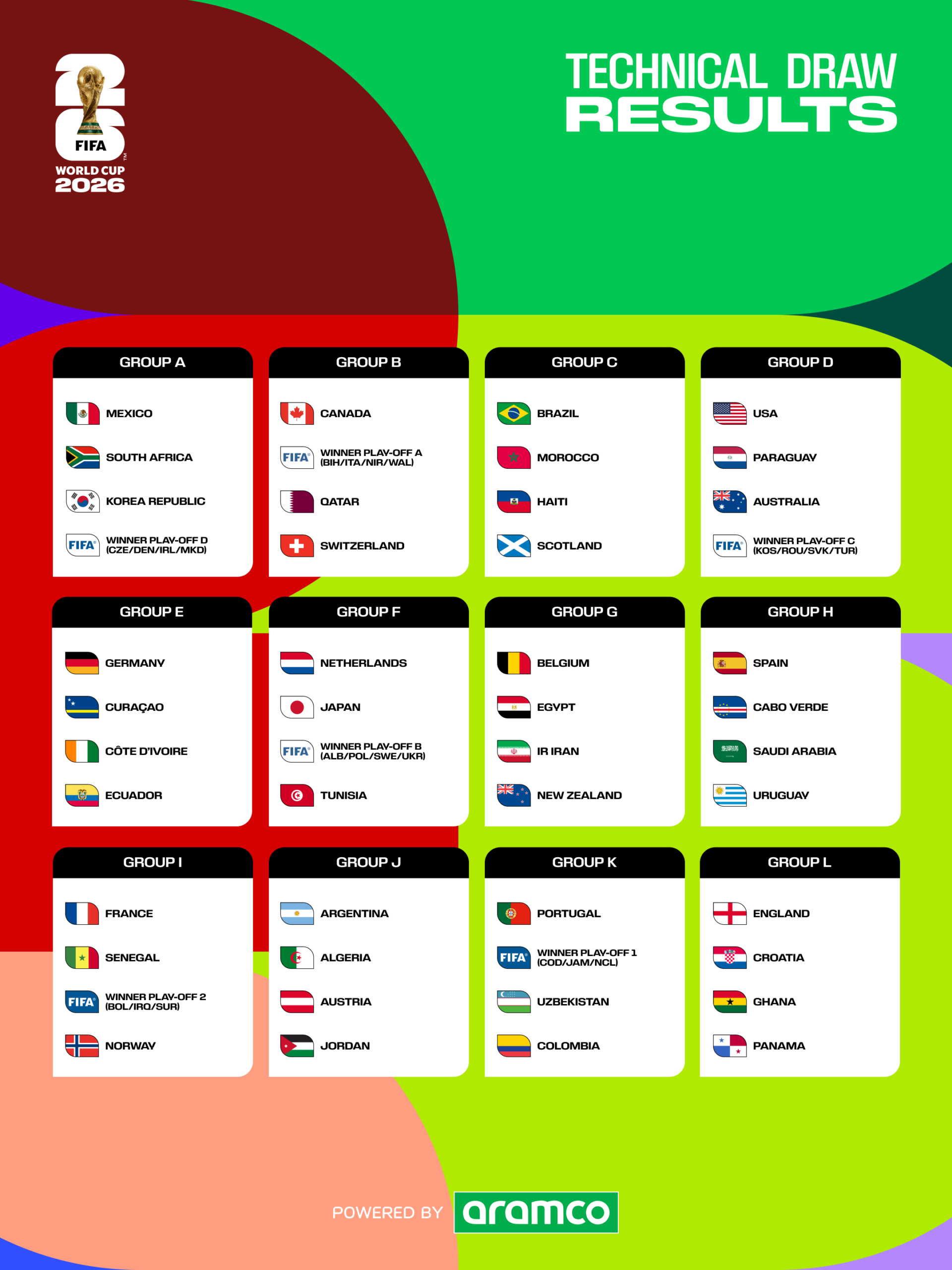
The challenge for African teams extends beyond Morocco. Across the draw, African representatives were matched against some of the strongest teams, raising concerns about early knockouts amid the larger competitive field. Ghana, placed in the same group as England and Croatia, face a daunting set of fixtures that revive old tensions from past World Cup clashes.
The expanded World Cup format, designed to increase global participation, has also intensified match-ups rather than diluting them. Teams were seeded based on rankings and continental distribution rules, but the randomness of the draw has left several African sides with steep mountains to climb.
The tournament kicks off on June 11, 2026, but not before six qualification slots are decided. Six groups are still incomplete as the final playoff fixtures approach. These remaining berths will be filled through intercontinental and regional playoff rounds scheduled for early next year, meaning that some African teams may not know their full group opponents until months before the tournament begins.
FIFA officials have noted that this uncertainty is one of the logistical challenges created by the tournament’s expanded structure, but insist the final qualifiers will “enhance global competitiveness.”
South Africa, returning to the World Cup stage with renewed optimism, also face a demanding group assignment. Drawn alongside two former World Cup quarter-finalists, their group promises a blend of physicality and tactical discipline. They face Mexico, Korea Republic and a yet-to-qualify team in Group A.
Senegal and Egypt, two of Africa’s most prominent football nations, also have difficult paths ahead. Senegal, known for its athleticism and cohesion, must contend with France, Norway, and a play-off winner in Group I.
Egypt are in Group G alongside Belgium, Iran, and New Zealand. While Tunisia will have an uphill task against The Netherlands, Japan, and a play-off winner among Albania, Poland, Sweden and Ukraine.