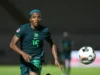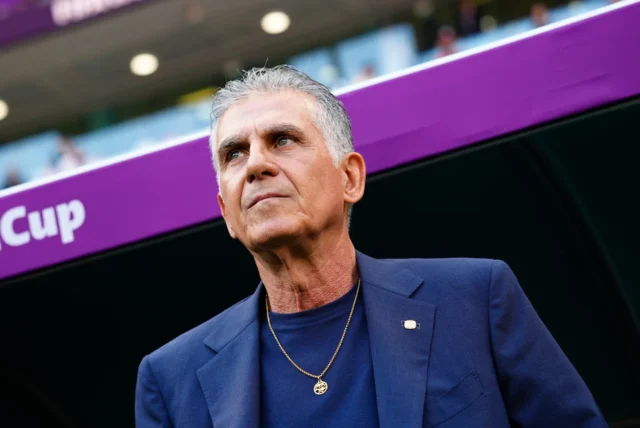
Ghana head coach Carlos Queiroz has defended his decision to include Thomas Partey in the Black Stars’ squad for the 2026 FIFA World Cup, insisting that the former Arsenal midfielder is entitled to the presumption of innocence while awaiting trial in England on multiple rape charges.
Speaking ahead of Ghana’s international friendly against Wales in Cardiff on Tuesday, Queiroz said his decision was based on a fundamental principle of justice and criticized what he described as a tendency by social media and sections of the media to pass judgment before legal processes are concluded.
Partey, 32, now plays for Spanish club Villarreal and has pleaded not guilty to the charges. The allegations relate to incidents said to have occurred during his time at Arsenal between 2020 and 2025. His trial is expected to begin in London in November or later.
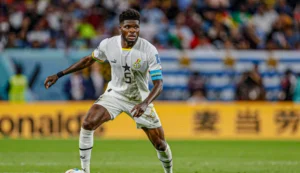
Addressing questions about the midfielder’s inclusion in Ghana’s World Cup squad, Queiroz called for patience and respect for due process.
“Let events run its normal course, let the river flow and one day when the river meets the ocean we will find the truth,” the veteran Portuguese coach said.
Queiroz, who is preparing for his fifth consecutive World Cup appearance as a head coach after previous stints with Portugal and Iran, argued that modern public discourse often condemns individuals before they have the opportunity to defend themselves.
“Today, and this is not only about Thomas, very unfortunately the way social media, and the media sometimes, act with full and total impunity we are condemned even before we have the opportunity to defend ourselves,” he said.
The Ghana coach declined to elaborate further on the legal case but made it clear that Partey’s presence in the squad reflected his confidence in the player’s eligibility to represent the country.
“If the player is here with me, my answer is clear, so I don’t have to make comments about my own decisions,” Queiroz added.
The issue has drawn renewed attention ahead of the World Cup, where Partey is expected to play a central role in Ghana’s midfield. He is not the only World Cup participant currently facing legal proceedings. Morocco defender Achraf Hakimi is also awaiting trial in Paris on similar allegations.
Queiroz suggested that broader global issues deserved greater attention than matters beyond the control of football coaches.
“There are much more serious problems, urgent issues in the world to talk about,” he said.
The 73-year-old manager, who took charge of Ghana in April, acknowledged the challenges public figures face in an era dominated by social media scrutiny.
“Unfortunately, as I said, today it is really difficult to deal with everything that is on top of us,” he remarked.
Drawing on his previous World Cup experiences, including his time managing Iran during the politically sensitive 2022 tournament in Qatar, Queiroz stressed the importance of shielding his players from distractions.
“The key point for me in my professional life in football it is to keep everything that is poison or dust far away from the four lines,” he said.
Ghana heads into the World Cup with high hopes as it prepares for its fifth appearance at the tournament in the last six editions. The Black Stars’ squad is led by Manchester City winger Antoine Semenyo and will face a challenging group-stage campaign.
The West Africans begin their Group L campaign against Panama in Toronto on June 17 before taking on England in Foxborough, Massachusetts. Their final group match will be against Croatia in Philadelphia on June 27.
Under the tournament’s expanded format, the top two teams in each group will qualify automatically for the round of 32, while some third-placed teams could also progress to the knockout stages.
Ghana’s World Cup history includes one of the most dramatic moments in African football. At the 2010 tournament in South Africa, the Black Stars came within moments of becoming the first African nation to reach a World Cup semifinal before a goal-line handball by Luis Suárez denied them victory. Ghana subsequently missed the resulting penalty and lost in a penalty shootout to Uruguay.
As the countdown to the World Cup continues, attention will remain focused both on Ghana’s ambitions on the pitch and the debate surrounding one of its most high-profile players off it.
AP