Lagos Government Vows Tough Action as Fire, Building Collapse Claims More Lives

Lagos State Governor Babajide Sanwo-Olu

The Lagos State Government has pledged to enforce tougher regulatory measures to curb the rising incidents of fire outbreaks and building collapses across the state, following the deadly fire and partial collapse of the 22-storey Great Nigeria House in Lagos.

Governor Babajide Olusola Sanwo-Olu made the commitment while inspecting the site of the incident, which occurred about ten days ago and has so far claimed eight lives. The high-rise building was engulfed by fire before parts of it collapsed, triggering an extensive search-and-rescue operation that is still ongoing.

Addressing journalists at the site, Sanwo-Olu said the tragedy underscored the urgent need for stricter enforcement of building standards and safety regulations. He warned that the state government would take “tough but necessary decisions” to prevent avoidable disasters that continue to endanger lives and property.

“We will not shy away from making hard decisions where lives are at stake,” the governor said. “The continuous occurrence of fire incidents and building collapses is unacceptable, and we must confront the root causes decisively.”

Sanwo-Olu explained that excavation and debris-clearing efforts had been delayed because engineers could not guarantee the structural integrity of the remaining portion of the building. According to him, the section still standing poses a serious risk to rescue workers and nearby properties.

“The integrity of the part of the building that is still standing cannot be guaranteed,” he said. “That is why we have had to proceed with extreme caution before commencing full excavation.”

The governor directed the Lagos State Building Control Agency to immediately intensify enforcement actions against developers and property owners who erect substandard structures or flout approved building plans. He said such negligence was largely responsible for recurring collapses and fire disasters in the state.

“I have instructed the Lagos State Building Control Agency to clamp down, without delay, on substandard buildings and sharp practices that put lives in danger,” Sanwo-Olu stated. “We must send a clear message that safety regulations are not optional.”

While commiserating with families of the victims, the governor expressed the state government’s sympathy and assured them that every effort was being made to recover those still trapped and to determine the cause of the incident.

“Our hearts go out to the families who have lost loved ones in this tragic incident,” he said. “The state stands with you at this difficult time.”

Sanwo-Olu also called for the support of federal agencies and multinational companies with specialised technical expertise to safely bring down the damaged structure, allowing excavation to proceed without further risk.

“We are seeking the cooperation of relevant federal agencies and international partners who have the technical capacity to safely dismantle the remaining structure so that excavation can commence immediately,” he added.

Emergency responders confirmed that eight bodies have so far been recovered from the site, while investigations into the cause of the fire and collapse continue.

The incident has once again raised concerns about building safety, regulatory enforcement and emergency preparedness in Nigeria’s commercial capital, with the state government insisting that stricter oversight is now unavoidable to prevent future tragedies.

Somaliland President Warns of Growing Hostility as Mass Protests Sweep Somalia Over Israel Recognition

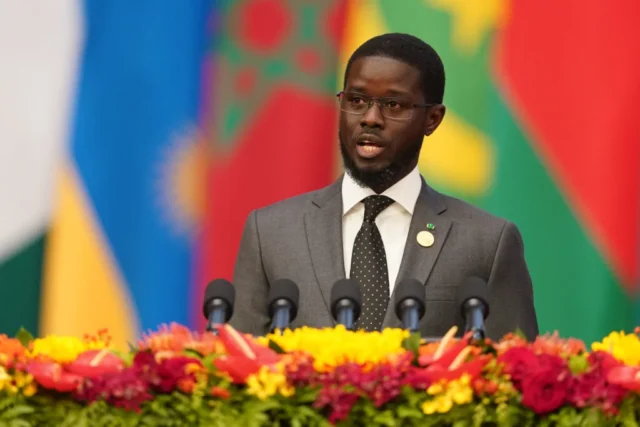
Somaliland president, Abdirahman Abdillahi Irro

Somalia is experiencing a wave of fierce public unrest and deepening political tension after Israel’s historic recognition of Somaliland as an independent state, prompting mass protests, urgent diplomatic activity and a warning from the President of Somaliland about rising hostility in the region.

Tens of thousands of Somalis have taken to the streets in cities across the country, including the capital Mogadishu, Baidoa, Dhusamareb, Las Anod and Buhoodle, in what security analysts are describing as the largest nationwide demonstrations in years. Crowds of men, women and youth flooded main roads, waving Somali flags and chanting for unity and the preservation of Somalia’s territorial integrity, angrily opposing what they view as a violation of their nation’s sovereignty.

The protests erupted shortly after Israel became the first country to formally recognise the self-declared Republic of Somaliland on December 26, 2025, in a move that has upended political calculations in the Horn of Africa and drawn strong regional and international condemnation. Somaliland, which declared independence from Somalia in 1991 following a civil conflict, had long sought diplomatic recognition but had never before secured formal endorsement from a UN member state.

The Somali government, supported by leaders in the protests, has blasted the recognition as an unlawful affront to national unity. In a recent emergency session of the United Nations Security Council, Somalia’s UN ambassador Abu Bakr Dahir Osman told world leaders that Israel’s action threatened both regional stability and the principles of international law. “This utter disdain for law and morality must be stopped now,” he said, warning that the recognition “aims to promote the fragmentation of Somalia.”

Somalia’s National Consultative Council, which brings together the President, Prime Minister and regional leaders, declared the recognition “illegal” and urged the Somali people to stand united in defence of their nation’s unity and peace. A communique released by the council said the decision disregarded Somalia’s sovereignty and imperilled security from the Red Sea to the Gulf of Aden.

Amid the tumult in Somalia, Somaliland’s President Abdirahman Mohamed Abdullahi has warned that the territory’s newfound diplomatic recognition has also generated growing hostility both within and beyond its borders, and called for unity and heightened security as tensions mount.

In comments addressing both supporters and critics, the Somaliland leader emphasised the need for calm and resilience in the face of opposition from Mogadishu and parts of the international community. He said the move towards formal recognition was intended to bolster Somaliland’s diplomatic prospects and foster broader cooperation — not to provoke conflict. However, in a sign of how fraught the situation has become, he acknowledged that critics view the recognition as a threat, and urged his people to remain vigilant. He also highlighted Somaliland’s historical quest for statehood and its efforts to engage with the world on its own terms.

Throughout Somalia, protesters have voiced similar themes of unity and resistance. In the capital’s Mogadishu Stadium, religious leaders and civil society figures urged demonstrators to reject external interference, with many condemning the recognition as part of a broader geopolitical manoeuvre that undermines Somali sovereignty. “We stand for the unity of the Somali people wherever they are,” one rally speaker told the gathering, reflecting the strong nationalist sentiment animating the protests.

Somalia’s Foreign Minister Abdisalam Abdi Ali also weighed in, warning that Israel’s decision could have serious regional consequences, including heightened insecurity in the Horn of Africa and disruption of critical maritime corridors such as the Red Sea and the Gulf of Aden.

The diplomatic backlash has been significant. At the Security Council, several nations condemned Israel’s recognition, arguing it set a dangerous precedent that could embolden separatist movements elsewhere. A senior United Nations official reiterated that existing UN Security Council resolutions affirm Somalia’s sovereignty and territorial integrity, and urged peaceful dialogue rather than actions that might escalate tension.

Turkish President Recep Tayyip Erdogan, hosting Somali President Hassan Sheikh Mohamud in Istanbul this week, described the recognition as “unacceptable” and reiterated Turkey’s backing for a united Somalia. Mohamud decried the move as a violation of international law and said the bilateral talks would focus on rallying diplomatic support against what both leaders view as a destabilising act.

As mass protests continue and diplomatic pressure mounts, the crisis over Israel’s recognition of Somaliland has underscored deep anxieties about state sovereignty, territorial integrity and regional security. For many Somalis, the demonstrations reflect a collective outcry against what they perceive as external interference in their nation’s affairs, even as leaders in both Somalia and Somaliland seek to navigate a rapidly shifting political landscape.

The coming days are likely to see further protests, intensified diplomatic engagement and possible negotiations aimed at de-escalation — but for now, the streets of Somalia echo with calls for unity, defiance and national pride.

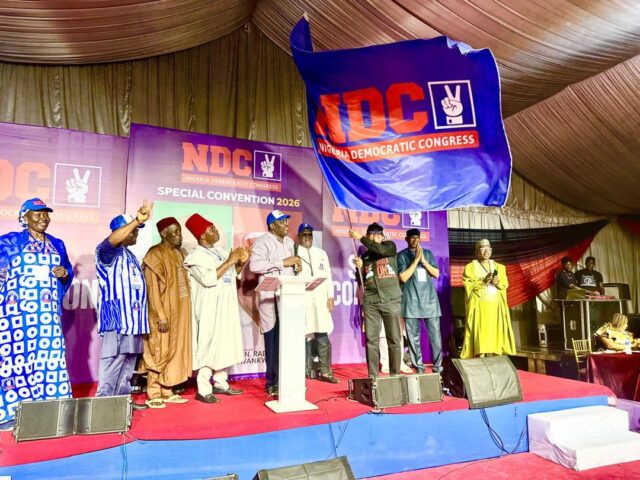
Atiku Welcomes Peter Obi into ADC

Former Vice President Atiku Abubakar on Wednesday officially welcomed Peter Obi into the African Democratic Congress (ADC), marking a significant development in Nigeria’s evolving political landscape as parties and coalitions recalibrate ahead of the 2027 general elections.

The announcement was made from Enugu, the capital of the Southeast region, where Atiku described Obi’s entry into the ADC as a “significant moment in the history of political coalitions in our country.” In a statement posted on social media, he expressed optimism about the prospects of a strengthened opposition capable of delivering prosperity, peace and good governance to Nigerians.

“Today marks a significant moment in the history of political coalitions in our country, with the official declaration of my brother and associate, @PeterObi, into the African Democratic Congress (ADC),” Atiku said. “It is my pleasure to welcome him officially, as we look forward to a robust working relationship that will foster a virile opposition, one that will ultimately form a government capable of bringing prosperity and peace to our people.”

Atiku, a veteran politician and perennial presidential contender, framed the development as part of a broader coalition-building effort. He said the launch of the ADC coalition train from Enugu should serve as a rallying call for other political actors and “patriots” to join the movement.

“And as the @ADCNig Coalition train leaves Enugu, the capital of the Southeast region, I hope this inspires other patriots to join the cause with the train headed in their direction,” he added, using the metaphor of a train to underscore momentum and inclusivity.

The event in Enugu, attended by party faithful and political supporters, reflects a growing realignment within Nigeria’s opposition space. Peter Obi, a former presidential candidate and influential figure in national politics, brings with him a substantial support base, particularly among young voters and proponents of political change.

While Obi has yet to issue a detailed public statement outlining his reasons for joining the ADC or his role within the party’s structure, his presence at the event and Atiku’s endorsement signal a new chapter of collaboration between key opposition figures.

Police, Military Clear Gusau–Dansadau Road After Deadly IED Attack

Joint police and military teams have successfully cleared the Gusau–Magami–Dansadau Road of explosive threats following a deadly improvised explosive device (IED) attack that killed eight people in Zamfara State late last week.

The Zamfara State Police Command confirmed on Monday that its Explosive Ordnance Disposal (EOD) unit, working alongside the military and other security agencies, completed a coordinated sweep operation along the affected corridor and declared the road safe for public use. The operation was launched after suspected terrorists detonated an IED on the highway on December 27, 2025, causing multiple fatalities and extensive damage to property.

In a statement issued by the Police Public Relations Officer, DSP Yazid Abubakar, the command said the clearance exercise was thorough and aimed at preventing further loss of life along the busy route. “Following the unfortunate incident involving the detonation of an improvised explosive device along the Gusau–Magami–Dansadau Road, joint police and military teams carried out an intensive Explosive Ordnance Disposal sweep of the area,” Abubakar said. “The road has now been cleared and declared safe for normal vehicular and human movement.”

The December 27 attack had triggered widespread fear among residents and commuters, forcing motorists to avoid the road while security agencies intensified patrols and technical searches for possible secondary devices. Authorities say the latest operation involved a careful inspection of the highway and surrounding areas to neutralise any hidden explosives and restore confidence among road users.

DSP Abubakar urged residents to remain alert despite the successful clearance, stressing that public cooperation remains critical in tackling security threats. “We encourage members of the public to remain vigilant at all times and to promptly report any suspicious objects or activities to the nearest security agency for immediate action,” he said.

The police reiterated their commitment to working with sister security agencies to protect lives and property across the state, particularly in areas prone to attacks by armed groups. With the road now reopened, security patrols are expected to continue along the corridor as part of broader efforts to deter further attacks and reassure communities affected by the recent violence.


OPHK Arrests Suspected Suicide Bomber, Intercepts IED Materials in Borno

The Joint Task Force North East, Operation Hadin Kai (OPHK), has recorded a major operational breakthrough in Borno State with the arrest of a suspected suicide bomber and the interception of materials believed to be intended for the manufacture of improvised explosive devices (IEDs).

The arrest followed sustained intelligence-led operations aimed at securing Banki town in Bama Local Government Area. Troops of the 152 Task Force Battalion, working in collaboration with other security agencies, apprehended the suspect on Monday, December 29, 2025, at the Banki Central Mosque.

Military sources identified the suspect as Abubakar Mustapha, who was found in possession of primed IED components, raising concerns of an imminent attack. A senior military officer involved in the operation said the arrest likely prevented a deadly incident. “The suspect was intercepted with materials already primed for use, which clearly indicated an intention to carry out an attack,” the officer said. 

Preliminary investigations revealed that Mustapha is from Bama Local Government Area and was also found with additional items linked to terrorist activities. He is currently undergoing detailed interrogation to establish his sponsors, collaborators and possible links to terrorist networks operating within the area. “Interrogation is ongoing to uncover the full extent of his connections and operational plans,” the military source added.

In a related development, OPHK troops deployed along the Cameroon–Nigeria border gate intercepted a Peugeot vehicle conveying six bags of urea fertiliser, a substance commonly used as a precursor in the production of IEDs. The vehicle and the fertiliser were immediately taken into military custody.

Further intelligence exploitation from the interception led to the arrest of the fertiliser dealer and the recovery of an additional six bags of urea fertiliser, bringing the total number of seized bags to twelve. All suspects and recovered items are currently in custody for further investigation and necessary legal action.

The military said the latest successes reflect the effectiveness of aggressive patrols, sustained presence and intelligence-driven operations across the North East. “Troops of Operation Hadin Kai continue to dominate their areas of responsibility in order to deny JAS and ISWAP terrorists freedom of action and to prevent attacks on civilian populations and critical infrastructure,” a statement from the task force noted.

Reassuring the public, the military said the morale and fighting efficiency of troops remain high as operations continue in line with the mandate to restore lasting peace and security across the region. Citizens were urged to continue providing timely and credible information to security agencies to support ongoing counter-terrorism efforts.

Apple Warns 1.8 Billion iPhone Users of “Extremely Sophisticated” Cyber Attacks

Apple has issued an urgent global security warning to its estimated 1.8 billion iPhone users, cautioning that their devices may be vulnerable to what the company described as “extremely sophisticated” cyber attacks unless they install the latest software updates.

In a security advisory released this week, the technology giant said it had identified critical vulnerabilities affecting its devices that have already been actively exploited in targeted attacks. The flaws were found in WebKit, the core browser engine that powers Apple’s Safari browser and all third-party browsers on iPhones and iPads.

Apple said the vulnerabilities could allow hackers to execute malicious code by luring users to compromised websites, potentially giving attackers unauthorized access to devices without the user’s knowledge. The company stressed that while the attacks appear to be highly targeted, the underlying weaknesses pose a serious risk to any unpatched device.

“Apple is aware of a report that these issues may have been exploited in an extremely sophisticated attack against specific targeted individuals,” the company said in its advisory.

To address the threat, Apple has rolled out emergency software updates across its ecosystem, including iOS, iPadOS, macOS, watchOS and tvOS. The updates are designed to close the security gaps and prevent further exploitation, with Apple urging users to install them immediately.

Cybersecurity experts say vulnerabilities in WebKit are particularly dangerous because they affect nearly all web activity on Apple devices. Since Apple requires all iOS browsers to use WebKit, a single flaw can have wide-ranging implications across multiple apps and services.

Industry analysts have warned that even when attacks initially target a small group of individuals, public disclosure of such vulnerabilities can lead to broader exploitation if users delay updates. According to security specialists, once attackers understand how a flaw works, it can quickly be adapted for wider use.

Apple declined to provide further details about who was targeted or who may be behind the attacks, citing security concerns and ongoing investigations. The company reiterated that it follows a strict policy of withholding technical specifics until fixes are available to protect users.

“For our customers’ protection, Apple does not disclose, discuss or confirm security issues until an investigation has occurred and patches or releases are available,” the company said.

The warning adds to a growing list of zero-day vulnerabilities Apple has addressed in 2025, underscoring the increasing sophistication of cyber threats facing smartphone users globally. Security researchers note that high-profile individuals such as journalists, activists, politicians and business executives are often the primary targets of such attacks, though ordinary users can still be affected if they fail to update their devices.

Apple has advised users to ensure their devices are running the latest software versions and to remain cautious when browsing the web or opening links, even from seemingly trusted sources. The company also highlighted advanced security features, such as Lockdown Mode, for users who believe they may be at higher risk.

The latest advisory serves as one of Apple’s strongest warnings this year and highlights the evolving challenges of digital security in an era of increasingly complex and targeted cyber attacks.

The AFCON Mathematics That Kept Tanzania’s Hopes Alive

Tanzania’s Taifa Stars produced one of the most unusual qualification stories at the 2025 Africa Cup of Nations, advancing to the Round of 16 despite recording only two points from their three Group C matches. Their progression, sealed with a 1-1 draw against Tunisia, is a product of the tournament’s qualification format and fine margins across all six groups.

Under AFCON’s rules, the tournament features 24 teams divided into six groups of four. At the end of the group stage, the top two teams from each group automatically qualify for the knockout rounds, creating 12 guaranteed spots in the last 16. In addition, the four best third-placed teams — determined by points first, then goal difference and goals scored — also advance, bringing the total number of teams progressing to 16.

Tanzania finished third in Group C behind group winners Nigeria and runners-up Tunisia after securing a 1-1 draw with the North Africans in their final group match in Rabat. In that game, Tunisia took the lead from a penalty converted by Ismael Gharbi before halftime, but Feisal Salum’s powerful second-half strike restored parity and kept Tanzania’s hopes alive.

With that result, Tanzania ended the group stage with two draws and one loss, giving them two points overall. While this tally would normally be insufficient to advance in most group formats, several factors worked in their favour in 2025.

Firstly, not all groups produced high point totals for third-placed teams. In Groups A and B, for example, Comoros and Angola also finished third with just two points each, but the tournament’s tiebreaker criteria came into play when comparing the third-placed sides across all groups.

When teams are level on points in the ranking of third-placed teams, goal difference is the next deciding factor, followed by goals scored. Both Tanzania and Angola posted a -1 goal difference, better than Comoros’ -2. But Tanzania had the edge in goals scored, tallying three goals compared to Angola’s two. That additional goal proved decisive, elevating the Taifa Stars into one of the four “best losers” in the tournament and securing their place in the knockout stages.

This progression marks a historic milestone for Tanzanian football, as it is the first time the Taifa Stars have reached the AFCON Round of 16 — a feat they had never previously achieved in their appearances dating back to 1980.

Tanzania’s journey to this point has been one of resilience and opportunism. In their earlier group matches, they opened with a 2-1 loss to Nigeria and followed with a draw against Uganda, keeping their hopes alive thanks to consistent effort and crucial goals, particularly from Salum, whose equaliser against Tunisia will be remembered as one of the defining moments of their campaign.

Now, as one of the four best third-placed teams, Tanzania will face host nation Morocco in the Round of 16 on January 4, 2026, in Rabat. The Taifa Stars go into that match as underdogs, but their unique and determined path to this stage has already made them one of the feel-good stories of AFCON 2025.

This unusual qualification route underscores how tournament formats that advance the best third-placed teams can produce surprising outcomes, rewarding teams that remain competitive even without wins. It also highlights the importance of every goal scored and conceded, as they ultimately decided Tanzania’s fate ahead of other competitors with similar point totals.

Eagles Unstoppable as Nigeria Reach AFCON Knockouts

Nigeria's Super Eagles celebrate after scoring the first goal against Tanzania on Tuesday. Credit: cafonline

Nigeria’s Super Eagles have stamped their authority at the 2025 Africa Cup of Nations (AFCON), completing a flawless group stage and advancing to the Round of 16 after a convincing 3-1 victory over Uganda on Tuesday night.

At the Complexe Sportif de Fès, Nigeria maintained their 100 per cent record in Group C, finishing the group stage with three wins from three matches to secure top spot and signal their intent as serious contenders in this year’s tournament. The Super Eagles’ victory over Uganda assured them a place in the knockout rounds, where they will face one of the third-placed teams from another group.

Paul Onuachu opened the scoring in the 28th minute, finding the net with his first international goal in four years and giving Nigeria a lead they would never relinquish. Midfielder Raphael Onyedika then took centre stage in the second half, scoring twice in quick succession to effectively seal the win for the three-time continental champions. Despite a late consolation goal from Rogers Mato for Uganda, the Super Eagles’ superiority was never in doubt.

The match also saw dramatic moments for Uganda, who were reduced to 10 men in the 56th minute when substitute goalkeeper Salim Magoola was shown a straight red card for a deliberate handball outside the penalty area, denying Victor Osimhen a clear goal-scoring opportunity. This forced Uganda to field their third choice keeper, who was unable to prevent Nigeria’s attacking surge.

Nigeria’s campaign has been impressive throughout. They began with a 2-1 win over Tanzania and followed up with a thrilling 3-2 victory against Tunisia, before drawing a line under their group stage run with the triumph over Uganda. With nine points, the Super Eagles became the first nation to reach the AFCON Round of 16 with a perfect winning record, a testament to their consistency and quality in the early phase of the tournament.

Head coach Éric Chelle praised his players for their collective effort and determination. “We worked hard for every point, and finishing with nine points from nine shows the character of this team,” Chelle said in his post-match comments. “This group was tough, but we stayed focused and will carry this momentum into the knockout rounds.”

Veteran forward Victor Osimhen, who played a key role in the squad throughout the group phase, emphasised Nigeria’s hunger for success beyond the group stage. “We came here to win, not just to qualify,” Osimhen remarked after the game. “Every match has been a battle, and we are ready for the next challenge.”

Uganda’s exit from the tournament was confirmed with this result, leaving the East Africans to reflect on what might have been after three hard-fought games. Meanwhile, attention now shifts to the knockout stages, where Nigeria will look to build on their perfect start and pursue a fourth AFCON title.

Security Action in Sokoto Strengthens Economy, Edun Assures

Wale Edun

The Federal Government has moved to reassure investors and international partners following a targeted joint security operation by Nigerian and United States forces in Sokoto on Christmas Day, insisting that the country remains peaceful, stable and firmly focused on economic growth.

In a statement addressing recent enquiries about the operation and its potential market implications, the Minister of Finance and Coordinating Minister of the Economy, Wale Edun, said Nigeria is not engaged in any internal or external war, but is instead confronting terrorism in partnership with trusted allies.

“Nigeria is not at war with itself, nor with any nation,” Edun said. “What Nigeria is decisively confronting—alongside trusted international partners—is terrorism. This distinction is important, and it is fundamental to understanding the positive economic implications of recent actions.”

According to the minister, the Sokoto operation was precise, intelligence-led and narrowly targeted at terrorist elements, with the aim of protecting innocent lives, national stability and economic activity. He stressed that such actions should not be misconstrued as destabilising, but rather as measures that reinforce peace and strengthen the conditions needed for sustainable growth.

“Far from destabilising markets or weakening confidence, such actions strengthen the foundations of peace, protect productive communities, and reinforce the conditions required for sustainable growth,” Edun said. “Security and economic stability are inseparable; every effort to safeguard Nigerians is, by definition, pro-growth and pro-investment.”

Edun said the operation reflects the broader security and reform agenda of the administration of President Bola Ahmed Tinubu, GCFR, under which Nigeria has recorded measurable progress in both security and economic performance.

Highlighting recent economic indicators, the finance minister disclosed that Nigeria’s Gross Domestic Product grew by 3.98 per cent in the third quarter of 2025, following a stronger 4.23 per cent growth in the second quarter, with expectations of an even better performance in the final quarter of the year.

“Our macroeconomic performance continues to improve,” he said. “Inflation has decelerated for the seventh consecutive period and is now below 15 per cent, reflecting improving price stability and the effectiveness of coordinated fiscal and monetary actions.”

He added that Nigeria’s financial markets have remained resilient despite global headwinds, noting that both domestic and international debt markets are stable and functioning efficiently due to prudent fiscal management. Over the past year, Nigeria has also secured credit rating upgrades from Moody’s, Fitch and Standard & Poor’s, developments Edun described as independent validation of the country’s reform trajectory.

“These upgrades are clear endorsements of the strength of our reforms and the credibility of our economic direction,” he said, adding that the government has maintained fiscal discipline, prioritised efficiency and protected macroeconomic stability.

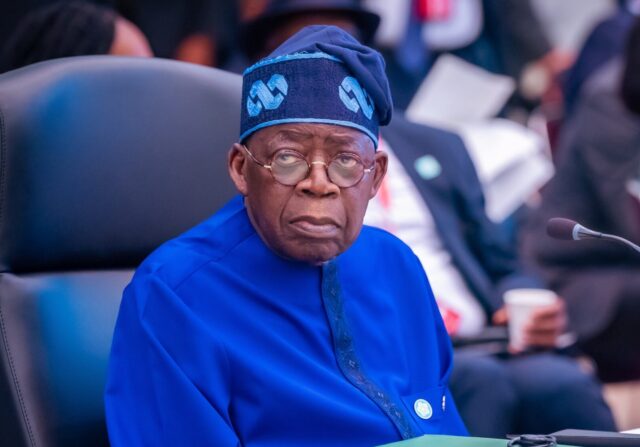
Referencing a recent address by President Tinubu, Edun said the administration’s overarching objective for 2026 is to consolidate the gains of 2025, strengthen economic resilience and continue building a sustainable, inclusive and growth-oriented economy.

“The actions we take today—on security, reforms and fiscal discipline—are aligned with that goal,” the minister said.

“The fundamentals are strengthening, the policy direction is clear, and the resolve of this administration—to protect lives, secure prosperity, and grow the economy—is unwavering,” he said.

EFCC Arraigns Bauchi Finance Commissioner over Alleged N5.7bn Money Laundering

The Economic and Financial Crimes Commission (EFCC) on Tuesday, December 30, 2025, arraigned the Bauchi State Commissioner for Finance, Yakubu Adamu, before the Federal High Court sitting in Maitama, Abuja, over alleged money laundering offences involving N5.79 billion.

Adamu, a former Branch Manager of Polaris Bank Plc, Bauchi branch, was arraigned alongside Ayab Agro Products and Freight Company Limited on a six-count charge bordering on money laundering, contrary to Section 21(a) and punishable under Section 21 of the Money Laundering (Prevention and Prohibition) Act, 2022. The case is being heard by Justice Emeka Nwite.

At the commencement of proceedings, prosecution counsel Samuel I. Chime told the court that the matter was scheduled for arraignment and requested that the charges be read to the defendants to enable them take their pleas.

“My Lord, this matter is for arraignment of the defendant on a six-count charge, and we humbly pray that the charge be read to the defendant for his plea to be taken,” Chime said.

According to the EFCC, the charges stem from alleged fraudulent transactions carried out between June and December 2023, while Adamu was serving as Branch Manager of Polaris Bank in Bauchi. In one of the counts, the anti-graft agency alleged that Adamu conspired with Ishaku Mohammed Aliyu, Managing Director of I.S. Makayye Investment Resources Limited, and Muntaka Mohammed Duguri, both currently at large, to launder N4.65 billion.

Count one alleged that the defendants facilitated the conversion, transfer, concealment and use of funds released by Polaris Bank under the guise of financing the supply of motorcycles to the Bauchi State Government through Emmanuel Asomugha General Enterprises, despite the fact that the motorcycles were never supplied.

“The offence is contrary to Section 21(a) and punishable under Section 21 of the Money Laundering (Prevention and Prohibition) Act, 2022,” the charge read in part.

Another count alleged that Adamu, sometime in 2023, acquired, used, retained and took control of N976 million, which was paid into the account of I.S. Makayye Investment Resources Limited and subsequently transferred to various individuals and entities.

The EFCC alleged that Adamu knew, or had reasonable grounds to know, that the funds constituted proceeds of unlawful activity linked to the diversion of the Polaris Bank loan meant for the motorcycle supply contract, which was never executed.

After the charges were read, Adamu pleaded not guilty to all six counts.

Following his plea, the prosecution urged the court to remand the defendant pending the determination of his bail application.

“In view of the defendant’s not guilty plea, we respectfully apply that he be remanded in custody pending the hearing and determination of the bail application,” Chime said.

Defence counsel, Gordy Uche, SAN, immediately applied for bail on behalf of the defendant. The application was opposed by the prosecution, which urged the court to deny bail or impose stringent conditions.

After hearing arguments from both sides, Justice Emeka Nwite adjourned the matter to January 2, 2025, for ruling on the bail application and ordered that the defendant be remanded in EFCC custody.

According to the EFCC, investigations revealed that Emmanuel Asomugha General Enterprises had been awarded a contract to supply motorcycles to the Bauchi State Government. To execute the contract, the company reportedly applied for and obtained a N4.65 billion loan facility from Polaris Bank, purportedly guaranteed by the Bauchi State Government.

Further investigations showed that although representations were made to the bank that the motorcycles had been supplied, no such supply ever took place, yet the funds were released to the contractor.

In a statement to investigators, Emmanuel Asomugha reportedly disclosed that he received the funds through Yakubu Adamu and the former Accountant-General of Bauchi State, Sa’idu Abubakar, adding that he was directed to transfer the money to several accounts provided to him.

EDITOR PICKS

Recent Posts