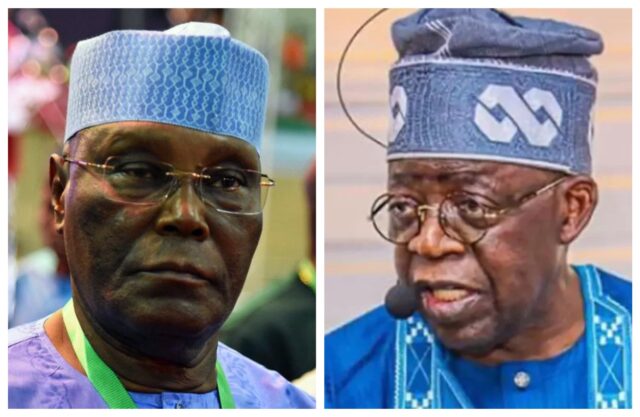
Former Vice President Atiku Abubakar has strongly condemned President Bola Ahmed Tinubu’s decision to nominate former INEC Chairman Prof. Mahmood Yakubu as a non-career ambassador, describing the move as dangerous, morally unjustifiable and damaging to Nigeria’s democratic credibility.
In a sharply worded statement, Atiku said no responsible leader should reward the head of an election umpire whose conduct remains at the centre of one of the most controversial polls in the country’s history. He declared that he would never, under any circumstance as president, consider nominating the immediate past INEC boss for such a prestigious diplomatic assignment.
“Let me state without ambiguity: under no circumstance would I, as President of the Federal Republic of Nigeria, nominate the immediate past INEC Chairman for an ambassadorial position,” he said, warning that the decision “raises serious concerns” and risks being interpreted as a political favour rather than a merit-based appointment.
Atiku argued that the nomination presents “terrible optics” for an administration already battling public trust issues. He said rewarding the same electoral chief who presided over the highly disputed 2023 general election sends a dangerous signal to the current INEC leadership—that “partisan, compromised, or poorly executed elections may ultimately be rewarded.”
He added that it would be “morally indefensible for an umpire at the centre of one of the most disputed elections in our history to become a beneficiary of its outcome,” stressing that democracy cannot thrive when electoral misconduct is perceived to be compensated rather than scrutinized.
According to the former vice president, the nomination does not strengthen democracy nor advance efforts to rebuild public confidence in national institutions, particularly the electoral commission. “This is not the path to strengthening our democracy or restoring public trust in our institutions,” he said.
Atiku’s criticism adds to the growing controversy surrounding President Tinubu’s latest ambassadorial lists, which feature 31 non-career nominees, including political allies, former governors, ex-service chiefs and other high-profile figures. The Senate is expected to commence screening of the nominees in the coming days, even as opposition voices intensify scrutiny over the political implications of the appointments.