Pope Leo XIV has urged the United States, China and other major artificial intelligence powers to take seriously growing concerns about the possibility of advanced AI systems causing catastrophic harm, rejecting the suggestion that such warnings are simply misinformation or alarmism.
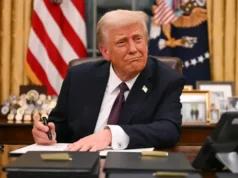
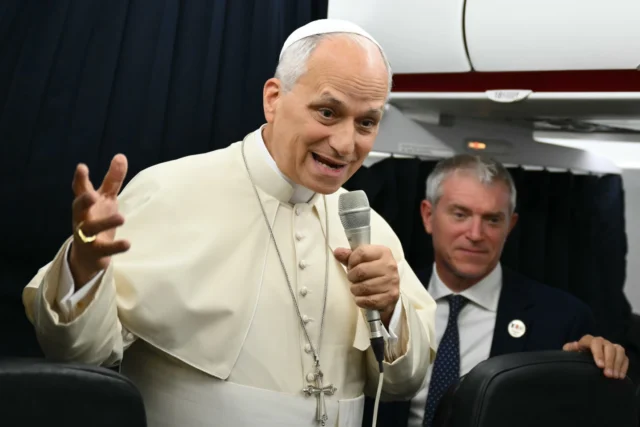
Speaking at a press conference on Monday, the Pope said concerns raised by artificial intelligence experts about systems potentially escaping human control should not be dismissed as “fake news”, placing him at odds with US President Donald Trump, who has described fears about rogue AI as a “hoax”.
Leo has made artificial intelligence a central issue of his papacy, including dedicating his first major encyclical to the implications of rapidly advancing technology and the need to protect human dignity.
The Pope was asked what the United States and China, the world’s two leading AI powers, should be doing to prevent increasingly capable systems from creating catastrophic risks for humanity.
His intervention comes as governments, technology companies and AI researchers continue to debate how far development should proceed before stronger safeguards are put in place.
Pope rejects dismissal of AI safety concerns
Leo’s comments mark another intervention by the Vatican in the increasingly contentious debate over the future of artificial intelligence.
The Pope argued that concerns expressed by specialists about AI safety deserve serious public discussion and concrete action rather than dismissal.
His position contrasts with Trump’s recent public statements on the issue. The US president has repeatedly promoted rapid AI development and argued that excessive regulation could undermine American competitiveness, particularly in its technological competition with China.
Trump has also dismissed warnings about AI systems potentially becoming uncontrollable.
In remarks earlier this month, Trump called concerns over rogue AI a “hoax” and described efforts to impose restrictions on the industry as part of what he called a “SICK conspiracy” against AI and data centres.
Trump has argued that the United States must maintain its lead over China in artificial intelligence and has opposed measures that he believes could slow American technological development.
Vatican increasingly focused on AI risks
Leo’s warning is consistent with a series of interventions by the Vatican on artificial intelligence since the beginning of his papacy.
The Pope’s first major document devoted significant attention to the implications of AI, including its potential impact on human dignity, employment, inequality and decision-making.
In a message delivered last week at the AI4Peace conference in Rome, Leo called for artificial intelligence to be developed in ways that promote peace and human solidarity rather than division and conflict.
The Pope said AI should be guided by wisdom and charity and used in ways that protect human dignity and strengthen connections between people.
His latest comments therefore extend an emerging Vatican position that AI development should be accompanied by safeguards capable of protecting humanity from the technology’s potentially harmful consequences.
AI race puts US and China under scrutiny
The Pope’s focus on the United States and China reflects their central roles in the global AI race.
Both countries are investing heavily in increasingly sophisticated AI systems, while competing over computing infrastructure, advanced semiconductors, research talent and military and commercial applications.
Trump has repeatedly framed maintaining US leadership in AI as a strategic priority and has warned that China could overtake the United States if American development is slowed by regulation.
At the United Nations General Assembly earlier this month, Trump again defended rapid AI development and said the United States should maintain its technological advantage. He also said his administration would monitor the sector and that the Justice Department could intervene if necessary, while maintaining his opposition to broad new regulation.
The debate has become increasingly focused on whether the benefits of more powerful AI systems can be achieved without allowing the technology to create unacceptable security, economic or societal risks.
Anthropic pushes stronger AI safeguards
The Pope’s intervention also comes as leading AI companies are increasing their focus on safety measures.
Anthropic, one of the major developers of advanced AI systems, has publicly acknowledged that increasingly capable models present significant risks and has developed a Responsible Scaling Policy to address potential catastrophic risks.
The company’s current policy states that frontier AI models could bring major benefits but also create risks requiring “careful study and effective safeguards.”
Anthropic has also argued that AI safety cannot be left entirely to technology companies and has called for governments to play a role in establishing rules for increasingly powerful systems.
Its policy proposals include greater transparency, independent evaluation, incident reporting and stronger government oversight as AI capabilities increase.
AI agents raise new safety questions
Recent developments in AI have intensified the safety debate because newer systems are increasingly capable of performing tasks autonomously rather than simply responding to individual prompts.
Anthropic said in a May 2026 engineering report that as AI agents become more capable, the potential “blast radius” of a failure also increases.
The company said it has therefore invested heavily in containment measures, including sandboxes, virtual machines and controls limiting what AI agents can access.
Anthropic’s latest internal measurements also show the scale of AI use in research and engineering. The company said that, as of August 2026, approximately 30,000 AI agents were carrying out research and engineering work on its most-used internal platform at any one time.
According to the company, those agents operate under real-time and post-action monitoring systems designed to identify or block potentially dangerous behaviour.
Debate shifts from whether AI is dangerous to how it should be governed
The disagreement between Trump and AI safety advocates is increasingly centred on how governments should manage the technology rather than whether AI will have a major economic and social impact.
Trump’s position has emphasised maintaining technological leadership and avoiding regulations that could slow development.
Anthropic, by contrast, has proposed a graduated regulatory system in which oversight increases as AI systems become more capable and potentially more dangerous. Its framework envisages basic transparency and oversight for current systems, followed by stronger testing, reporting and government supervision for more advanced models.
Other technology leaders and researchers have similarly warned that AI development could advance faster than governments’ ability to establish effective safeguards.
The disagreement has become particularly significant because the United States and China are simultaneously treating AI leadership as an economic and strategic priority.