The Federal Government has renewed efforts to revive and accelerate Nigeria’s long-delayed Digital Switch Over (DSO) programme, with the Minister of Information and National Orientation, Mohammed Idris, urging stakeholders to prioritise national interest over institutional and commercial disagreements.
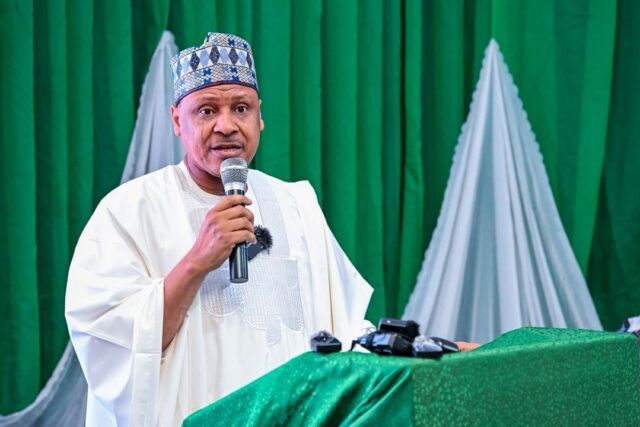
Speaking at the Digital Switch Over Stakeholders’ Meeting in Abuja on Tuesday, Idris described the DSO initiative as a critical pillar of Nigeria’s broadcasting and digital transformation agenda, stressing that the programme goes beyond a mere transition from analogue to digital television.
“The Digital Switch Over programme should never be viewed merely as a technology migration project. It is much bigger than that. It is an economic transformation initiative with the potential to expand opportunities for broadcasters, content creators, manufacturers, technology providers, advertisers and millions of Nigerian viewers,” the minister said.
The DSO project, which Nigeria committed to under the International Telecommunication Union (ITU) framework, has faced repeated delays over the years due to funding constraints, regulatory disputes, infrastructure gaps and disagreements among industry players. Tuesday’s meeting brought together broadcasters, signal distributors, manufacturers, regulators, technology firms and other stakeholders in a bid to rebuild consensus ahead of the next phase of implementation.
Idris acknowledged the frustrations surrounding the prolonged rollout but commended stakeholders for their investments and commitment to the process. “The journey towards digital broadcasting has been long and, at times, challenging, but it has always been driven by a shared objective: to build a stronger, more modern and more competitive broadcasting sector for our country,” he said.
The minister emphasised that the government’s objective was not to create winners or losers within the industry but to ensure that the programme ultimately benefits Nigeria and Nigerians. “This meeting is therefore not about winners and losers. It is about ensuring that the national interest remains paramount,” he added.
He noted that a successful DSO rollout could transform Nigeria into one of Africa’s leading media and content hubs by enabling more television channels, stronger local content production, better audience measurement systems and improved advertising revenues.
“The promise of DSO lies in its ability to create a more vibrant media ecosystem — one that supports more channels, more local content, better audience measurement, stronger advertising revenues, increased innovation and greater opportunities for Nigerian creativity to flourish,” Idris stated.
The minister also sought to reassure investors and operators about the government’s approach, saying the administration remained committed to transparency, stakeholder engagement, local content development, investor confidence, regulatory certainty and the protection of sovereign interests.
“As a government, we remain committed to the principles of stakeholder engagement, local content development, investor confidence, regulatory certainty, and sovereign interest. These principles are not mutually exclusive; they are essential ingredients for the success of any national project of this scale,” he said.
Idris called on participants at the meeting to engage constructively and avoid approaching the discussions from narrow institutional perspectives. “We must resist the temptation to view this process through narrow institutional or commercial lenses. The larger question before us is how to ensure that the DSO programme ultimately delivers its intended benefits to Nigeria and Nigerians, without delay,” he said.