Global players’ union FIFPRO has called for full transparency and meaningful involvement of player representatives in FIFA’s controversial proposal to create a new commercial subsidiary, known as FIFA Forward Enterprise, amid mounting opposition that has already led UEFA’s 55 member associations to threaten a boycott of FIFA competitions.
In a statement issued on Thursday, FIFPRO said it had “taken note of the recent public announcement regarding FIFA’s proposal to establish the FIFA Forward Enterprise.” The union described the plan as forming “part of wider discussions about the future governance, organisation and commercial development of international football,” stressing that initiatives of this scale “require transparency, clear processes and meaningful engagement with those who have a legitimate stake in the future of the professional game.”
FIFPRO highlighted recent progress in its relationship with FIFA, including a Memorandum of Understanding and the creation of a Global Social Dialogue Platform. These steps, it said, reflect a broader commitment to “transparency, structured dialogue, objective criteria and the collective development of the game.” Professional footballers, the union emphasised, “are fundamental stakeholders in the game and decisions concerning the governance and development of international football inevitably have implications for the environment in which they work and compete.”
The players’ body therefore expects such proposals “to be discussed openly and transparently, with the meaningful involvement of player representatives and the other relevant stakeholders.” It added that “as reactions across the football community grow, FIFA carries a particular responsibility to unite the football industry rather than divide it. Decisions of this importance should be shaped through a genuine and inclusive process, not through ultimatums.” FIFPRO said it would continue to follow the matter closely and expected to be “properly informed and involved,” while remaining committed to protecting players’ interests and working constructively with all stakeholders.
FIFPRO Europe issued a sharper response, stating it had “noted with deep concern the proposal to transform the FIFA World Cup and other FIFA competitions into investable assets for private capital.” The European division warned that the move “would fundamentally and irreversibly reshape the incentives underpinning the competitions in which players work, compete and build their careers.” It criticised the lack of engagement with those most affected and the bypassing of recently established dialogue mechanisms, declaring that it “cannot – and will never – support such a model.”
The proposal, first reported earlier this week, envisages moving FIFA’s commercial and operational event-delivery activities into a subsidiary that FIFA would own and control permanently. According to FIFA, the entity would be valued at around $20 billion, with the organisation seeking to raise funds by selling minority, non-controlling stakes to long-term external investors while retaining majority control and exclusive authority over governance, competitions and the match calendar. Under the plan, each of FIFA’s 211 member associations would receive $20 million in FIFA Forward Development funding for 2027-2030, with an additional voluntary one-off $20 million available through a Fast Forward Programme financed by external investment.
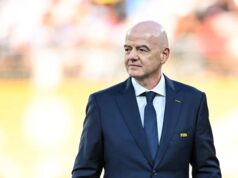
FIFA President Gianni Infantino has defended the initiative, describing it as “an opportunity but not an obligation” and part of a democratic consultation process. In a video message, he said the subsidiary’s purpose was to “grow the value and redirect it back to” the member associations, while regulation, development and governance of the game would remain with FIFA.
On 31 July, FIFA issued a clarification stating it “acknowledges and respects feedback and concern aired in public” and “reaffirms its commitment to an open and democratic consultation.” The governing body said “erroneous reporting in the media disrupted [the] planned consultation process” and insisted: “Nobody is selling football. This is not something FIFA would ever entertain.” It stressed that “no single entity can claim to represent all 211 MAs around the world” and that the plan would proceed only with the support of a majority of member associations. Without that support, FIFA said, its commercial activities would remain unchanged and the enterprise would not be established.
UEFA has taken the strongest stance against the proposal. After an emergency meeting, its 55 member associations “unanimously and unequivocally reject[ed]” the plan, stating that “the World Cup cannot be treated as an investment product” and “is not for sale.” UEFA declared that no European national teams would participate in any FIFA competition “for so long as these proposals remain alive,” unless the plan is abandoned entirely and binding assurances are given that FIFA will not open its governance or competitions to private ownership. Other confederations, including Concacaf, have also expressed deep concern over the lack of prior consultation.