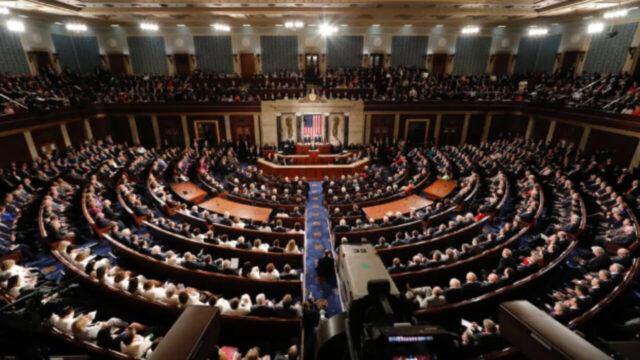
The U.S. House of Representatives narrowly approved a highly contentious bill aimed at criminalizing gender-affirming medical care for transgender minors, marking one of the most significant federal actions yet in the ongoing national debate over transgender rights and healthcare. The measure, known as the Protect Children’s Innocence Act, passed Wednesday evening by a vote of 216 to 211, with 207 Democrats and 4 Republicans voting against it.
Sponsored by Georgia Republican Rep. Marjorie Taylor Greene, the legislation seeks to make it a federal crime to provide puberty blockers, hormone therapy or gender-affirming surgeries to anyone under the age of 18. If enacted, medical providers and, in some cases, parents or guardians who consent to such treatments could face fines and up to ten years in prison, though minors themselves would not be subject to criminal penalties.
Speaking on the House floor ahead of the vote, Greene framed the bill as a protective measure. “Protecting children is not optional, it’s our duty,” she said, insisting that minors are not capable of making “life-altering decisions” about their bodies. Her supporters argue the bill prevents what they describe as irreversible and harmful medical procedures on young people.
Despite its passage in the House, the bill faces a steep uphill battle in the Senate, where it is widely expected to struggle to secure the 60 votes necessary to overcome a filibuster. Nevertheless, its advancement signals a major escalation in conservative efforts to curtail gender-affirming care at the federal level.
The voting breakdown highlighted stark partisan divides. Most Republicans backed the measure, while Democrats united in opposition, though three Democrats crossed party lines to support it. Among the Republicans who joined Democrats in opposing the bill were Reps. Mike Kennedy (R-Utah), Brian Fitzpatrick (R-Pa.), Gabe Evans (R-Colo.) and Mike Lawler (R-N.Y.).
Critics of the bill, including members of the Congressional Equality Caucus and prominent civil liberties groups, denounced the legislation as an unprecedented intrusion into personal healthcare decisions and parental rights. Congressional Equality Caucus Chair Rep. Mark Takano described it as “the most extreme anti-transgender legislation to ever pass through the House,” warning that it could criminalize families and doctors “choosing to prioritise their child’s health.”
The American Civil Liberties Union also condemned the measure, arguing that it would “put a threat of prosecution between hundreds of thousands of families and their doctors” and create a dangerous precedent by embedding ideological judgments into medical law. The ACLU noted that major medical associations, including the American Medical Association and the American Psychological Association, support gender-affirming care as medically necessary for many transgender youth.
The House vote comes amid broader federal actions aimed at restricting transgender healthcare. Just days after the bill’s passage, Health and Human Services Secretary Robert F. Kennedy Jr. announced new policies that would bar Medicaid and Medicare funding for gender-affirming treatments for minors and issue FDA warnings to manufacturers of chest binders marketed to youth — characterizing such procedures as unsafe and unproven.
At the state level, the federal debate mirrors ongoing legislative activity. Several states have enacted their own bans on gender-affirming care for minors, including New Hampshire’s HB 377 and HB 712, which prohibit hormone therapy, puberty blockers and many surgeries for those under 18, and have already attracted national attention.
Supporters of transgender rights expressed alarm at the House action. Rep. Sarah McBride (D-Del.), the first openly transgender member of Congress, passionately opposed the bill, urging lawmakers not to “insert themselves into the personal healthcare decisions of patients, parents, and their providers.” Advocates warn that restricting access to care could exacerbate mental health risks for transgender youth, who already face higher rates of anxiety, depression and suicide compared with their cisgender peers.