The Federal Government has announced significant progress toward the establishment of state police in Nigeria, with a constitutional amendment expected in the near future following months of consultations involving the Presidency, the National Assembly and key security stakeholders.
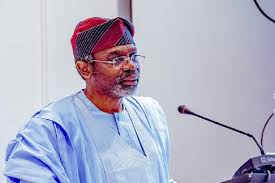
Chief of Staff to the President, Femi Gbajabiamila, disclosed this on Thursday after a high-level consultative meeting on state police convened by the Presidency at the State House in Abuja.
Addressing State House correspondents after the meeting, Gbajabiamila said deliberations on the proposed framework for state policing commenced several months ago on the directive of President Bola Ahmed Tinubu and have since recorded substantial progress.
According to him, discussions have now advanced beyond the conceptual stage and are focused on the constitutional amendments required to pave the way for a decentralised policing system across the country.
“We started deliberations in the last three or four months on how to go about the establishment of state police as directed by Mr President,” Gbajabiamila said.
He stressed that the creation of state police involves complex constitutional and legal considerations and cannot be implemented through executive action alone.
“Establishing state police is not something that you do with the snap of the fingers. There is a lot involved in terms of constitution and legalities, and thank God we have now gained a lot of traction,” he stated.
Expressing optimism about the progress made so far, the Chief of Staff added: “Hopefully, the amendment will come shortly, and the details of the amendment will come after that.”
Gbajabiamila explained that the immediate focus is on securing the necessary constitutional changes before work begins on the enabling legislation that will govern the operation, structure and responsibilities of state police formations.
“Right now, what we are looking at is the constitutional amendment itself, and then the enabling law would follow thereafter. That is what we have been deliberating on in the last couple of hours,” he said.
He noted that consultations have revealed broad consensus among stakeholders on the need for state police, indicating that the national conversation has shifted from debating the desirability of the initiative to determining the most effective legal and institutional framework for its implementation.
The Chief of Staff also confirmed that President Tinubu would receive a detailed report on the outcome of the meeting as part of ongoing efforts to advance the proposal.
The latest meeting forms part of a series of engagements initiated by the Federal Government to develop a workable framework for state policing, an initiative aimed at strengthening Nigeria’s security architecture, improving intelligence gathering at the grassroots level and enhancing the capacity of state governments to respond to local security threats.
President Tinubu has consistently advocated for the establishment of state police in recent months, arguing that Nigeria’s evolving security challenges require a more decentralised approach to law enforcement. The President has maintained that state police would improve community-based security operations, deepen intelligence gathering and strengthen the protection of lives and property across the country.
The consultative meeting brought together several top government officials and security leaders, including Deputy Senate President Jibrin Barau, Deputy Speaker of the House of Representatives Benjamin Kalu, Attorney-General of the Federation and Minister of Justice Prince Lateef Fagbemi, and Inspector-General of Police Tunji Disu, among others.