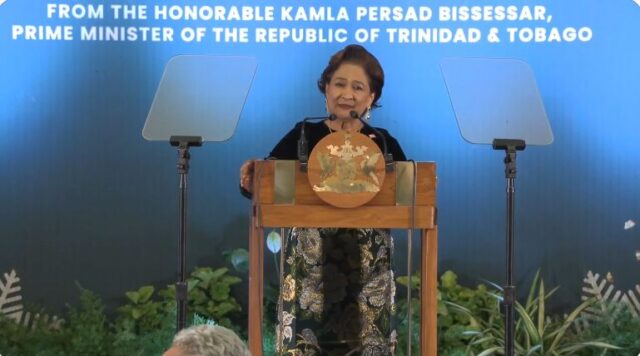
Prime Minister Kamla Persad-Bissessar has firmly reaffirmed Trinidad and Tobago’s support for the United States amid escalating tensions between Washington and Caracas, as concerns mount over electronic warfare and military posturing in the Caribbean.
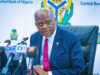
Speaking at a supper hosted at the Diplomatic Centre on Thursday, Persad-Bissessar sought to reassure citizens that the government remains fully alert to regional developments and that there is no immediate cause for public alarm. She said the safety and stability of Trinidad and Tobago remain at the forefront of her administration’s priorities.
Addressing growing rhetoric within the country linked to the US–Venezuela standoff, the Prime Minister criticised what she described as “hypocrisy and unkindness” from individuals calling for confrontation with the United States. She stressed that Trinidad and Tobago maintains a strong and strategic bilateral relationship with Washington.
“Trinidad and Tobago stands with the United States,” Persad-Bissessar said, highlighting that the U.S. remains the country’s largest trading partner. She contrasted this with Trinidad and Tobago’s limited commercial engagement with Venezuela, noting that trade with Caracas accounts for just 0.0003 of total trade volume. “These are the facts,” she said.
The Prime Minister also warned against actions or statements that could negatively affect Trinidad and Tobago nationals living in or travelling to the United States. She revealed that more than 350,000 Trinidad and Tobago citizens hold U.S. visas, over 250,000 reside in the United States, and approximately 20,000 have dual citizenship. “I do not want anyone to lose their U.S. visa,” she said, urging citizens to act responsibly and recognise the realities of the country’s international partnerships.
Persad-Bissessar underscored the strategic importance of the United States to Trinidad and Tobago’s national security, arguing that Washington remains the only country currently capable of offering decisive military protection if the nation were threatened. “Understand where our help comes from. Understand who can protect and defend Trinidad and Tobago,” she said, adding that the U.S. possesses the military power, equipment and resources necessary to do so. “Trinidad and Tobago first.”
Her remarks come as tensions between the United States and Venezuela continue to escalate, with growing evidence of electronic warfare activity in the Caribbean. Data and security assessments indicate that both militaries have been jamming satellite navigation signals, including GPS systems, as part of defensive measures against potential attacks. Aviation and maritime experts warn that such disruptions increase the risk of accidents across the region’s busy air and sea routes.
The jamming incidents reflect rising military brinkmanship between U.S. President Donald Trump and Venezuelan President Nicolás Maduro, heightening anxiety among Caribbean nations located near the geopolitical flashpoint.