Bola Ahmed Tinubu has declared that Nigeria’s economy has stabilised and is gradually recovering after what he described as difficult but necessary reforms undertaken by his administration over the last three years.
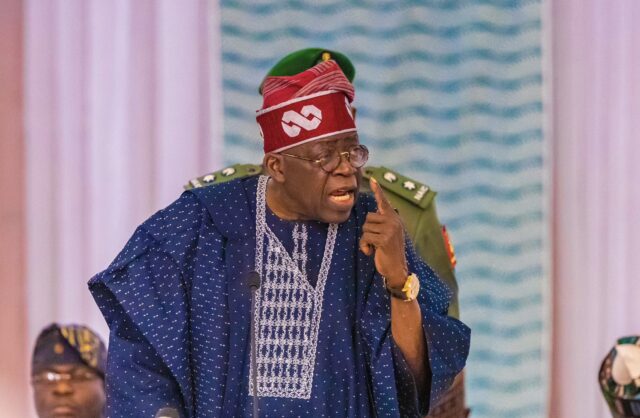
In a nationwide address marking the third anniversary of his administration, President Tinubu defended key policy decisions including the removal of petrol subsidy and foreign exchange reforms, insisting the measures prevented Nigeria from sliding into deeper economic crisis.
Addressing Nigerians on Thursday, Tinubu acknowledged the hardship experienced by citizens following the reforms but maintained that the sacrifices were beginning to yield results.
“I remain deeply conscious of those sacrifices, and I assure you: your sacrifice has not been in vain,” the president said.
“And today, I can say with confidence that Nigeria has stabilised and is moving forward again. Across the country, visible progress is taking shape.”
Tinubu said his administration inherited severe fiscal and structural challenges, including mounting debt-servicing costs, exchange-rate distortions, insecurity, declining revenues and unsustainable subsidy payments.
“At the height of the subsidy regime, Nigeria was spending as much as ₦18.4 billion daily to sustain petrol subsidies—over ₦4 trillion in 2022 alone,” he said.
He added that multiple foreign exchange windows and arbitrage practices cost Nigeria more than ₦8 trillion over three years due to speculative activities and rent-seeking.
“The situation demanded urgent and courageous action,” Tinubu stated.
“The easy choices would have been politically convenient. But leadership demands courage, especially when the right decisions are difficult.”
The president argued that refusing to implement the reforms would have led to fiscal breakdown and worsening poverty.
“Together, we chose reform over ruin and decisiveness over hesitation,” he said.
Tinubu pointed to several economic indicators which he said reflected improving investor confidence and economic recovery, including growth in the capital market.
According to him, the Nigerian stock market’s All Share Index rose from 53,000 in 2023 to 250,000 in 2026, while market capitalisation increased from ₦30 trillion to ₦160 trillion.
“Our economy is now more competitive and better positioned for sustainable growth than it was in 2023,” he said.
The president also highlighted ongoing infrastructure projects across the country, saying more than 2,700 kilometres of highways and roads are under construction or rehabilitation.
He listed major projects including the Lagos-Calabar Coastal Highway, Sokoto-Badagry Super Highway, Abuja-Kaduna-Zaria-Kano Road and the East-West Road as evidence of accelerated infrastructure development.
Tinubu further disclosed that reforms in the oil and gas sector had attracted renewed international investment, while local refining capacity was helping reduce dependence on imported fuel.
“The $5 billion NLNG Train 7 project is nearing completion to boost LNG production capacity, exports, and dividends,” he said.
On power supply, Tinubu admitted that the electricity sector continued to face major challenges but said his administration was investing heavily in transmission infrastructure, renewable energy and grid expansion.
“No modern economy can grow in darkness,” the president said.
“When power improves, businesses expand, industries grow, jobs are created, and families prosper.”
He also said government interventions in agriculture were supporting millions of farmers through improved seedlings, fertilisers, mechanisation and access to finance.
Tinubu noted that the Nigerian Education Loan Fund had disbursed over ₦282 billion to more than 1.5 million students to improve access to higher education.
The president added that the Renewed Hope Housing Programme and projects by the Federal Housing Authority were delivering more than 10,000 housing units nationwide while creating over 300,000 jobs.
He appealed to Nigerians to remain patient and united as the administration continues implementing reforms.
“We have not solved every problem, and we are not yet where we want to be,” Tinubu admitted.
“But the foundation for recovery has been laid.”
The president also assured investors and the international community that Nigeria remains committed to democratic stability, responsible governance and economic reforms aimed at long-term prosperity.