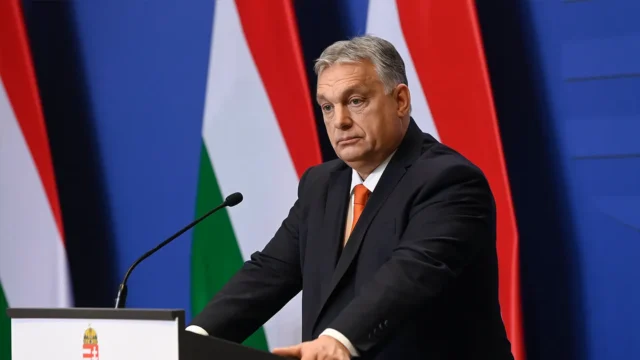
Hungarian Prime Minister Viktor Orbán has intensified his opposition to a controversial European Union plan to use frozen Russian assets to support Ukraine, asserting that doing so would amount to the bloc entering the war itself. His remarks, made on the sidelines of a critical EU summit in Brussels, have underscored deep divisions within the Union as leaders grapple with how best to sustain Kyiv in its conflict with Moscow.
Orbán told reporters that “to take Russian assets to fund Ukraine … cannot be interpreted in any other way than as a declaration of war”, arguing that confiscating or reallocating the funds of one party in an ongoing conflict to another would effectively embroil the EU in hostilities. He stressed that Hungary does not want the European Union to become a direct party to the Russia-Ukraine war and urged fellow leaders to pursue peace-oriented steps instead of escalation.
The controversy comes as EU leaders are meeting to debate a bold yet contentious strategy to address Ukraine’s growing financial shortfalls. The European Commission has proposed a mechanism to harness roughly €210 billion in Russian central bank assets frozen across the bloc by using them as collateral for a loan that would provide up to €90 billion in assistance to Ukraine across 2026 and 2027 without technically confiscating the sovereign reserves — a construct known as a “reparations loan.”
While major capitals such as Berlin and Brussels argue this approach could shore up Kyiv’s finances without burdening member states with direct debt, Hungary — alongside Belgium and other sceptics — has voiced legal and political concerns. Belgium in particular has sought strong assurances against potential Russian retaliation, including legal and financial safeguards for Euroclear, the Belgian clearing house where much of the frozen assets are held.
Orbán has gone further than most, openly warning that any plan to transfer value from Russia to Ukraine would escalate the conflict rather than help resolve it. “There are two countries that are at war,” he said, “… it’s not the European Union — they are Russia and Ukraine.” The Hungarian leader suggested that the proposal to use the frozen assets might already have been removed from the EU summit’s agenda, describing it as effectively “dead” due to lack of majority support.
He further stressed his position, posting on X.com, “Confiscating Russian assets to fund Ukraine? A declaration of war. Taking the money of one side and giving it to the other would drag the EU into the conflict. This must not happen. Thankfully, I am not the only one who sees it this way.”
His stance has drawn criticism from Kyiv. Ukrainian officials, including Foreign Minister Andrii Sybiha, have slammed Orbán’s objections, with some Kyiv voices labelling him “Russia’s most valuable frozen asset in Europe” for blocking measures that Ukraine views as critical to its survival and defence.
Orbán has further rejected other financing mechanisms, including proposals for joint EU borrowing to support Ukraine, saying Hungary’s constitution would not allow such debt obligations without parliamentary approval and reaffirming his view that the EU should focus on peace rather than war funding.
The broader EU summit debate comes against the backdrop of an increasingly urgent need to solidify funding for Ukraine, with European leaders warning that failure to agree on a financial strategy could weaken Kyiv’s ability to sustain operations and potentially embolden Russian advances. Some member states have signalled the necessity of decisive action, while others continue to hedge over legal, economic, and security risks.