COAS Redeploys Senior Officers in Sweeping Reshuffle
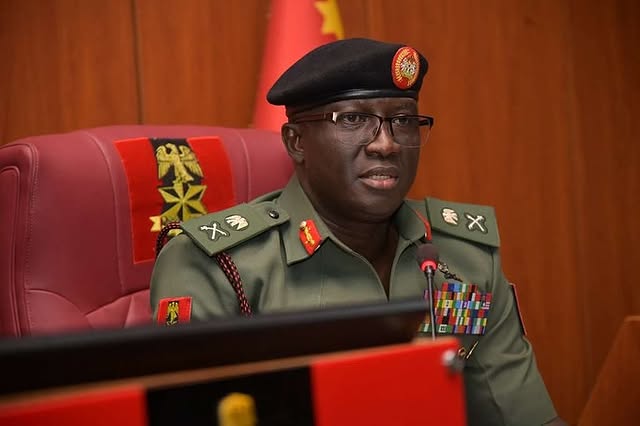
Nigeria Chief of Army Staff, Lieutenant General Waidi Shaibu

Abuja — The Chief of Army Staff (COAS), Lieutenant General Waidi Shaibu, has approved a major reshuffle in the Nigerian Army, redeploying several senior officers to strategic command, staff, and instructional positions in a move aimed at strengthening leadership and improving operational efficiency across the force.

According to an official statement from Army Headquarters, the shake-up is designed to “reinvigorate leadership, strengthen command structures, and reposition the Nigerian Army for heightened operational effectiveness.”

Among the most prominent appointments, Major General Bamidele Alabi has been redeployed to the Army Headquarters Department of Policy and Plans as the Chief of Policy and Plans (Army). Similarly, Major General Jamal Abdulsalam, who previously served as Chief of Special Services and Programmes, now proceeds to the Defence Headquarters Department of Operations as Chief of Defence Operations.

Also affected in the reorganization, Major General Peter Mala moves from the Office of the National Security Adviser to assume duty as Commander, Training and Doctrine Command (TRADOC), while Major General Samson Jiya has been appointed Chief of Defence Accounts and Budget at the Defence Headquarters, following his redeployment from the Nigerian Army Heritage and Future Centre (NAHFC).

In other key appointments, Major General Mayirenso Saraso becomes Chief of Operations (Army), Major General Isa Abdullahi takes over as Chief of Administration (Army), and Major General Musa Etsu-Ndagi assumes the position of Chief of Civil-Military Affairs (Army).

The restructuring also saw Major General Abubakar Haruna named Commander, Nigerian Army Training Centre (NATRAC), Kontagora, and Major General Philip Ilodibia appointed Chief of Defence Space Administration at the Defence Space Administration.

At the corps level, Major General Godwin Mutkut moves from the Multinational Joint Task Force (MNJTF) in N’Djamena to become Corps Commander, Infantry, while Major General Umar Abubakar takes charge of the Armour Corps. Major General John Adeyemo is now Corps Commander, Artillery, and Major General Mohammed Abdullahi becomes Corps Commander, Signals.

Other appointments include Major General Taofik Sidick as Chief of Accounts and Budget (Army), Major General Abdullahi Ibrahim as Corps Commander, Ordnance, Major General Adeyinka Adereti as Corps Commander, Electrical and Mechanical Engineers, and Major General Nansak Shagaya as Corps Commander, Supply and Transport. Brigadier General Yusha’u Ahmed has also been named Acting Corps Commander, Education.

In the training institutions, Major General Oluyemi Olatoye, formerly with 82 Division/Joint Task Force South East (Operation UDO KA), has been appointed Commandant of the Nigerian Defence Academy (NDA), Kaduna. Major General Emmanuel Mustapha becomes Commandant, Nigerian Army Signal School, while Major General Adamu Hassan takes over as Commandant, Nigerian Army School of Artillery. In addition, Brigadier General John Bulus has been appointed Commandant, Nigerian Army School of Finance and Accounts.

The new postings, which take immediate effect, reflect the COAS’s commitment to continuous restructuring for improved professionalism and readiness in tackling emerging security challenges across the country.

Army Headquarters said the reshuffle underscores General Shaibu’s drive to ensure a disciplined, motivated, and combat-ready force capable of addressing Nigeria’s evolving defence and security needs.
Tinubu Reverses Pardon for Maryam Sanda; Convict to Serve Six Years

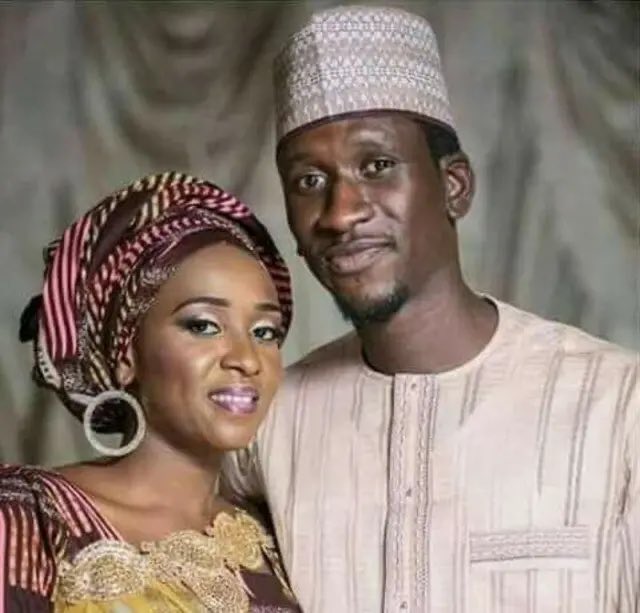
Maryam Sanda and late husband

In a dramatic reversal of his earlier clemency move, President Bola Tinubu has revoked the pardon granted to Maryam Sanda and ordered that she serve six years imprisonment instead. The decision effectively annuls the pardon that had sparked widespread controversy.

Maryam Sanda was originally convicted in 2020 for culpable homicide after fatally stabbing her husband, Bilyaminu Bello. She had been on death row, having spent over six years in custody, before President Tinubu’s earlier pardon granted her clemency along with 174 other convicts.

The pardon triggered strong backlash from many quarters. Critics argued that including a capital offender among the beneficiaries diluted the rule of law and disrespected victims’ families.

Under the new directive, Sanda’s pardon has been revoked and her sentence reinstated for six years behind bars. The move appears to be a response to public pressure and moral outcry, as well as a correction to the earlier clemency exercise.

Tinubu directed a comprehensive review of the earlier recommendations under Section 175(1) and (2) of the 1999 Constitution (as amended). As a result, several individuals convicted of serious crimes — including kidnapping, drug trafficking, human trafficking, fraud, and unlawful arms possession — were removed from the list.

Others who had been granted full pardons in the previous list saw their sentences commuted instead, reflecting what the presidency described as a “balanced approach to justice.”

“The action became necessary in view of the seriousness and security implications of some of the offences, the need to be sensitive to the feelings of the victims of the crimes and society in general, and the need to boost the morale of law enforcement agencies,” the statement read.

It added that Tinubu’s decision was guided by “the concept of justice as a three-way traffic for the accused, the victim, and the state or society.”

The approved list of eligible beneficiaries has since been transmitted to the Nigerian Correctional Service for implementation.

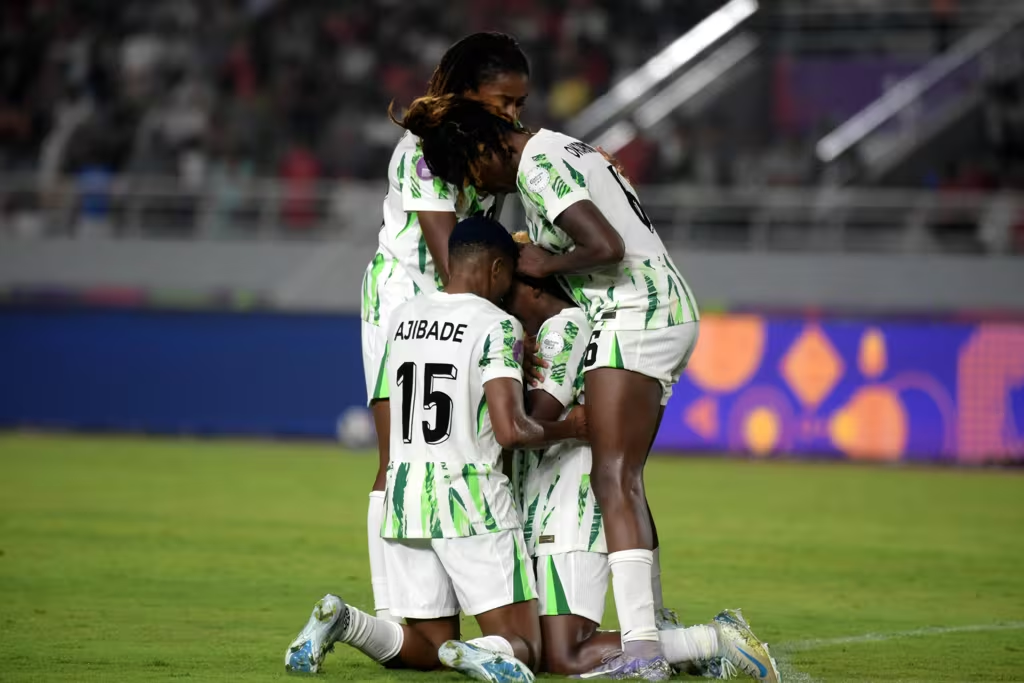
Ajibade Focuses on World Cup Ambitions as Super Falcons Seal WAFCON Spot

Rasheedat Ajibade

In an exclusive interview with FIFA ahead of the 2027 Women’s World Cup campaign, Nigerian forward Rasheedat Ajibade spoke passionately about her dreams for the Super Falcons and the broader growth of women’s football in Africa. The interview comes just as the Falcons have secured qualification for the 2026 Women’s Africa Cup of Nations (WAFCON).

Ajibade, who has established herself as a key figure in Nigeria’s attack, told FIFA her ambition is not only to shine individually but to help propel the team to new heights on the global stage. “We know our capabilities,” she said. “Our collective strength lies in belief, hard work and unity.”

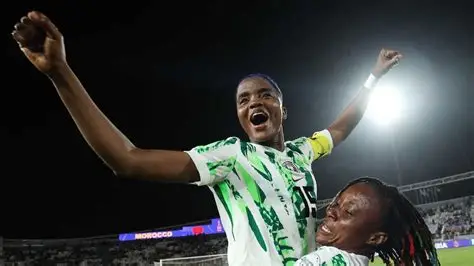
Her words carry considerable weight now that the Super Falcons have confirmed their place in WAFCON 2026 following a 1-1 draw against Benin at home. The result gave Nigeria a 3-1 aggregate win after a 2-0 victory in the first leg in Lomé.

In her interview, Ajibade reflected on her journey — from youth tournaments to senior level — and emphasized the responsibility she feels as a leader for younger players. “I always say: don’t just play for yourself, play for those who look up to you back home,” she told FIFA. She also spoke about her time overseas, noting how exposure to different leagues has expanded her skills and footballing intelligence.

When asked about the upcoming qualifiers and continental challenges, Ajibade acknowledged that the path to WAFCON and beyond is never straightforward. She stressed that the Falcons must balance ambition with consistency: “Winning the qualifier is just part of the story — how we perform in the tournament will define us.”

Her reflections came at a moment of optimism for Nigeria’s women’s football. The Falcons’ unbeaten path through WAFCON qualifying reinforces the team’s status as a continental powerhouse and signals rising confidence ahead of World Cup challenges. Nigeria remains the only African nation to have appeared at every Women’s World Cup, and Ajibade is clear-eyed about carrying that legacy forward.

As the Super Falcons shift gears from qualifying to preparation, Ajibade says the squad is already working on cohesion, tactical depth and mental resilience — areas she believes will determine success at major tournaments. “We want to be respected, feared,” she remarked. “And to do that, we must bring our best to every game — whether here in Africa or on the global stage.”

With both the WAFCON berth secured and the countdown to Brazil 2027 advancing, Ajibade’s ambition and the Falcons’ momentum present a compelling narrative for Nigeria’s quest to reclaim continental glory and make an impact on the world stage.

Nigeria turns towards prosperity

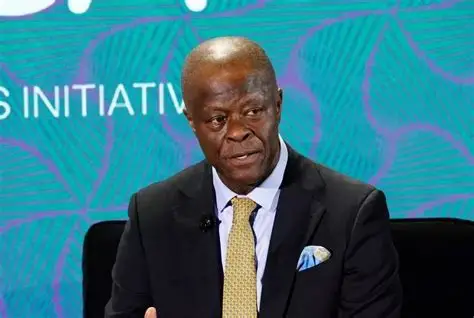
Wale Edun

By Wale Edun

In this role, I often feel a mix of emotions: deep pride in our national journey, regret over the opportunities we failed to seize, and confidence in our direction of travel today. Despite some historical shortfalls and present-day challenges, I believe the most difficult phase of our economic journey is behind us. Nigeria has turned a decisive corner. The road ahead will demand hard work and discipline, but we are firmly on the right path.

When President Bola Ahmed Tinubu took office in 2023, Nigeria’s economy was on the brink of fiscal collapse. Slowing growth, surging inflation, and market distortions like the fuel subsidy and multiple exchange rate regimes had created an environment that scared off investment. The President’s mandate was clear – dismantle those market distortions, reward productivity, and create a climate where private investment can thrive.

From Crisis to Stability

Two years later, the results are evident at the macro level. GDP grew by 4.23 percent in the second quarter of 2025. Inflation, while still high, has moderated to 18.02 percent after six consecutive months of decline. The exchange rate has stabilised, and the gap between official and parallel markets has narrowed to about 1 percent, down from a peak of nearly 70 percent. Importantly, foreign reserves have risen above $43 billion, the highest since 2019. These are more than just numbers; they are the foundation for building inclusive growth that benefits every Nigerian.

Notwithstanding, we recognise that the economy is ultimately about people, not statistics. Millions of Nigerians measure progress by the cost of food, transport, and other necessities. I am keenly aware of this reality. Food inflation has been our heaviest burden since it surged after currency depreciation and the removal of fuel subsidies. However, targeted measures are beginning to ease the pressure. A bag of rice that cost about ₦120,000 last year now averages around ₦ 80,000. The prices of garri, pepper, tomatoes, and other essentials have also decreased.

At the same time, we are careful to ensure our smallholder farmers have enough incentives to return to farms next planting season. We are therefore implementing programmes that stimulate agricultural production by safeguarding smallholder farmers’ incomes.

In addition, 8.1 million households nationwide have received direct cash support from the government to help meet basic needs. This is more than a safety net; it ensures that the impact of these necessary reforms is cushioned for the most vulnerable among us, even as we continue to resolve the identity verification issues required to reach our 15 million households’ target.

Hard Truths on Debt and Revenue

The progress we have made does not diminish the tough realities we still face. Debt service costs remain heavy, consuming a larger-than-ideal share of our revenues. This is the consequence of past borrowing and elevated interest rates. At the same time, Nigeria’s fiscal revenue-to-GDP ratio, at about 10 percent after rebasing, remains one of the lowest in Africa. This limits government resources for essential services like health, education, and infrastructure.

On 26 June 2025, the President signed the new Nigeria Tax Act and companion legislation, to take effect on 1 January 2026. These reforms aim to broaden the tax base, simplify compliance, and reduce leakages, while introducing a more progressive tax regime that shields lower-income earners and adjusts rates for higher earners. Together with structural revenue reforms such as the Revenue Optimisation and Assurance programme (RevOp), these measures will strengthen revenues, create fiscal space, and support greater investment in our people and infrastructure.

Anchoring Growth in Real Sectors

A stable economy is crucial, but stability alone is insufficient. To deliver inclusive prosperity, we must anchor growth in sectors that generate jobs and opportunities. We are providing necessary incentives to revive investments in the oil and gas industry. With improved security, oil theft is down, and production has rebounded to 1.68 million barrels per day, including condensates. Refinery projects are setting the stage for a stronger downstream sector.

In agriculture, we are boosting food supply, reducing reliance on imports, and ensuring farmers have security and access to markets. We are encouraging investment in factories and strategic value chains, creating employment for our young and dynamic workforce. We are investing in technology and the creative sector to harness the energy of our youth and position Nigeria as a hub of innovation. In addition, we are expanding exports beyond oil by tapping into the global demand for critical minerals.

Infrastructure is the backbone of growth. Public funds alone cannot meet Nigeria’s vast needs, so we are attracting private capital through public-private partnerships. The Ajaokuta–Kaduna–Kano gas pipeline, and Project Bridge’s 90,000 km fibre expansion are examples of how we are laying out the groundwork for industrialisation and nationwide connectivity.

Restoring Confidence at Home and Abroad

As I begin to conclude, the clearest sign that Nigeria is on the right path is the return of confidence. Investors – both domestic and foreign, multilateral institutions, and ordinary citizens are starting to believe in the nation’s prospects again. But confidence is fragile. Sustaining it demands a predictable policy environment, disciplined fiscal management, and steady progress in reducing inflation.

Our medium-term target is 7 percent growth by 2027/28. Achieving this will require not only government action but the full participation of the private sector, entrepreneurs, and citizens. I am confident that if we work together, we will not only meet this target but surpass it. The task ahead, therefore, is to deepen resilience, broaden opportunities, and ensure that reforms translate into real improvements in daily life—better schools, affordable food, reliable power, accessible healthcare, and jobs for our youth.

Then, we can be assured that Nigeria’s next decade will be one of shared prosperity and renewed hope.


*Wale Edun is the Minister of Finance and Coordinating Minister of the Economy

Ouattara Wins Fourth Term in Ivory Coast election

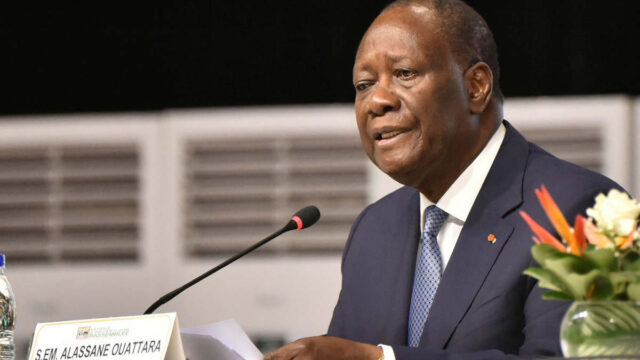
Ivory Coast President Alassane Ouattara

President Alassane Ouattara has been declared the winner of Côte d’Ivoire’s presidential election, securing a fourth term with approximately 89.8 % of the vote, according to provisional results released by the national electoral commission on October 27, 2025.

The vote was marked by a low turnout, with just around 50 % of registered voters casting ballots. Observers noted empty polling stations in several urban areas including Abidjan.

Ouattara’s main rivals, including former first lady Simone Gbagbo and ex-commerce minister Jean‑Louis Billon, finished well behind, with Billon conceding defeat ahead of the official confirmation.

Some of the country’s most prominent opposition figures, such as former President Laurent Gbagbo and former Credit Suisse CEO Tidjane Thiam, were barred from running, prompting critics to question the openness of the electoral process.

Ouattara, 83, has been in office since 2011. His re-election follows constitutional changes and political maneuvers that allowed him to reset term limits and seek additional mandates. The government hailed his economic stewardship, pointing to robust growth in the cocoa-rich nation.

However, the election also raises serious concerns. Analysts warn the dominance of a single leader and the exclusion of significant opposition voices may erode democratic norms in the region. “It is clear that from the outset, there has been no election … because the Constitutional Council chose the candidates on political grounds,” one civil-society leader told a news outlet.

Opposition supporters and human rights observers remain cautious. While voting proceeded without major incidents, the atmosphere of muted public engagement and the sidelining of challengers have cast a long shadow over the outcome. The full, final results must still be validated by the country’s Constitutional Council.

For now, Côte d’Ivoire stands at a crossroads—not only with a new term ahead of Ouattara, but also with questions about how the country can reconcile stability, economic progress and democratic accountability in an evolving West African political landscape.

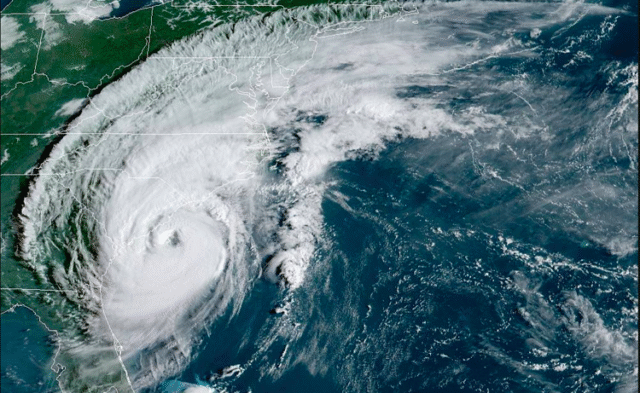
Hurricane Melissa Tears Through the Caribbean, Jamaica Braces for Catastrophe

Hurricane Melissa has rapidly intensified into a Category 5 storm as it bears down on Jamaica, leaving residents and authorities scrambling in its path. The hurricane is forecast to unleash catastrophic rain, destructive winds, and life-threatening flooding across much of the island by Tuesday night.

Meteorologists warn that Melissa’s slow movement will amplify its danger: rainfall totals may reach 30 to 40 inches in some regions, while storm surges could push seawater several feet inland along Jamaica’s southern coast.

Coastal communities are especially at risk of flooding and structural damage.

The storm has already left a deadly trail across Hispaniola. In Haiti, officials confirmed at least one death when heavy rains triggered flooding and landslides.

Elsewhere, infrastructure damage, power outages and disruptions in basic services are mounting.

Jamaica has issued widespread warnings under alert conditions. Authorities activated over 880 shelters across the island and ordered evacuations in highly vulnerable areas, including parts of Kingston and Port Royal.

Prime Minister Andrew Holness urged citizens to take the threat seriously and seek safety immediately. “Take all measures to protect yourself,” he said, stressing that no area should consider itself immune from harm.

U.S. forecasters have flagged the hurricane as one of the strongest ever seen in the region. The National Hurricane Center (NHC) warned of “catastrophic” flash flooding and numerous landslides, especially in mountainous terrain.

The NHC report also cautioned that weakening of winds does not mean reduced impact — extended rainfall and surges can exact massive destruction.

Beyond Jamaica, Melissa’s projected path includes Cuba, and the Bahamas, where storm conditions may spread following the island landfall.

In response, disaster management agencies across the Caribbean have issued calls for action. Residents have been urged to stock supplies, reinforce property, and evacuate low-lying zones.

At least seven fatalities have been attributed to Melissa so far, spanning Jamaica, Haiti and other impacted islands. The full extent of property damage and recovery needs remains unclear.

As the window for preparation narrows, Jamaica and neighboring Caribbean nations face a dire test. The coming hours will determine the storm’s human and economic cost — and whether early warnings and evacuations save lives.

Cameroon on Edge as President Biya Declared Winner of Contested Election

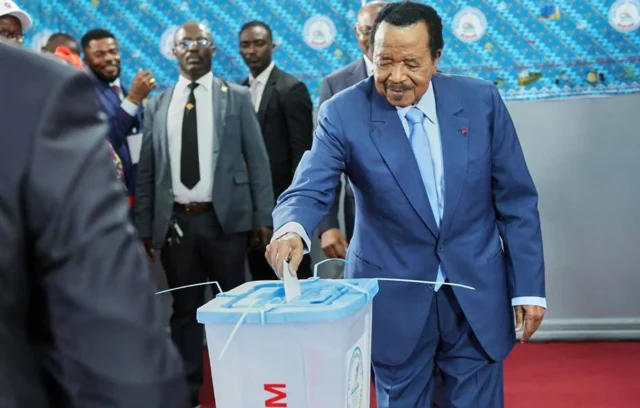
Cameroun's re-elected President Paul Biya

President Paul Biya has been officially re-elected for an eighth term, securing 53.66 % of the vote in Cameroon’s October 12 presidential election, according to the Constitutional Council.

The announcement has stirred widespread unrest across the country, with opposition supporters rejecting the result and accusing authorities of orchestrating fraud.

At least four protesters were killed in clashes with security forces ahead of the result being confirmed.

Opposition candidate Issa Tchiroma Bakary, a former ally of Biya, declared himself the winner ahead of the official outcome, citing his own internal tally of 54.8 % and calling the official process a “masquerade.”

He posted on social media after the official result: “Shooting point-blank at your own brothers – I can’t help but wonder if you’re mercenaries.”

Biya, who has helmed the country since 1982 and removed presidential term limits in 2008, is now set to extend his rule potentially into his late 90s.

His long tenure has drawn criticism for stifling democratic development, particularly amid humanitarian crises in the Anglophone regions and security threats in the north.

Security forces are deployed in major cities including Douala, Garoua and Yaoundé, where internet disruptions were reported and gatherings were banned.

The government said the declaration of results signals continuity and stability; the opposition insists the people’s will has been ignored.

Analysts warn that with high youth unemployment, deep economic unease and lingering conflict, the election outcome could deepen social fractures unless meaningful reforms are undertaken. Whether Biya’s new term will bring change or further entrenchment of the status-quo remains a critical question for Cameroon’s future.

Customs Intercepts ₦5.3bn Drug Shipment Hidden in Imported Cars

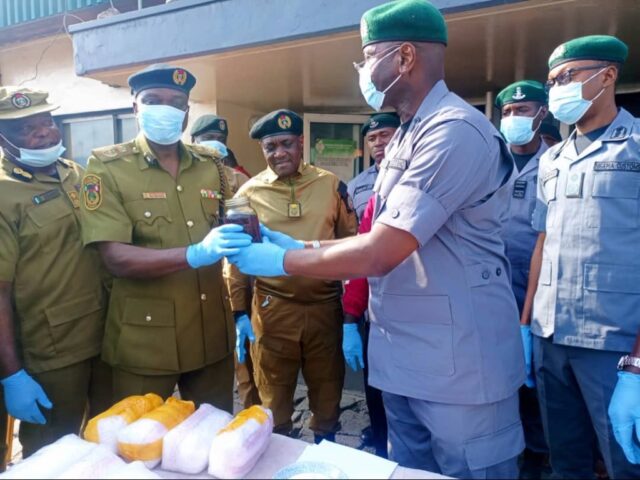
Credit; Nigeria Customs

The Nigeria Customs Service (NCS), Tin Can Island Port Command (TCIPC), has intercepted a massive consignment of illicit drugs concealed inside imported vehicles from Canada, in what officials described as one of the largest seizures of the year.

The interception, announced during a press briefing on Friday, October 24, 2025, was made possible through coordinated intelligence operations involving Customs officers and other security agencies. According to Comptroller Frank Onyeka, the Area Controller of TCIPC, two 40-foot containers originating from Montreal, Canada, were flagged and thoroughly examined after intelligence indicated suspicious contents.

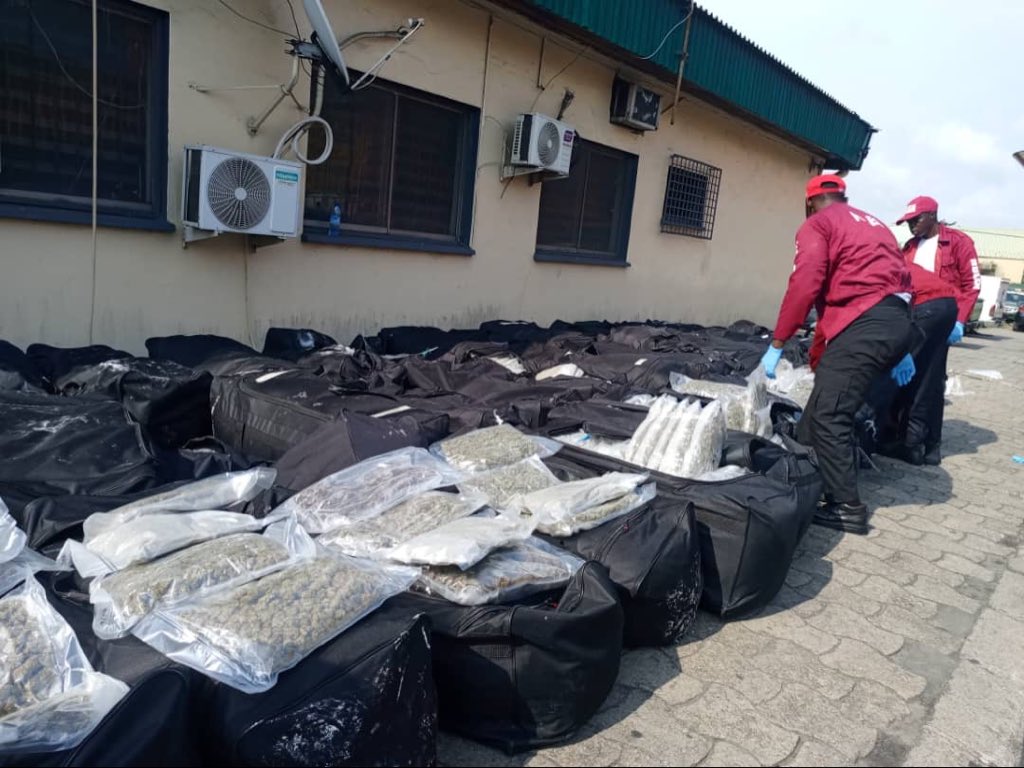
“The Command’s officers discovered various quantities of dangerous narcotics skillfully concealed within eight imported vehicles,” Onyeka said. The items included 156 packets of Colorado Indica (a strain of cannabis) weighing 78 kilograms, 1.2 kilograms of Hashish oil, 2,081 packages of Cannabis Indica weighing 1,093 kilograms, and 8 kilograms of Crystal Meth, with a total Duty Paid Value (DPV) of ₦5.304 billion.

The Customs chief described the interception as a strong signal of the Service’s renewed resolve to curb transnational drug trafficking and safeguard Nigeria’s economy. “The Command wishes to sound a clear warning to all individuals or groups involved in smuggling illicit drugs. Such nefarious activities not only sabotage the national economy but also pose severe risks to national security, public health, and biodiversity,” he declared.

Credit; Nigeria Customs

Onyeka emphasized that the Tin Can Island Port Command remains committed to leveraging intelligence, technology, and inter-agency collaboration to secure Nigeria’s borders. He also commended the Comptroller-General of Customs, Bashir Adewale Adeniyi, for providing strategic leadership and fostering cooperation with other security agencies.

Following established protocol, the seized drugs were formally handed over to the National Drug Law Enforcement Agency (NDLEA) for further investigation.

Receiving the consignment, Commander Daniel Onyishi, head of the NDLEA Tin Can Strategic Command, praised the Customs Service for its vigilance and professionalism. “This level of inter-agency collaboration is critical to national security. The NDLEA remains resolute in ensuring that all seized narcotics are fully investigated and destroyed in accordance with the law,” he stated.

Comptroller Onyeka also commended his officers and men for their dedication and professionalism, urging them to “remain alert, maintain integrity, and continue to uphold the Service’s reputation in the fight against smuggling and illegal trade.”

The latest seizure reinforces growing collaboration between Customs and NDLEA as both agencies intensify the crackdown on cross-border drug trafficking operations threatening Nigeria’s borders.

Wizkid’s son Boluwatife drops rap teaser, fans erupt

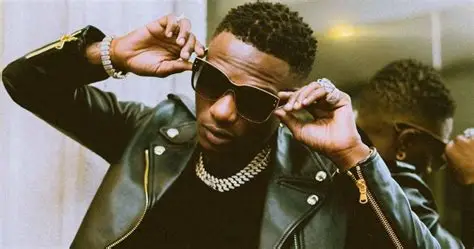
Wizkid

Wizkid’s 14-year-old son, Boluwatife Balogun (known as “Tife” or “Champz”), has set social media ablaze after releasing a teaser of his debut rap single. The clip, shared on Instagram on October 26, 2025, shows the young talent delivering lines like “Shoutout to the OGs in the game, but it’s time to pass on the baton” and “I’ve got zero competition.”

In the video, Boluwatife appears confident behind the mic, letting the beat ride while sporting studio headphones and a chill smile. Fans immediately drew parallels between his flow and his father’s early musical style: “Lion no dey born goat,” one comment read, buzzing around the internet within hours.

At just 14, the youngster has already amassed hundreds of thousands of followers online, and his teaser crossed more than a million views within its first day.

His mother, Shola Ogudu, further teased his coming release, sharing on X.com that “My baby mixed and mastered his first solo freestyle… the lyrics came straight from the heart… It is almost time to take over the world.”

As speculations grow about the title and full release date of the single, fans are also asking whether the prodigy might officially join his father’s imprint, Starboy Entertainment. Neither Wizkid nor his team has yet confirmed those details.

For now, it seems the Balogun musical legacy may have passed to a new generation — and judging by the buzz, we’ll be watching closely.

Troost-Ekong: Super Eagles Ready to Turn AFCON Pain into Glory

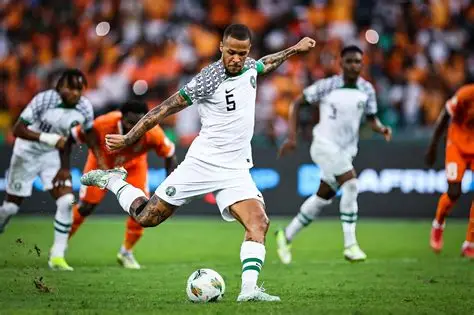
Nigeria captain William Troost-Ekong has said that the Super Eagles are traveling to the upcoming AFCON 2025 with a deeper belief, shaped by the anguish of their defeat in the previous final. In an exclusive interview with CAFOnline, Troost-Ekong remarked: “We learned from pain — now we’re ready” as Nigeria aims to convert heartbreak into triumph.

Troost-Ekong, who plays in Saudi Arabia, described a camp imbued with fresh energy. “The team is excited … the last AFCON left a lasting impression for all of us,” he said, adding that the squad is eager for another chance at the title.

He admitted that in the 2023 final against Côte d’Ivoire, emotions got the better of his side: “We probably should have broken it down more and focused on how we wanted to play instead of playing the occasion.” This time, he stressed, the approach would be more measured.

While acknowledging Nigeria’s strengths, Troost-Ekong cautioned against presumptions. “I think that’s overstated [calling us favourites],” he stated, pointing to the quality of other contenders such as hosts Morocco and defending champions Côte d’Ivoire.

On what it takes to win the continent’s crown, the captain emphasized the blend of intangibles: “Heart, togetherness and consistency.” He noted that momentum must grow gradually through the stages of the tournament, warning against complacency or panic.

Speaking on Nigeria’s group — which includes Tunisia, Uganda, and Tanzania — Troost-Ekong acknowledged no match would be easy. He called Tunisia “high in confidence” and affirmed that matches against Tanzania and Uganda will require focus.

Inside the locker room, the atmosphere is light, he said. Troost-Ekong revealed that Samuel Chukwueze acts as DJ, Victor Boniface contributes comic relief, and Raphael Onyedika is often among the funnier personalities — but all are united in purpose.

Troost-Ekong ended with a plea to fans, thanking those who stayed loyal during Nigeria’s slow start in qualifying: “Please stay behind us … when all of Nigeria — 250 million plus — stands together, that’s our power.”

EDITOR PICKS

Recent Posts