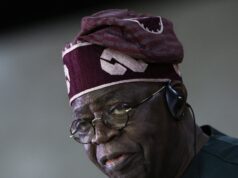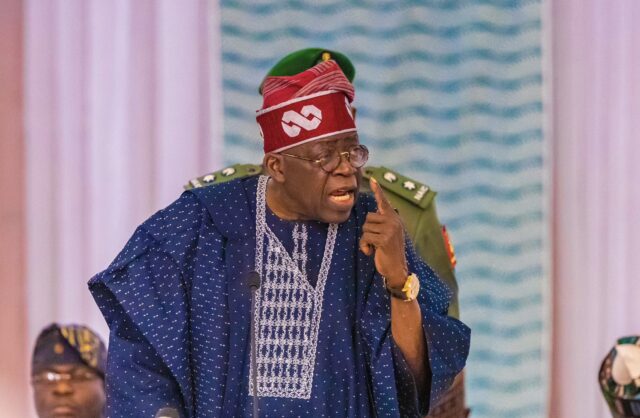
President Bola Ahmed Tinubu has defended his administration’s refusal to negotiate with kidnappers, insisting that Nigeria will not bargain with criminals, while assuring Nigerians that the proposed state police system will include safeguards to prevent abuse.
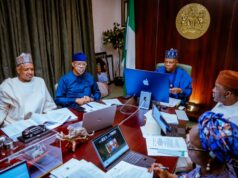
The President made the remarks on Thursday while receiving members of the Oyo State Council of Obas, led by the Olubadan of Ibadanland, His Imperial Majesty, Oba Rashidi Adewolu Ladoja, at the Presidential Villa in Abuja.
Speaking against the backdrop of the recent successful rescue operation in Oriire, Oyo State, Tinubu praised the Armed Forces for their role in securing the victims’ freedom, attributing the success to the professionalism of security personnel, as well as the prayers and support of traditional rulers and Nigerians.
“Congratulations on the Oriire rescue that succeeded. I think we succeeded with your support, prayers, and I agree with you that we should commend the men and women of the armed forces for their excellent performance. On behalf of them, I accept your message, and I will forward the same message on,” the President said.
Tinubu disclosed that the kidnappers had attempted to force the government into releasing members of their criminal network in exchange for the abductees, in addition to demanding ransom. He said the Federal Government rejected the proposal outright.
“We refused to negotiate. These criminals wanted us to review the release from detention, members of their criminal gangs that were already arrested. That was one of their conditions, aside from the money they’re looking for. And I said, ‘no deal,’ we are not going to negotiate with criminals. They committed murder,” he said.
The President added that investigations revealed some members of the criminal network were foreign nationals, warning that insecurity spilling over from neighbouring countries continues to complicate Nigeria’s security situation.
“Some of them are non-Nigerians, you know, you see the problem of insecurity in Mali, Burkina Faso, Niger Republic is adding more fuel to our challenges,” Tinubu stated.
Addressing broader security reforms, the President explained that his administration expanded the Nigerian Army from eight to 12 divisions to enable faster deployment of troops to troubled areas across the country. According to him, the additional formations have improved the military’s operational readiness and boosted efforts to confront insecurity.
Tinubu also reiterated his commitment to establishing state police, dismissing fears that governors could misuse the system. He assured that constitutional safeguards would be built into the framework and that traditional rulers would play critical oversight roles.
“There will be state police. That state police will have guardrails from abuses. We’ll protect it from abuses, and you traditional rulers too will have roles to play,” he said.
He further announced plans to strengthen forest security by expanding the responsibilities of forest guards beyond wildlife protection to combating armed criminals operating from forests across the country.
“We are equally enhancing the capacity and capability of the forest guards; they are not just to chase antelopes and animals. We are going to have them chase the criminals and deal with them in various forests,” the President added.
Calling for greater public participation in tackling insecurity, Tinubu urged Nigerians to remain vigilant by monitoring activities within their communities and promptly reporting suspicious individuals to security agencies. He stressed that intelligence gathering at the grassroots remains critical to defeating criminal networks.
Turning to the economy, Tinubu said Nigeria’s fiscal situation had improved significantly under his administration, arguing that state governments now enjoy stronger financial positions than in previous years.
“The situation has greatly improved,” the President said, adding that unlike in the past, governors no longer need to borrow money to pay workers’ salaries.
He challenged governors to channel increased revenues into infrastructure capable of stimulating economic development and strengthening security operations.
The President specifically urged state governments to prioritise road networks over prestige projects.
“I urge our governors to concentrate more on quality infrastructure like building roads and arteries network to really enhance the quality of life and accessibility of the security agencies to penetrate those areas as opposed to building flyovers where there is no numeric traffic,” he said.
Earlier, the Olubadan of Ibadanland, Oba Rashidi Ladoja, congratulated President Tinubu on the successful rescue operation in Oriire and commended his administration’s achievements in infrastructure and security.
The monarch declared the traditional institution’s support for the administration’s Renewed Hope Agenda, expressing confidence in the President’s leadership.
“We believe in your Renewed Hope Agenda. It is clear you are Renewing our Hope in infrastructure and fixing our abandoned roads. We traditional rulers must ensure this administration completes its tenure. We know it’s a difficult job, and we are ready at any point in time to give you our own opinion, our own advice, and also our own prayers.
“We continue to pray for you, Mr. President, so that by the time you do your bit, and I look at it that you are, now, and that has been shown in the Oriire issue,” Oba Ladoja said.
The monarch also advocated deeper constitutional reforms, arguing that true federalism would accelerate development across Nigeria’s regions. He said the establishment of regional commissions would complement that objective and appealed for constitutional recognition of traditional rulers by assigning them formal roles in governance.
The delegation included several prominent traditional rulers from Oyo State, alongside senior government officials, including the President’s Chief of Staff, Femi Gbajabiamila; Minister of Power, Joseph Tegbe; Chairman of the Nigerian Revenue Service, Zacch Adedeji; and the Special Adviser to the President on Media and Public Communication, Sunday Dare.