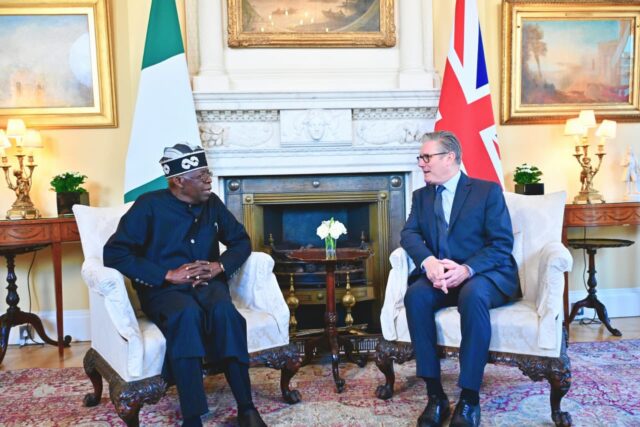
A £746 million export finance agreement to modernise Nigeria’s busiest seaports took centre stage as President Bola Ahmed Tinubu met with UK Prime Minister Keir Starmer in London, marking a significant step in deepening bilateral economic ties.
The deal, announced Thursday, will fund the redevelopment of the Lagos Port Complex and the Tin Can Island Port Complex—two critical gateways for Nigeria’s international trade. Backed by UK Export Finance, the facility guarantees the investment, with Citibank coordinating and arranging the loan.
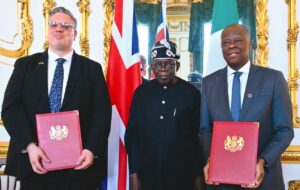
According to BBC News, the agreement is expected to unlock £236 million in supplier contracts for British companies, underscoring the commercial upside for the UK. Among the headline beneficiaries is British Steel, which is set to secure a £70 million contract—a development the British government has described as a major boost to its industrial base.
The port modernisation project is designed to address long-standing inefficiencies at Nigeria’s primary maritime hubs in Lagos, improving cargo handling capacity, reducing turnaround times, and easing congestion that has historically constrained trade flows. The upgrade is expected to significantly enhance Nigeria’s logistics performance and competitiveness within West Africa’s trade corridors.
During the talks, Tinubu emphasised Nigeria’s economic reform agenda and the importance of strategic international partnerships in delivering infrastructure at scale. He noted that the country remains “challenged by terrorism,” highlighting the dual priorities of security stabilisation and economic growth.
For the UK, the agreement aligns with efforts to expand export-led growth and support domestic industries through overseas projects. The structure of the deal—anchored on export credit guarantees—ensures that British firms play a central role in execution while strengthening long-term trade relations with Africa’s largest economy.
The meeting in London forms part of a broader diplomatic engagement aimed at reinforcing UK-Nigeria cooperation across infrastructure, trade, and investment. With implementation expected to begin following final contractual processes, both governments are positioning the £746 million deal as a cornerstone of a renewed economic partnership with tangible benefits on both sides.