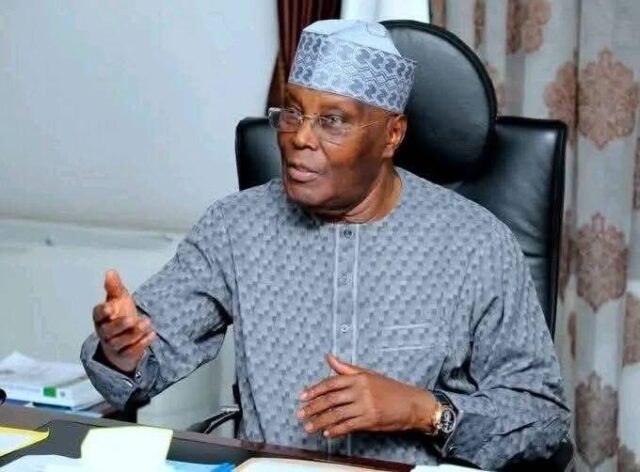
Former Vice President Atiku Abubakar has outlined a stark agenda ahead of his proposed visit to the United States, declaring that his engagements will centre on what he described as Nigeria’s deepening crisis of security, governance, and economic stability.
In a statement issued by his media adviser, Paul Ibe, Atiku said the country is confronting a “full-blown internal crisis” that can no longer be “downplayed, politicized, or explained away.” He pointed to escalating violence across multiple regions, warning that the Nigerian state is increasingly failing in its core responsibility of safeguarding lives and property.
According to him, “the situation has moved beyond isolated incidents to a pattern of systemic failure,” with communities overrun, livelihoods destroyed, and citizens left vulnerable. He added that “any government that cannot guarantee basic security forfeits the moral basis of its mandate,” underscoring the urgency of the security challenge.
The former vice president also highlighted worsening economic conditions, describing the hardship facing Nigerians as both severe and avoidable. He cited rising inflation, currency weakness, and declining purchasing power as key pressures, noting that “Nigerians are not just tired, they are being stretched to the limits of endurance.” He attributed the situation in part to policy inconsistency and a lack of strategic direction.
Beyond security and the economy, Atiku raised concerns about the health of Nigeria’s democratic institutions, warning that declining public confidence in governance, accountability, and the electoral process poses a threat to national stability. As the country edges closer to another election cycle, he cautioned that any attempt to undermine transparency would have serious consequences for unity and legitimacy.
Addressing anticipated criticism of his international engagement, Atiku defended his decision to engage global stakeholders, insisting that “telling the truth about Nigeria is not unpatriotic.” He rejected claims that such outreach amounts to inviting foreign interference, arguing instead that Nigeria’s challenges have global implications and cannot be ignored.
He maintained that while “only Nigerians will decide Nigeria’s leadership,” international partners have a legitimate interest in the country’s stability and democratic health. He added that “responsible leadership does not hide from scrutiny, it welcomes it as a pathway to improvement.”
In a direct message to the current administration, Atiku warned against complacency, stating that “power is not an entitlement but a responsibility,” and urged the government to demonstrate a clear strategy for addressing insecurity and economic decline.
He also called on citizens to remain engaged and demand accountability, stressing that “no nation survives in silence.” According to him, meaningful change must come from within, driven by the collective will of Nigerians.