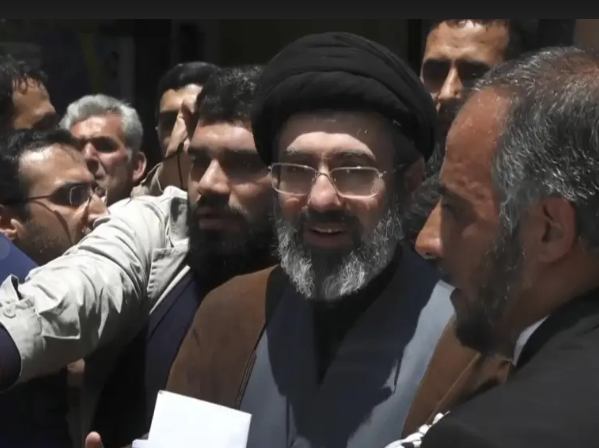
The election of Mojtaba Khamenei as the new Supreme Leader of Iran marks one of the most consequential political transitions in the Islamic Republic since the death of Ayatollah Ruhollah Khomeini in 1989. Following the death of his father, Ali Khamenei, Iran’s powerful clerical body, the Assembly of Experts, selected Mojtaba as the country’s third Supreme Leader — placing him at the apex of a political system where ultimate authority over the military, judiciary, and national strategy rests with a single office.
The development is historic and controversial in equal measure. It represents the first time leadership of the Islamic Republic has passed from father to son, raising questions about dynastic power in a system born out of a revolution that rejected monarchy. At the same time, the transition comes during an exceptionally tense geopolitical moment, with Iran locked in a complex web of confrontation, negotiation, and rivalry across the Middle East and beyond.
For governments from Washington to Beijing, and for regional actors from Riyadh to Tel Aviv, the leadership shift introduces a period of strategic uncertainty. The new Supreme Leader’s worldview, alliances, and political instincts could shape the trajectory of Iran’s nuclear program, regional military posture, and relations with the global economy for decades.
Who Mojtaba Khamenei Is
Despite long-standing speculation about his influence, Mojtaba Khamenei has historically maintained a relatively low public profile compared with other senior figures in Iran’s leadership.
Born in 1969 in Mashhad, he is the second son of Ali Khamenei, who served as Iran’s Supreme Leader from 1989 until his death. Mojtaba studied in the religious seminaries of Qom, one of the central hubs of Shiite scholarship, where many of Iran’s most influential clerics are trained.
Over the past two decades, analysts and diplomats have frequently described Mojtaba as a behind-the-scenes power broker within Iran’s political establishment. Although he never held a formal senior government office, he was widely believed to wield significant influence within the Supreme Leader’s inner circle and among the country’s security institutions.
One institution particularly central to his political network is the Islamic Revolutionary Guard Corps (IRGC). The IRGC is both a military force and a vast economic conglomerate that plays a decisive role in Iran’s strategic policy. Numerous analysts have long argued that Mojtaba cultivated strong ties with key figures inside the organization, particularly during periods of domestic unrest and political tension.
If those relationships endure under his leadership, they could shape the balance of power inside Iran’s governing structure. The IRGC’s support is widely considered essential for political stability in the Islamic Republic.
A Historic and Controversial Succession
The selection of Mojtaba Khamenei represents an unprecedented moment in the history of the Islamic Republic.
When the revolution overthrew Mohammad Reza Pahlavi during the Iranian Revolution in 1979, the new system explicitly rejected hereditary rule. The monarchy was replaced by a hybrid political model combining republican institutions with clerical oversight.
Under this structure, the Supreme Leader is formally chosen by the Assembly of Experts, a council of Islamic jurists tasked with selecting and supervising the country’s highest authority.
A father-to-son succession therefore raises questions about whether the revolutionary system has gradually evolved into something resembling the dynastic structures it once opposed.
Critics — including some reformist clerics and political activists — argue that such a transition could undermine the ideological legitimacy of the Islamic Republic. Supporters, however, may see continuity as essential in a period marked by regional conflict and domestic pressure.
Domestic reactions inside Iran are difficult to measure accurately due to restrictions on political expression and media coverage. Nevertheless, debates over legitimacy, governance, and generational change are likely to intensify within political and religious circles.
Impact on the Middle East
Iran’s foreign policy is deeply intertwined with the strategic vision of the Supreme Leader. As a result, the leadership transition has immediate implications for the balance of power across the Middle East.
The rivalry between Iran and Israel remains one of the region’s most volatile flashpoints. Israel views Iran’s nuclear ambitions and its support for regional armed groups as an existential threat. Tehran, in turn, portrays Israel as a hostile power aligned with Western influence in the region.
Iran also maintains close relationships with a network of allied groups and governments, often referred to as the “axis of resistance.” These include organizations such as Hezbollah in Lebanon and various militias operating in Iraq and Syria.
Whether Mojtaba Khamenei will maintain, expand, or recalibrate this network remains uncertain. Much will depend on how he interprets Iran’s strategic interests and how he balances ideological commitments with pragmatic considerations.
Relations with Saudi Arabia — Iran’s principal regional rival — will also be closely watched. Although recent diplomatic efforts between Tehran and Riyadh have attempted to reduce tensions, decades of rivalry rooted in geopolitical competition and sectarian divisions remain unresolved.
If the new leadership adopts a more confrontational stance, the risk of proxy conflicts across the region could increase. Conversely, a pragmatic approach could open opportunities for regional de-escalation.
Global Power Politics
Beyond the Middle East, the leadership transition will reverberate across global power politics.
The relationship between Iran and the United States has been defined by hostility since the Iran hostage crisis in 1979. Disputes over sanctions, regional influence, and Iran’s nuclear program have repeatedly brought the two countries to the brink of confrontation.
A central question is whether Mojtaba Khamenei will pursue renewed diplomacy over the nuclear issue. Negotiations surrounding the Joint Comprehensive Plan of Action — the 2015 nuclear agreement — have remained uncertain for years.
Iran’s relations with other major powers may prove more stable. Both Russia and China have expanded strategic cooperation with Tehran in recent years.
Moscow and Tehran have developed military coordination in conflicts such as the war in Syria, while Beijing has deepened economic ties through energy purchases and infrastructure investment. China’s long-term partnership agreement with Iran reflects a broader effort to integrate the country into Asian economic networks.
The European Union, meanwhile, faces a delicate diplomatic balancing act — attempting to preserve engagement with Iran while aligning with Western security concerns.
Energy Markets and the Global Economy
Iran holds some of the world’s largest proven reserves of oil and natural gas. As a result, political developments in Tehran can have ripple effects across global energy markets.
Any escalation in tensions involving Iran could affect the security of the Strait of Hormuz, the narrow waterway through which a significant share of the world’s seaborne oil exports passes.
Disruptions to shipping in this corridor could drive volatility in global energy prices, affecting economies far beyond the Middle East.
Sanctions also remain a central variable. The United States and its allies have imposed extensive restrictions on Iran’s energy exports and financial system. If diplomacy under the new leadership leads to sanctions relief, Iran could significantly increase its oil exports — potentially reshaping global supply dynamics.
Conversely, intensified geopolitical tensions could further isolate Iran from international markets.
Scenarios for Iran’s Future
The trajectory of Iran under Mojtaba Khamenei could unfold along several possible paths.
Best-case scenario:
The new Supreme Leader consolidates domestic authority while pursuing cautious diplomatic engagement with global powers. Renewed negotiations on the nuclear issue lead to sanctions relief, allowing Iran to reintegrate partially into the global economy and reduce regional tensions.
Worst-case scenario:
Regional rivalries intensify, diplomatic channels collapse, and confrontations between Iran, Israel, and the United States escalate. Such a trajectory could heighten the risk of military conflict in the Middle East and further destabilize global energy markets.
Most likely scenario:
Iran continues a strategy of strategic resilience — maintaining its regional alliances, advancing its technological and military capabilities, and navigating between confrontation and negotiation with global powers.
In this middle path, change would be incremental rather than transformative. The ideological foundations of the Islamic Republic would remain intact while tactical adjustments respond to shifting geopolitical realities.
A New Era with Global Implications
Leadership transitions in Iran have historically reshaped both domestic governance and international diplomacy. The rise of Mojtaba Khamenei therefore represents more than a generational change within one country’s leadership.
It signals the beginning of a new chapter in the evolution of the Islamic Republic — one that will influence regional conflicts, global energy markets, and the strategic calculations of major powers.
Whether Mojtaba Khamenei ultimately proves to be a guardian of continuity or an architect of change remains uncertain. What is clear is that the world will be watching closely as Iran navigates this pivotal moment in its history — and as the broader international order adjusts to the implications of a new Supreme Leader in Tehran.