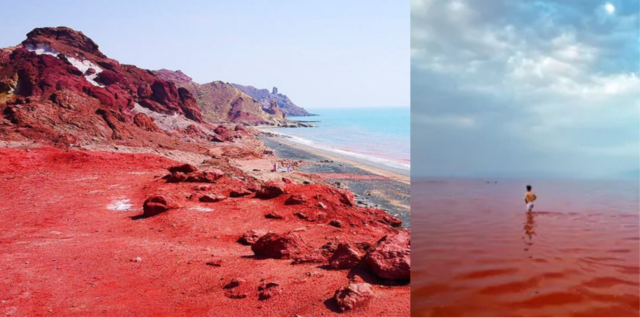
A striking natural spectacle unfolded this week on Hormuz Island, a small but geologically unique island in southern Iran’s Strait of Hormuz, when heavy rainfall turned parts of the island’s beaches and shallow sea waters a vivid blood-red color. The dramatic transformation, captured in numerous viral videos and photos shared on social media, has captivated audiences worldwide and drawn scientific interest in equal measure.
The phenomenon began on December 16 and 17, following unusually intense seasonal rainfall that washed mineral-rich soil from the island’s hillsides down to the coastlines. Streams of red-tinged water flowed across the landscape, depositing fine particles of iron oxide into shoreward waters and transforming stretches of sand and seawater into an eerie crimson hue.
Scientists and local experts say the spectacle is natural and harmless, arising from Hormuz Island’s distinctive geology. The island’s soil contains high concentrations of iron oxide minerals, especially hematite, which give the earth its characteristic red color. When rainwater flows over these iron-rich slopes, it picks up and carries the microscopic mineral particles into the ocean. There, as the particles remain suspended in shallow water, they absorb and reflect light in a way that makes the water and sand appear deep red.
Geologists point out that this type of mineral-laden runoff is temporary and does not indicate pollution or a biological hazard such as a harmful algal bloom. Environmental specialists reassure the public that the phenomenon poses no known risk to human health or marine life, and that the red coloration generally fades as sediments settle and tidal currents disperse the particles.
Local residents and visitors alike have flocked to the island’s dramatic coastline — particularly areas known as the “Red Beach” — to witness the spectacle firsthand. Photographers and tourists have turned what is normally a subdued coastal scene into a surreal tableau reminiscent of a Mars-like landscape, drawing comparisons on social media and prompting references to biblical imagery, despite its natural origins.
Hormuz Island’s striking mineral diversity has long been a hallmark of its landscape, earning it nicknames such as the “Rainbow Island of the Persian Gulf.” The island features a mosaic of colors in its soils and rock formations that is only fully appreciated after rainfall, when the spectrum of hues becomes most pronounced. The iron-rich red soils — known locally as golak — are not only a visual wonder but are also used traditionally as pigments in art and cuisine.
While the red-tinted waters are drawing international attention, experts emphasize that the effect is ephemeral. As weather patterns change and the heavy runoff subsides, Hormuz’s beaches and coastal waters are expected to return to their more familiar tones, until the next significant rainfall.