Former U.S. Secretary of State and 2016 Democratic presidential candidate Hillary Clinton has reignited the long-running debate over America’s Electoral College system, describing it as an “abomination” in a new Netflix documentary series examining the foundations of American democracy.
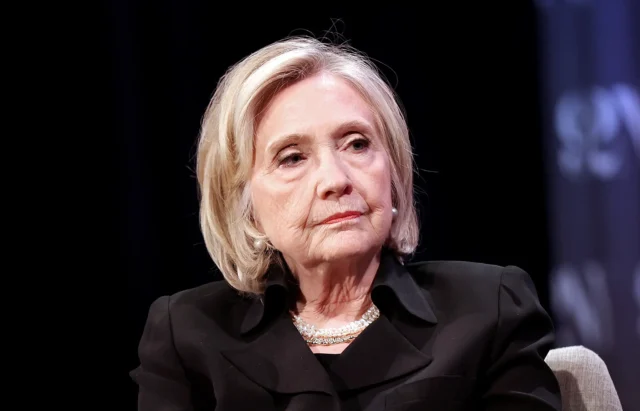
Clinton made the remarks in The American Experiment, a Netflix miniseries set to premiere on Wednesday, where she reflected on her controversial loss in the 2016 presidential election despite winning the national popular vote by nearly three million ballots.
“Well, I personally think the Electoral College is an abomination,” Clinton said with a laugh during her interview for the series. “For obvious reasons.”
Her comments revive one of the most contentious discussions in U.S. politics: whether the Electoral College remains an appropriate mechanism for electing presidents or whether the country should adopt a direct popular vote system.
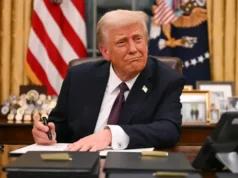
Clinton’s criticism carries particular weight because she is one of only a handful of presidential candidates in American history to win the popular vote but lose the presidency. In the 2016 election, she secured nearly three million more votes nationwide than Republican candidate Donald Trump but ultimately lost the White House because Trump won enough states to secure a majority of Electoral College votes.
Director Brian Knappenberger said Clinton rarely speaks openly about the emotional impact of that election night and welcomed her candid reflections for the documentary.
“I knew I would be asking former Secretary of State and presidential candidate Hillary Clinton about one of the most painful moments of her life,” Knappenberger told Variety. “She has rarely spoken candidly about that election night and we’re really happy she talked about it for the series.”
He added that Clinton’s experience gives her a unique perspective on the issue.
“She has a unique perspective as one of only five people in American history to lose the presidency after winning the popular vote. The 2016 election also stands out because Hillary Clinton defeated Donald Trump in the popular vote by such a significant margin,” he said.
The Electoral College system, established under the U.S. Constitution, allocates electoral votes to states based on their representation in Congress. Critics argue that the arrangement gives disproportionate influence to smaller states because each state receives two Senate-based electoral votes regardless of population size.
While Clinton sharply criticized the system, the documentary also features voices defending it.
Former Republican Senator Jeff Flake of Arizona argued that the Electoral College serves an important constitutional purpose by balancing power between federal and state governments.
“The states have considerable power,” Flake said in the series. “The states run elections. That is a good thing to decentralize that kind of power.”
The renewed controversy comes nearly a decade after the 2016 election, one of the most consequential and divisive contests in modern American political history.
In her 2017 memoir, What Happened, Clinton offered a broader explanation for her defeat, attributing it to multiple factors including sexism, racism, the fallout from the email controversy, and Trump’s unconventional political style.
“I was running a traditional presidential campaign with carefully thought-out policies and painstakingly built coalitions,” she wrote. “While Trump was running a reality TV show that expertly and relentlessly stoked Americans’ anger and resentment.”
Public opinion on the Electoral College remains divided, though recent polling suggests growing support for reform. According to a recent Economist/YouGov survey, approximately 56 percent of Americans support amending the Constitution to abolish the Electoral College and replace it with a nationwide popular vote.
Momentum has also been building behind the National Popular Vote Interstate Compact, an agreement among participating states to award their Electoral College votes to the winner of the national popular vote regardless of state-level results.
In April, Virginia became the 18th state to join the compact, adding to a growing coalition seeking to effectively bypass the Electoral College without requiring a constitutional amendment.
However, the agreement will only take effect once participating states collectively control at least 270 Electoral College votes—the number required to elect a president.
As debate over electoral reform intensifies ahead of future presidential contests, Clinton’s latest remarks are likely to fuel fresh scrutiny of a system that has repeatedly shaped the outcome of U.S. elections and remains one of the most debated features of American democracy.