Nigeria has emerged as a global reference point for steady and credible reform leadership, the World Bank has said, in a strong endorsement of President Bola Ahmed Tinubu’s economic agenda.
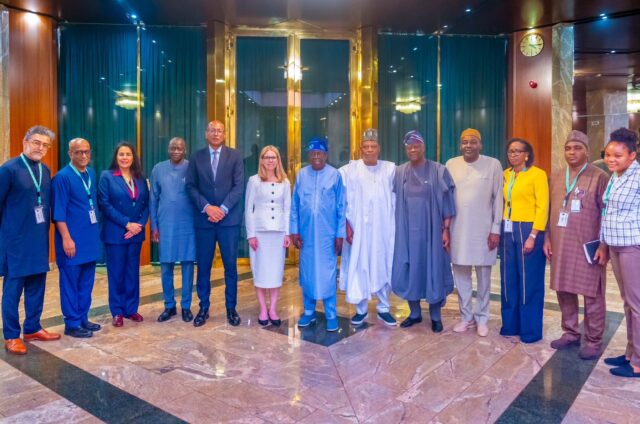
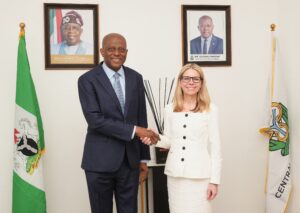
The World Bank’s Managing Director of Operations, Anna Bjerde, made the remark on Tuesday during a high-level meeting with President Tinubu and Vice President Kashim Shettima at the State House in Abuja. Bjerde led a delegation of senior World Bank officials to the meeting, where she praised Nigeria’s reform trajectory over the past two years.
According to Bjerde, Nigeria is increasingly cited internationally as an example of a country that has shown consistency and resolve in implementing difficult but necessary reforms. She said the government’s determination to stay the course despite short-term challenges has begun to yield tangible results and rebuild confidence among investors, policymakers and the private sector.
“Nigeria is now frequently referenced globally as an example of steady, credible reform leadership,” Bjerde said. “This consistency and the clear evidence of positive results have strengthened confidence across the board.”
She disclosed that the World Bank’s forthcoming Country Partnership Framework for Nigeria would be firmly aligned with the country’s own development priorities, particularly the ambition to grow the economy to a $1 trillion GDP and achieve a sustained growth rate of seven percent.
President Tinubu, in his response, reaffirmed his administration’s unwavering commitment to the reform agenda, describing it as challenging but necessary for long-term stability and prosperity. He stressed that there would be no reversal of key policies already implemented.
“There will be no turning back,” the President said, acknowledging that the removal of fuel subsidy and the unification of foreign exchange rates initially triggered inflationary pressures. He noted, however, that inflation has eased significantly in recent months and the naira has stabilised, helping to restore investor confidence and improve the ease of doing business.
President Tinubu said the reforms are rooted in transparency, accountability and policy stability, adding that rebuilding trust in the economy was central to the government’s strategy.
The President also highlighted agriculture as a major pillar of his administration’s economic plan, outlining steps taken to transform the sector and boost productivity. He pointed to investments in zonal mechanisation centres, improved seed development and fertiliser availability, supported by the growing petrochemical industry, as part of efforts to move farmers from subsistence farming into viable cooperatives.
“Nigeria is the heart of the continent, and we must do what’s necessary to strengthen the economy, particularly when you look at the young population of this country and the vast area of arable land,” Tinubu said. “How do we employ mechanisation and make agriculture easier? I have embarked upon that. We have created zonal mechanisation centres to help the farmers.”
He called on the World Bank to deepen its partnership with Nigeria by accelerating access to financing, reducing bureaucratic bottlenecks, sharing successful development models, managing risks more effectively and investing in local capacity building to fast-track inclusive growth.
In her remarks, Bjerde underscored the importance of expanding access to finance for businesses of all sizes, particularly mid-sized firms, which she described as critical engines of job creation. She also commended Nigeria’s focus on early childhood development, noting its long-term impact on productivity and human capital.
“Many countries around the world, including middle-income and upper-middle-income countries, are again seeing rising levels of stunting,” she said. “Here, we’ve identified early childhood development as a strong entry point. All of this is to say we’re looking forward to a new country partnership framework.”
Bjerde reaffirmed the World Bank Group’s commitment to supporting Nigeria’s reform agenda through a coordinated programme involving its key institutions, including the International Development Association, the International Bank for Reconstruction and Development and the International Finance Corporation.