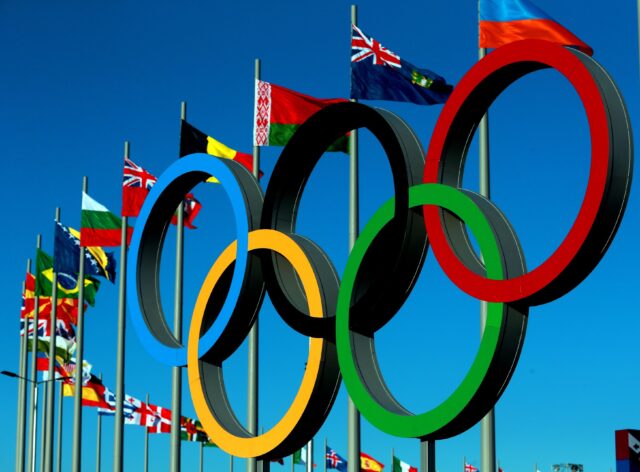
The International Olympic Committee (IOC) has signalled it is moving toward banning transgender athletes from women’s events at the Olympic Games, though as of today it has not taken a formal decision.
Under the leadership of newly-appointed President Kirsty Coventry, the IOC is steering away from its previous hands-off approach—where each sport federation decided its own rules—and now looks set to impose a unified policy. In June, Coventry announced the creation of a working group titled “Protection of the Female Category”, tasked with reviewing eligibility criteria for transgender athletes.
Despite the shift in tone, an IOC spokesperson confirmed this morning that no final rule exists yet. “We are still weighing universal rules for transgender athlete participation,” the official said.
The move follows pressure from several major international sports bodies, which have already tightened eligibility for transgender and DSD (differences of sex development) athletes. For instance, nations like the U.S. have effectively banned transgender women from female events via the United States Olympic & Paralympic Committee (USOPC) policy changes adopted earlier this year.
According to documents shared with IOC members, evidence being considered includes physiological differences such as muscle mass and bone density retained from male puberty—arguments widely cited by opponents of transgender participation in female categories. Nonetheless, critics argue that the science remains contested and that blanket bans may violate inclusion principles.
Inside the IOC’s walls, the working group is expected to issue draft policy recommendations by early 2026. If adopted, these would guide not only the 2028 Summer Olympics in Los Angeles but set precedent for youth and regional Olympic events as well.
For athletes and advocates, the uncertainty is unsettling. Trans and non-binary athletes have cited a lack of clarity and the risk of exclusion, while advocacy groups warn of potential human-rights implications. On the opposite side, many women’s sports entities welcome stronger regulation to bolster competitive fairness.
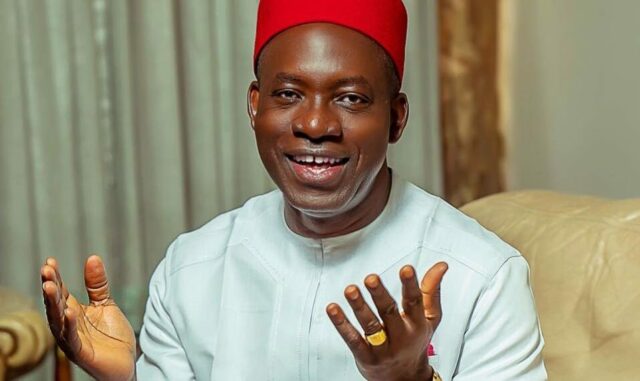
Incumbent Governor Charles Chukwuma Soludo of the All Progressives Grand Alliance (APGA) has secured a decisive victory in the November 8 governorship election in Anambra State, having been declared the outright winner after sweeping all 21 local government areas.
According to the official results announced by the returning officer, Professor Omoregie Edoba, Vice-Chancellor of the University of Benin, Soludo amassed 422,664 votes, while his nearest challenger, Nicholas Ukachukwu of the All Progressives Congress (APC), trailed with 99,445 votes. The Young Progressives Party (YPP) candidate, Paul Chukwuma, polled 37,753 votes, and the Labour Party’s George Moghalu scored 10,576. Out of 2,788,864 registered voters, 598,229 were accredited, and 584,054 valid votes were recorded. A total of 11,244 ballots were rejected.
In a statement following the result, Independent National Electoral Commission (INEC) Chairman Joash Ojo Amupitan (PhD) congratulated the people of Anambra for “a largely peaceful and credible exercise” and commended the strong deployment of technology via the IReV portal, noting that over 99 per cent of results were uploaded in real time. “The standard of this poll reflects our evolving capacity and the will of the electorate,” he said.
Governor Soludo, speaking to supporters in Awka after his declaration, thanked the Anambra electorate for the renewed trust and congratulated his rivals for a campaign he described as intense but fair. He also praised President Bola Ahmed Tinubu and INEC for ensuring what he called “the best-organised election in Anambra to date.”
Soludo’s victory all but cements APGA’s dominance in the state and positions him for a second term concluding in 2030. Analysts say the landslide margin—over four times the votes of his main rival—underscores both Soludo’s enduring popularity and the opposition’s weak showing.
While the election was largely peaceful, observers noted persistent concerns around low voter turnout and reports of vote-buying. INEC has reaffirmed its commitment to investigate all credible allegations of malpractice.
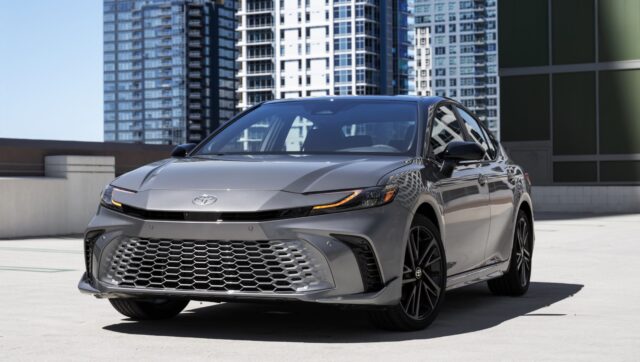
When a sedan not only meets expectations—but raises the bar—it becomes headline news. That is precisely what the 2026 Toyota Camry Hybrid has done: quietly and confidently staking its claim as one of the very best midsize sedans for 2026.
Here’s a look at why this vehicle merits that accolade—and what that means for buyers, especially in markets like Nigeria and Africa where value, durability and versatility matter.
Why It Stands Out
Efficiency Meets Performance
Under the bonnet lies a hybrid system that blends a 2.5-litre four-cylinder petrol engine with dual electric motors (and an optional third motor for AWD models).
With front-wheel-drive (FWD), some trims deliver 53 mpg city / 50 mpg highway (based on U.S. figures) for earlier versions, and estimates suggest similarly high efficiency for 2026.
AWD variants manage very respectable efficiency too—for example ~51/49 mpg in certain trims.
In real-world tests, a combined figure of ~46 mpg was recorded by one reviewer and the car ranked #1 out of seven midsize sedans in its class.
In short: you get both economy and the capability to keep up with contemporary standards of drivability.
2026 Toyota Camry SE Black
Safety & Tech You Can Rely On
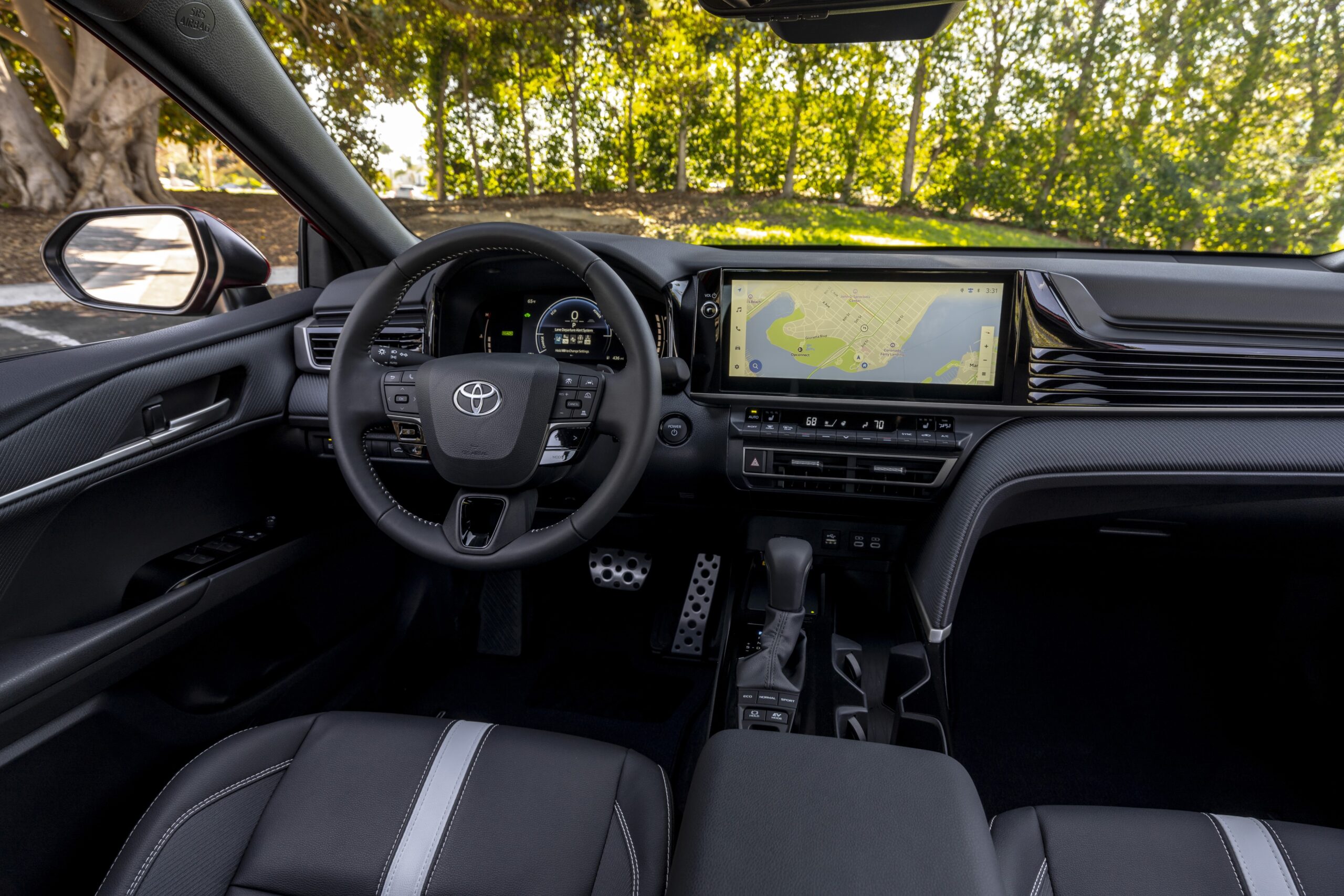
Safety is not an afterthought here. The Camry Hybrid comes standard with the Toyota Safety Sense 3.0 suite, including adaptive cruise control, lane tracing assist, pedestrian detection and more.
Independent testing backs it up:
Rated a “Top Safety Pick+” by the Insurance Institute for Highway Safety (IIHS) in prior year model versions.
Strong crash and driver-assist credentials give buyers peace of mind.
Value & Versatility
The 2026 Camry Hybrid is pitched with a starting price (in the U.S.) around $29,000–$30,000 depending on trim and drive system.
Given its class, hybrid powertrain, safety, reliability and brand backing, that’s strong value.
For markets outside North America—including Nigeria—these traits hold extra weight: fuel economy becomes a major cost factor, while reliability and resale value matter significantly.
Global-Ready Build & Reliability
Built on the latest Toyota New Global Architecture (TNGA‑K) platform, the Camry Hybrid benefits from increased rigidity, reduced noise, better ride quality and improved structural integrity.
As one reviewer in Nigeria puts it: “Unmatched fuel economy … available AWD for poor roads … Toyota’s dependable service network and resale value”. That last part is key in African contexts: after-sales support, parts availability and resale value often make or break a purchase decision.
Why It’s Among the Best Midsize Sedans for 2026
Analysts and reviewers don’t hand out such high marks lightly. In comparing the Camry Hybrid with competitors such as the Honda Accord Hybrid and Hyundai Sonata Hybrid, the Camry held its own and in many cases came out ahead:
One shoot-out of sub-$40,000 midsize sedans placed the Camry on top thanks to its hybrid efficiency and overall refinement.
Reviewers highlight that while some rivals are more sporty or stylish, they may trade off on fuel economy or value—areas where the Camry shines.
Therefore, when you combine efficiency + safety + reliability + value, you get a vehicle that ticks the major boxes for a modern midsize sedan—and for many drivers (in Nigeria/Africa especially) these boxes often eclipse pure luxury or performance.
What Buyers in Nigeria / Africa Should Pay Attention To
Fuel Economy: With petrol/diesel costs constantly fluctuating, the hybrid powertrain means real savings over time.
Resale Value & Brand Support: Toyota’s network, reputation and resale strength are major advantages.
All-Wheel Drive Option: If you drive on rougher roads or in tougher weather, the AWD hybrid version offers extra reassurance.
Trims & Features: The Nightshade Edition, for example, adds sport-tuned suspension, unique styling cues and 19-inch wheels.
Parts & Maintenance: While the hybrid system is proven, hybrid components and service may cost more; ensure local dealer/service center is able to support.
Local Import/Tax Implications: In markets like Nigeria, duties, customs and import costs can add significantly—factor that into your budget.
Final Word
The 2026 Toyota Camry Hybrid is not simply “another midsize sedan.” It’s a standout in a category that has been under pressure from SUVs and shifting consumer tastes. By combining high-performance hybrid efficiency, strong safety credentials, proven reliability and real value, it delivers a compelling package—one worthy of being voted among the best midsize sedans of 2026.
For buyers in Nigeria or across Africa, its attributes align tightly with local priorities: long-term economy, durability, brand support and smart value. If you are in the market for a midsize sedan that will work hard, hold up well, and still offer a refined experience—this is a vehicle to consider.
The Economic and Financial Crimes Commission (EFCC) has issued an official statement clarifying the events that led to the death of a Lagos resident, Endurance Udeke, during an anti-cybercrime operation at Periwinkle Estate, Lekki Phase 1.
According to the Commission, operatives conducted a sting operation at the upscale estate on November 4, 2025, targeting suspected internet fraudsters. The EFCC said the operation was carried out “smoothly” in most of the apartments, leading to the arrest of four suspects.
However, tragedy struck when Udeke and another resident of apartment W6a allegedly attempted to flee by jumping from the fourth floor of their building. Udeke was critically injured and later died despite medical efforts to save him, while the second individual survived after receiving treatment and being stabilised in hospital.
In its statement, the EFCC described the incident as “shocking” and maintained that there was no physical contact between its officers and the deceased before the jump occurred.
“The Commission is shocked at the suicidal action of the deceased. There was no contact between officers of the Commission and the deceased before the unfortunate incident,” the statement read.
The EFCC added that it promptly informed Udeke’s family about the circumstances surrounding his death and the efforts made to rescue him. The family, according to the agency, acknowledged and appreciated the attempts to save his life.
The Commission has since reported the case to the Nigeria Police, which has launched a formal investigation into the matter.
While expressing condolences to the family, the EFCC urged the public to remain calm and avoid panic during its operations, emphasising that its officers act within the law.
“It is important to remind the public that no one with nothing to hide has reason to be afraid of EFCC sting operations,” the Commission stated.
The agency reiterated its commitment to professionalism and accountability in its enforcement duties as investigations continue into the tragic incident.
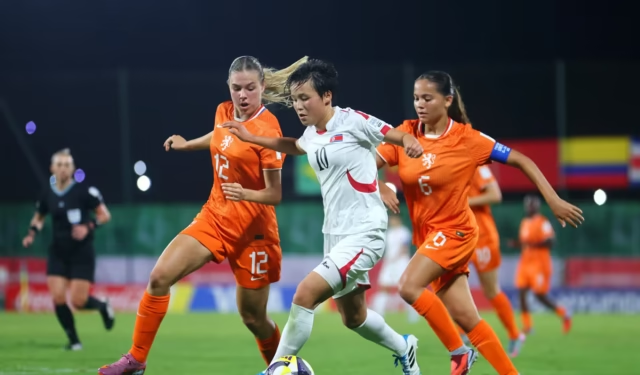
The 2025 FIFA U-17 Women’s World Cup in Morocco is heading for an exciting finish as Korea DPR and the Netherlands prepare to clash in the final match of the tournament on Saturday.
The championship game will bring together two strong teams with very different histories. Korea DPR, three-time winners of the competition, are looking to claim their fourth world title. The Netherlands, on the other hand, are making their first-ever appearance in the final, a huge milestone for the European nation.
Korea DPR have impressed fans with their strong defence and quick attacking play throughout the competition. Their teamwork and experience at this level have made them favourites to lift the trophy again. The team’s coach said his players are “ready to make history once more” as they aim to keep their dominance in women’s youth football.
The Netherlands have been one of the surprise packages of the tournament. Known for their skillful ball control and fast passing, the young Dutch side defeated several tough opponents to reach the final. Their coach praised the team’s fighting spirit, saying, “These girls have worked hard to earn their place. We will go out there and give everything.”
The final will be played at a packed stadium in Morocco, with thousands of fans expected to cheer for both sides. FIFA officials said the tournament has been a major success, attracting strong crowds and showing how much women’s football has grown around the world.
The match will be a clash of two styles — Korea DPR’s disciplined defending against the Netherlands’ attacking creativity. Both teams will be eager to make the most of their chances in what promises to be a thrilling encounter.
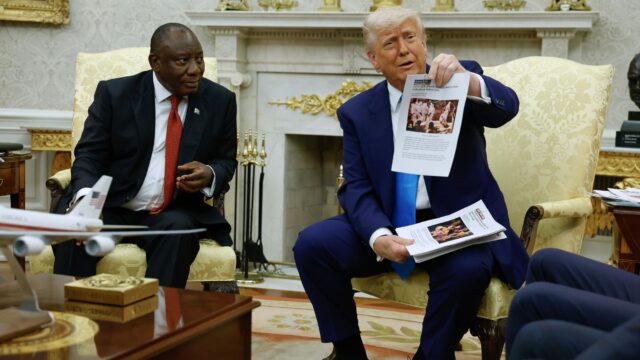
South Africa President Cyril Ramaphosa and US President Donald Trump
U.S. President Donald Trump has announced he will not attend the upcoming 2025 G20 Johannesburg Summit in South Africa and has sharply criticised host nation South Africa for what he described as “very bad policies,” escalating diplomatic tensions between the two countries.
Trump’s comments, which surfaced in recent remarks and a social-media post, targeted South Africa’s land-reform laws and alleged mistreatment of the white minority. He questioned the country’s suitability as a G20 host and suggested he would send a lower-level delegate instead of attending in person. “I think maybe I’ll send somebody else because I’ve had a lot of problems with South Africa,” he said earlier this year.
The G20 summit, scheduled for November 22-23 in Johannesburg under the theme “Solidarity, Equality, Sustainability”, is set to be the first time the gathering of world leaders would be held on African soil. Trump’s decision to boycott the summit comes amid deeper rifts between Washington and Pretoria over land-expropriation policies, South Africa’s alignment with the BRICS bloc and its independent foreign-policy posture.
South Africa’s response has been firm. President Cyril Ramaphosa stated in February that the country “will not be bullied” and resisted Trump’s characterisation of its domestic policies. Pretoria argues the U.S. claims lack basis in evidence.
Diplomatic observers note that Trump’s absence—coupled with the earlier directive from the U.S. National Security Council barring American agencies from participating in the summit—could dramatically reduce U.S. influence at a gathering expected to address global economics, climate and development.
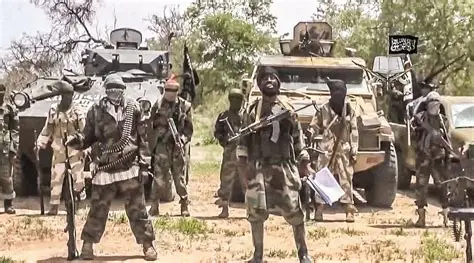
The Department of State Services (DSS) has provided a comprehensive update on ongoing terrorism-related prosecutions across Nigeria, reaffirming its commitment to justice and national security.
The agency confirmed that the trial of two high-profile terrorism suspects — Mahmud Muhammad Usman (also known as Abu Bara’a) and Abubakar Abba (also known as Isah Adam and Mahmud Al-Nigeri) — will continue on November 19 before Justice Emeka Nwite of the Federal High Court, Abuja.
The duo, described as key leaders of Jama’atu Ansarul Muslimina fi Biladis Sudan (ANSARU), an Al-Qaeda affiliate in Nigeria, were captured in a high-risk intelligence operation in July after months of surveillance. Usman, alleged to be the Emir of ANSARU, reportedly coordinated sleeper cells and financed terrorism through kidnappings and robberies. Abba, said to be his deputy, allegedly led the “Mahmudawa” cell operating around Kainji National Park, spanning Niger and Kwara states and extending into Benin Republic.
According to the Office of the National Security Adviser (ONSA), Usman received training in Libya between 2013 and 2015 under foreign jihadist instructors from Egypt, Tunisia, and Algeria. He is said to be skilled in weapons handling and improvised explosive device (IED) fabrication.
Both men are facing 32 counts of terrorism, including illegal mining. Usman has already been sentenced to 15 years in prison after pleading guilty to one count, while Abba pleaded not guilty to all charges.
The DSS also provided updates on the ongoing prosecution of Khalid Al-Barnawi, alleged mastermind of the 2011 bombing of the United Nations headquarters in Abuja, which killed 20 people and injured more than 70. Al-Barnawi and four co-defendants are being tried before Justice Nwite, but the case has faced multiple delays due to procedural challenges, including the absence of defence counsel at previous hearings.
The court recently granted a DSS request for an accelerated hearing, with trial sessions held on October 23 and 24, during which videos of the defendants’ confessional statements were played.
In another case, the DSS said five men have been arraigned over their alleged involvement in the June 5, 2022 attack on St. Francis Catholic Church in Owo, Ondo State, where over 40 people were killed and more than 100 injured.
The suspects — Idris Abdulmalik Omeiza, Al-Qasim Idris, Jamiu Abdulmalik, Abdulhaleem Idris, and Momoh Otuho Abubakar — were arraigned on a nine-count charge of terrorism. They are accused of being members of the Al-Shabab terror network and carrying out the attack to advance extremist ideology. All five pleaded not guilty, and their bail application was rejected by Justice Nwite, who ruled that the offences were capital in nature and the evidence against them substantial.
The DSS also confirmed ongoing trials of suspects arrested for the Yelwata massacre in Benue State’s Guma Local Government Area on June 13, 2025, where dozens were killed and over 100 injured. President Bola Tinubu visited the state to console victims and directed the immediate arrest of the perpetrators.
Following extensive investigations, the police arrested 26 suspects, and the DSS later charged nine individuals before the Federal High Court in Abuja for terrorism-related offences. Two others, Haruna Adamu and Muhammad Abdullahi, remain at large.
Two additional suspects — Terkende Ashuwa and Amos Alede — are being prosecuted for alleged reprisal attacks linked to the same violence. All defendants have pleaded not guilty, and their trials are ongoing.
Speaking on the developments, DSS Director-General Tosin Ajayi said the prosecutions demonstrate the diligence of Nigeria’s security agencies in countering terrorism through lawful means.
“The various arrests and trials of terrorism suspects show that Nigeria’s security agencies are diligent in dealing with those who disrupt our peace,” Ajayi said. “These cases are separate from the hundreds of suspects under military custody, whose prosecutions are being handled by the Office of the Attorney-General. In July last year, 125 terrorists were convicted.”
Ajayi assured Nigerians that the DSS would continue to pursue justice “in consonance with the rule of law.”
The Federal Government of Nigeria has successfully raised $2.35 billion in its latest Eurobond issuance, marking a major milestone in the country’s return to the international capital markets.
According to a statement from the Debt Management Office (DMO), the Eurobonds were issued in two tranches — a $1.25 billion 10-year bond maturing in 2036 and a $1.10 billion 20-year bond maturing in 2046. The 10-year note was priced at a yield of 8.63 percent, while the 20-year note was priced at 9.13 percent.
Nigeria’s government described the transaction as a strong vote of confidence in its ongoing economic reforms. The issue attracted a record-breaking orderbook of over $13 billion, the largest ever achieved by the country. Investors from the United Kingdom, North America, Europe, Asia, and the Middle East — alongside Nigerian investors — participated in the offering, highlighting broad-based global interest.
“This development reaffirms Nigeria’s position as a recognised and credible participant in the global capital market,” President Bola Ahmed Tinubu said, lauding the successful outcome. “We are delighted by the strong investor confidence demonstrated in our country and our reform agenda.”
Finance Minister and Coordinating Minister of the Economy, Wale Edun, said the issuance reflected “the international community’s continued confidence in Nigeria’s reform trajectory and our commitment to sustainable, inclusive growth.”
DMO Director-General Patience Oniha described the transaction as “a major achievement for Nigeria,” noting that it would help fund long-term projects consistent with President Tinubu’s economic growth agenda. “Accessing the Eurobond market to raise long-term financing supports development while diversifying Nigeria’s funding sources,” she said.
The newly issued notes will be listed on the London Stock Exchange, the FMDQ Securities Exchange Limited, and the Nigerian Exchange Limited. Proceeds from the sale will be used to finance the 2025 fiscal deficit and support the government’s wider budgetary needs.
The Federal Government appointed Chapel Hill Denham, Citigroup, Goldman Sachs, J.P. Morgan, and Standard Chartered Bank as joint bookrunners for the deal, while FSDH Merchant Bank Limited acted as financial adviser.
A faction within the Peoples Democratic Party (PDP) on Thursday staged a peaceful demonstration outside the United States Embassy in Abuja, calling on the international community to intervene and protect Nigeria’s democratic institutions.
The protesters, grouping under banners reading “Fix PDP, fix Nigeria” and “Save our Democracy,” marched to the embassy’s Maitama district gate early in the afternoon. Their aim: to draw global attention to what they described as escalating intimidation of opposition voices and a drift towards a one-party system under the current administration.
In a coordinated move, demonstrators also submitted letters of protest to the US Embassy, the European Union mission, and the Federal Ministry of Justice. The letters warned of weakening democratic structures and said that the ruling party was using state institutions to suppress dissent.
This public appeal comes amid a deepening leadership crisis within the PDP. In recent days, factional suspensions have proliferated: One wing, led by National Chairman Umar Damagum, suspended National Secretary Samuel Anyanwu and other officials, only for Anyanwu’s faction to counter-suspend Damagum and his loyalists.
One protester addressed journalists at the embassy gate: “We are calling on the United States, the European Union and all lovers of democracy to intervene before it’s too late. Nigeria must not slide into a one-party dictatorship.”
Security operatives were visibly stationed at the site, though no incidents were reported. Organisers described the action as a peaceful yet urgent appeal for foreign and domestic actors to support institutional integrity in Nigeria.
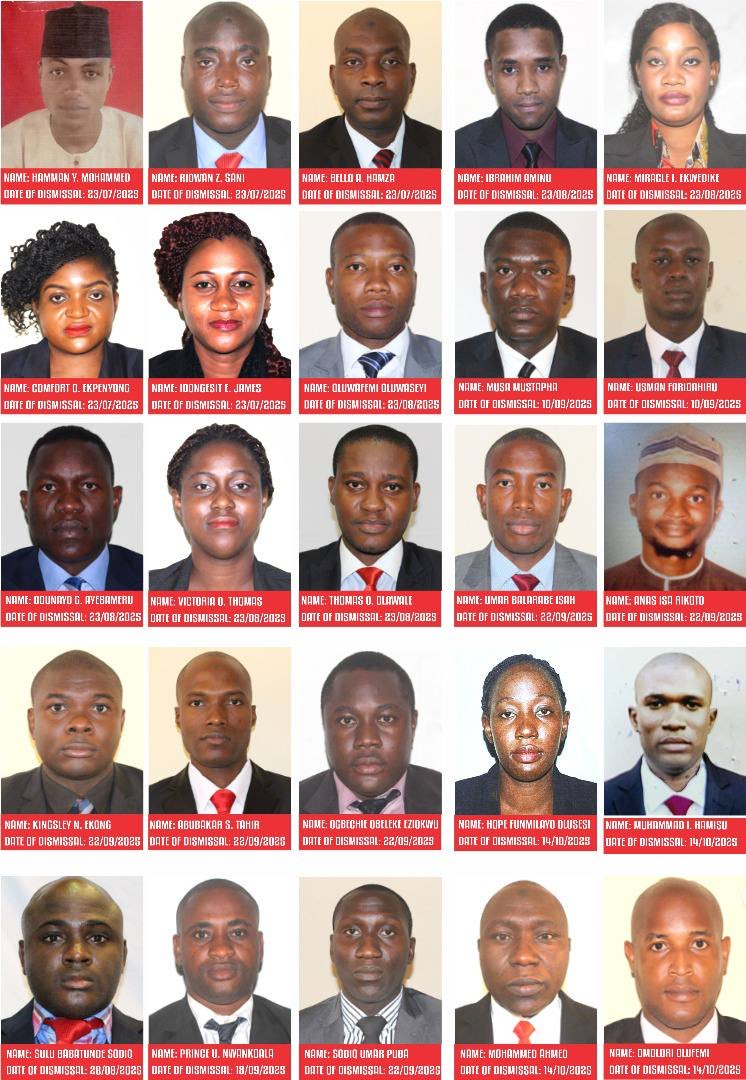
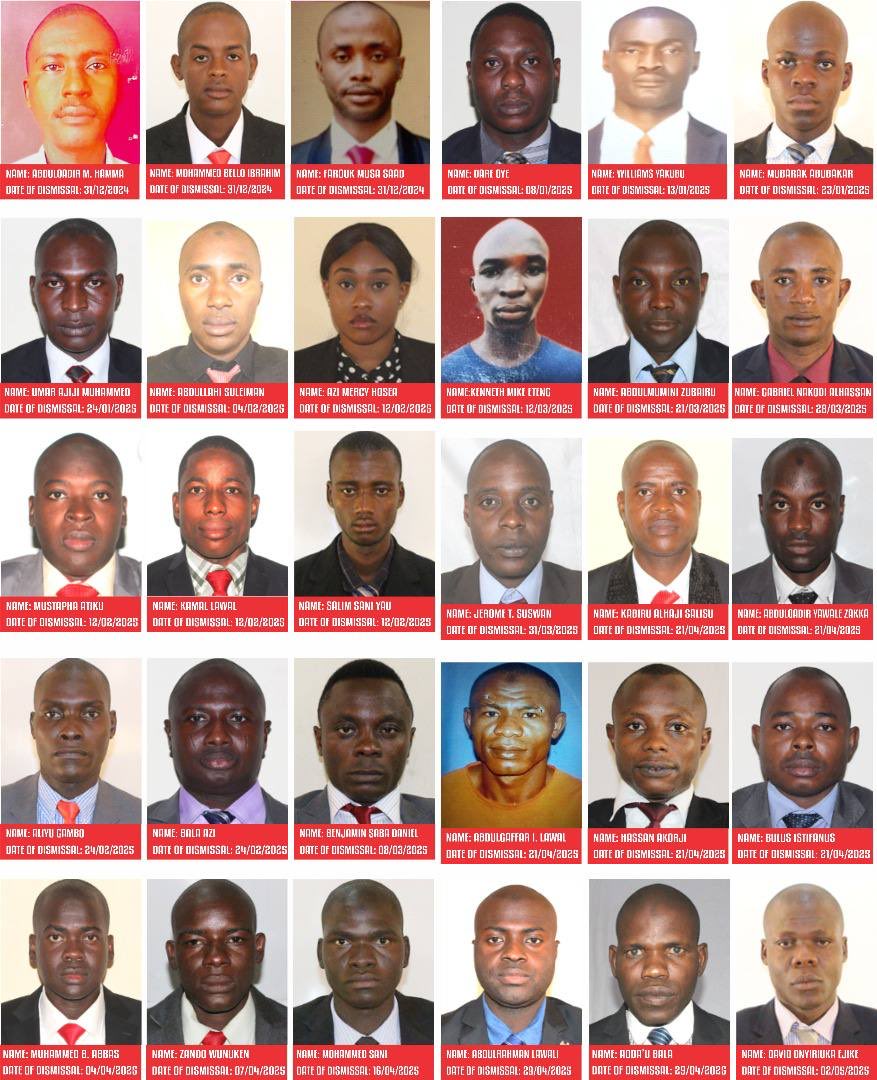
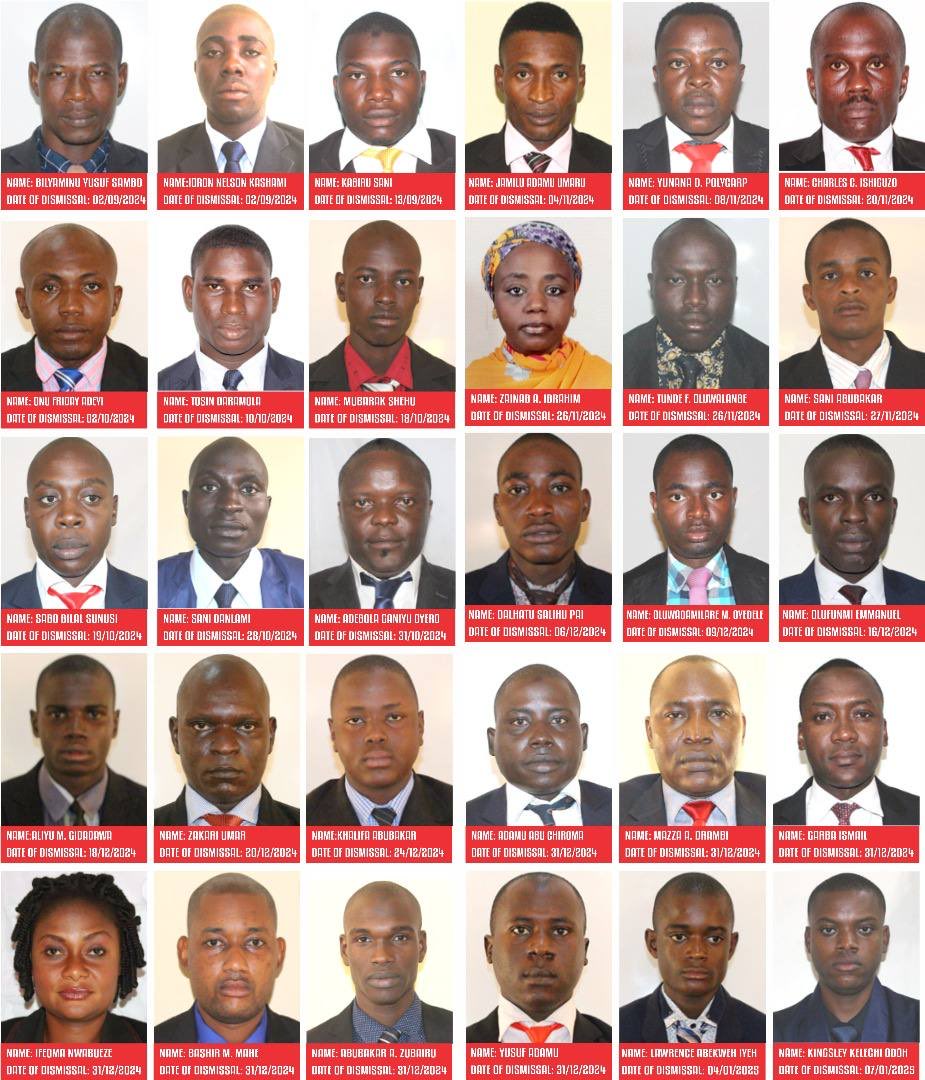
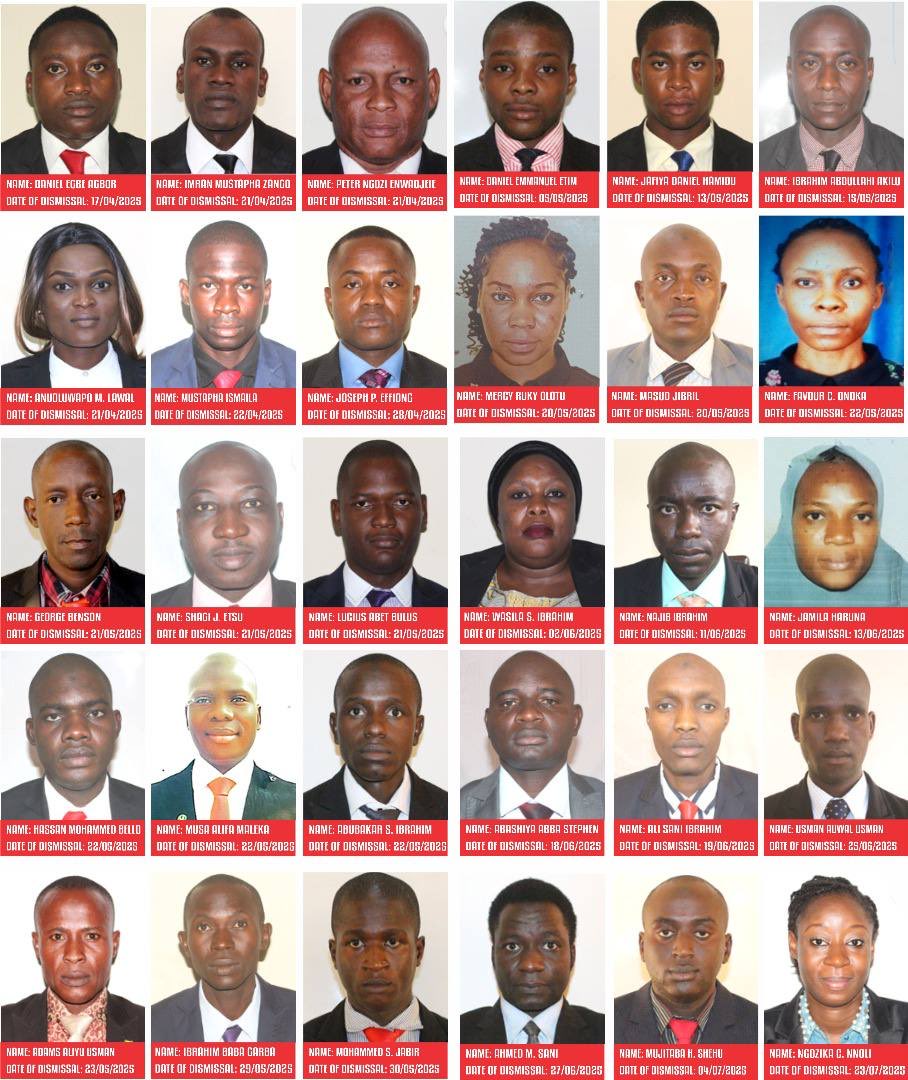
The Department of State Services (DSS) announced on Tuesday that it has dismissed 115 personnel as part of a sweeping internal reform aimed at strengthening discipline and integrity within the agency.
In a statement issued concurrent with the announcement, the agency said the affected officers were removed following a series of internal reviews and investigations into misconduct and corruption. The dismissals, it noted, were not the result of a single event but had been carried out “over a period of time” as part of ongoing efforts to rid the service of personnel who fall short of professional standards.
The DSS also issued a public warning, alerting citizens to the possibility that some of the dismissed persons continue to pose as serving security operatives. It specifically named two individuals — Barry Donald and Victor Onyedikachi Godwin — whom the agency said had been publicly disowned and remain a risk to unsuspecting members of the public.
To ensure transparency, the service published the names of the dismissed officers on its official website and provided a hotline for verification and complaints.
The scale of the purge signals a heightened focus by the DSS on internal governance at a time when Nigeria’s security agencies face mounting scrutiny over accountability.
However, some observers raise questions about the process and criteria for dismissal, calling for clarity on whether the individuals were afforded due process and whether the agency will publish the specific nature of the misconduct findings.