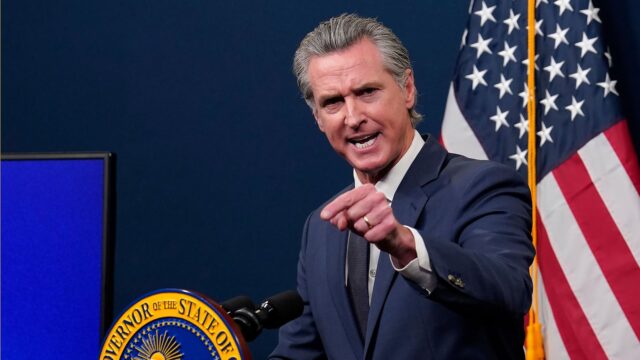
California Governor Gavin Newsom has signed an executive order directing state agencies to continue using the terms “Artificial Intelligence” and “AI”, rejecting a new terminology adopted by US President Donald Trump’s administration.
The order, Executive Order N-10-26, signed on September 30, requires all California agencies and departments under Newsom’s authority to refer to the technology as “Artificial Intelligence” and “AI”, regardless of any different or rebranded terminology adopted by the federal government, unless doing so would conflict with state or federal law.
The move came one day after Trump signed an executive order directing federal executive departments and agencies to replace “Artificial Intelligence” and “AI” with “Super Intelligence” and “SI” in official communications, websites, reports and other non-statutory documents.
Trump’s September 29 order argued that advances in frontier AI systems had moved beyond the capabilities traditionally associated with the term artificial intelligence.
“The terminology used by the Federal Government should reflect the transformative capabilities of these technologies,” the White House order stated, directing federal agencies to use “Super Intelligence” and “SI” in place of “Artificial Intelligence” and “AI” to the maximum extent permitted by law.
Newsom’s response takes the opposite approach, keeping the established terminology across California’s state government.
In his executive order, Newsom said that while language and terminology can be significant, changing the name of a technology should not distract from what he described as documented security and safety risks associated with rapidly developing AI systems.
The order states that California agencies must use “Artificial Intelligence” and “AI” notwithstanding any “rebranded or different terminology used by the federal government”, unless the terminology would be inconsistent with the law.
Newsom also announced the move publicly, saying: “I just signed an executive order permanently declaring Artificial Intelligence ‘Artificial Intelligence’ in California. You’re welcome, America.”
The terminology dispute is unfolding against a much broader disagreement over how governments should regulate increasingly capable AI systems.
California has spent much of 2026 expanding its AI regulatory framework. Earlier in September, Newsom signed legislation establishing a system for independent verification of AI models and creating a registry for AI auditors. He subsequently issued another executive order directing officials to accelerate independent oversight and examine the development of an emergency “kill switch” for frontier AI models.
That September 18 order called for experts to develop recommendations on stronger safety requirements, including independent evaluations of frontier AI companies and possible emergency shutdown mechanisms for advanced models.
On September 23, Newsom announced the experts who would advise California on the next stage of its AI safety framework, including work related to the proposed emergency shutdown mechanism.
The governor’s latest action also came on the same day he signed a series of new laws dealing with AI and its effects on workers, healthcare, transparency and digital impersonation.
Among the measures signed September 30 are requirements for human review of certain automated employment decisions, disclosure when AI contributes to mass layoffs or other forms of technological displacement, stronger restrictions on workplace surveillance and new safeguards concerning AI-generated material.
California also enacted measures requiring greater human involvement when AI is used in healthcare decisions and strengthened transparency rules intended to help people determine whether digital material was generated or altered by AI.
The state’s latest AI measures build on legislation signed earlier in September that created a framework for independent assessment of AI systems and models. California officials have described the broader approach as an effort to combine technological innovation with safety, accountability and public oversight.
Newsom has also previously directed California to prepare workers and businesses for potential disruption caused by AI, including gathering information on changes to employment and developing policies to help workers adapt to technological changes.
The latest order therefore represents more than a dispute over terminology. It places California’s state government on a separate administrative track from the federal government at a time when both levels of government are developing different approaches to the rapidly evolving technology.
The White House says the term “Super Intelligence” better reflects the capabilities and potential of modern frontier systems, while California’s order maintains the conventional “Artificial Intelligence” terminology and focuses its policy response on safety, security, transparency and accountability.