The Federal Government has moved to quell growing public concern and misinformation surrounding the migration partnership between Nigeria and the United Kingdom, insisting that the recently signed Memorandum of Understanding (MoU) does not compel Nigeria to accept non-citizens deported from Britain.
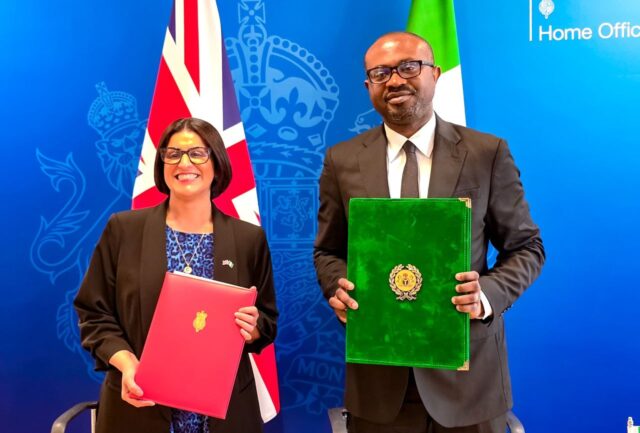
The clarification follows widespread speculation after the agreement was signed on the sidelines of President Bola Ahmed Tinubu’s state visit to the UK. Authorities said the deal is strictly aimed at strengthening bilateral cooperation on migration management, particularly in curbing irregular migration and ensuring orderly, lawful movement between both countries.
According to the government, the MoU—signed by Nigeria’s Minister of Interior and the UK’s Home Secretary—establishes a structured framework for “regulated and safe migration flow” while enhancing collaboration on immigration enforcement in line with domestic laws and international conventions.
Officials were emphatic that “nowhere in the 12-page memorandum is Nigeria required to accept foreign nationals other than Nigerians,” stressing that any individual to be repatriated must undergo rigorous identification and verification processes to confirm nationality.
The agreement provides that both countries will facilitate the “dignified return” of their citizens who do not have legal rights to remain in the other’s territory. Authorities noted that the rights of returnees are protected under the deal, which mandates that individuals must be treated “with dignity and respect, with due regard to their human rights and fundamental freedoms.”
Under the operational procedures outlined in the MoU, deportations will only occur after thorough checks, including biometric verification or supporting documentation such as passports or national identity records. Where identity cannot be conclusively established, removals are to be deferred. In cases of wrongful repatriation, the requesting country is obligated to return the individual at its own cost.
The government also highlighted provisions designed to protect the welfare and assets of returnees, noting that migrants will be allowed to travel with their legally acquired belongings. “Every returnee will be given ample opportunity to make adequate arrangements for the transfer or disposal of his property,” the MoU states, underscoring a departure from previous practices where deportees often lost access to their assets.
Additionally, individuals facing deportation retain the right to appeal based on human rights considerations, including long-term residence, cultural integration, or potential reintegration challenges in their home country.
Nigeria further retained sovereign control over its immigration documentation process. The MoU makes clear that the Nigeria Immigration Service alone is responsible for issuing travel documents for returning nationals, even in cases involving expedited procedures using UK-issued letters.
Beyond repatriation, the agreement includes reintegration support mechanisms for returnees, ranging from immediate assistance such as accommodation and transportation to longer-term initiatives like access to education, vocational training, and entrepreneurship funding.
The MoU, which mirrors similar agreements signed in 2012, 2017 and 2022, will run for an initial five-year period, subject to renewal upon mutual consent.
Reiterating its position, the government urged media organisations and the public to seek accurate information before drawing conclusions. “Media organisations should seek clarification when uncertain about any issue to avoid misinforming the public,” the statement said.