The Independent National Electoral Commission (INEC) has unveiled the timetable for Nigeria’s 2027 general elections while announcing sweeping procurement reforms aimed at strengthening transparency, efficiency, and public trust in the electoral process.
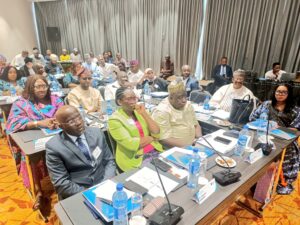
The Commission fixed Saturday, January 16, 2027, for the Presidential and National Assembly elections, while Governorship and State Assembly polls will hold on Saturday, February 6, 2027. The announcement was made during a high-level capacity building workshop for National Electoral Commissioners and senior management staff held in Lagos in partnership with the Konrad-Adenauer-Stiftung (KAS).
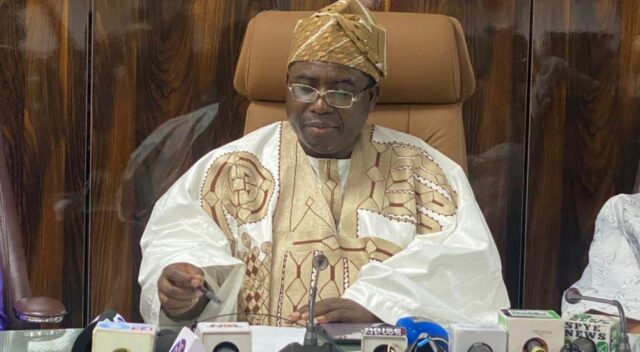
Declaring the workshop open on behalf of the Chairman, Prof. Joash O. Amupitan, SAN, National Commissioner Mrs. May Agbamuche-Mbu described the engagement as a critical milestone in INEC’s ongoing reform agenda. She said the Commission is focused not only on conducting elections but also on “safeguarding the entire democratic ecosystem through systems that are transparent, accountable, and resilient.”
In his address, Prof. Amupitan underscored the urgency of institutional reforms, noting that the Commission is “159 days into” his tenure at a time he described as pivotal in Nigeria’s democratic evolution. He emphasized that electoral credibility must be anchored on practical systems rather than theoretical commitments.
“My primary mandate, and indeed our collective burden, is to ensure that the electoral architecture of Nigeria is not just robust in theory but strong in practice,” he said. “We must move beyond the rhetoric of reform to the reality of implementation.”
The INEC Chairman identified procurement as a central but often overlooked pillar of credible elections, describing it as the “invisible architecture” that underpins successful electoral outcomes. According to him, failures in procurement can erode public trust even before voting begins.
“When procurement is handled with integrity, it becomes the bedrock of public confidence. When it is compromised, it becomes the fault line through which trust collapses,” Amupitan stated. “Our responsibility is not limited to election day activities. It encompasses the entire electoral value chain—from planning and logistics to procurement and deployment.”
He also highlighted the implications of the Electoral Act 2026, particularly the amendment reducing the statutory notice period for elections from 360 to 300 days. The compressed timeline, he said, demands greater efficiency and precision from the Commission.
“This compressed timeline is not a challenge to be lamented but a reality to be mastered,” he said. “It requires us to work with the efficiency of a well-calibrated machine… There is no room for delay, no margin for error, and no excuse for complacency.”
Amupitan explained that the early release of the election timetable was designed to provide certainty for stakeholders, including political parties, candidates, and security agencies, while allowing sufficient time for procurement, logistics, and training.
“Transparency begins with certainty,” he noted. “By releasing this timetable well in advance, we are sending a clear signal that INEC is prepared… and that we intend to conduct an election that meets the highest standards of credibility and professionalism.”
The workshop also featured contributions from development partners and key government agencies. The Resident Representative of KAS in Nigeria, Mr. Tobias Ruettershoff, emphasized that procurement plays a decisive role in electoral integrity, warning that weak systems can undermine even well-conducted elections.
“The credibility of elections does not begin on election day,” he said. “It begins long before with planning, logistics and administration… If procurement is transparent and efficient, it strengthens the integrity of the entire electoral process.”
In a keynote address, the Director-General of the Bureau of Public Procurement, Dr. Adebowale Adekunle, described procurement as the “hidden engine of electoral integrity,” outlining reforms aimed at boosting transparency, competition, and digital transformation. He disclosed that ongoing reforms have already delivered savings exceeding ₦1.1 trillion and led to the certification of more than 2,700 procurement professionals.
Adekunle warned of critical risks in electoral procurement, including overreliance on single vendors and global supply chain disruptions, stressing that such vulnerabilities could undermine democratic processes.
“A resilient democracy must never outsource its sovereignty,” he said, cautioning against excessive dependence on individual suppliers.
He further noted that disruptions in global supply chains—from geopolitical tensions to technological shortages—could delay the delivery of critical election materials. To mitigate these risks, he advocated early procurement planning, supplier diversification, and the adoption of end-to-end electronic procurement systems.
“Every election is a test not only of the electoral body but of the systems that support it,” Adekunle added. “When procurement is done right, it strengthens trust in democracy. When it fails, the consequences can be profound.”