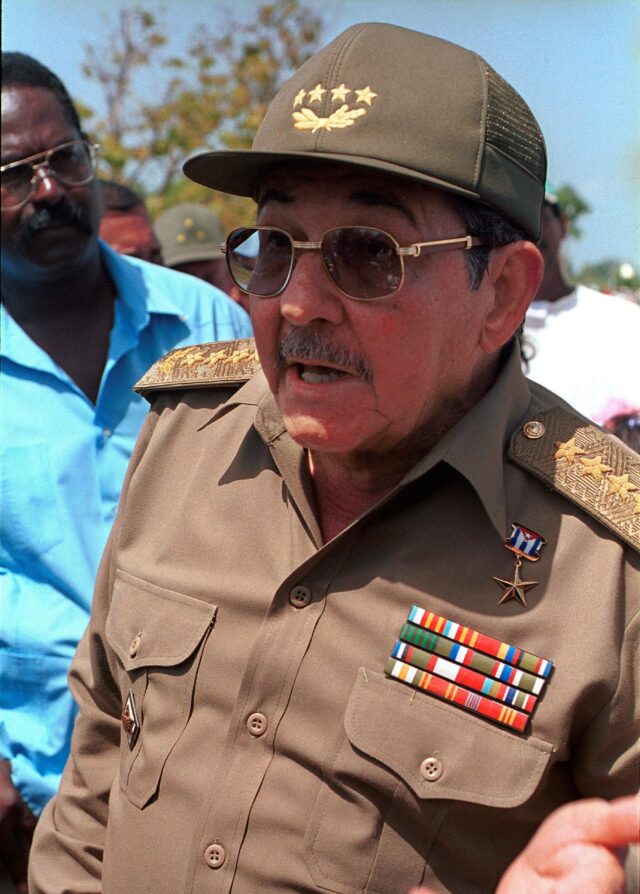
The United States has formally indicted former Cuban president Raúl Castro on murder and conspiracy charges linked to the 1996 shooting down of two civilian aircraft operated by the Miami-based exile group Brothers to the Rescue, in a dramatic escalation of tensions between Washington and Havana.
Federal prosecutors in Miami announced that Castro, now 94, faces charges including conspiracy to kill U.S. nationals, four counts of murder and destruction of aircraft over the incident that killed four people after Cuban fighter jets shot down the planes over international waters.
According to the indictment, Castro — who was serving as Cuba’s defence minister at the time — allegedly authorised the February 24, 1996 operation in which Cuban MiG fighter jets targeted the unarmed aircraft during a humanitarian mission searching for Cuban refugees near the Florida Straits.
Acting U.S. Attorney General Todd Blanche said the charges represented a long-awaited push for accountability over the deaths of the four men killed in the incident. “We are announcing an indictment charging Raul Castro and several others with conspiracy to kill U.S. nationals,” Blanche said during a ceremony in Miami honouring the victims.
The indictment also names several former Cuban military officials and pilots allegedly involved in the operation. U.S. officials described the move as part of a broader effort by President Donald Trump’s administration to intensify pressure on Cuba’s communist leadership.
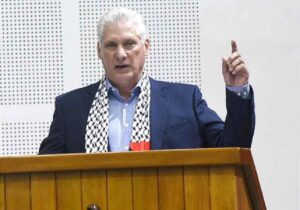
Cuba’s government swiftly condemned the charges, accusing Washington of using the legal system for political purposes. Cuban President Miguel Díaz-Canel rejected the indictment and criticised the United States for escalating tensions between the two countries.
“Current accusations are part of a political manoeuvre,” Díaz-Canel said, while Cuban officials insisted the 1996 action was carried out in defence of Cuban airspace following repeated incursions by exile groups.
Cuba’s Deputy Foreign Minister Carlos Cossio also responded sharply to comments made by U.S. Secretary of State Marco Rubio, who blamed Cuba’s economic crisis on government corruption and mismanagement rather than U.S. sanctions.
“The reason why the US secretary of state lies so repeatedly and unscrupulously when referring to Cuba and trying to justify the aggression imposed on the Cuban people is not ignorance or incompetence,” Cossio wrote in a statement posted on social media. “He knows well that there is no excuse for such a cruel and ruthless aggression.”
The case marks one of the most significant legal actions ever taken by the United States against a former Cuban leader and is expected to further strain already fragile diplomatic relations between the longtime Cold War rivals.
Although Castro stepped down as Cuba’s president in 2018 and later relinquished leadership of the Communist Party, he is still regarded as one of the most influential figures within the Cuban political establishment. Analysts, however, say the likelihood of him being extradited to the United States remains extremely low.
The indictment has also sparked international reaction, with China condemning the move and accusing Washington of weaponising judicial mechanisms to pressure Cuba. Chinese Foreign Ministry spokesperson Guo Jiakun said the United States should “stop using sanctions and judicial actions as tools of oppression.”