U.S. President Donald Trump has demanded Iran’s “unconditional surrender” as violence across the Middle East intensified, with Israeli forces launching heavy airstrikes in Lebanon and Iran retaliating with missile and drone attacks across the region. The comments came as the conflict entered its seventh day and casualties continued to mount.
Trump made the demand in a statement posted on his Truth Social platform, signaling that Washington would not pursue negotiations with Tehran unless it capitulates. “There will be no deal with Iran except UNCONDITIONAL SURRENDER,” Trump wrote, adding that after such a move the United States and its allies would help rebuild the country’s economy under new leadership.
The U.S. president further suggested that Iran’s political leadership would need to change as part of any resolution. He said that following surrender and the selection of what he called “a GREAT & ACCEPTABLE Leader(s),” the United States and its partners would work to bring Iran “back from the brink of destruction, making it economically bigger, better, and stronger than ever before.”
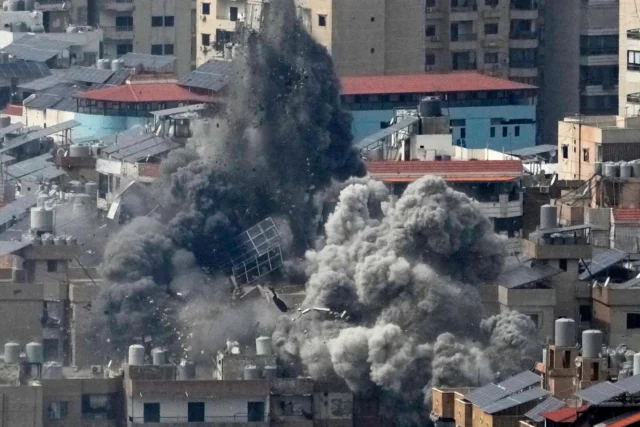
The remarks came as Israeli warplanes carried out some of the heaviest bombardments in recent years, striking targets in Tehran and Beirut while also hitting positions linked to the Iran-backed militant group Hezbollah in southern Lebanon and the Lebanese capital’s suburbs. The strikes were described as the most intense since a 2024 ceasefire ended the last major war between Israel and Hezbollah.
Iran has responded with waves of missiles and drones targeting Israel and several Gulf countries hosting U.S. forces, escalating fears that the conflict could expand across the region. The fighting has already caused significant casualties, with more than 1,200 people reported killed in Iran and over 200 in Lebanon, while thousands have been displaced.
The crisis has also triggered a growing humanitarian emergency. Israeli evacuation warnings in southern Lebanon have forced tens of thousands of residents to flee their homes, and officials in Lebanon have warned that the country could face a severe humanitarian disaster if the bombardment continues.
Meanwhile, Iranian President Masoud Pezeshkian said some countries have begun mediation efforts aimed at ending the war. However, he emphasized that Iran would defend its sovereignty and resist external pressure.
The rapidly escalating conflict has drawn international concern, with governments and global organizations calling for de-escalation amid fears of wider regional war and disruptions to global energy markets. As fighting continues across multiple fronts, diplomatic efforts to halt the violence remain uncertain.